


Anchorage Digital to Acquire Mountain Protocol, Expand Stablecoin Services

Anchorage Digital, a U.S.-based digital asset platform, announced Tuesday it has agreed to acquire Mountain Protocol, a Bermuda-regulated issuer of the USDM stablecoin. The transaction, subject to regulatory approvals and customary closing conditions, is aimed at strengthening Anchorage Digital’s stablecoin operations amid increasing demand from institutional clients. The acquisition will incorporate Mountain Protocol’s team, technology, and regulatory licensing into Anchorage Digital’s infrastructure. The move comes as the stablecoin market gains momentum globally, propelled by growing use cases in both traditional finance and the cryptocurrency sector. Deal Highlights Anchorage Digital Strategy Amid Regulatory Clarity The deal aligns with Anchorage Digital’s broader strategy to expand its role in the stablecoin sector, particularly as U.S. regulatory frameworks continue to evolve. The company has been actively involved in initiatives such as the Global Dollar Network and has previously launched stablecoin-focused rewards programs to support institutional participation. Nathan McCauley, Anchorage Digital’s CEO and co-founder, said the acquisition represents a key milestone in the company’s efforts to enhance stablecoin adoption among institutional investors. He emphasised that the partnership will help advance security, compliance, and risk management standards in the sector.“By acquiring Mountain Protocol, we are taking a significant step forward in supporting institutional stablecoin adoption and advancing a new era of safety, security, and regulatory compliance in the global digital asset ecosystem.” Mountain Protocol, which recently completed an $8 million Series A funding round led by Multicoin Capital, issues USDM, a stablecoin fully backed by U.S. Treasuries. The stablecoin operates across multiple blockchain networks and is designed to appeal to investors seeking a regulated and transparent digital dollar alternative. Stablecoins Continue to Gain Traction in Global Finance The transaction underscores the growing significance of stablecoins in global finance, where they are increasingly used for low-cost, around-the-clock value transfers. Industry analysts view stablecoins as a bridge between traditional banking systems and digital asset ecosystems, offering predictable pricing while leveraging blockchain’s efficiency. Anchorage Digital’s acquisition of Mountain Protocol positions it to serve rising institutional demand for regulated stablecoin products, as financial institutions explore new blockchain-based settlement and payment methods. The deal is also expected to broaden Anchorage Digital’s product suite, adding capabilities to support emerging use cases across multiple sectors. While neither company disclosed the financial terms of the agreement, both parties indicated the deal is expected to close following regulatory clearance. The Bermuda Monetary Authority, which regulates Mountain Protocol, will play a key role in the review process.
Who Is Max Keiser? And His Role in the Bitcoin Revolution
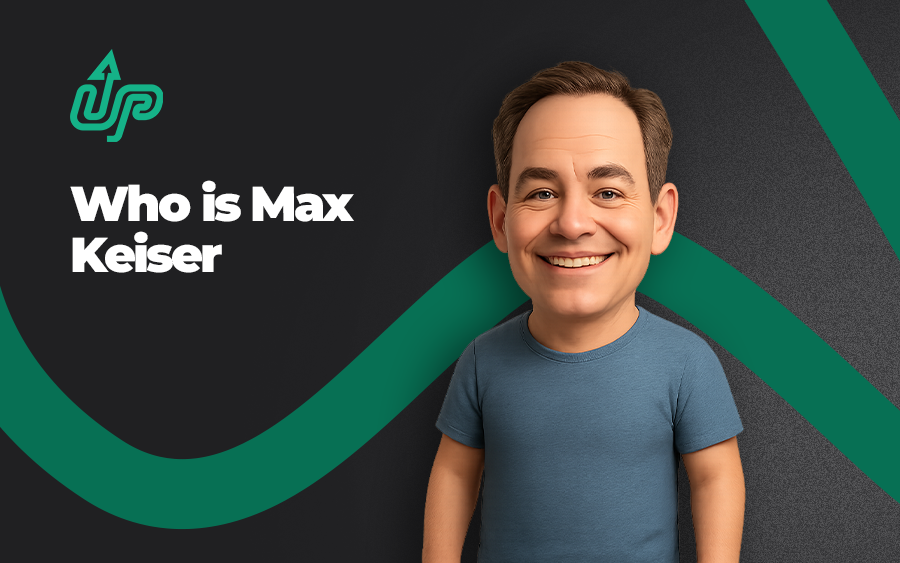
Max Keiser is a name that sparks both admiration and controversy in the financial and crypto worlds. A former Wall Street trader turned outspoken Bitcoin advocate, Keiser has spent decades challenging the traditional financial system while championing Bitcoin as the ultimate revolution. His influence on crypto space is undeniable. But who is Max Keiser beyond the headlines? Let’s take a deep dive into his journey, from his early career in finance to his bold predictions and strong belief in Bitcoin’s future. Key Takeaways Max Keiser’s Early Career: From Wall Street to Media Source: Bitcoinist Before becoming one of Bitcoin’s most vocal advocates, Max Keiser built a career in traditional finance and media. He started on Wall Street as a stockbroker, where he gained firsthand experience in the mechanics of financial markets. However, his time in the industry exposed him to what he saw as deep flaws within the global financial system, issues he would later criticize heavily. Seeking a platform to challenge mainstream financial narratives, Keiser transitioned into media, creating and hosting financial programs that took an unconventional and often critical approach to Wall Street and central banking. He launched the show The Oracle on BBC and later Keiser Report on RT, where he analyzed market trends, interviewed experts, and passionately advocated for alternative financial systems. His bold style quickly gained attention, which made him a unique voice in financial journalism. During this time, Keiser also ventured into technology-driven financial solutions. He co-founded the Hollywood Stock Exchange (HSX), an early digital trading platform that introduced the concept of virtual securities. This foreshadowed the rise of blockchain-based financial innovations. His experiences in both finance and media set the stage for his eventual embrace of Bitcoin, a technology he saw as the answer to the problems he had long criticized. “Fiat money is the greatest scam in history. Bitcoin is the truth machine.” — Max Keiser The Keiser Report .Source: actualidad Max Keiser gained widespread recognition through The Keiser Report, a financial news show he co-hosted with his wife, Stacy Herbert, on RT from 2009 to 2022. The show became a platform for Keiser’s outspoken critics of Wall Street, central banks, and government policies. He often exposed what he saw as widespread corruption and manipulation in global markets. Unlike traditional financial programs, The Keiser Report sometimes took a theatrical approach to analyzing economic issues. Keiser frequently called out institutions like the Federal Reserve, major investment banks, and hedge funds, accusing them of rigging the system in favor of the elite while ordinary people bore the consequences. He was particularly critical of fiat currency, arguing that it was a tool for wealth transfer from the public to powerful financial players. One of the show’s recurring themes was the concept of “financial terrorism,” a term Keiser used to describe market manipulation by major banks and corporations. He famously predicted the collapse of financial institutions well before events like the 2008 crisis fully unfolded. His deep distrust of traditional financial systems ultimately led him to become an early and vocal supporter of Bitcoin, which he championed as a solution to economic manipulation. Through The Keiser Report, Keiser not only educated viewers on financial trends but also played a key role in mainstreaming Bitcoin and exposing the flaws of traditional markets. His relentless advocacy helped shape the conversation around decentralized finance, inspiring many to question the established financial order. Long before Bitcoin became a buzzword, Keiser was sounding the alarm on fiat currency and calling for a financial revolution. Why Max Keiser Went All In on Bitcoin Max Keiser. Source: Bitcoin.com Max Keiser was one of the earliest and most vocal advocates of Bitcoin, recognizing its potential long before mainstream adoption began. His journey into Bitcoin began around 2011 when he publicly endorsed it as a revolutionary asset that could dismantle the corrupt financial system he had long criticized. Unlike traditional economists who dismissed Bitcoin as a passing fad, Keiser saw it as “digital gold,” a decentralized alternative to fiat currency that put financial power back into the hands of individuals. Through The Keiser Report and various speaking engagements, Keiser consistently urged people to invest in Bitcoin, often making bold price predictions that seemed extreme at the time but later proved remarkably accurate. He famously encouraged viewers to buy Bitcoin when it was under $10, arguing that its scarcity and decentralized nature made it superior to government-backed money. Over the years, his unwavering belief in Bitcoin earned him a reputation as one of its most passionate evangelists. Beyond advocacy, Keiser actively contributed to the crypto space by launching initiatives to promote Bitcoin adoption. He and his wife, Stacy Herbert, founded the El Zonte Capital investment fund, supporting Bitcoin-based businesses, particularly in El Salvador, a country that later became the first in the world to adopt Bitcoin as legal tender. Keiser was a key supporter of this move, working closely with Salvadoran officials to promote Bitcoin’s use in everyday transactions. His dedication to Bitcoin goes beyond financial speculation; he views it as a tool for economic freedom, protecting individuals from inflation, government overreach, and centralized control. Although critics argue that his maximalist stance ignores other blockchain innovations, Keiser remains firm in his belief that Bitcoin is the ultimate financial revolution, one that will reshape global economies for generations to come. Keiser’s investment strategy with Heisenberg Capital wasn’t just about profit—it was about backing a new financial order built on Bitcoin. Keiser’s Crypto Investment: Heisenberg Capital Source: Cryptonomist Max Keiser didn’t just advocate for Bitcoin, he actively invested in it and other disruptive technologies through Heisenberg Capital, the venture capital firm he co-founded with his wife, Stacy Herbert, in 2013. The firm was one of the earliest to back Bitcoin-related startups, demonstrating Keiser’s conviction that the cryptocurrency would transform the financial world. Heisenberg Capital gained a reputation for supporting projects aligned with Keiser’s vision of decentralization and financial sovereignty. The firm was an early investor in Bitcoin when it was still largely dismissed by mainstream finance, a
Crypto Futures: Definition, How to Trade & Risk

The crypto market’s volatility can be both a blessing and a curse. Many traders, especially newcomers, struggle to navigate these rapid swings effectively. Traditional spot trading, limited to buying and holding, often falls short in such turbulent conditions. With the help of cryptocurrency futures, you can take advantage of quick price swings and protect yourself from unanticipated declines while putting sound risk management techniques into practice. This article will examine the fundamental ideas of cryptocurrency futures, compare leading exchanges, describe leverage and margin, compare futures and spot trading, and examine sophisticated market-navigating techniques. Key Takeaways What Are Derivatives? Derivatives are financial contracts whose value is derived from the price of an underlying asset, such as a cryptocurrency, commodity, or stock. They allow traders and investors to speculate on or hedge against the future price movements of the underlying asset without actually owning it. In the context of cryptocurrencies, derivatives enable market participants to trade on the price movements of assets like Bitcoin or Ethereum, using leverage and taking both long and short positions to potentially profit from both rising and falling markets. Types of Crypto Derivatives To fully leverage the crypto market, it’s important to understand the distinctions between various types of derivatives. 1. Futures Contracts Futures are agreements to buy or sell a cryptocurrency at a predetermined price on a specific future date. For instance, a Bitcoin futures contract might obligate the buyer to purchase Bitcoin at $50,000 three months from now, regardless of its market price at that time. 2. Options Contracts Options give traders the right, but not the obligation, to buy or sell a cryptocurrency at a set price within a certain period. A call option allows the purchase of the asset, while a put option allows the sale. This flexibility enables traders to hedge positions or speculate on price movements. 3. Perpetual Contracts Perpetual contracts are similar to futures but do not have an expiration date. They allow traders to hold positions indefinitely, provided they meet margin requirements. These contracts often include mechanisms like funding rates to align the contract price with the underlying asset’s spot price. Institutional participation in crypto futures has grown by 60% in the last year, according to CME data. How Crypto Derivatives Work Crypto derivatives function through agreements between buyers and sellers, specifying terms like the contract’s duration, price, and quantity of the underlying cryptocurrency. You can profit from price fluctuations without directly owning the asset. For example, if a trader anticipates Bitcoin’s price will rise, they might buy a Bitcoin futures contract. If Bitcoin’s price increases as expected, the value of the futures contract would also rise, allowing the trader to sell the contract for a profit. Benefits of Crypto Derivatives Crypto derivatives offer several advantages that can enhance a trader’s portfolio and trading strategies. 1. Leverage Derivatives often allow the use of leverage, enabling traders to control larger positions with a smaller initial investment. This means potential profits can be magnified. However, it’s important to note that leverage also increases the potential for significant losses. 2. Hedging Traders can use derivatives to hedge against price fluctuations in the underlying cryptocurrency. For example, if a trader holds a significant amount of Bitcoin, they might use Bitcoin options to protect against potential price declines. 3. Speculation Derivatives provide opportunities for speculation, allowing traders to profit from both rising and falling markets. By taking long or short positions, traders can potentially benefit from various market conditions. 4. Access to Diverse Strategies Crypto derivatives offer a range of trading strategies, such as arbitrage, spread trading, and market-making, providing traders with tools to optimize their trading approaches. 5. Market Efficiency By enabling short-selling and offering various trading strategies, derivatives can contribute to market efficiency, helping to align prices with the underlying asset’s true value. Risks Associated with Crypto Derivatives Like any financial instrument, crypto derivatives carry potential downsides, and being aware of these risks is important for informed trading. 1. Market Volatility The cryptocurrency market is highly volatile. While this volatility can present opportunities, it also poses significant risks, especially when using leverage. Sudden price swings can lead to rapid gains or losses. 2. Counterparty Risk In derivative contracts, there’s a risk that the other party may default on their obligations. This is particularly concerning in the crypto space, where regulatory oversight may be limited. 3. Liquidity Risk Some crypto derivatives may have low trading volumes, leading to liquidity issues. This can make it difficult to enter or exit positions without affecting the market price. 4. Regulatory Risk The regulatory environment for cryptocurrencies and their derivatives is continually developing. Changes in regulations can impact the legality, taxation, and profitability of derivative trading. 5. Complexity Understanding and effectively trading crypto derivatives requires a solid grasp of financial instruments and market dynamics. For inexperienced traders, the complexity can lead to misunderstandings and potential losses. Liquidity in futures markets is not just about volume; it’s about the depth of the order book and the speed of execution. How to Trade Bitcoin Futures: Step-by-Step Instructions for New Traders Trading Bitcoin futures allows investors to speculate on the future price movements of Bitcoin without directly owning the cryptocurrency. This approach offers opportunities for profit in both rising and falling markets. Here’s a step-by-step guide to help new traders navigate Bitcoin futures trading. What is Bitcoin Futures A Bitcoin futures contract is a standardized agreement to buy or sell Bitcoin at a predetermined price on a specific future date. These contracts enable traders to hedge against price volatility or speculate on price movements. Unlike spot trading, where actual Bitcoins are exchanged, futures trading involves contracts representing the value of Bitcoin. Step 1: Choose a Reputable Futures Exchange To begin trading Bitcoin futures, select a reliable futures exchange that offers these contracts. Prominent exchanges include the Chicago Mercantile Exchange (CME) and the Chicago Board Options Exchange (CBOE). Also, cryptocurrency exchanges like Binance and Kraken provide futures trading services. Ensure the chosen platform complies with regulatory standards and has robust