


Indonesia’s Govt. Says Crypto Market Hit $31–32B in Volume in 2025

Indonesia’s government has released fresh data showing the country’s cryptocurrency market posted remarkable figures in 2025, with total trading volume landing between $31 billion and $32 billion for the year, underscoring the nation’s rapid digital asset adoption. Strong Growth Amid Broader Digital Finance Expansion According to official figures, Indonesia’s crypto trading activity generated around $47 million in tax revenue from transactions in 2025, a substantial sum that highlights the government’s success in capturing value from this burgeoning sector while maintaining a regulatory framework that supports market participation. This performance positions Indonesia as one of Southeast Asia’s standout digital finance markets, where retail investors and trading platforms have significantly broadened their footprint. Regulatory shifts over the past year have also helped clarify tax obligations and bolster compliance, contributing to increased revenue collection despite some volatility in transaction value trends reported by financial authorities. Investor Base Tops 20 Million One of the most striking aspects of the government’s report is the scale of participation: more than 20 million Indonesians were investing in cryptocurrencies by the end of 2025, a figure derived from official statistics tracking investor accounts and market engagement. This level of participation places Indonesia among the world’s most active retail crypto markets in terms of user numbers, fueled in part by widespread smartphone use, deepening financial inclusion, and increased accessibility of mobile trading platforms. The demographic skews younger, with tech-savvy investors seeking alternatives to traditional savings and investment vehicles amid shifting economic conditions. Tax Strategy and Regulatory Environment A key reason behind the uptick in reported tax revenue, despite a slightly mixed picture around transaction volume reported by some regulators, is improved clarity in how digital assets are classified and taxed. In 2025, new tax regulations shifted the treatment of crypto, eliminating value-added tax (VAT) on crypto transfers while imposing a final income tax on transactions by crypto sellers, particularly through licensed domestic platforms. These adjustments were designed both to encourage participation in regulated markets and to ensure the state captures revenue from trading activity without imposing overly burdensome costs on investors. What This Signals for Indonesia’s Financial Future Indonesia’s 2025 crypto results hint at a broader trend — digital assets have cemented themselves as a fixture in the country’s investment landscape. With the combination of strong investor interest, a clear tax regime that enhances state revenue, and evolving regulatory oversight aimed at protecting participants, Indonesia is increasingly seen as a model for balancing innovation with fiscal responsibility. As the region continues to draw attention from global crypto firms and domestic financial institutions alike, more robust infrastructure and education initiatives will be crucial for sustaining long-term growth. Analysts say Indonesia’s trajectory could influence neighboring markets as they refine their approaches to digital assets and investor engagement. For now, the 2025 figures mark a milestone — quantifying the sheer scale of Indonesia’s crypto market and demonstrating how thoughtful policy can support both adoption and accountability.
Kansas Introduces Bitcoin Strategic Reserve Bill
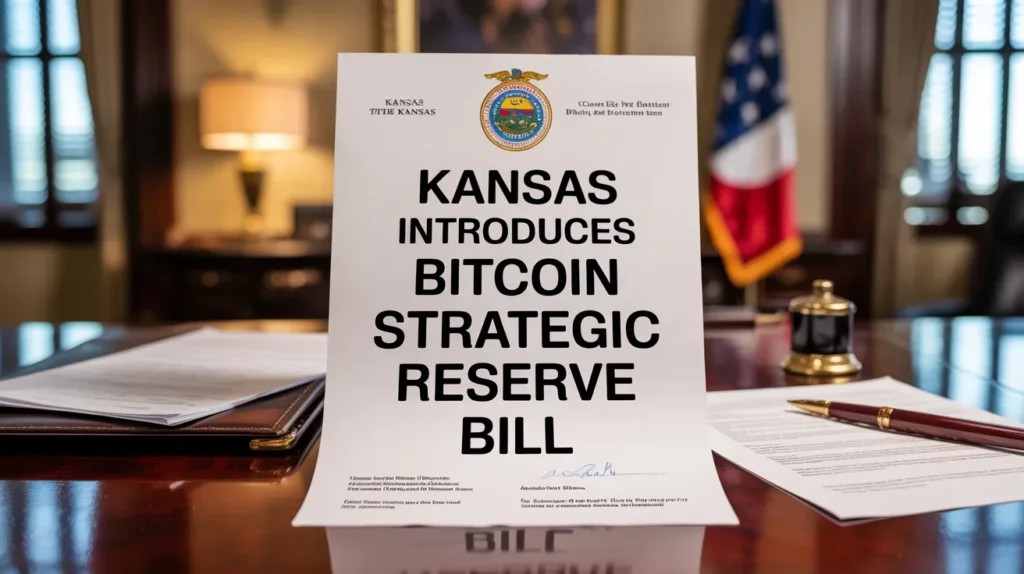
Kansas today, others tomorrow. Kansas has taken a notable step into the digital asset space with the introduction of a bill that could allow the state to formally gain exposure to Bitcoin. The proposal, now moving through the state legislature, seeks to establish a Bitcoin strategic reserve by permitting a portion of Kansas’ public trust funds to be invested in Bitcoin-related financial products. If passed, the legislation would authorize state fund managers to allocate up to 10% of eligible trust fund assets into Bitcoin exchange-traded funds (ETFs). Rather than holding Bitcoin directly, the bill opts for regulated investment vehicles, reflecting a cautious but deliberate approach to crypto exposure at the state level. “The bill would allow a capped allocation of state trust assets into Bitcoin ETFs, placing Kansas among states exploring digital assets as part of long-term reserve planning.” This move signals a broader shift in how public institutions are beginning to view Bitcoin—not just as a speculative asset, but as a potential component of diversified reserves. Bitcoin ETFs, approved at the federal level in the U.S. earlier in 2024, have made it easier for institutions to gain exposure without dealing with custody, private keys, or direct on-chain management. Key Takeaways Why Kansas Is Paying Attention to Bitcoin State trust funds are traditionally invested in low-risk assets such as bonds, equities, and money market instruments. The Kansas proposal does not abandon this conservative philosophy; instead, it introduces a ceiling that limits risk while allowing participation in an asset class that has shown long-term growth potential despite volatility. Bitcoin’s fixed supply and growing institutional adoption are key reasons lawmakers across several states are now debating similar measures. Supporters argue that limited exposure could serve as a hedge against inflation and currency debasement, especially as public funds look to preserve value over long time horizons. Kansas would not be acting in isolation. In recent months, multiple U.S. states have explored or proposed legislation related to Bitcoin reserves or crypto investments. While approaches differ—some favor direct holdings, others prefer ETFs—the underlying theme is the same: digital assets are increasingly part of serious policy discussions. Legislative Hurdles Remain Despite the attention the bill has drawn, it is far from guaranteed to become law. The proposal must still pass through committee reviews, potential amendments, and full legislative votes before reaching the governor’s desk. Lawmakers are expected to scrutinize risk management frameworks, compliance standards, and the potential impact on public finances. Critics are likely to raise concerns about Bitcoin’s price swings and whether public funds should be exposed to such volatility, even indirectly. Proponents counter that the 10% cap and use of ETFs provide safeguards that balance innovation with fiscal responsibility. A Signal to the Broader Market Even at the proposal stage, the Kansas bill sends a strong message. State-level interest in Bitcoin is no longer theoretical—it is becoming actionable policy. Each new bill adds pressure for clearer regulatory standards and encourages further institutional participation. Whether Kansas ultimately passes the legislation or not, the conversation itself reflects a changing attitude toward Bitcoin in the U.S. public sector. What was once dismissed as fringe technology is now being evaluated alongside traditional assets in state financial planning. If enacted, Kansas could become another reference point for states weighing how—and whether—to integrate Bitcoin into their asset allocation frameworks.
Circle CEO Jeremy Allaire Says Stablecoin Adoption Is Accelerating, With 40% Annual Growth

Stablecoin adoption is entering a faster phase of growth as global banks move beyond trials and into full-scale deployment, according to Circle CEO Jeremy Allaire. Speaking at the World Economic Forum in Davos, Allaire said the sector is expanding at roughly 40% per year, a pace that signals a clear shift from experimentation to real-world financial use. “Stablecoins have crossed the threshold from pilots to production,” Allaire told attendees, pointing to rising institutional participation and growing transaction volumes across global payment networks. His remarks reflect a broader change in how traditional finance views blockchain-based money. Once treated as a niche innovation, stablecoins are increasingly being integrated into mainstream banking operations, particularly for payments and settlement. Banks Move From Testing to Implementation For years, large financial institutions approached stablecoins cautiously, often limiting their involvement to sandbox environments and limited proofs of concept. That approach is now changing. Banks across North America, Europe, and parts of Asia are actively exploring stablecoin use for cross-border payments, treasury operations, and internal settlement. The appeal is straightforward. Stablecoins allow transactions to settle in minutes rather than days while significantly reducing costs associated with correspondent banking. These efficiency gains are becoming difficult for banks to ignore, especially as competition intensifies in global payments. Allaire emphasized that the current growth is being driven less by retail speculation and more by institutional demand. Payment providers and financial infrastructure firms are reporting steady increases in stablecoin transaction volumes, suggesting deeper integration behind the scenes. USDC Gains Ground in Institutional Finance USD Coin (USDC), Circle’s dollar-backed stablecoin, has been a major beneficiary of this trend. Data from Circle’s transparency disclosures shows a steady rise in institutional usage, with banks and large financial firms settling increasingly large transactions on-chain. Executives cite several factors behind USDC’s traction, including its regulatory-first design, frequent attestations, and compatibility with existing compliance frameworks. These features have made it easier for banks to justify adoption internally, especially as regulatory scrutiny around digital assets increases. The broader stablecoin market reflects similar momentum. Market capitalization has continued to climb, while monthly transaction volumes are now measured in the hundreds of billions of dollars. Analysts tracking the space expect these figures to rise sharply if current growth rates hold through 2025. Regulation Provides a Clearer Path Forward One key reason banks are becoming more comfortable with stablecoins is improving regulatory clarity. In Europe, the Markets in Crypto-Assets (MiCA) framework has established formal rules for issuing and managing stablecoins. In the United States, lawmakers and regulators are advancing proposals aimed at defining reserve requirements, disclosures, and oversight responsibilities. This progress has reduced uncertainty for compliance teams, allowing banks to move from observation to execution. Many large institutions have now formed dedicated digital asset units focused specifically on stablecoins and tokenized payments. “Clear rules are giving financial institutions the confidence to build,” Allaire noted, adding that regulation and innovation are no longer moving in opposite directions. Global Payments and Emerging Markets Beyond large financial centers, stablecoins are also attracting attention in developing economies. In regions where access to traditional banking is limited or cross-border payments are expensive, dollar-backed stablecoins offer a practical alternative. Remittance corridors are emerging as one of the earliest success stories. Stablecoins allow users to send value across borders quickly, often at a fraction of the cost charged by legacy providers. This utility-driven demand adds another layer to the market’s growth, distinct from trading or investment activity. At the same time, global payment systems are facing pressure to modernize. Blockchain-based settlement challenges the dominance of traditional correspondent networks by reducing intermediaries and operational friction. Many banks are now exploring hybrid models that combine existing infrastructure with stablecoin rails. Toward Widespread Financial Adoption Looking ahead, Allaire expects stablecoins to become a standard component of global finance rather than a specialized tool. He has suggested that most major financial institutions will participate in stablecoin ecosystems within the next five to seven years. This outlook is supported by rising infrastructure investment, improving interoperability between financial networks, and growing consumer exposure through bank-backed applications. Partnerships between fintech firms and traditional banks are accelerating this process, blending regulatory experience with technical expertise. While challenges remain, particularly around global coordination and risk management, momentum appears to be firmly on the side of adoption. As stablecoins continue to scale, their role in payments, settlements, and financial access is becoming harder to dismiss. Allaire’s 40% growth forecast underscores just how quickly this corner of crypto is moving into the financial mainstream—and how deeply it may reshape the way money moves around the world.