


Visa Expands Its Partnership With Stripe-Backed Bridge to Bring Stablecoin-Linked Cards to 100+ Countries by Year-End

Global payments giant Visa Inc. is widening its push into blockchain-based finance, announcing an expanded collaboration with Bridge, the stablecoin infrastructure firm acquired by Stripe in February 2025. The move will scale stablecoin-linked Visa cards to more than 100 countries by the end of the year, a sharp increase from the 18 markets where the product is already live. The partnership allows fintech companies and developers to issue Visa cards backed by stablecoin balances. Cardholders can spend those balances at over 175 million merchant locations worldwide wherever Visa is accepted, effectively bridging crypto holdings with everyday commerce. Crypto wallet providers including Phantom and MetaMask have already integrated the card functionality, enabling millions of users to convert stablecoins into point-of-sale purchases without manually off-ramping into fiat first. Key Takeaways Expansion Across Four Major Regions The expanded rollout will cover Europe, Asia Pacific, Africa, and the Middle East. If completed as planned, it would represent one of the broadest deployments of stablecoin-linked payment cards to date. Bridge provides the backend infrastructure that allows businesses to launch custom stablecoin programs tied to Visa cards. Through a partnership with Lead Bank, transactions made with these cards can now be settled onchain as part of Visa’s stablecoin settlement pilot. That pilot marks a significant shift from traditional card settlement systems, which typically rely on established banking rails and batch-based clearing processes. Stablecoin Settlement Moves Onchain Visa’s pilot enables issuers and acquirers to settle directly with Visa using stablecoins over supported blockchain networks. Lead Bank is one of the participating institutions, while Bridge supplies the stablecoin infrastructure layer facilitating these flows. The initiative is testing whether blockchain-based settlement can improve operational efficiency, expand settlement options for issuers, and speed up fund movement compared to conventional methods. It also evaluates how infrastructure providers like Bridge can simplify blockchain interaction for financial institutions that lack deep crypto-native expertise. Cuy Sheffield, Visa’s Head of Crypto, emphasized the strategic direction behind the expansion: He added: The settlement pilot builds on Visa’s broader blockchain initiatives over recent years, which have included USDC settlement experiments and integration efforts with crypto-native platforms. Custom Stablecoins Enter Card Programs Beyond card issuance and settlement, Visa is also assessing whether assets issued through Bridge could be supported in future payment flows across its network. This would introduce additional settlement pathways for partners seeking alternatives to traditional fiat-based processing. Zach Abrams, CEO and co-founder of Bridge, framed the collaboration as part of a longer-term financial infrastructure shift: That comment signals a growing institutional appetite for programmable money—stablecoins issued by businesses themselves rather than relying solely on third-party issuers. A Broader Institutional Push The announcement comes as Visa continues to post strong financial performance in its core payments business. The company reported 15% year-over-year revenue growth in its fiscal first-quarter 2026 results, reaching $10.9 billion, while maintaining a market capitalization above $600 billion. Even as its traditional card network remains dominant, Visa is steadily integrating blockchain-based tools into its settlement architecture. Rather than positioning stablecoins as a replacement for existing systems, the company appears to be building optionality into its network—allowing issuers and partners to choose between fiat and blockchain rails where appropriate. For the crypto sector, the expansion to over 100 countries significantly increases the potential reach of stablecoin spending. By embedding digital dollar equivalents directly into widely accepted card infrastructure, Visa and Bridge are lowering the friction between blockchain assets and everyday transactions. If successful, the model could accelerate mainstream stablecoin adoption—not through speculative trading, but through practical utility at checkout counters worldwide.
Eric Trump’s American Bitcoin Corp. Added 11,298 Bitcoin Miners, Expanding Its Mining Capacity by 12%
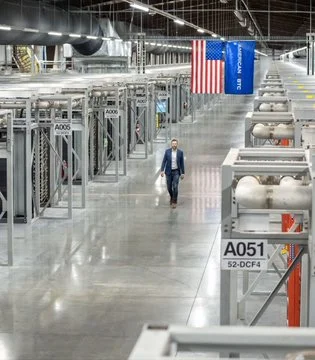
American Bitcoin Corp. (ABTC), the Trump family-backed mining firm co-founded by Eric Trump, is expanding its Bitcoin mining footprint with the purchase of 11,298 new ASIC machines, a move that will increase its owned capacity by roughly 12%. The machines are slated for delivery and deployment in March 2026 at the company’s Drumheller facility in Alberta, Canada. Once installed, the additional hardware will contribute 3.05 exahash per second (EH/s) to ABTC’s total capacity—equivalent to approximately 0.3% of the current global Bitcoin network hashrate. The expansion comes at a time when several publicly listed miners are redirecting capital and infrastructure toward artificial intelligence data center hosting. ABTC, however, is choosing to double down on Bitcoin production. Key Takeaways Capacity Push and Efficiency Gains With the new deployment, ABTC’s owned mining capacity will climb to 28.1 EH/s. Operational capacity, however, is projected to stand closer to 25 EH/s once the machines are energized. The gap reflects equipment that has been acquired but not yet installed or powered at active sites. Following the March 2026 rollout, the company expects to operate a total of 58,999 miners. The newly acquired ASIC units carry an efficiency rating of 13.5 joules per terahash (J/TH), compared to ABTC’s fleet average of 16 J/TH. Lower joule-per-terahash figures translate into reduced energy consumption per unit of computing power — a critical factor in mining economics, particularly amid volatile power markets. Based on current network difficulty and hashrate conditions, the added 3.05 EH/s could yield roughly 42 BTC per month, or approximately 515 BTC annually. At a Bitcoin price near $68,000, that production would imply potential gross monthly revenue of about $2.9 million and annual revenue near $35 million, before factoring in electricity costs, hosting fees, pool expenses, or shifts in mining difficulty. A Bitcoin Accumulation Model Alt text: Bitcoin symbol ABTC’s strategy centers on accumulating Bitcoin at production costs below spot market prices, rather than liquidating coins immediately to fund operations. The company reported that in the fourth quarter of 2025 it mined Bitcoin at a 53% discount to prevailing market prices. Management argues that expanding the fleet reinforces its structural cost advantage and long-term treasury strategy. At the end of 2025, ABTC held 5,401 BTC on its balance sheet. Since then, that figure has surpassed 6,000 BTC, positioning the firm among the more aggressive public accumulators of Bitcoin. For the full year 2025, ABTC generated $185.2 million in revenue but posted a net loss of $153.2 million. The bulk of the loss stemmed from a $227.1 million non-cash mark-to-market adjustment on its Bitcoin holdings under fair value accounting standards—an increasingly common source of earnings volatility for public crypto companies. Market Reaction: Shares Slip Below $1 Despite the capacity expansion, ABTC shares fell 7% following the announcement, sliding decisively below the $1 psychological threshold. The stock now trades approximately 76% beneath its 200-day exponential moving average of $3.95, underscoring the depth of the drawdown over recent months. Stocks that fall under $1 often face additional selling pressure due to delisting concerns and restrictions from institutional mandates. Technically, ABTC has broken below its lower Bollinger Band at $0.8844, indicating extreme oversold conditions. However, such signals can also reflect strong downside momentum. Immediate support sits near $0.8844, roughly 7% below current levels, with broader historical support visible in the $0.60–$0.80 range. The divergence between operational expansion and equity market performance highlights the tension facing mining firms in 2026: while Bitcoin production metrics may improve, equity valuations remain sensitive to broader market risk appetite, accounting volatility, and capital structure concerns. For ABTC, the path forward is clear—scale hashrate, lower production costs, and accumulate Bitcoin. Whether that strategy translates into a sustained equity recovery will depend on Bitcoin’s price trajectory, energy economics, and investor confidence in mining as a standalone business model rather than a proxy for AI infrastructure plays.
Deloitte Conducted the First Reserve Attestation for Tether’s USAT Stablecoin
In a development that could shift the way regulated stablecoins are perceived in the United States, Deloitte has issued the first-ever reserve attestation for Tether’s newly launched U.S. dollar‑pegged stablecoin, USAT. The attestation covers the backing of the token as of January 31, 2026—marking a notable moment in Tether’s ongoing effort to win institutional confidence and align more closely with U.S. regulatory expectations. Key Takeaways A Snapshot of USAT’s Reserve Validation The report, prepared by Deloitte under criteria set by the American Institute of Certified Public Accountants (AICPA) for asset‑backed, fiat‑pegged tokens, confirmed that USAT had $17.6 million in reserves backing 17.5 million tokens in circulation at the end of January. That leaves a slight excess of roughly $103,000, indicating the backing exceeded supply. USAT’s reserve composition is straightforward: about $3.65 million held in U.S. dollar cash and roughly $13.95 million in very short‑term reverse repurchase agreements collateralized by U.S. Treasury securities. Those repurchase positions matured in late January and early February and were managed through a registered U.S. broker‑dealer. The cash holdings were kept in bank and brokerage accounts that generally provide federal insurance protections, though some portions were above standard coverage limits. What the Attestation Does and Doesn’t Tell Us It’s crucial to understand that this engagement was an attestation rather than a full audit. Deloitte’s role was to assess whether the reserve report was fairly presented in accordance with the AICPA’s 2025 stablecoin criteria at a specific point in time. The firm did not examine how reserves are managed day‑to‑day, evaluate internal controls, or judge compliance with all federal, state, or local regulations. That distinction matters because a full audit would involve deeper scrutiny of financial systems, governance, and ongoing reserve practices—areas that regulators and institutional investors often demand for higher assurance. Tether CEO Paolo Ardoino has publicly stated that securing a broad, independent audit from a Big Four firm is a top objective, even as major accounting firms have historically avoided full audits of Tether’s main stablecoin, USDT. A Strategic Push Into Regulated Dollar Tokens USAT represents Tether’s calibrated re‑entry into the U.S. stablecoin market under a formal regulatory framework known as the GENIUS Act, which went into effect in July 2025. This law requires stablecoin issuers operating in the U.S. to hold high‑quality reserves and operate under federal oversight — a significant departure from Tether’s traditional practice with USDT, which has faced long‑standing scrutiny for its audit history and international orientation. Issued through Anchorage Digital Bank, USAT is structured to maintain a strict 1:1 peg with the U.S. dollar on the Ethereum blockchain. Anchorage, chartered in 2021 as the first federally regulated digital asset bank in the U.S., partnered with Tether to design a stablecoin that could satisfy Federal Reserve and regulatory expectations directly. In messaging surrounding the report, Tether has framed USAT as a blend of its global stablecoin experience with Anchorage’s U.S. regulatory standing, positioning the token as appealing to institutional and compliance‑focused market participants. Market Context and Competitive Backdrop USAT’s $17.6 million reserve base and initial market cap of roughly $20 million may seem modest when compared to the broader stablecoin landscape, where the total market cap approaches $300 billion and dominant tokens like USDT and Circle’s USDC alone account for the vast majority of supply. However, the significance of this announcement lies less in scale today and more in the compliance architecture it suggests for regulated dollar tokens moving forward. Circle has been working with Deloitte on its USDC reserve attestations since early 2023, giving it a head start in establishing audited confidence. Tether’s engagement of Deloitte for USAT—even at the attestation level—signals an effort to close that credibility gap in the regulated U.S. market. Looking Ahead Deloitte’s attestation does not fundamentally alter the structure of USAT’s reserve holdings, but it does provide a level of third‑party verification that Tether has historically struggled to secure from major accounting firms due to reputational and regulatory risk concerns. Whether this step will evolve into full audits for USAT or eventually extend to Tether’s broader stablecoin portfolio remains a key question for market watchers. For now, the endorsement from Deloitte adds a new dimension to the credibility of regulated stablecoins, offering reassurance to investors and institutions that demand transparent and independently confirmed backing for dollar‑pegged digital assets.