



Cross-border payments still suffer from friction in global finance. A payment sent on Tuesday morning may not arrive until Friday afternoon. Settlement windows also shut down on weekends, while correspondent banking networks charge fees at every stage of the process.
For teams handling international operations, these challenges are far more than technical inconveniences; they represent high financial costs, and that’s exactly why the stablecoin payment processor exists.
A stablecoin payment processor or gateway does what your bank does for card and wire payments, but on a blockchain. It accepts digital dollars (stablecoins), confirms the transaction, and settles the funds, often in under a minute, for a fraction of the cost.
In this guide, we break down exactly what a stablecoin payment processor is, how it works, why businesses are switching, and which processors are worth your attention.
Key Takeaways
- A stablecoin payment processor handles payments made in digital currencies like USDC or USDT, which are pegged to the US dollar.
- Real-world stablecoin payments hit $390 billion in 2025, more than doubling from 2024, and B2B payments drove 60% of that volume.
- The US GENIUS Act, signed in July 2025, now gives businesses a clear legal framework to adopt stablecoins with confidence.
What Is a Stablecoin Payment Processor?
A stablecoin payment processor sits between a payer and a recipient, accepting stablecoin transactions and either passing them through or converting them to fiat for settlement. The processor handles wallet generation, transaction monitoring, blockchain selection, and the off-ramp to a bank account.
The “stablecoin” part is important. Regular cryptocurrencies like Bitcoin can swing 10% in value in a single day due to market volatility. That makes them unreliable for everyday business payments. However, stablecoins solve that problem. One USDC (USD Coin) or one USDT (Tether) is always worth $1. It’s digital cash that doesn’t lose its value overnight.
According to McKinsey and Artemis Analytics, real-world stablecoin payments reached $390 billion annually based on December 2025 data, more than doubling from 2024. So whether you’re a freelancer getting paid by a US client from Nigeria or a manufacturer receiving bulk payments from Asia, a stablecoin payment processor makes that happen cleanly, quickly, and with a receipt on the blockchain.
How a Stablecoin Payment Processor Works
Stablecoin payment processors allow businesses to accept payments while enabling merchants to retain full control over their preferred settlement currency. Here is how it works, step by step:
1. Payment Initiation
Customers complete payments using their credit or debit cards through a simple and familiar checkout process. They do not need a crypto wallet, technical blockchain knowledge, or any understanding of stablecoins to make a transaction, giving them an experience comparable to traditional online payments.
2. Blockchain Settlement
Once the payment is initiated, the platform automatically converts the transaction into stablecoins and processes settlement directly on the blockchain. This happens within seconds to minutes, eliminating the need for banks, payment intermediaries, and lengthy multi-day settlement periods. The blockchain infrastructure also enhances transaction speed, transparency, and efficiency while reducing processing friction.
3. Merchant Fund Access
Merchants retain full control over how they receive and manage funds. They can choose to hold stablecoins directly for treasury management, cross-border transactions, or future payments, or instantly convert the funds into fiat currency for withdrawal to their bank account.
This flexible settlement model allows businesses to optimize liquidity while benefiting from faster and more efficient payment processing.
“My years in fintech and crypto have convinced me that stablecoins are the future of payments.” Anthony Yim, .
Why Businesses Are Moving to Stablecoin Payments
Stablecoins bridge the stability of traditional fiat currencies with the speed, accessibility, and flexibility of blockchain technology. The 2025 EY-Parthenon Stablecoin Survey of 350 corporates and financial institutions found that 70% of corporates would be more willing to adopt stablecoins if they were integrated with their existing ERP and treasury platforms.
Here are some reasons why businesses are increasingly interested in stablecoin payments:
The Cost Problem With Traditional Payments
Traditional international payments are expensive. A wire transfer costs about $20–$50 per transaction for you, plus receiving fees on the other side, and a hidden markup on the exchange rate.
Likewise, card networks charge about 2.9% plus a fixed fee per transaction. For international remittances, the average fee is 6.35%. In contrast, the fees charged by stablecoin processors range from 0.5% to 2%. On a $10,000 invoice, that difference is several hundred dollars every single time.
The Speed Problem With Traditional Payments
SWIFT wire transfers take two to five business days. ACH transfers take one to three days domestically and don’t work internationally at all. Cross-border payments often bounce through three to five correspondent banks before arriving.
Meanwhile, stablecoins settle in seconds to minutes. On Solana, one of the most popular blockchains for stablecoin payments, validators achieve finality in roughly 400 milliseconds.
The Geography Problem With Traditional Payments
Many emerging markets lack sufficient banking services. Businesses in Nigeria, Indonesia, Vietnam, and the Philippines regularly face delays and restrictions when sending or receiving international payments. Stablecoins work as long as you have an internet connection and a wallet. There’s no bank account required.
Programmability Creates New Business Opportunities
Beyond speed and lower costs, stablecoins deliver a feature that traditional payment rails simply cannot match: programmability. Businesses can use smart contracts to embed payment conditions directly into transactions and release funds automatically after delivery confirmation.
It can also split payments among multiple suppliers at once or instantly convert funds into local currency upon receipt. For treasury teams handling complex multi-currency supplier networks, this automation removes significant manual processes and reduces payment disputes.
Also Read: 10 Signs an Airdrop Is a Scam and How To Avoid Them
The Two Most Used Stablecoins for Business Payments
USDC (USD Coin)
USDC is issued by Circle and is fully regulated. The asset is audited monthly and backed by cash and US Treasury reserves. If you want a stablecoin with clean compliance credentials, USDC is the default choice for most Western businesses. Circle publishes monthly reserve reports, so you always know what’s backing your digital dollars.
USDT (Tether)
USDT is the most widely used stablecoin by trading volume. It has deep liquidity and is accepted on virtually every platform. The asset is particularly common for payments in Asia and Latin America. USDC and USDT together account for over 80% of the stablecoin market, which surpassed $305 billion in circulating supply in 2025.
Understand that aside from USDT and USDC, the stablecoin market includes a wide range of other digital assets designed to maintain price stability. For instance, Paxos, a Web3-focused financial technology company, issues USDP.
“Stablecoins are no longer limited to the Web3 space; they’re becoming a credible alternative for global business finance.”
Top Stablecoin Payment Processors in 2026
As per McKinsey, stablecoin-linked card spending grew 673% in 2025 to reach $4.5 billion. Let’s look at the top payment processors driving this rapid adoption.
UPay – Designed for global crypto transactions

Source: Upay.best
Founded in 2023, UPay focuses on building a complete digital asset management ecosystem for crypto holders by delivering a wide range of financial solutions. This includes payments, investments, and wealth management services.
As a stablecoin payment gateway, UPay enables businesses to accept digital currencies through its UPay Business API. Merchants can process payments in stablecoins such as USDT while the platform manages crypto-to-fiat settlements automatically. UPay also provides integrated card issuance and compliance infrastructure, allowing businesses to handle transactions more efficiently and securely.
The platform offers competitive pricing, with transaction fees starting as low as 1% for standard accounts and dropping to 0% for select premium tiers. Cross-border transaction fees typically range between 1% and 3%, making international payments more cost-effective for businesses and users alike.
Key Stablecoin Features:
- Stablecoin Payment Acceptance: UPay allows merchants to receive payments in stablecoins, including USDT, creating a smoother digital payment experience.
- Instant Fiat Conversion: The platform supports real-time conversion of stablecoins into fiat currencies, enabling users to complete everyday transactions without delays.
- Global Payment Reach: Through integration with settlement networks such as StraitsX, UPay supports stablecoin spending across millions of merchants worldwide.
UPay also places strong emphasis on compliance and regulation. The company holds recognized Money Services Business (MSB) licenses in both the United States and Canada while maintaining regulatory standards across its other operational regions.
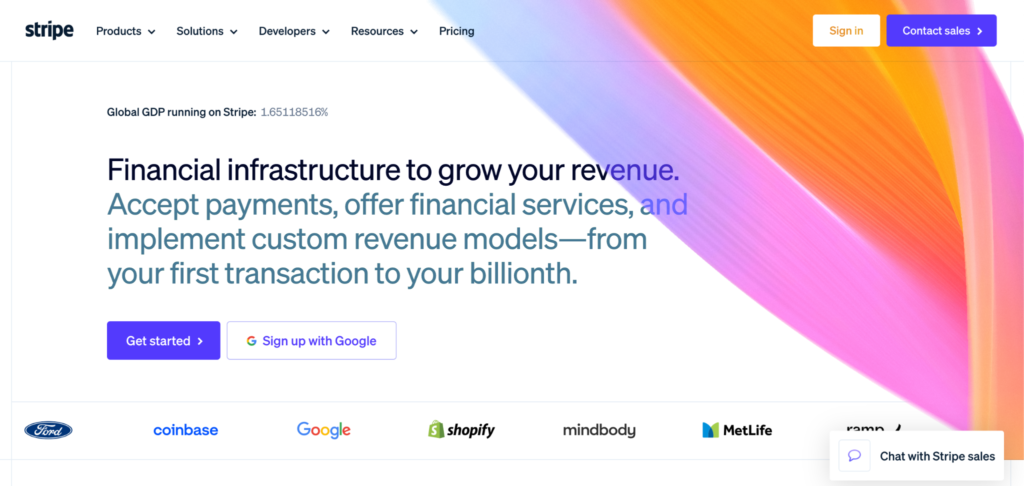
Stripe (via Bridge) – Ideal for businesses already on Stripe
Source: Stripe.com
Stripe, the financial services platform that helps all types of businesses accept payments, acquired Bridge.xyz for $1.1 billion in October 2024. Bridge processed over $5 billion in annual volume before the acquisition. Today, Stripe offers stablecoin acceptance natively inside its existing checkout flow.
For US businesses already using Stripe, this is the easiest entry point. Fees start at 1.5%, setup takes about five minutes, and you don’t need to understand blockchain at all. Stripe handles everything behind the scenes.
BVNK – Suitable for enterprise-scale international payments

Source: bvnk.com
BVNK is based in London and focuses on enterprise B2B payments. It processes over $30 billion in annual volume, and it safeguards 100% of customers’ funds against insolvency. Mastercard also plans to partner with BVNK, which signals the level of institutional trust it carries.
If you’re a fintech, marketplace, or large business that needs cross-border settlement with compliance built in, BVNK is worth a serious look. The firm is regulated and authorized by the Malta Financial Services Authority (MFSA) and markets in crypto-assets (MiCA).
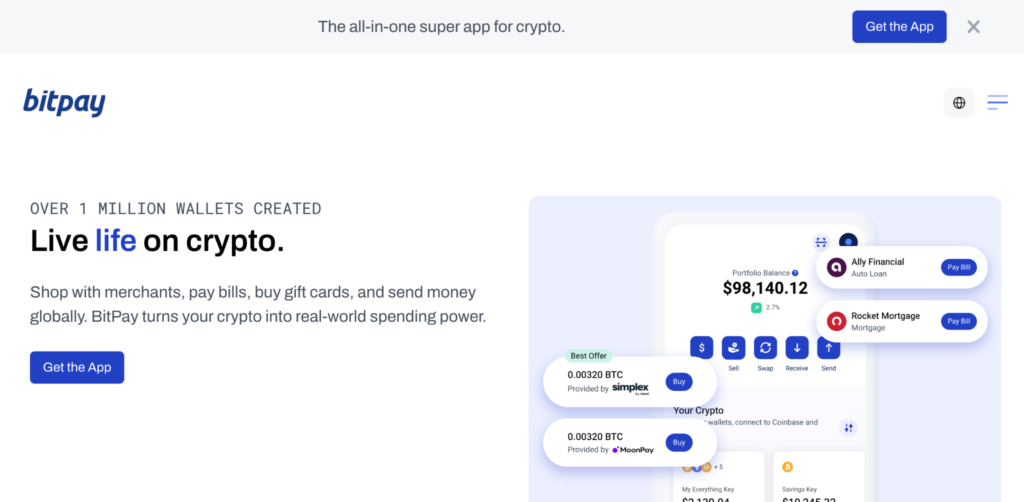
BitPay – Ideal for US-based consumers
Source: bitpay.com
BitPay has been operating since 2011, making it one of the oldest crypto payment processors still running. The platform supports USDC, USDT, and several other assets, with integrations for Shopify, WooCommerce, and other major platforms.
BitPay handles compliance and handles conversion to fiat on your behalf. It’s a reliable, battle-tested option for merchants who want stablecoin acceptance without managing wallets themselves.
BitPay, Inc. is registered as a Money Services Business (MSB) with the U.S. Department of the Treasury’s Financial Crimes Enforcement Network (FinCEN).
What the GENIUS Act Means for Your Business
For a long time, businesses held back on stablecoins because of regulatory uncertainty. That changed on July 18, 2025, when the US government signed the GENIUS Act into law, the first dedicated federal framework for stablecoins in America.
Here’s what it means:
- Stablecoin issuers must hold 1:1 reserves for every stablecoin they issue. If 1 billion USDC exists, Circle must hold $1 billion in cash or equivalent assets.
- Issuers must have a federal license and submit to regular audits.
- Anti-money laundering and identity verification standards are now mandatory.
“The GENIUS Act introduces the first comprehensive regulatory framework specifically for stablecoin issuers, bringing clarity and legitimacy to the digital asset space.”
For businesses, this is encouraging news. You’re no longer entering an uncertain legal situation when you accept USDC. The rules are clear, the oversight is real, and the issuers you work with are accountable. The EU has done the same through its MiCA regulation. This regulatory clarity is one reason stablecoin B2B volumes jumped 733% in 2025.
What to Consider Before Choosing a Stablecoin Payment Processor
Not every processor fits every business. Here are the main factors to weigh:
- Settlement preference: Do you want to hold stablecoins or convert to your local currency automatically? Upay, BVNK, and Stripe’s Bridge support hybrid approaches where you keep some in stablecoins and auto-convert the rest.
- Volume and fees: Upay offers as low as 0% for some tiers, which is suitable for small merchants. BVNK’s 0.3% floor is better at enterprise scale.
- Geography: USDC is dominant in the US and Europe. USDT is more common for counterparties in Asia and Latin America. Make sure your processor supports what your customers actually use.
- Compliance: If you handle large volumes or operate in regulated industries, choose a processor that manages KYC, KYB, and Travel Rule reporting automatically, like BVNK or Stripe.
- Existing infrastructure: If you already use Stripe for card payments, enabling stablecoins through their Bridge integration is the path of least resistance.
Also Read: Best Stablecoins for Beginners in 2026: Safe and Simple Ways to Start in Crypto
Conclusion
Stablecoin payment processors are solving real problems that businesses have dealt with for decades: slow international transfers, high fees, and limited access to global markets. The technology is no longer experimental. McKinsey, Visa, Stripe, and Mastercard are all building on the same rails.
If you’re sending or receiving international payments regularly, accepting a stablecoin payment processor into your stack could cut your transaction costs in half and eliminate days of settlement time. The GENIUS Act removed the last major excuse for hesitation; the legal framework is now clear.
The businesses that start testing this infrastructure today will have a significant advantage when stablecoin rails become the default for global commerce. And based on the numbers, such as $390 billion in real payment volume in 2025 and growing, that shift is already well underway.
Frequently Asked Questions
What is a stablecoin payment processor?
A stablecoin payment processor is a service that lets businesses accept and send payments in stablecoins; digital currencies like USDC or USDT that are pegged 1:1 to the US dollar. The processor handles the technical work like generating payment addresses, monitoring transactions on the blockchain, and settling funds to your bank account or digital wallet.
Is it safe to use a stablecoin payment processor?
Yes, it is safe when you use a reputable processor. After the US GENIUS Act (July 2025), licensed stablecoin issuers must hold 1:1 reserves and submit to regular audits. Processors like Upay, Stripe, BVNK, and BitPay manage compliance and follow regulations on your behalf.
What stablecoins should my business accept?
USDC is the safest choice for regulatory compliance; it’s fully audited and backed by US Treasury reserves. USDT has more liquidity and is preferred by customers in Asia and Latin America. Most processors let you accept both.
How long does a stablecoin payment take to settle?
Most stablecoin transactions settle in seconds to a few minutes, depending on the blockchain used. Solana settles in under a second while Ethereum typically takes one to two minutes. The difference is vast compared to international wire transfers.
Can small businesses use a stablecoin payment processor?
Yes. Platforms like Upay and NOWPayments are designed for smaller businesses and have simple setups. You don’t need a developer or a blockchain background to get started.