


USDT, the ticker symbol for Tether, is the most widely used stablecoin in the world. It tracks the value of the US dollar one to one, which makes it a popular way for crypto traders to hold value without leaving the crypto ecosystem entirely.
But there comes a point when you need real money in your bank account, not a digital dollar sitting in a wallet. That is when the question of how to convert USDT to fiat instantly becomes urgent.
In 2026, the process is faster than it has ever been. Several platforms now offer same-day and even real-time conversion from USDT to local currencies including USD, EUR, GBP, NGN, AED, and dozens of others. The options range from centralised exchanges with bank transfer integrations to peer-to-peer marketplaces where buyers purchase your USDT directly, to crypto debit cards that convert at the point of sale.
But fast does not always mean cheap, and cheap does not always mean safe. Each conversion method carries its own fee structure, processing time, platform risk, and regulatory context.
Choosing the wrong method can cost you more than you expect, delay your funds, or in some cases get your account flagged.
This article covers every method available for instant USDT to fiat conversion in 2026, breaks down the real costs, compares the fastest platforms, and tells you exactly what to do and what to avoid when you need your money quickly.
Key Takeaways
- USDT-to-fiat conversion is faster in 2026 than it has ever been, with same-day and near-instant options available through centralised exchanges, P2P platforms, and crypto debit cards.
- The conversion itself on a centralised exchange is almost always instant the delay comes from the bank withdrawal step, not the conversion.
- P2P platforms are the most effective option for users in markets where bank integration with exchanges is limited, and trades can complete in under 30 minutes with a responsive counterparty.
- Sending USDT on the wrong network is one of the most costly and preventable mistakes in the conversion process.
- Only use licensed, regulated platforms that require KYC verification. Unverified platforms carry operatio
- nal and regulatory risks that outweigh any convenience benefit.
What Is USDT and Why People Convert It to Fiat
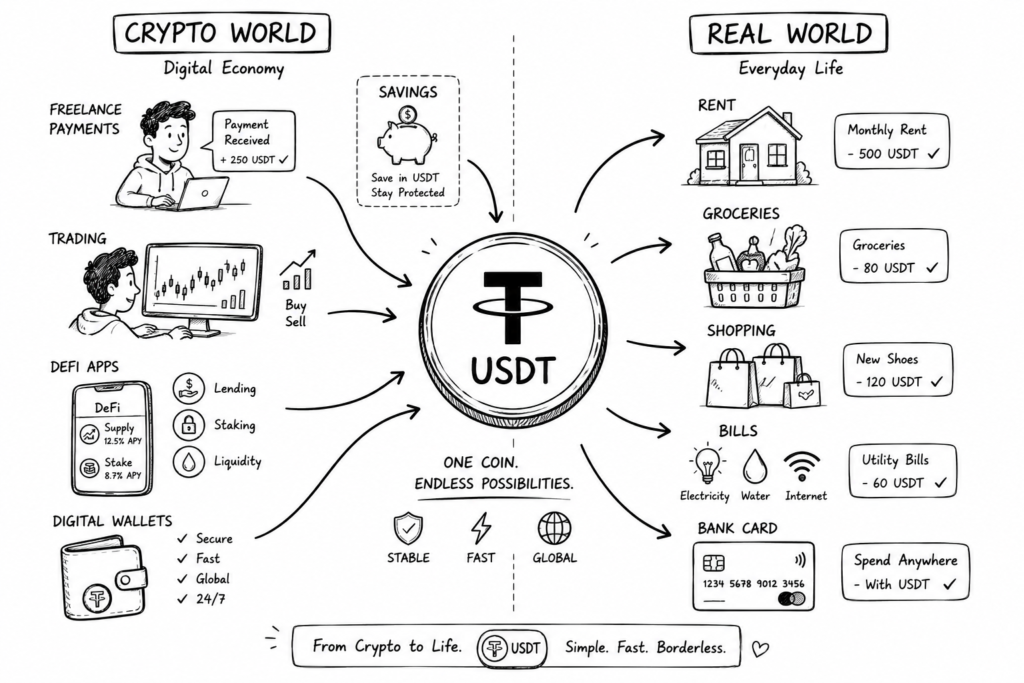
USDT is a stablecoin issued by Tether Limited. Each USDT token is pegged to one US dollar, meaning its value does not fluctuate the way Bitcoin or Ethereum does. Tether claims to back each token with equivalent reserves held in cash, cash equivalents, and other assets.
Tether (USDT) is the largest stablecoin by market cap and one of the most traded assets in all of crypto by daily volume.
People hold USDT for several reasons. Traders use it as a safe harbour during market volatility when Bitcoin drops sharply, moving funds into USDT preserves the dollar value without requiring a full exit from crypto.
DeFi users hold USDT to provide liquidity in lending protocols and decentralised exchanges and earn yield. Cross-border workers and freelancers receive USDT as payment because it transfers faster and more cheaply than traditional wire transfers across borders.
Eventually, most of these users need to convert USDT back to their local currency. A freelancer in Nigeria needs Nigerian naira in their bank account to pay rent. A trader in the UK wants to take profits as British pounds. A remittance recipient in the Philippines needs pesos to cover daily expenses. The conversion from USDT to fiat is the final step that connects the crypto economy to the real world, and how quickly and cheaply that step happens matters enormously to real people.
The challenge is that this process sits at the intersection of crypto infrastructure and traditional banking, two systems that were not built to work together. Bridging them instantly requires either a platform with direct bank integrations, a willing buyer on the other side of a peer-to-peer trade, or a card that handles the conversion at the moment of purchase.
How Instant USDT to Fiat Conversion Works
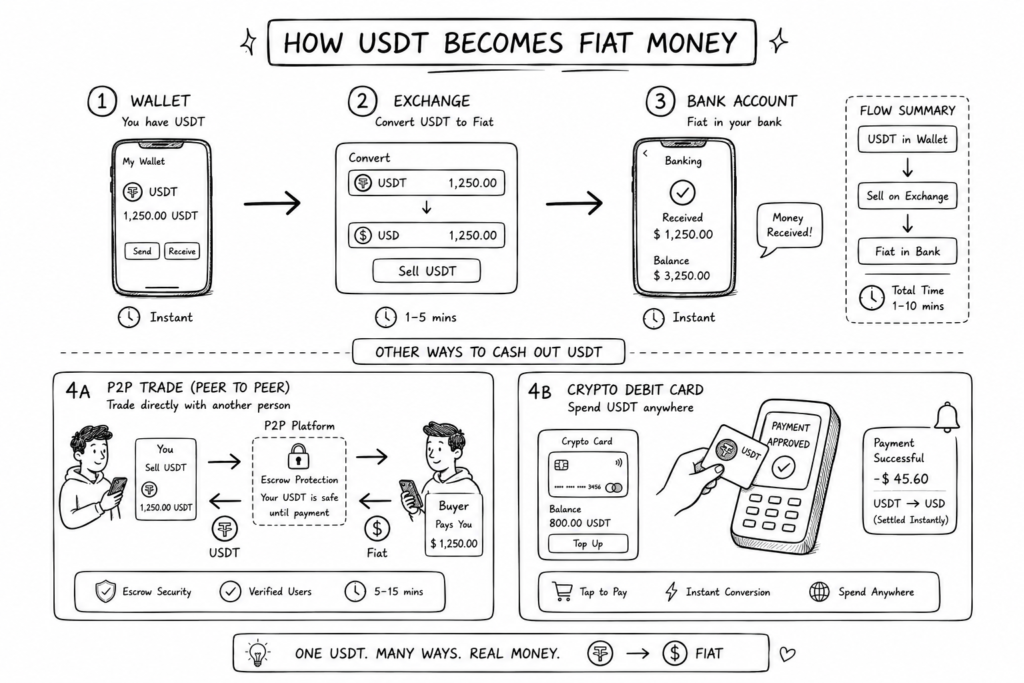
Understanding how the conversion works helps you choose the right method and avoid unexpected delays.
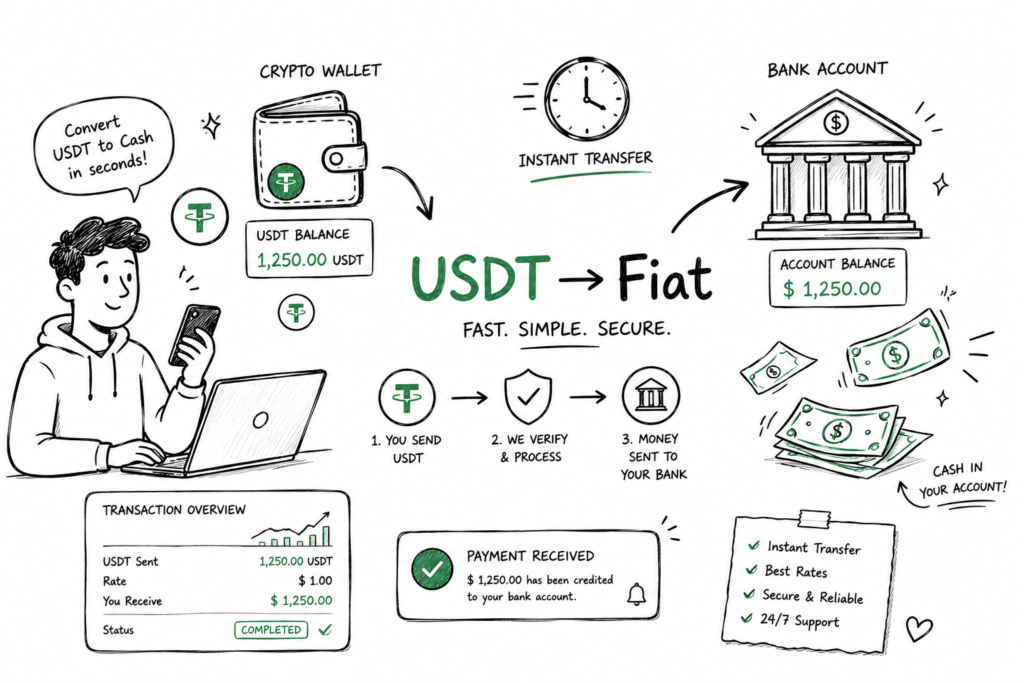
When you convert USDT to fiat on a centralised exchange, the exchange acts as the buyer. You sell your USDT to the platform at the current USDT/USD or USDT/local currency rate, the platform credits your account with fiat, and you then withdraw that fiat to your bank account.
The conversion itself from USDT to fiat balance on the platform is usually instant or near-instant. The delay, when there is one, almost always comes from the bank withdrawal step, not the conversion step.
On peer-to-peer platforms, the process is different. You list your USDT for sale at a price you set, a buyer accepts the offer and sends fiat directly to your bank account or mobile wallet, and once you confirm receipt, the platform releases your USDT to the buyer.
The USDT is held in escrow by the platform during this process, which protects both sides. Speed here depends entirely on how quickly the buyer sends the fiat payment.
Crypto debit cards work differently again. Your USDT sits in a wallet linked to the card. When you make a purchase or ATM withdrawal, the card provider converts the exact amount of USDT needed into local currency at that moment and processes the transaction.
The conversion is instant from the user’s perspective, though the underlying mechanics involve the card provider selling USDT on your behalf in real time.
Each of these mechanisms has different implications for fees, speed, and risk. The sections below cover each in detail.
Method 1: Centralised Crypto Exchanges
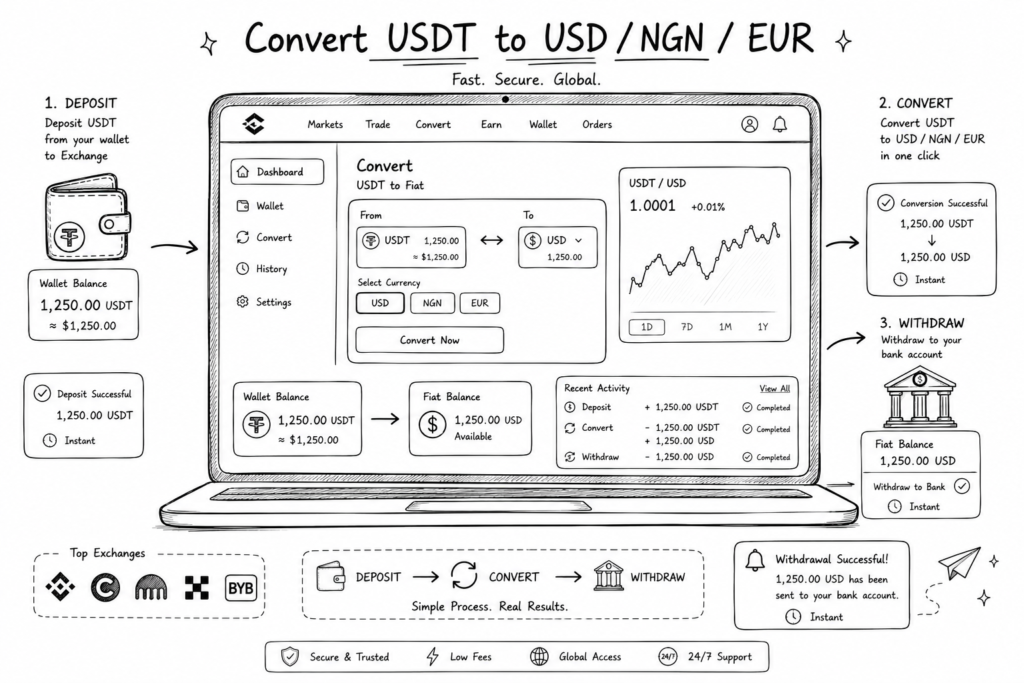
Centralised exchanges are the most commonly used method for converting USDT to fiat and offer the fastest conversion times for most users.
Platforms like Bybit, Coinbase, Kraken, and OKX all support USDT-to-fiat conversion with varying speeds and fee structures.
The process on most centralised exchanges follows the same basic steps. You deposit your USDT to the exchange if it is not already there, navigate to the sell or convert section, select USDT as the asset you are selling and your target fiat currency, confirm the transaction, and the fiat balance appears in your exchange account almost immediately. Withdrawing that fiat balance to your bank account is the step that takes time.
Binance is the largest exchange by volume and offers one of the fastest withdrawal systems globally. Its P2P marketplace allows you to convert USDT to local fiat currencies and receive payment directly to your bank account, mobile money, or payment app.
For users in supported markets, Binance also offers direct bank withdrawal of fiat balances with processing times that range from a few minutes to 24 hours depending on the bank and the country.
Coinbase serves primarily US, UK, and European users and offers instant conversion of USDT to USD, GBP, or EUR within the platform. US users with Coinbase accounts linked to a bank can use instant cashout, which moves funds to a linked debit card almost immediately for a small fee typically 1.5% of the transaction. Standard ACH bank transfers are free but take one to three business days.
Kraken is well-regarded for its withdrawal reliability and serves users in the US and Europe. USDT conversion to USD, EUR, GBP, or CAD happens instantly within the platform, and Kraken’s bank withdrawal speeds are among the fastest of the major exchanges for European users using SEPA transfers, which typically settle within hours.
Bybit and OKX cater more to international users and have strong coverage across Asia, the Middle East, and Africa. Both platforms offer fiat withdrawal through a combination of bank transfer, third-party payment processors, and their own P2P systems. Processing times are competitive for their target markets.
The main fee components on centralised exchanges are the trading or conversion fee, which typically runs between 0.1% and 0.5% of the transaction value, and the withdrawal fee, which varies by currency and withdrawal method.
Always check both fees before you convert, because a platform with a low trading fee but a high withdrawal fee can end up costing more than a platform with a slightly higher trading fee and lower withdrawal costs.
Method 2: Peer-to-Peer (P2P) Platforms
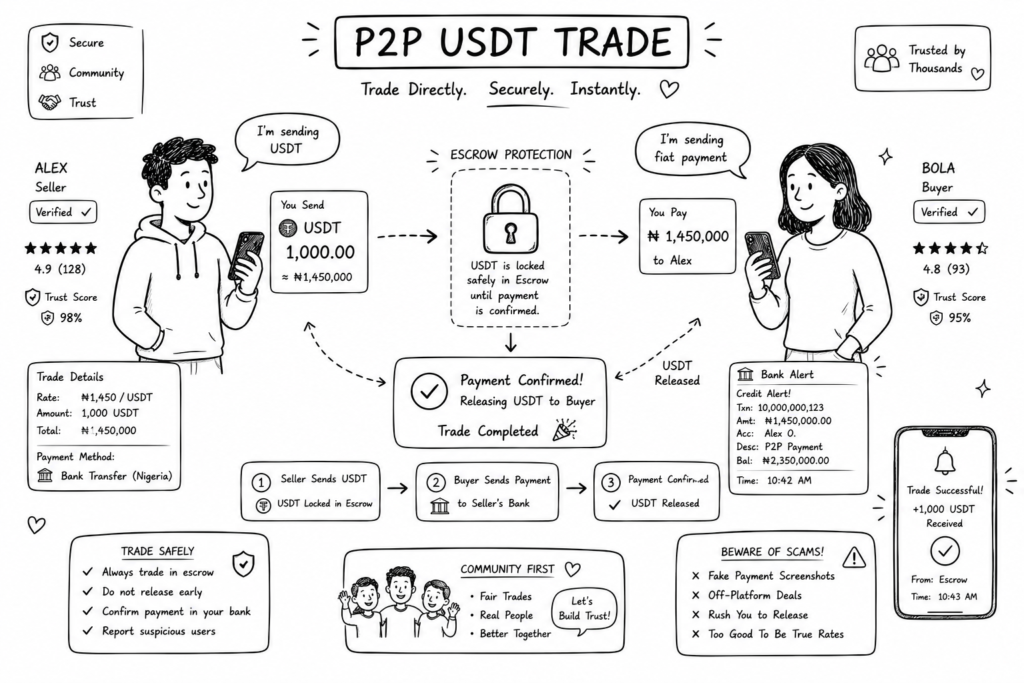
Peer-to-peer platforms connect USDT sellers directly with buyers and are particularly valuable in countries where direct bank integration with centralised exchanges is limited or unavailable. In markets like Nigeria, Ghana, Kenya, Pakistan, Vietnam, and Venezuela, P2P is often the fastest and most accessible method for converting USDT to local fiat.
On a P2P platform, you select an offer from a buyer who is willing to purchase your USDT at a posted rate, confirm the trade, and send your USDT into the platform’s escrow system.
The buyer then sends fiat to your specified payment method bank transfer, mobile money, cash deposit, or a payment app like M-Pesa or PayPal and once you confirm that the fiat has arrived, the escrow releases your USDT to the buyer.
The entire process, when both parties respond quickly, can take as little as five to fifteen minutes. The rate offered by buyers on P2P platforms sometimes runs slightly above the market rate, particularly for high-demand currencies, which means sellers occasionally get a better effective rate than they would on a centralised exchange.
In some markets this premium is significant sellers of USDT in Nigeria’s naira market, for example, have historically received rates several percentage points above the official exchange rate because of strong local demand.
Binance P2P is the most widely used platform globally and supports hundreds of fiat currencies and payment methods. However, as of the time of writing, Binance P2P is not supported in Nigeria.
Bybit, Paxful, and Remitano are strong alternatives in specific regional markets, while OKX P2P is well-established across Asia and the Middle East.
The main risk with P2P trading is counterparty behaviour. Scams do occur, and the most common form involves a buyer claiming they sent payment when they did not, or sending a reversible payment like a bank transfer that gets cancelled and then disputing the trade after receiving the USDT.
To reduce this risk, trade only with buyers who have high completion rates (above 95%), a large number of completed trades, and positive reviews.
Use the platform’s dispute system if anything goes wrong, and never release USDT from escrow until you have confirmed the fiat payment in your account, not just a payment notification, but the actual funds.
Method 3: Crypto Debit Cards
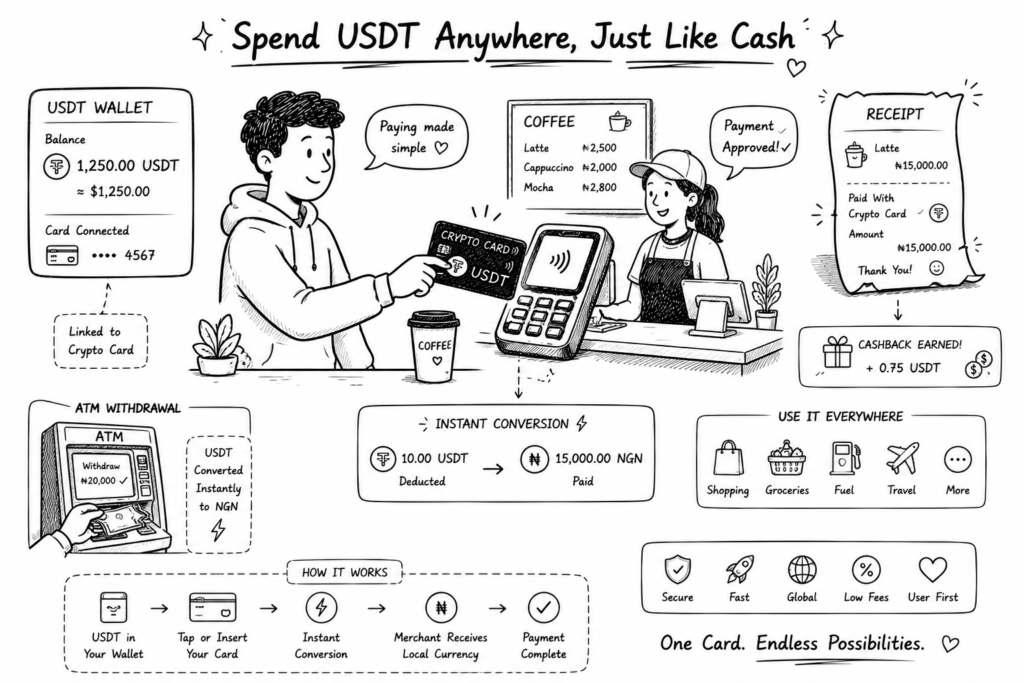
Crypto debit cards offer the smoothest conversion experience for everyday spending because they eliminate the withdrawal step entirely. Instead of converting USDT to fiat and then spending the fiat, the card handles the conversion at the moment of the transaction.
How it works is straightforward. You load USDT into the card’s associated wallet. When you use the card to make a purchase at any merchant that accepts Visa or Mastercard which is essentially everywhere the card provider converts the exact amount of USDT needed into the local currency and processes the payment in real time. When you withdraw cash from an ATM, the same conversion happens at the point of withdrawal.
Crypto.com’s Visa card is one of the most widely used in this category. It supports USDT and several other cryptocurrencies, offers varying cashback rates depending on the card tier, and is available in most major markets. The conversion happens at the real-time market rate with a spread that varies by tier.
Bybit Card, Binance Card, and Nexo Card offer similar functionality with different fee structures and availability. The Nexo Card is distinctive in that it allows users to spend against their crypto balance without converting, essentially treating crypto as collateral for spending though USDT holders are more likely to prefer direct conversion given its stable value.
The main cost of crypto debit cards is the conversion spread, which is the difference between the rate the card provider gets when it sells your USDT and the rate it passes on to you.
This spread is typically between 0.5% and 2% depending on the provider and the tier of card you hold. Some cards also charge monthly fees, ATM withdrawal fees, and inactivity fees. Read the full fee schedule before choosing a card, as the headline cashback rate can obscure total costs.
ATM withdrawals with crypto debit cards are available in most countries but tend to carry higher fees than point-of-sale purchases. Limits also apply most cards cap daily ATM withdrawals at $1,000 to $2,500 equivalent depending on verification level and card tier.
Method 4: Instant Payment Apps and Third-Party Processors
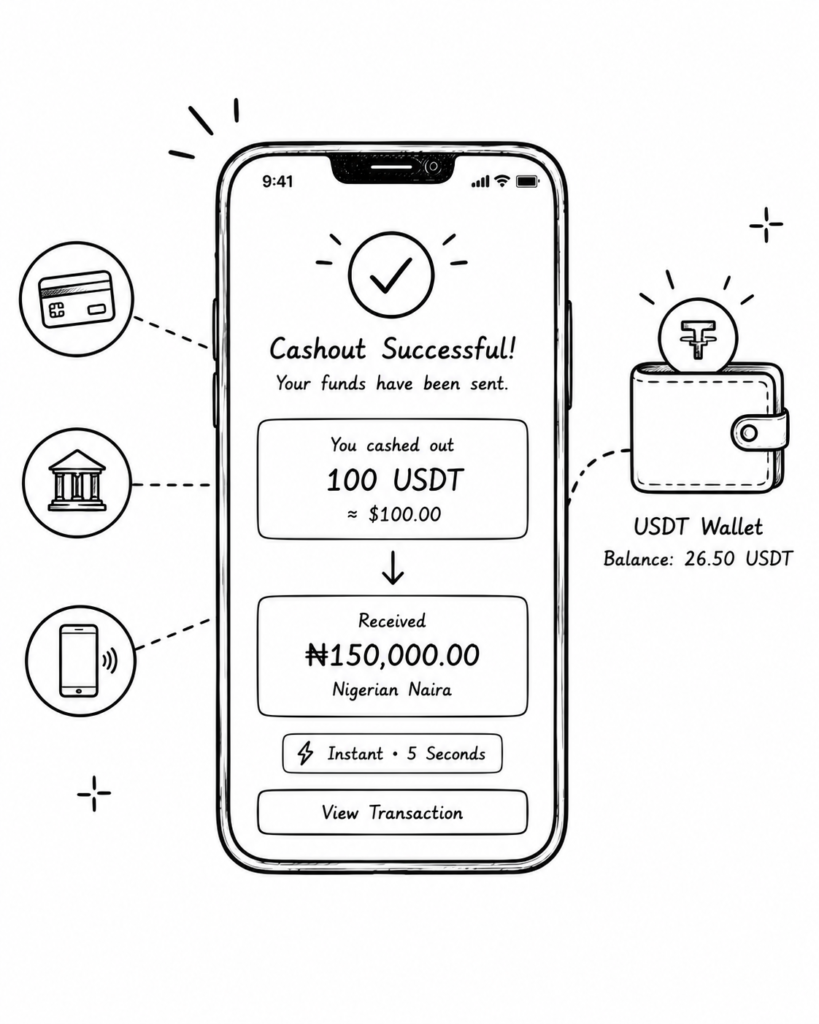
A growing number of payment apps and third-party processors now support direct USDT-to-fiat conversion without requiring a full exchange account. These services target users who want a simpler experience than a traditional exchange provides.
Transak, MoonPay, and Banxa are third-party on and off-ramp providers that integrate with wallets, DeFi platforms, and apps to allow direct USDT-to-fiat conversion. You connect your wallet, select the amount of USDT you want to convert, choose your payout method bank transfer, debit card, or in some cases PayPal and the service processes the conversion.
Fees tend to be higher than centralised exchanges, often running between 1.5% and 3.5%, but the convenience and the simplified interface are the main value proposition.
PayPal itself added crypto functionality in recent years and allows US users to convert supported cryptocurrencies though USDT support varies by region and has had different availability over time. Check current PayPal support for USDT in your region before counting on this as an option.
Revolut, the digital banking platform, supports crypto conversion for users in supported markets including the UK and much of Europe. You can hold USDT in a Revolut crypto wallet and convert it to GBP, EUR, or other currencies supported on the platform, with the fiat landing in your Revolut account immediately. From there, spending or withdrawing to a linked bank account is the same as any other Revolut balance.
Strike, primarily available in the US and El Salvador, offers Bitcoin-based payments rather than USDT, but its model of instant conversion at the point of transaction is the same principle.
For USDT specifically, Strike is not the primary tool, but it illustrates the direction the industry is moving toward invisible conversion that happens in the background.
USDT Conversion by Region
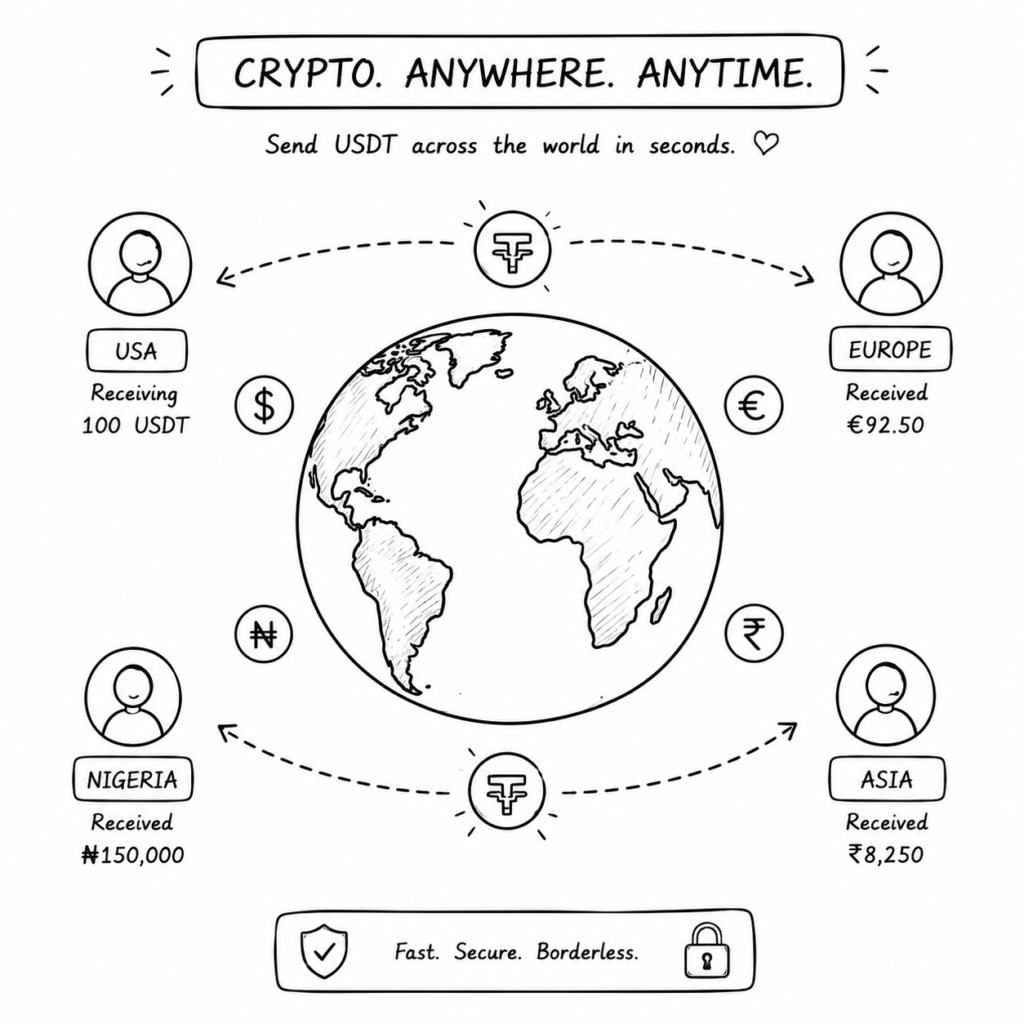
The best method for converting USDT to fiat depends significantly on where you are located. Platforms, payment methods, and regulatory environments vary by country.
In the United States, Coinbase and Kraken are the most regulated and reliable options. Gemini is also well-regarded for US users. Bank transfers via ACH are the standard withdrawal method, and instant cashout to a debit card is available on Coinbase for a fee. The US has the most developed fiat off-ramp infrastructure of any single market.
In the United Kingdom and Europe, Kraken’s SEPA and Faster Payments integrations make it the fastest option for GBP and EUR withdrawals. Revolut provides a strong alternative for European users who already have a Revolut account. Coinbase also serves UK and EU users effectively.
In Nigeria, Ghana, and other West African markets, Bybit P2P and local alternatives such as Remitano and Yellow Card dominate because of their support for mobile money and local bank transfers. This P2P market is one of the most liquid in the world, particularly for the NGN market, due to local banking restrictions.
In the United Arab Emirates, Rain and BitOasis are locally licensed exchanges with AED withdrawal support. Bybit and OKX have significant user bases in the UAE and support AED through their P2P systems. The UAE’s regulatory framework under VARA (Virtual Assets Regulatory Authority) has made it one of the more structured markets for crypto-to-fiat conversion.
In Southeast Asia Philippines, Vietnam, Thailand, Indonesia Binance P2P is the dominant platform. Local payment apps and mobile wallets are the preferred fiat payout method, and conversion times are competitive.
In Latin America, Binance P2P and Bitso (for Mexican peso conversions) are the primary options. Brazil has a growing number of licensed local exchanges that support BRL withdrawals directly.
Beyond the major exchanges and P2P platforms, a specialized category of dedicated off-ramp services is emerging to provide localized, faster conversion services.
Regional and Dedicated Off-Ramp Platforms
Alongside the large global P2P marketplaces and centralised exchanges, a newer category of platforms has emerged specifically to solve the last-mile problem of converting USDT into local fiat currency.
Platforms like Spenda and Xpend sit in this category. They are not general-purpose exchanges, and they are not global P2P marketplaces with thousands of buyers and sellers across dozens of countries. They are purpose-built off-ramp services designed to move USDT into a specific local currency, through local payment methods, as quickly as possible.
The distinction matters because the experience on these platforms is fundamentally different from using Binance P2P or a centralised exchange.
When you use Binance P2P, you are navigating a global marketplace where you need to find a suitable buyer, assess their trade history, negotiate or accept a rate, and wait for them to respond.
When you use a dedicated off-ramp platform, the process is closer to a direct service you initiate a conversion, the platform or its liquidity network handles the other side, and the fiat lands in your local bank account or mobile wallet with minimal back and forth.
How These Platforms Work
The mechanics vary slightly between platforms, but the core flow is consistent. You connect your crypto wallet or paste a receiving address, enter the amount of USDT you want to convert, select your preferred local payment method which might be a bank account, a mobile money wallet, or a payment app specific to your country and confirm the transaction.
The platform locks in a rate, you send the USDT, and the fiat is disbursed to your specified account. Some platforms handle this in a fully automated way with no human counterparty involved. Others use a hybrid model where liquidity providers sit on the fiat side and fulfil orders as they come in.
Settlement times on these platforms are one of their strongest selling points. For markets where traditional P2P trades can take 30 to 60 minutes because you are waiting on a human counterparty, dedicated off-ramp platforms often complete the full conversion of USDT sent to fiat received in under 10 minutes for standard amounts.
For users who need to convert regularly and cannot afford to wait on an unreliable counterparty, that reliability is worth a great deal.
1. Xpend
Xpend is a Nigerian fintech platform that lets USDC and USDT holders spend their stablecoins directly without converting to naira through P2P first.
The platform runs entirely through WhatsApp, Nigeria’s most widely used communication app with over 51 million active users, and a web app at app.justxpend.ai. You deposit USDC or USDT into your Xpend wallet, and from that point you can pay electricity bills, buy airtime and data across all major Nigerian networks, renew DStv, GOtv, and Startimes subscriptions, raise and receive invoices, send gifts, and transfer money.
Xpend requires full KYC verification, government-issued ID, BVN, phone number, and email before you can deposit or transact. The platform is available on the AppStore and accessible via website.
Best for: Nigerian USDT and USDC holders who want to pay bills, buy airtime, send invoices, and manage everyday payments directly from their stablecoin balance without converting to naira through P2P.
2. Spenda
Spenda operates as a crypto off-ramp platform focused on fast stablecoin-to-fiat conversion for users in Nigeria. The platform is built around simplicity. Its interface is designed for users who want to convert USDT to local currency quickly, without the complexity of a full exchange account or the uncertainty of a P2P marketplace.
Spenda supports local bank transfers and targets markets where stablecoin adoption is high, but traditional banking infrastructure makes direct exchange withdrawals slow or unreliable. The platform offers competitive rates and a transparent fee structure, making it easier for users to calculate the actual cost of a conversion before committing.
As an African crypto to fiat and payment app, Spenda also provides transparent, low fee transactions across its services. Creating a Naira Verve virtual card comes with a one time issuance fee of ₦500, while physical cards can be requested for ₦2,000. Bank transfers attract minimal flat fees. For example, a ₦10,000 transfer incurs only a ₦20 fee. In addition, depositing cryptocurrency such as USDT into a Spenda wallet is completely free of charge.
Fastest P2P Platforms Compared
Different platforms lead in different regions and for different use cases. Here is how the main options compare on the metrics that matter most for instant conversion:
- Binance offers the broadest global coverage, the largest P2P marketplace, and competitive fees (0.1% trading fee). Withdrawal speed to bank accounts varies by country but is among the fastest globally for supported markets. Best for users outside the US who want maximum flexibility.
- Coinbase is the most reliable option for US users. Instant cashout to a linked debit card costs 1.5% but delivers funds within minutes. Standard bank transfers are free but slower. Best for straightforward USD conversion in the US.
- Kraken leads for European users who need fast EUR or GBP withdrawals. SEPA withdrawals typically complete within hours. Fees are competitive and the platform has a strong regulatory track record. Best for EU and UK users.
- Crypto.com leads for card-based spending. The conversion is instant at the point of purchase. Best for users who want to spend USDT directly rather than withdraw to a bank.
- Binance P2P or Paxful leads for users in African and Asian markets where bank integrations with exchanges are limited. Speed depends on the counterparty but trades typically complete in under 30 minutes. Best for NGN, GHS, KES, PKR, and similar currencies.
- Transak and MoonPay lead for simplicity. Higher fees but easier onboarding and no exchange account required. Best for occasional users who need a one-time conversion without setting up a full exchange account.
Fees Breakdown: What Instant Conversion Actually Costs
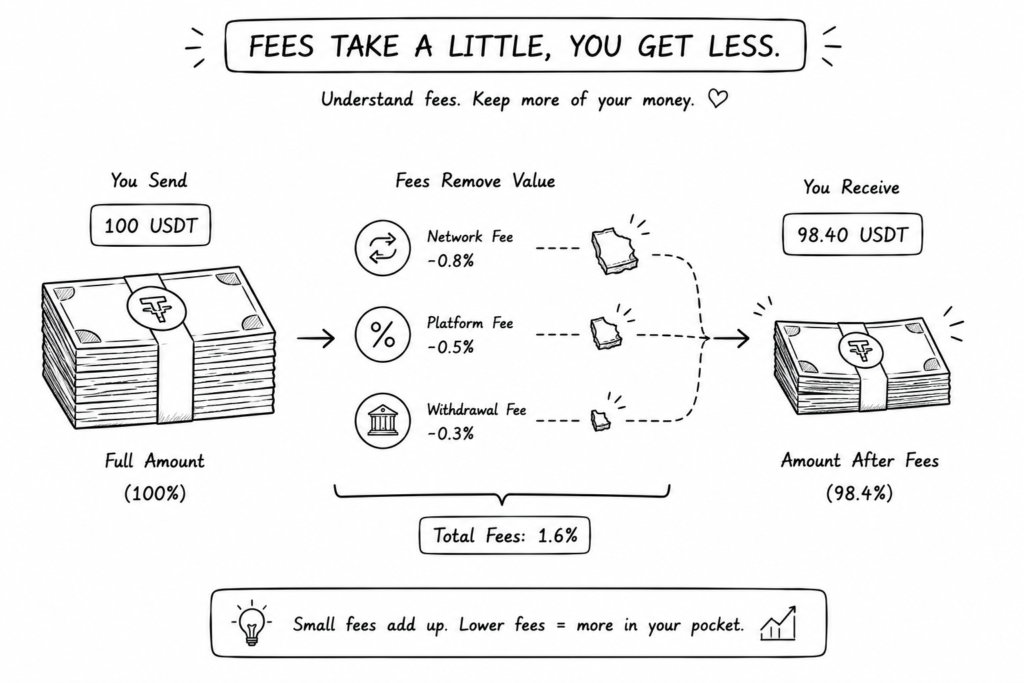
Every conversion method carries costs, and the total cost is often higher than the headline fee suggests. Understanding the full cost structure prevents surprises.
On centralised exchanges, costs include a trading or conversion fee (0.1% to 0.5%), a withdrawal fee (flat fee or percentage depending on the currency and method), and in some cases a spread on the USDT/fiat rate if you are converting rather than selling at market price.
The withdrawal fee is sometimes the largest component a flat $25 wire transfer fee on a $500 conversion is a 5% effective fee before you even count the trading fee.
On P2P platforms, the fees are embedded in the exchange rate. The platform itself typically charges no direct fee for the trade, but buyers offer rates below market and sellers price above market to capture their margin. The effective spread is usually 1% to 3% but can be higher in lower-liquidity markets.
For crypto debit cards, costs include the conversion spread (0.5% to 2%), any ATM withdrawal fees ($2 to $5 per withdrawal is common), and any monthly or tier-based fees.
Third-party processors like Transak and MoonPay are the most expensive option, typically charging 1.5% to 3.5% on top of the conversion rate. For small, occasional conversions the convenience justifies the cost. For frequent or large conversions, the fees add up quickly.
The most cost-effective method for large conversions is almost always a centralised exchange with a bank transfer withdrawal, despite the slower speed. For small amounts where speed matters most, a crypto debit card or P2P trade typically offers the best balance of speed and cost.
KYC, Compliance, and Why It Is Important
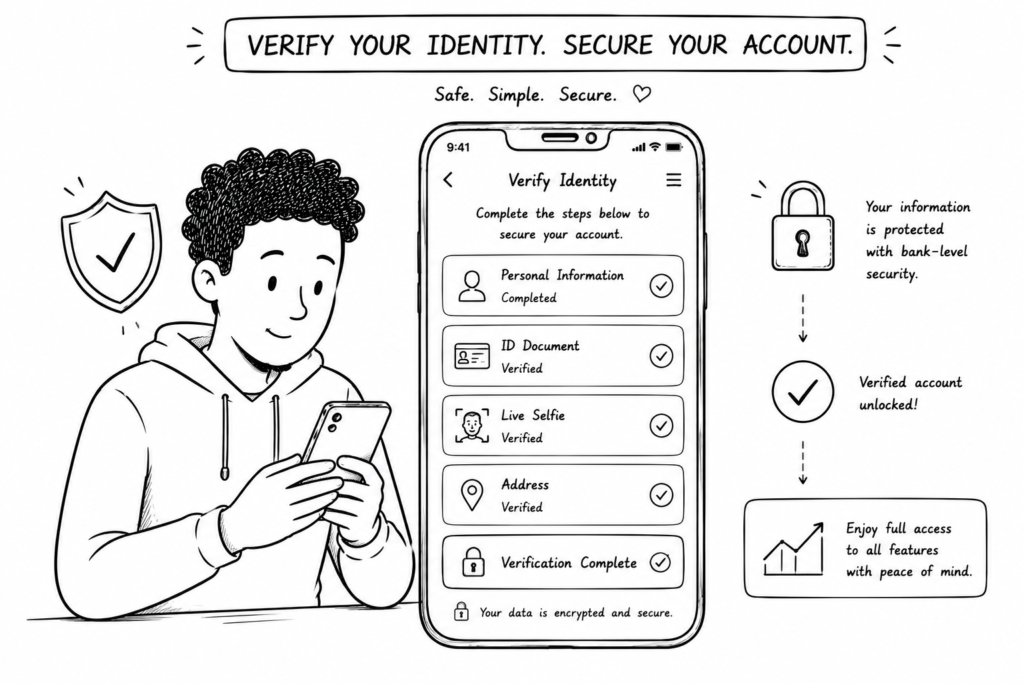
Every legitimate platform that converts USDT to fiat requires identity verification. This is not optional it is a legal requirement under anti-money laundering (AML) and know-your-customer (KYC) regulations in every major jurisdiction.
The verification process typically involves submitting a government-issued ID, a selfie or live video check, and proof of address. Most platforms now process these automatically and can verify your identity within minutes to hours. Once verified, withdrawal limits increase and conversion options expand.
Unverified accounts face strict limits on how much they can convert and withdraw. On Binance, for example, unverified users have a daily withdrawal limit of 0.06 BTC equivalent far below what most active users need. Full verification removes or significantly raises this limit.
The KYC requirement also means that platforms can and do report transaction data to tax authorities in many jurisdictions. In the US, platforms report transactions above $10,000 to the IRS and issue 1099 forms.
In the EU, the DAC8 directive requires crypto-asset service providers to report user transactions to national tax authorities starting in 2026.
Converting USDT to fiat is a taxable event in most countries, and using a regulated platform means that transaction is on record.
This is not a reason to avoid regulated platforms; it is a reason to keep accurate records of your conversions for tax purposes. Use only platforms that are licensed in your jurisdiction, verify your identity properly, and treat each conversion as a financial event that needs to be recorded.
Common Mistakes to Avoid When Converting USDT to Fiat
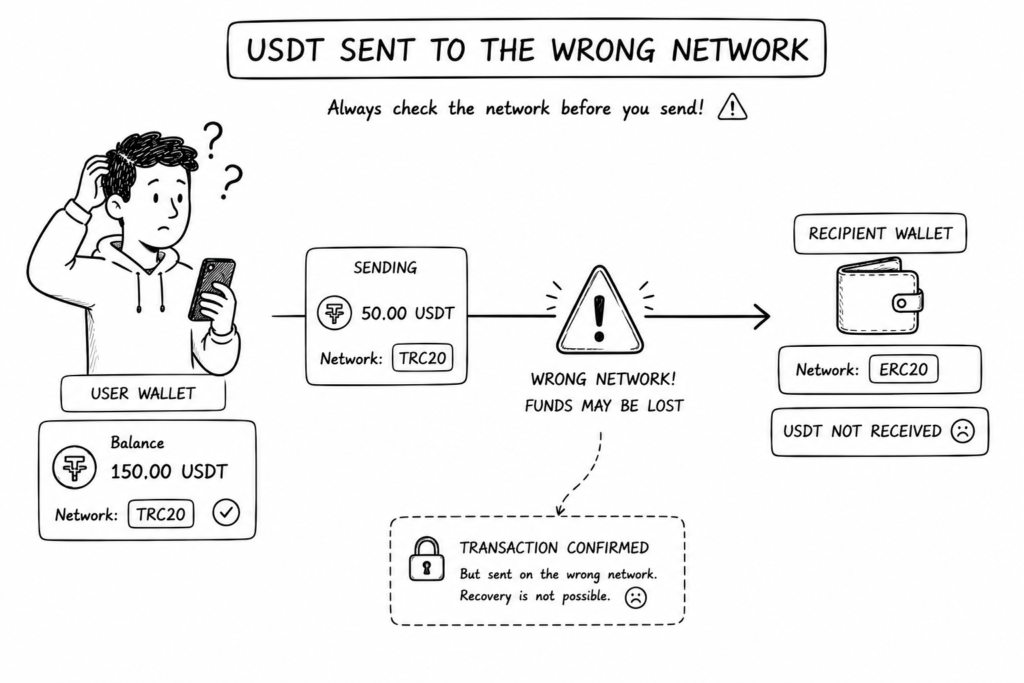
Several avoidable mistakes regularly cost people money or delay their conversions significantly.
Sending USDT on the wrong network is one of the most common and costly errors. USDT exists on multiple blockchains Ethereum (ERC-20), Tron (TRC-20), BNB Chain (BEP-20), Solana, and others. If you send ERC-20 USDT to a TRC-20 address, or vice versa, the funds may be lost or require a complex recovery process that the platform may charge for or refuse to attempt.
Always confirm the network before sending and always match the network your USDT is on with the network the receiving platform expects.
Ignoring withdrawal fees on large transactions is another common mistake. A platform that seems cheaper because of a low trading fee can end up more expensive overall if its withdrawal fees are high. Always calculate the total cost of the conversion including all fees before you execute.
Using unverified or unlicensed platforms to avoid KYC is a risk that people underestimate. Unlicensed platforms operate outside regulatory frameworks, which means no deposit protection, no dispute resolution, and no accountability if something goes wrong.
The regulatory risk of using an unlicensed platform can also create problems with your bank, which may flag incoming transfers from unknown crypto sources.
Converting during peak network congestion on Ethereum can result in high gas fees if your USDT is on the ERC-20 network and needs to be moved first.
Tron-based TRC-20 USDT has significantly lower transfer fees and is preferred for this reason when moving USDT between wallets before conversion.
Releasing USDT on a P2P trade before the fiat payment clears is one of the most serious mistakes a P2P seller can make. Always wait until the fiat is in your account, not just the notification, before releasing from escrow.
Tax Implications of Converting USDT to Fiat
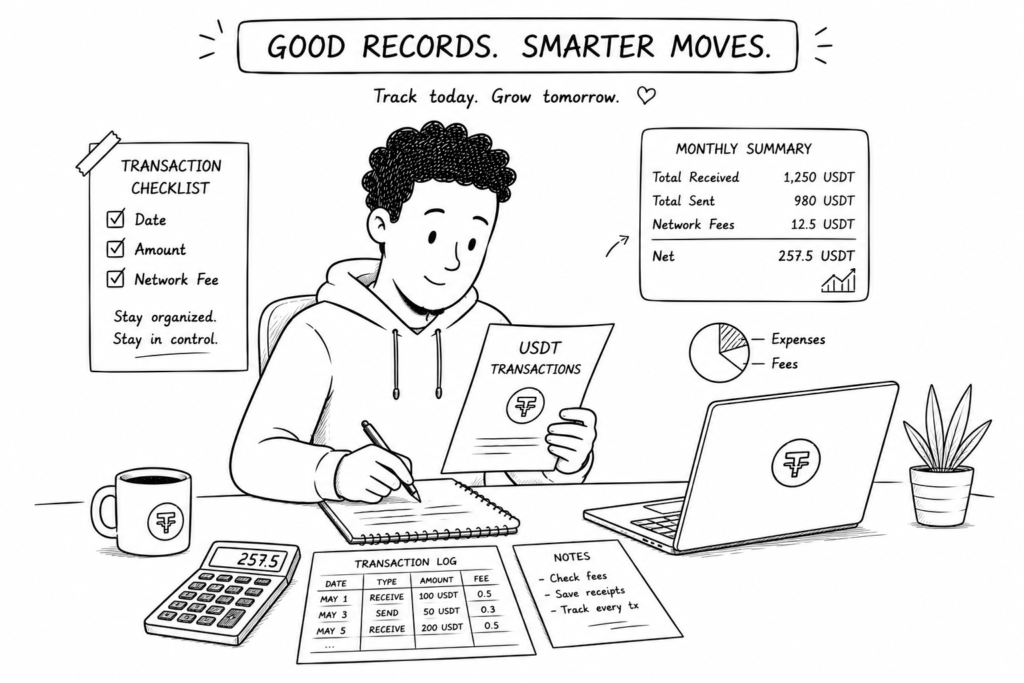
In most jurisdictions, converting USDT to fiat is a taxable event. Even though USDT is a stablecoin pegged to one dollar, the conversion is treated as a disposal of a digital asset, and any gain or loss relative to your cost basis needs to be reported.
In practice, because USDT trades at or extremely close to one dollar at all times, the gain or loss on a USDT-to-fiat conversion is usually minimal the difference between the price you paid for the USDT and the price you received when you converted it.
For most users this difference is fractions of a cent per token. But the reporting obligation still exists in countries like the US, UK, Australia, and Canada, regardless of how small the gain or loss is.
The more significant tax event for most USDT holders is the transaction that created the USDT balance in the first place for example, selling Bitcoin or Ethereum for USDT.
That disposal triggers a capital gain or loss based on the value of the crypto at the time of sale. The subsequent conversion of USDT to fiat is a separate event with a typically minimal tax consequence.
Keep records of every conversion including the date, the amount of USDT converted, the rate received, the fiat amount received, and the platform used.
Tax software designed for crypto users Koinly, CoinLedger, ZenLedger can automate most of this record-keeping if you connect your exchange accounts through API or CSV import.
If you convert large amounts of USDT to fiat regularly, consult a crypto tax accountant to ensure you are handling reporting correctly in your specific jurisdiction.
Conclusion
Converting USDT to fiat instantly is straightforward in 2026 if you know which method fits your situation. Centralised exchanges offer the most reliable route for users in supported markets, with conversion happening immediately and bank withdrawals completing within hours.
P2P platforms fill the gap in markets where direct bank integrations are limited, and crypto debit cards remove the withdrawal step entirely for everyday spending.
The most important variables in any conversion are the total fee across all cost components, the network your USDT is on, the platform’s regulatory standing in your jurisdiction, and your verification status.
Getting these right means your money moves fast and lands where it should. Getting them wrong means delays, unexpected costs, or in the worst case, lost funds.
Start with a regulated platform, complete your KYC verification before you need it, choose the withdrawal method that balances speed and cost for your amount, and keep a record of every transaction for tax purposes.
The infrastructure for instant USDT-to-fiat conversion is better than it has ever been using it correctly is simply a matter of knowing where to look and what to check before you send.
Frequently Asked Questions
What is the fastest way to convert USDT to fiat?
The fastest way to convert USDT to fiat depends on your location and how you want to receive the funds. For US users, Coinbase’s instant cashout to a debit card delivers funds in minutes.
For international users, a P2P trade with a responsive buyer can complete in under 15 minutes. Crypto debit cards convert at the point of purchase instantly.
For large amounts, a centralised exchange with a fast bank withdrawal integration such as Kraken for EU users is typically the most reliable fast option.
Is converting USDT to fiat taxable?
Yes. In most countries including the US, UK, Canada, and Australia, converting USDT to fiat is treated as a disposal of a digital asset and is a taxable event.
Because USDT is pegged to one dollar, the gain or loss is usually negligible, but the reporting obligation still exists. The more significant tax event is typically the trade that created your USDT balance in the first place. Keep records of every conversion and consult a crypto tax professional if you convert large amounts regularly.
Can I convert USDT to fiat without KYC verification?
No, not through any legitimate and regulated platform. KYC verification is a legal requirement for all licensed crypto-to-fiat services under anti-money laundering regulations in every major jurisdiction.
Unverified platforms that allow conversion without KYC operate outside regulatory frameworks and carry significant operational and legal risks.
Always use platforms that are licensed in your jurisdiction and complete the verification process before you need to convert.
What is the difference between TRC-20 and ERC-20 USDT when converting?
TRC-20 USDT runs on the Tron blockchain and has very low transfer fees, typically less than $1. ERC-20 USDT runs on the Ethereum blockchain and carries gas fees that vary with network congestion, which can range from $1 to $20 or more.
Both represent the same USDT value but cannot be sent to each other’s addresses interchangeably. When depositing USDT to an exchange for conversion, always select the network that matches the address the exchange provides. Sending on the wrong network can result in lost funds.
How much does it cost to convert USDT to fiat?
The cost of converting USDT to fiat varies by method. On centralised exchanges, expect a trading fee of 0.1% to 0.5% plus a withdrawal fee that ranges from a flat $5 to $25 for wire transfers or free for ACH and SEPA in many cases.
On P2P platforms, the cost is embedded in the exchange rate, typically 1% to 3% below market. Crypto debit cards carry a conversion spread of 0.5% to 2%. Third-party processors like Transak or MoonPay charge 1.5% to 3.5%. Always calculate the total cost across all fee types before executing a conversion.
Is USDT always worth exactly one dollar when converted?
No, though it is usually very close. USDT occasionally trades at a slight premium or discount to one dollar on secondary markets depending on supply and demand conditions.
During periods of extreme market stress like the LUNA/UST collapse in May 2022 USDT briefly traded below $0.997 as investors panicked about stablecoin stability.
Under normal conditions, the difference between USDT and one dollar is fractions of a cent, and the bigger variable in your conversion rate is the platform’s spread and fees rather than USDT’s own peg stability.