



Crypto payments have moved into the mainstream. Global crypto transaction volumes now exceed $8 trillion annually, and more businesses than ever are accepting digital assets as payment. Yet choosing the best crypto payment gateway in 2026 remains a challenge.
Some providers hide fees, others lack compliance tools, and many fail to scale as transaction volumes grow. The best gateways do more than process crypto payments; they offer reliable fiat settlement, strong regulatory safeguards, smooth integrations, and transparent pricing.
To help you cut through the noise, we evaluated the best crypto payment gateways based on the factors that matter most and identified the top performers for 2026.
Key Takeaways
- Crypto payment gateways enable acceptance of Bitcoin, Ethereum, stablecoins, and other digital assets while benefiting from transaction fees as low as 0.23%–1%, often far below traditional credit card processing costs.
- Settlements are in minutes rather than days, eliminate chargeback risks, and expand globally with smooth, borderless transactions.
- When choosing a crypto payment gateway, prioritize features such as multi-chain support, automatic fiat settlement, easy API integration, and built-in compliance and regulatory tools.
What Are Crypto Payment Gateways?

Crypto payment gateways are digital payment solutions that enable businesses to accept cryptocurrencies such as Bitcoin (BTC), Ethereum (ETH), USDT, USDC, and other digital assets as payment for goods and services.
Similar to traditional payment processors like Stripe and PayPal, these platforms act as a bridge between a customer’s crypto wallet and a merchant’s checkout system, making crypto transactions simple, secure, and efficient.
As crypto adoption continues to grow globally, crypto payment gateways are becoming an increasingly popular option for e-commerce stores, SaaS platforms, online marketplaces, freelancers, and global businesses seeking faster, lower-cost payment alternatives.
Also Read: Using The Crypto Tracking Spreadsheet in 2026
How Do Crypto Payment Gateways Work?
Crypto payment gateways streamline blockchain transactions behind the scenes, allowing customers to pay with digital currencies while merchants receive funds in their preferred format.
A typical crypto payment process follows four key steps:
1. Invoice Creation
When a customer proceeds to checkout, the payment gateway generates a unique payment request. This usually includes a dedicated wallet address, a QR code, and the exact amount of cryptocurrency required to complete the purchase.
2. Customer Payment
The customer scans the QR code or copies the wallet address and sends the required cryptocurrency directly from their wallet. Depending on the blockchain network being used, the transfer can take anywhere from a few seconds to several minutes.
3. Blockchain Verification
Once the payment is initiated, the gateway monitors the blockchain and verifies the transaction. It confirms that the correct amount has been sent and waits for the required network confirmations before marking the payment as complete.
4. Settlement
After verification, the funds are settled according to the merchant’s preferences. Some businesses choose to receive cryptocurrency directly into their wallets, while others use automatic conversion features that instantly convert crypto payments into fiat currencies such as USD, EUR, GBP, or NGN. This helps businesses avoid cryptocurrency price fluctuations while still benefiting from blockchain-based payments.
Why Are Businesses Adopting Crypto Payment Gateways?
Businesses across industries are turning to crypto payment gateways because they offer several advantages over traditional payment methods.
Lower Transaction Fees
Credit card processors and international payment providers often charge fees ranging from 2% to 5% per transaction. Crypto payment gateways can significantly reduce these costs, especially for cross-border transactions, helping businesses improve profit margins.
Elimination of Chargeback Fraud
One of the biggest challenges merchants face with card payments is chargeback fraud. Recent data states that chargebacks are estimated to have drained $33.8 billion from the accounts of merchants globally in 2025. However, since blockchain transactions are irreversible once confirmed, crypto payments eliminate chargebacks and reduce the risk of fraudulent disputes.
Faster International Payments
Traditional international bank transfers can take several days to settle and often involve multiple intermediaries. On the other hand, crypto transactions can settle within minutes, enabling businesses to receive funds much faster regardless of where customers are located.
Access to a Global Customer Base
According to the World Bank, approximately 1.4 billion adults worldwide remain unbanked. Meanwhile, cryptocurrency operates without geographical restrictions.
Therefore, anyone with internet access and a crypto wallet can make payments, allowing businesses to serve customers in regions where traditional banking services may be limited or expensive.
Enhanced Security
Blockchain technology records transactions on a decentralized and tamper-resistant ledger. This reduces the risk of payment fraud and enhances overall transaction security for both merchants and customers.
Also Read: Understanding Crypto Price Analysis for Market Trends and Trading Insights in 2026
Types of Crypto Payment Gateways
Not all crypto payment gateways operate in the same way. Businesses can choose from several models depending on their compliance requirements, custody preferences, and operational needs.
Custodial Crypto Payment Gateways
Custodial gateways, such as Upay, act as intermediaries that temporarily hold and process funds on behalf of merchants. These providers often handle wallet management, security, compliance, and automatic crypto-to-fiat conversion.
This model is particularly attractive to businesses that want exposure to crypto payments without managing private keys or cryptocurrency wallets directly.
Best for: Traditional businesses, e-commerce stores, and enterprises seeking simplicity and regulatory support.
Non-Custodial Crypto Payment Gateways
Non-custodial gateways, such as NOWPayments, allow merchants to maintain complete control of their funds. Payments move directly from the customer’s wallet to the merchant’s wallet without a third party holding the assets.
This approach aligns with the core principles of decentralization and provides greater privacy and ownership over funds.
Best for: Crypto-native businesses, privacy-focused merchants, and organizations that prioritize self-custody.
Stablecoin Payment Gateways
Stablecoin payment gateways, such as BVNK, focus primarily on fiat-pegged digital assets such as USDT, USDC, and EURC. By using stablecoins, merchants benefit from the speed and efficiency of blockchain transactions while avoiding the volatility associated with traditional cryptocurrencies.
These platforms have become increasingly popular among enterprises involved in international payments, treasury management, and cross-border settlements.
Best for: Businesses seeking predictable pricing, global settlement capabilities, and reduced currency risk.
Crypto Payment Gateway Comparison at a Glance
| Gateway | Best For | Starting Fee | Custody Model |
| Upay | All-in-one checkout and card spending | Less than 1% | Custodial |
| BVNK | Stablecoin treasury management | Custom/enterprise | Custodial or self-managed |
| CoinsPaid | High-volume iGaming and forex | Volume-based | Custodial |
| BitPay | Established US enterprises | 1% | Custodial |
| CoinRemitter | No-KYC, low-fee acceptance | 0.23% (on withdrawal) | Non-custodial |
| CryptAPI | Developers who want zero setup friction | 0.25% | Non-custodial |
| NOWPayments | Altcoin variety | 0.5% to 1% | Non-custodial |
| CoinGate | Regulated EU businesses | 1% | Custodial |
| BTCPay Server | Free, self-hosted control | 0% platform fee | Non-custodial |
| Coinbase Business | Shopify and Coinbase ecosystem | 1% | Custodial |
The 10 Best Crypto Payment Gateways in 2026
Here is the list of the top crypto payments in 2026:
1. Upay: Best All-in-One Pick
Source: business.upay.com
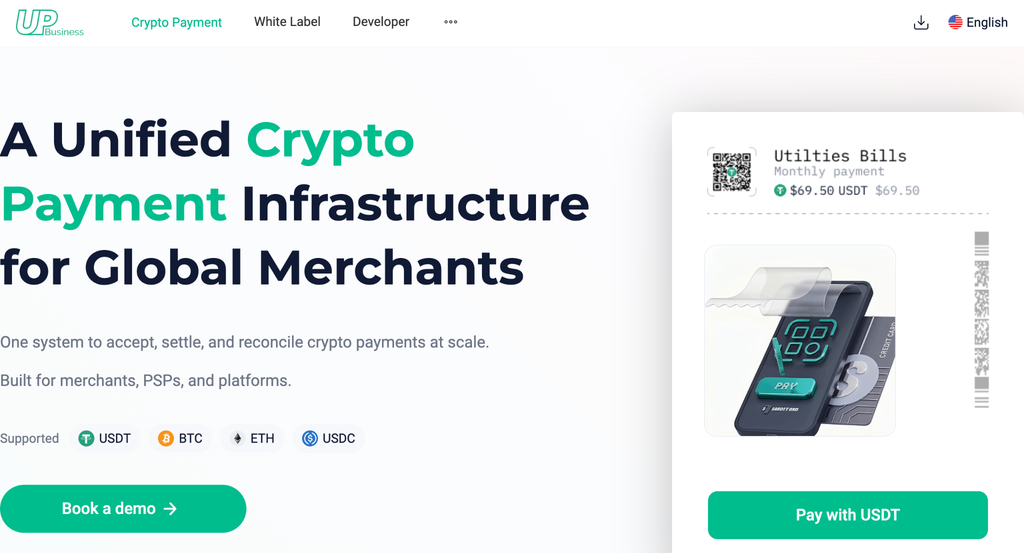
UPay simplifies crypto payments by removing the technical barriers that often prevent small businesses from accepting digital assets. Merchants can start accepting stablecoins without managing private keys, running blockchain infrastructure, or building complex integrations, making onboarding fast and accessible.
Through its UPay Business API, the platform enables smooth acceptance of 50+ assets, like BTC, ETH, and USDT, while handling instant crypto-to-fiat conversion and settlement in the background.
It also supports integrated card issuance and delivers a unified dashboard for payments, making it ideal for e-commerce stores, freelancers, and growing businesses. With transaction fees starting as low as 1% and cross-border costs typically between 1% and 3%, UPay offers a cost-efficient global payment solution.
Merchants can build custom solutions via the Upay business API and connect them to major platforms like Shopify, WooCommerce, and Magento through custom integration rather than one-click plugins. Upay operates under MSB licensing in the US and Canada, reinforcing its focus on compliance, security, and global scalability.
2. BVNK: Best for Stablecoin Treasury Management

Source: bvnk.com
BVNK delivers enterprise-grade infrastructure that enables businesses to move smoothly between fiat and stablecoins at scale.
Built for global operations rather than regional or retail use cases, it has processed over $25 billion in annualized payment volumes and billions more in stablecoin inflows. In addition, BVNK has more than 25 global licenses and approvals across 130+ markets, supporting leading enterprises such as Deel and Worldpay.
The platform combines extensive regulatory coverage, multi-chain and multi-token support, and a high-performance settlement system designed for speed, compliance, and reliability.
Its infrastructure includes virtual accounts in USD, EUR, and GBP for efficient fiat on- and off-ramps, along with stablecoin pay-ins and payouts powered by an in-house trading engine and deep banking network.
3. CoinsPaid: Best for High-Volume iGaming and Forex

Source: coinspaid.com
CoinsPaid is built for businesses handling high-volume, frequent transactions, including iGaming platforms and forex brokers managing continuous deposits and withdrawals.
It supports multiple cryptocurrencies with smooth crypto-to-fiat conversion, automated invoicing, and real-time transaction tracking. Designed for scale, its infrastructure has processed over 40 million transactions, ensuring reliable performance even under heavy load.
Features like bulk payouts and recurring billing improve operational efficiency, while a reliable API enables easy integration into high-traffic systems such as SoftSwiss-powered platforms.
With volume-based pricing, strong security standards, and an Estonia license, CoinsPaid is tailored for compliant, enterprise-grade crypto payments.
4. BitPay: Best for Established US Enterprises
Source: bitpay.com
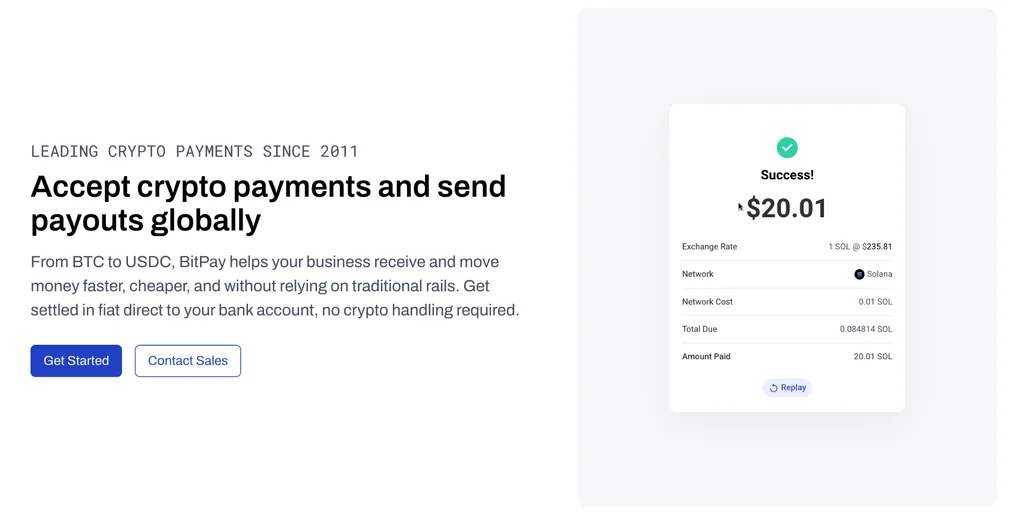
BitPay is one of the most established crypto payment gateways, trusted by major companies like Microsoft and AMC Theatres. It offers a reliable, enterprise-focused solution for businesses that prioritize proven infrastructure over experimental features.
Merchants can accept Bitcoin, Ethereum, and popular stablecoins, with support for 100+ cryptocurrencies and Lightning Network payments for faster, low-cost transactions. It also enables daily fiat settlement in USD, EUR, and GBP, with fees starting around 1% depending on volume.
BitPay integrates easily with platforms like Shopify, Magento, and WooCommerce and includes tools such as recurring billing, POS support, and automatic handling of small “dust” transactions.
5. CoinRemitter: Best for No-KYC, Low-Fee Acceptance
Source: coinremitter.com
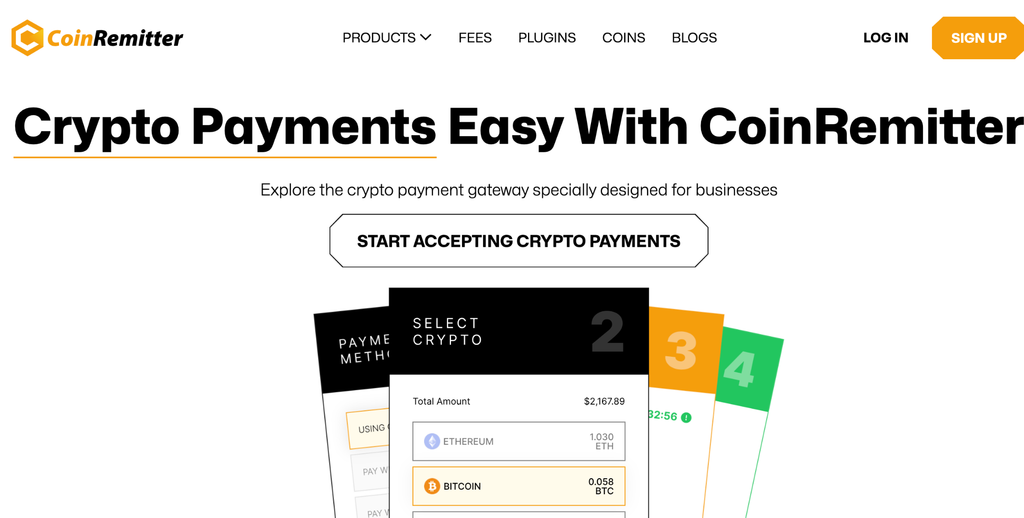
CoinRemitter is built for merchants who want to start accepting crypto payments without delays. With no KYC requirements, businesses can get up and running quickly while maintaining greater privacy.
The platform supports major cryptocurrencies, including Bitcoin, Ethereum, Litecoin, USDT, and USDC, and integrates smoothly through WooCommerce, Magento, PrestaShop, OpenCart plugins, and a REST API.
Standout features include its Gas Station tool for reducing withdrawal costs, hosted invoices, payment widgets, and automatic withdrawals every 30 minutes.
Security is strengthened with two-factor authentication and login protection, while its 0.23% processing fee remains one of the lowest publicly advertised rates in the crypto payment gateway industry.
6. CryptAPI: Best for Developers Who Want Zero Friction
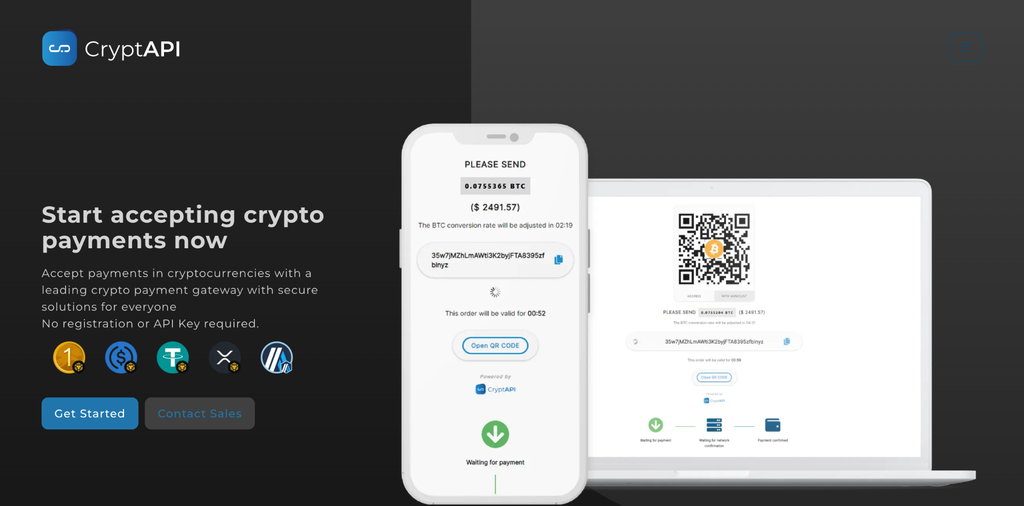
Source: cryptapi.io
CryptAPI is a developer-friendly crypto payment gateway built for speed and simplicity. Unlike most providers, merchants can start accepting crypto payments without creating an account or obtaining an API key, making integration remarkably fast.
The platform supports Bitcoin, Ethereum, Litecoin, Bitcoin Cash, and dozens of other cryptocurrencies, with transaction fees starting at just 0.25%. As a non-custodial solution, funds are automatically settled directly to the merchant’s wallet, eliminating counterparty risk and payout delays.
Developers can integrate through a flexible API or deploy prebuilt plugins for popular e-commerce platforms such as WooCommerce, Magento, OpenCart, and PrestaShop.
7. NOWPayments: Best for Altcoin Variety
Source: nowpayments.io
NOWPayments is a leading non-custodial crypto payment gateway, making it an excellent choice for e-commerce businesses that serve customers with diverse cryptocurrency preferences.
Supporting more than 350 cryptocurrencies, it offers one of the broadest selections in the market. Merchants benefit from advanced features such as mass payouts, subscription billing, white-label solutions, and a sandbox environment for testing integrations.
With plugins for WooCommerce, Shopify, Magento, PrestaShop, and WHMCS, setup is straightforward. Its non-custodial model sends funds directly to merchants’ wallets, while competitive fees start at just 0.5%, rising to 1% when automatic conversion is enabled.
8. CoinGate: Best for Regulated European Businesses
Source: coingate.com
CoinGate has been helping businesses accept crypto payments since 2014 and stands out as one of the few providers to hold both a MiCA license and a Payment Institution license in the European Union.
This regulatory foundation makes it an excellent choice for EU-based merchants seeking compliance and reliable fiat settlement. The platform supports major cryptocurrencies and stablecoins across more than 180 countries while offering invoicing, payment links, crypto payouts, and treasury management tools.
Businesses can integrate CoinGate quickly through plugins for WooCommerce, Shopify, Magento, and other leading e-commerce platforms. With transparent fees starting at just 1% and settlement options in EUR, USD, GBP, and stablecoins, CoinGate combines simplicity, compliance, and global reach.
9. BTCPay Server: Best Free, Self-Hosted Option
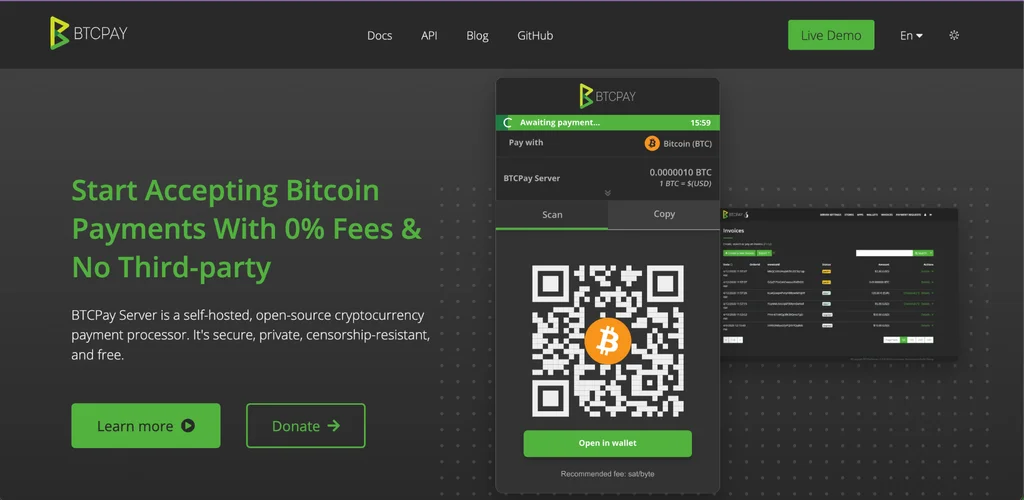
Source: btcpayserver.org
BTCPay Server takes a different approach to crypto payments by putting merchants in complete control. As a self-hosted, open-source payment processor, it eliminates intermediaries, giving businesses full custody of their funds while avoiding platform fees.
The platform supports Bitcoin and the Lightning Network out of the box, with additional assets such as USDT, USDC, and DAI available through community-developed plugins. BTCPay Server integrates with popular e-commerce platforms like WooCommerce and offers flexible server-level deployment.
With no third-party custodian involved, there are no mandatory KYC requirements, making it a top choice for privacy-focused merchants.
10. Coinbase Business (formerly Coinbase Commerce): Best for Shopify and Coinbase Users
Source: Pinterest.com
Coinbase Business (formerly Coinbase Commerce) is a custodial crypto payment gateway that enables merchants to accept payments in stablecoins such as USDC and USDT directly from customers.
The platform delivers a smooth checkout experience while protecting businesses from volatility through instant conversion into USDC or local fiat currencies. With an average transaction fee of around 1%, it offers a cost-effective alternative to traditional card payments and eliminates chargebacks due to irreversible blockchain transactions.
Note that the platform is currently restricted to merchants in the U.S. and Singapore. These merchants can get paid via payment links, invoices, hosted checkout pages, e-commerce plugins like Shopify and WooCommerce, or fully custom API integrations, giving businesses flexible and global payment capabilities. Settlements run through Coinbase’s regulated custodial infrastructure for added security and compliance.
How to Choose the Right Crypto Payment Gateway in 2026
Important Disclosure
Choosing the right crypto payment gateway can make or break your revenue flow. With hundreds of options flooding the market, the difference lies in the details, not the branding.
Technical Reality: Not all gateways support the same blockchains or settlement speeds. Assess API reliability, Web3 wallet compatibility, non-custodial options, and real-time conversion to reduce volatility exposure.
Cost Structure: Fees are rarely flat. Watch for per-transaction percentages, withdrawal costs, fiat conversion spreads, and monthly minimums. Low headline rates often hide charges that quietly erode your margins at scale.
Below are factors to look out for before choosing a payment gateway:
1. Start With Custody
Your first decision is custody. If you prefer a hands-off approach where you don’t manage private keys, custodial gateways like UPay or BitPay simplify everything. They handle wallet security, transaction routing, and compliance so you can focus on business operations.
However, if full control and self-sovereignty matter more, non-custodial solutions are a better fit. Platforms such as BTCPay Server and CryptAPI give you direct control over funds and infrastructure, but they also require you to manage security, backups, and private keys yourself.
2. Match the Gateway to Your Customer Base
Your payment stack should reflect how your customers actually pay. If your users mainly transact in Bitcoin and major stablecoins like USDT or USDC, most established gateways, like Upay, will cover your needs without friction. These assets are widely supported and integrate easily across providers.
If your audience is more diverse and includes niche altcoin holders, broader-coverage platforms like NOWPayments tend to perform better. They support a wider range of tokens, making them more suitable for crypto-native or global audiences.
3. Operating Region and Compliance Needs
Geography plays a major role in gateway selection. Upay covers a large global reach, thanks to its licensing across the US, Canada, Hong Kong, and the UAE.
For businesses operating in the European Union, a platform like CoinGate may be more suitable due to its stronger alignment with evolving regulatory frameworks such as MiCA. In the United States, merchants often prefer established providers like BitPay, which has a long operational history and established compliance infrastructure.
4. Always Test the Checkout Experience Before You Commit
Even the best backend system can fail if the checkout experience is poor. Before making a final decision, run real tests using the provider’s sandbox or demo environment. Many gateways, including UPay, offer this feature.
Simulate a full transaction from a customer’s perspective. Check speed, clarity, wallet flow, and confirmation steps. Because in practice, a slow or confusing checkout process costs more conversions than any difference in transaction fees ever will.
Frequently Asked Questions
What Is the Best Crypto Payment Gateway for Small Businesses in 2026?
Upay is the strongest overall pick for small businesses because it combines a low starting fee, simple plugins, and a custodial model that removes the need to manage crypto wallets directly. CoinRemitter and CryptAPI are worth considering too if you don’t need fiat settlement and want the lowest possible fees.
Do Crypto Payment Gateways Charge Lower Fees Than Credit Cards?
Yes, in most cases. Crypto gateways typically charge between 0.23% and 1%, compared to the 2% to 3% that traditional card processors charge. The exact savings depend on your transaction volume and whether you use auto-conversion features, which can add to the base fee.
Is Upay Good for Beginners?
Yes. Upay is built specifically for merchants who don’t want to manage blockchain infrastructure themselves. The API-based setup, which connects to platforms like WooCommerce and Shopify, combined with instant fiat settlement, makes it one of the easier gateways to launch without prior crypto experience.
Are Crypto Payments Safe for Businesses?
Yes, when you choose a gateway with clear security practices like two-factor authentication, transparent custody policies, and proper licensing where required, like Upay. The bigger risk for most businesses isn’t fraud; it’s price volatility, which is why many merchants use auto-conversion to stablecoins or fiat at the moment of sale.