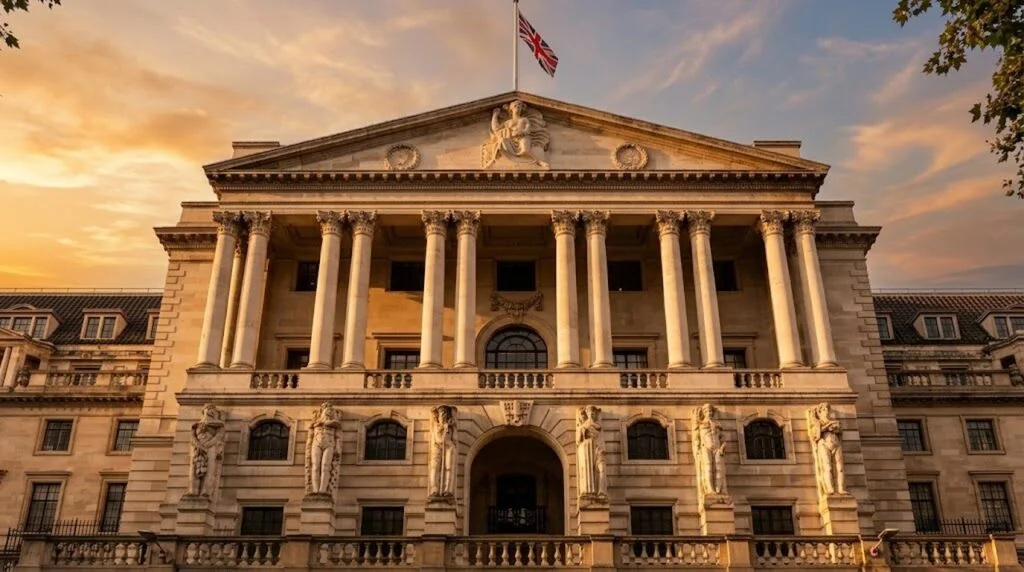
The Bank of England has indicated that the United Kingdom may not need to introduce a retail digital pound as quickly as previously anticipated, particularly if regulated private-sector alternatives can deliver similar benefits.
Speaking during meetings in Washington, Deputy Governor Sarah Breeden reportedly said tokenised bank deposits and sterling-denominated stablecoins could provide households and businesses with new ways to make digital payments.
Her comments do not mean the digital pound has been cancelled. Instead, they suggest that UK policymakers are evaluating how different forms of digital money could coexist before committing to a central bank digital currency.
Key Takeaways
- The Bank of England sees no immediate need to rush the introduction of a retail digital pound.
- Regulated stablecoins and tokenised bank deposits could deliver some of the same payment benefits.
- No final decision has been made on whether the digital pound will proceed.
- Any launch would require primary legislation from Parliament.
- The Bank wants different forms of sterling money to remain exchangeable at equal value.
Private Digital Money Could Reduce the Urgency
According to PaymentExpert, Breeden said the UK might not need a digital pound “that quickly” if private digital money develops successfully.
These private alternatives could include regulated pound-denominated stablecoins and tokenised commercial-bank deposits. Although they may use similar technologies, they are not the same as a central bank digital currency.
A digital pound would be issued by the Bank of England and represent a direct claim on the central bank. Stablecoins are normally issued by private companies, while tokenised deposits remain liabilities of commercial banks.
Understanding what stablecoins are and how they work is therefore important when comparing them with a potential digital pound.
The Digital Pound Has Not Been Approved
The Bank of England and HM Treasury are still assessing whether a digital pound is necessary.
The Bank’s official digital pound updates state that no decision has been made. A blueprint and joint assessment are expected in 2026, after the current design phase concludes.
Even if officials decide to proceed, Parliament would need to approve primary legislation before a digital pound could be introduced. Consumers should therefore not interpret the latest remarks as an announcement of an upcoming launch.
Building a Multi-Money System
Breeden’s broader objective is a financial system in which cash, traditional bank deposits, tokenised deposits, regulated stablecoins and potentially central bank digital currency can operate together.
For users, the crucial requirement is that these different forms of sterling remain interchangeable at par. One pound held in a bank account, stablecoin wallet or future digital-pound wallet should retain the same face value when transferred between systems.
Achieving that outcome would require strong regulation, reliable reserves, redemption rights and compatible payment infrastructure. These safeguards are especially important because crypto payments involve several technical and operational stages that may not be visible to the customer.
The Bank also wants credible sterling-based options to develop so that the UK’s digital-payment market does not become overly dependent on tokens denominated in other currencies.
What Happens Next?
The Bank of England is expected to continue developing its digital-pound blueprint while finalising its approach to systemic stablecoins.
Policymakers will need to determine whether private innovation can provide secure, accessible and widely accepted digital money without creating unacceptable risks. They must also consider privacy, financial inclusion, resilience and the potential effect on commercial-bank deposits.
Central bank digital currencies remain one possible part of cryptocurrency’s wider influence on the future of finance, but the UK’s approach shows that governments do not necessarily view them as the only solution.
Conclusion
The Bank of England has not abandoned the digital pound, but it appears increasingly willing to let regulated private money prove what it can deliver.
The final decision will depend on whether stablecoins and tokenised deposits can provide efficient digital payments while maintaining public confidence in sterling. Until the Bank of England and HM Treasury complete their assessment, the digital pound should be viewed as a policy option—not a confirmed product.