


An Overview of Bhutan Economy
Bhutan’s economy relies on agriculture and forestry to provide livelihoods for about 60% of its population. Agriculture consists mainly of animal husbandry and subsistence farming. Its forests also provide tons of raw materials that it trades to grow its Gross Domestic Product.
Bhutan has rugged terrain, which limits its ability to build roads and infrastructure. Regardless, the nation is one of the richest in South Asia in gross domestic product (nominal) per capita, which is estimated to be $4,300 in 2025.
Experts forecast a strong GDP growth rate of 6.8% and an inflation rate of 3.1% for 2025.
Current State of Crypto Adoption in Bhutan

Source: Skyfi lab
Bhutan is tucked between two huge countries, China and India. The country has a population of under a million.
Public engagement with cryptocurrency remains very low, with only about 8.31% of the population estimated to be actively engaging in crypto-related activities. This low penetration is reinforced by the new 2025 regulations restricting public access.
According to Statista, “the cryptocurrencies market is projected to achieve a revenue of $128,800 in 2025”. However, the growth is projected to grow in the coming years. In 2026, the crypto market’s value would rise to $133,000.
The low penetration of cryptocurrency in Bhutan might be cultural. The nation has strong ties with religion and hardly prioritizes amassing wealth.
In the 1970s, Jigme Singye Wangchuck, Bhutan’s fourth monarch, wanted to nip the bud of the kingdom’s obsession with economic growth. He formed the mantra “Gross national happiness is more important than gross domestic product.”
Yet Bhutan has participated in one of the biggest state-operated mining activities and is now pioneering several key state-led adoption initiatives:
- National Digital Identity (NDI): In a significant 2025 development, Bhutan is moving its National Digital Identity system onto the Ethereum blockchain, aiming for completion by early 2026.
- Tourist Payment System: In May 2025, Bhutan launched a nationwide crypto payment system for tourists. In collaboration with Binance Pay and the digital DK Bank, it allows visitors to pay for services like visas, hotels, and tours using approved cryptocurrencies.
- CBDC Pilot: The Royal Monetary Authority (RMA) has partnered with Ripple to pilot a central bank digital currency (CBDC), the digital Ngultrum, exploring uses for cross-border payments and financial inclusion.
Let’s examine Bhutan’s Bitcoin mining and how it affects the country.
Crypto Law in Bhutan

Source: Flickr
As of 2025, cryptocurrency is no longer a “gray area” in Bhutan. It operates under a clear restricted legality model defined by the central bank. While it is not legal tender, its status was formalized by an official announcement from the Royal Monetary Authority (RMA) on April 30, 2025.
The April 2025 RMA Directive
The RMA has adopted a phased strategy to protect citizens and maintain financial stability while supporting responsible innovation. The key directives are:
- Restricted to Gelephu Mindfulness City (GMC): Crypto mining operations and cryptocurrency exchange services are permitted only within the jurisdiction of the Gelephu Mindfulness City (GMC). All operators must be registered entities or business partners operating under the GMC’s special regulatory framework.
- Public On-Ramping Restricted: The RMA reaffirmed that on-ramping (converting local currency to crypto) through Bhutanese banks or RMA-regulated financial institutions remains restricted for the general public.
Regulatory Authorities
Several bodies oversee this new framework:
- Royal Monetary Authority of Bhutan (RMA): The central bank and primary financial supervisor. It licenses institutions, ensures financial stability, and enforces the restrictions on public crypto trading.
- Gelephu Mindfulness City (GMC): A special economic hub designated as the exclusive jurisdiction for all legal crypto mining and exchange activities in Bhutan.
- Financial Intelligence Department (FID): The central agency for implementing the country’s AML/CFT Regulations 2025, which are designed to prevent illicit financial flows.
Compliance for Businesses (AML/CFT 2025)
While the AML/CFT Regulations 2025 do not yet specifically address virtual assets, all financial entities, including those within the GMC, must adhere to this framework. Key rules include:
- Anti-Money Laundering (AML) Checks: Businesses must conduct thorough Customer Due Diligence (CDD) before executing transactions over Nu. 300,000.
- Know Your Customer (KYC) Requirements: Firms must verify customer identities using reliable, independent documents (e.g., passport, national ID card).
- Mandatory Procedures: Companies must appoint a senior-level AML Compliance Officer (AMLCO), establish internal controls, and retain all transaction records for a minimum of ten years.
Potential Perks of Crypto Adoption
Source: Space Coast Daily
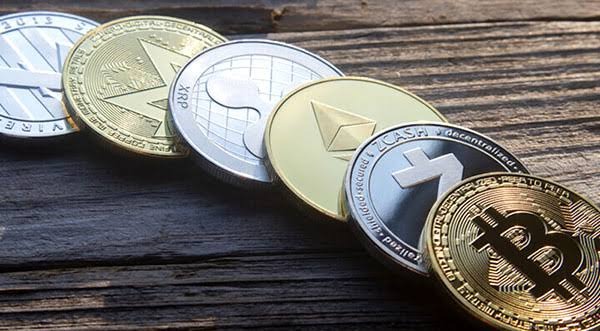
Crypto adoption comes with several amazing benefits; here are a few of them:
Economic Growth
Rather than waiting for startups, Bhutan is driving economic growth directly. Its state-run mining operations contribute significantly to state revenue. The new tourist payment system, launched in May 2025, aims to capture more value from the tourism sector by simplifying payments.
Transparency and Traceability
Blockchain technology features all transactions on a public ledger. Bhutan is exploring this potential through its pilot of a digital Ngultrum (CBDC) with Ripple, which could enhance the transparency and efficiency of cross-border transactions.
Lower Transaction Fees
The new tourist payment system, which uses Binance Pay, is designed to be cheaper than traditional payment methods for international visitors. The CBDC pilot also aims to reduce friction and costs for cross-border and peer-to-peer payments.
Challenges of Crypto Adoption
Source: Needpix.com
Several challenges exist that stifle Bhutan’s potential rapid and widespread crypto adoption. Here are some notable mentions:
- Integration with Current Traditional Financial Systems:
Environmental Impact
Participating in crypto mining has serious environmental implications. Bhutan is actively addressing this challenge by leveraging its abundant hydropower resources to power its mining operations. The country’s plan to invest $500 million in greener mining operations aims to make it a model for sustainable digital asset mining.
Lack of User Protection
Unlike traditional finance, cryptocurrency doesn’t have user protection. This remains a primary concern and is a key reason for the RMA’s restrictions. By prohibiting public on-ramping, the central bank is shielding its citizens from the volatility and risks of the retail market.
Integration with Current Traditional Financial Systems
Integrating cryptocurrencies is a hassle. Bhutan is tackling this through phased, controlled projects rather than a disruptive public rollout. The Ripple CBDC pilot and the Binance Pay tourist system are both examples of integrating digital assets within a regulated framework.
Bhutan Bitcoin Mining Operations

Source: ccnull.de
Although Bhutan’s public stance was once unclear, the country is a major state holder of Bitcoin. This effort is led by Bhutan’s sovereign investment arm, Druk Holding & Investments (DHI), implying Bhutan’s efforts in crypto mining is very real.
These operations are now formally sanctioned and regulated under the Gelephu Mindfulness City (GMC) framework as of April 2025.
New data from October 2025 shows Bhutan’s holdings have fluctuated. After peaking at over 13,000 BTC in late 2024, the government’s reserves now stand at approximately 6,371 BTC.
The exciting twist is that Bhutan doesn’t limit its holdings to Bitcoin alone. Here are some of the other cryptos Bhutan has:
- Ethereum
- BNB
- Matic
- Tether
Is Cryptocurrencies Legal in Bhutan?
Yes, but with significant restrictions. As of 2025, Bhutan has moved from a “gray area” to a formal policy of restricted legality.
What Is Legal About Crypto In Bhutan?
- State-run mining by Druk Holding & Investments.
- Crypto payments for tourists through the new government-backed system.
- Crypto mining and exchanges operated by entities officially registered within the Gelephu Mindfulness City (GMC).
What Is Illegal About Crypto In Bhutan
- Public trading for citizens: The Royal Monetary Authority (RMA) continues to restrict domestic banks from facilitating crypto trading or on-ramping for the general public.
Final Thoughts
Bhutan is more than a happy country; it is also a cautious digital innovator and a mining behemoth. While the nation has active state-run mines, Bhutan has now declared its stand on cryptocurrency. Of course, we will update occasionally, but we are not promising.
The activity has moved from a gray area to a controlled, dual-track system in 2025. This approach restricts public access to protect citizens while simultaneously embracing state-led innovation through the Gelephu Mindfulness City, a CBDC pilot with Ripple, and a national crypto payment system for tourists.
Disclaimer: The views expressed in this article are not intended as financial advice and should not be taken as one. We accept no liability for any financial decisions made based on the information presented in this article.
Frequently Asked Questions About Crypto Adoption in Bhutan
How Many Mining Farms Does Bhutan Have?
According to a Forbes report, Bhutan has four active Bitcoin mines responsible for the country’s growing fortune.
Can you use Crypto Exchanges in Bhutan?
No, not as a member of the general public.
The Royal Monetary Authority (RMA) restricts domestic banks from facilitating crypto trading. As of April 2025, cryptocurrency exchanges can only operate legally if they are registered entities within the special economic zone of Gelephu Mindfulness City (GMC).
How Much Bitcoin Does Bhutan Retain?
As of October 2025, Bhutan holds approximately 6,371 Bitcoins. This value is not static and changes as mining operations continue and the government manages its reserves.
When will Cryptocurrency be Legal in Bhutan?
It became legal in a restricted way in 2025. The RMA’s April 2025 directive legalized crypto mining and exchanges only for entities within the Gelephu Mindfulness City (GMC).
A national crypto payment system for tourists was also launched in May 2025. However, it remains restricted for public trading through domestic banks.