

Crypto Adoption in Czechia
In March 2010, during an online auction on the BitcoinTalk Forum, a member offered 10,000 Bitcoin for sale for just $50. There’s no record of whether it sold, but it was recorded that someone countered with an offer of $25, considering Bitcoin nearly worthless.
This article explores the current state of cryptocurrency adoption in the Czech Republic, examining the legal frameworks that shape it, as well as the potential opportunities and challenges it faces in an evolving digital economy.
Current Economic Situation in The Czech Republic
Source: IMF Data Mapper
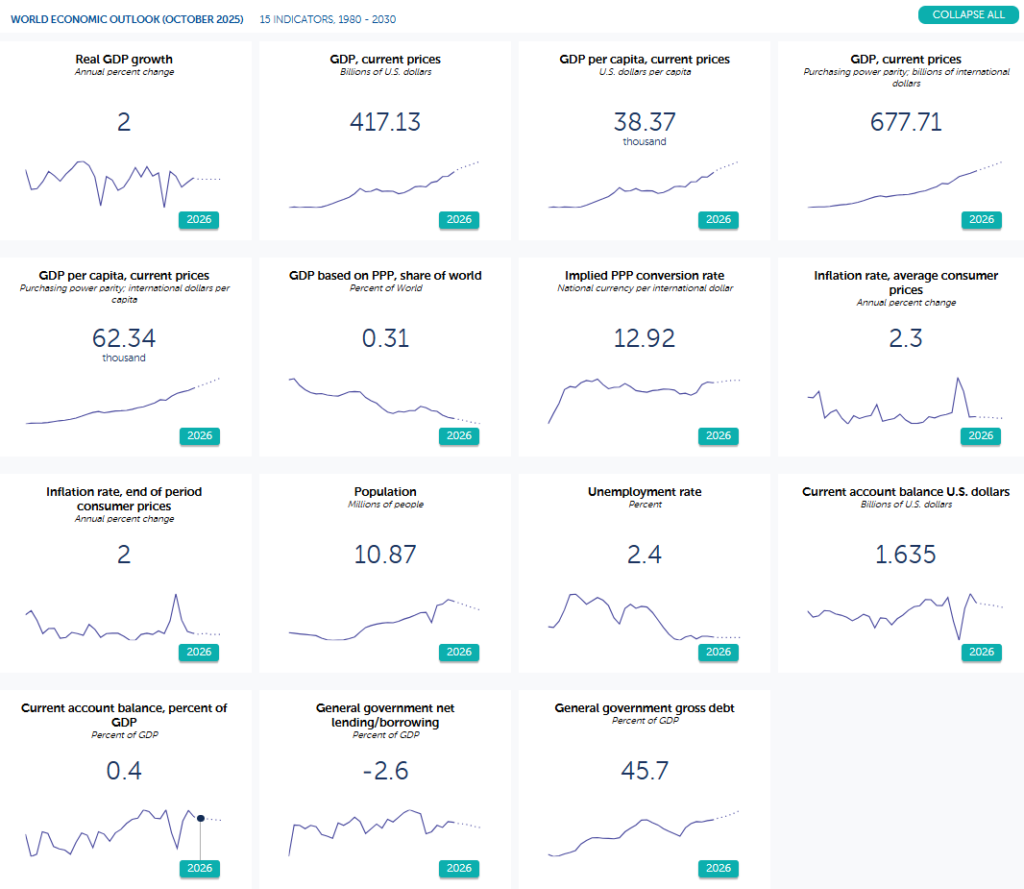
The Czech Republic’s economic situation in 2026 shows resilience and steady recovery. Following the disruptions caused by the COVID-19 pandemic and the Russia-Ukraine war, the country has managed to stabilize inflation and restore economic growth.
Since gaining independence from Czechoslovakia on January 1, 1993, the Czech Republic has consistently worked towards building a stable economy. After stagnation in 2023 due to high inflation, the economy rebounded with GDP growth of 2.4% in 2025 and is projected to reach 2.0% in 2026, according to the IMF.
Inflation has returned close to the Czech National Bank’s 2% target, easing from the elevated levels seen in previous years. As of December 2025, inflation stood at 2.1%, with projections of 2.3% for 2026. The unemployment rate remains among the lowest in the EU at 2.7% in 2025, though it is expected to increase modestly to 2.8-2.9% by 2027.
Despite facing an aging population due to a long-term decline in birth rates, the Czech Republic has demonstrated a strong commitment to technological advancement. This is evident in the country’s thriving tech ecosystem, which includes a growing number of IT companies, startups, and research institutions.
The Czech Republic is also embracing blockchain technology and cryptocurrency, reflecting its forward-thinking approach to digital innovation.
Current State of Crypto Adoption in the Czech Republic

Source: Unsplash
The Czech Republic has established itself as one of Europe’s most crypto-friendly nations, with a regulatory environment that has contributed to significant growth in adoption. The country has transitioned from a relatively permissive approach to implementing comprehensive EU-wide regulation while maintaining support for innovation.
Market Growth and Projections
The cryptocurrency market in the Czech Republic experienced substantial growth in 2025.
According to Statista, the revenue in the cryptocurrency market of the Czech Republic reached approximately US$473.9 million in 2025 and is projected to grow to US$495.1 million in 2026, representing an annual growth rate of 4.48%.
Trading volumes on domestic Czech exchanges surged by 50% in 2025, reaching 15.5 billion koruna (approximately $750 million), according to data reported by major Czech exchanges, including Simplecoin and Coingarage. This significant increase reflects growing investor interest and the integration of cryptocurrencies into mainstream investment portfolios.
User adoption has also expanded dramatically. As of 2025, the Czech Republic is home to more than 52,000 registered cryptocurrency users, reflecting an 18% year-over-year increase. Crypto ownership has reached approximately 12% of the adult population, positioning the Czech Republic among the top ten EU countries in digital asset adoption. The user penetration rate reached 45.96% in 2025 and is projected to increase to 48.37% by 2026.
Legal Status and Regulatory Framework
Since February 15, 2025, the eCzech Republic has fully implemented the EU’s Markets in Crypto-Assets (MiCA) regulation through the Digital Finance Act (Act No. 31/2025 Coll.).
The Czech National Bank (ČNB) has been designated as the competent authority for supervising the crypto-asset market, responsible for receiving notifications, processing license applications, and exercising supervisory powers over crypto-asset service providers (CASPs).
Under the new framework:
- All crypto-asset service providers must obtain a CASP license from the ČNB
- Existing Virtual Asset Service Providers (VASPs) operating before December 30, 2024, had until July 31, 2025, to apply for CASP licenses
- Those who submitted applications by the deadline can continue operations until July 1, 2026, or until their license application is decided
- The Financial Analytical Office (FAÚ) maintains oversight of AML/CTF compliance and regulates crypto-assets not covered by MiCA
Operating without a proper license carries severe penalties, with fines reaching up to €15 million or 15% of annual turnover, whichever is higher.
Cryptocurrency Usage Patterns
While cryptocurrencies are not widely used for everyday transactions across the entire Czech Republic, their use for investments and trading has increased substantially. Bitcoin remains the most widely used cryptocurrency, with Ethereum, Litecoin, and various stablecoins also maintaining significant market presence.
Prague, the capital city, stands out as one of Europe’s most crypto-friendly destinations, ranking as the second-best crypto city in Europe. The city has nearly 91 Bitcoin ATMs as of December 2024, with over half located in Prague. Residents and visitors can use cryptocurrency for a wide range of purchases, from coffee shops and restaurants to hotels and retail stores.
Factors Driving The Adoption of Cryptocurrencies in Czech Republic

Source: Freepik
Several factors are driving cryptocurrency adoption in the Czech Republic:
Technological Advancements
The increasing sophistication of blockchain technology and the development of user-friendly cryptocurrency wallets have made it easier for individuals in the Czech Republic to access and use cryptocurrencies. The country’s strong IT sector and tech-savvy population provide a solid foundation for crypto adoption.
Historic Central Bank Move
In November 2025, the Czech National Bank made history by becoming the first European central bank to purchase Bitcoin directly.
The ČNB created a $1 million test portfolio consisting of Bitcoin, a USD-pegged stablecoin, and a tokenized deposit. Governor Aleš Michl, who proposed the initiative in January 2025, emphasized the bank’s goal to gain practical experience with blockchain-based technologies and evaluate Bitcoin’s potential role in reserve diversification.
I came up with the idea of creating a test portfolio in January 2025. The aim was to test decentralised Bitcoin from the central bank’s perspective and to evaluate its potential role in diversifying our reserves.
This groundbreaking move has significantly boosted confidence in cryptocurrency among the Czech citizens and businesses, signaling official recognition of digital assets’ growing importance.
Revolutionary Tax Reform
Perhaps the most significant driver of adoption in 2025 was the implementation of the biggest benefits of cryptocurrency tax reform.
In February 2025, the Czech Republic introduced a time test that exempts cryptocurrency holdings from capital gains tax if held for more than three years. Additionally, annual transactions under CZK 100,000 ($4,000) are tax-exempt and do not need to be reported.
We pushed for better conditions for cryptocurrencies, made life easier for people, and supported modern technologies. The new time test guarantees that if you hold cryptocurrencies for more than three years, their sale will not be taxed.
This places the Czech Republic alongside Switzerland and the UAE as one of the world’s most tax-friendly jurisdictions for long-term cryptocurrency holders.
Economic Concerns
Many individuals in the Czech Republic view cryptocurrencies as a potential hedge against inflation and economic instability, particularly following the inflationary pressures experienced in recent years. With inflation now stabilized around 2%, cryptocurrencies continue to attract interest as an alternative investment and wealth preservation tool.
Financial Privacy
Cryptocurrencies offer a degree of financial privacy compared to traditional banking systems, making them attractive to people who value their financial autonomy. However, this must be balanced with the strict AML/KYC requirements now in place under MiCA.
Investment Opportunities
The potential for significant returns on investment continues to draw people to crypto trading. The increased institutional participation and clearer regulatory framework have made cryptocurrency investment more accessible and credible.
Government Support
The Czech government’s supportive stance on cryptocurrencies, including the favorable tax policies and the ČNB’s experimental Bitcoin purchase, has significantly influenced adoption rates. The comprehensive regulatory framework under MiCA provides clarity and protection for both businesses and consumers.
Cryptocurrency Usage in Various Sectors

Source: Freepik
In the Czech Republic, the use of cryptocurrency has grown across various sectors, driven by the country’s openness to innovative technologies. The following sectors utilize crypto in their activities:
Retail and E-commerce
Several Czech retail businesses and e-commerce platforms accept cryptocurrency payments, particularly Bitcoin.
Alza, one of the largest online retailers in the Czech Republic, has been accepting Bitcoin since 2017. This adoption highlights the growing use of crypto in day-to-day purchases and demonstrates the practical application of digital currencies in mainstream commerce.
Finance and Banking
While the Czech banks remain cautious about crypto, fintech companies are actively innovating with blockchain and cryptocurrencies.
What is a crypto exchange services and crypto wallets have proliferated, with several Czech companies providing comprehensive crypto-related services, including custody, trading, and payment solutions.
Under the new MiCA framework, crypto-asset service providers must obtain licenses from the ČNB, bringing them under proper regulatory oversight while ensuring consumer protection and market integrity.
Tourism and Hospitality
Prague’s reputation as a crypto-friendly city continues to grow. Hotels, restaurants, and tourist agencies in Prague and other major cities increasingly accept crypto payments, creating opportunities to cater to both tourists and locals interested in alternative payment methods. The widespread presence of Bitcoin ATMs throughout the city makes it convenient for visitors to use cryptocurrency.
Real Estate
Cryptocurrency is increasingly being accepted in real estate transactions, where buyers can purchase property using digital assets. Some real estate agencies now facilitate crypto payments to attract international investors, particularly those taking advantage of the 3-year tax exemption.
Tech Startups and Innovation
The Czech Republic is home to a vibrant tech startup scene, where blockchain technology is widely explored. Crypto is used for fundraising through token sales, with startups using blockchain for transparent and secure operations. The country’s supportive regulatory environment and skilled workforce make it an attractive destination for blockchain companies.
Notable the Czech blockchain companies include SatoshiLabs (creators of the Trezor hardware wallet), Invity, and numerous other startups contributing to the global cryptocurrency ecosystem.
Art and Collectibles
The rise of NFTs (Non-Fungible Tokens) has sparked interest among artists and collectors in the Czech Republic. Artists and galleries are adopting crypto as a means of buying, selling, and trading digital art on blockchain platforms, though NFTs remain outside MiCA’s scope under current legislation.
Crypto Laws in Czechia
Source: Freepik
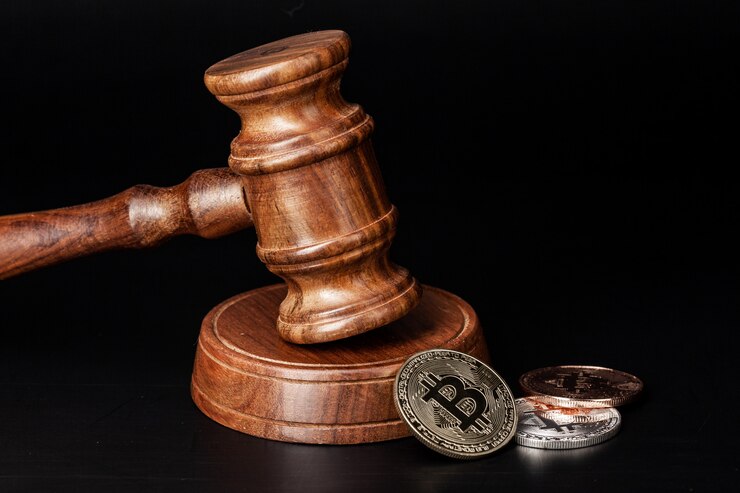
The regulatory framework surrounding cryptocurrencies in the Czech Republic underwent a fundamental transformation in 2025 with the implementation of MiCA. The following are notable points concerning crypto laws in the Czech Republic:
Legal Status of Cryptocurrencies
Cryptocurrencies like Bitcoin are not considered legal tender in the Czech Republic, but they are recognized as legitimate commodities and intangible assets. They are treated similarly to other financial assets for legal and tax purposes.
Markets in Crypto-Assets (MiCA) Implementation
The Digital Finance Act (Act No. 31/2025 Coll.), which came into force on February 15, 2025, serves as the Czech implementation of the EU’s MiCA regulation. Key aspects include:
- Designated Authority: The Czech National Bank is the primary regulator and supervisor for crypto-asset service providers
- Licensing Requirements: All CASPs must obtain licenses from the ČNB to operate legally
- Transitional Provisions: Existing operators who submitted CASP applications by July 31, 2025, can continue until their applications are decided (no later than July 1, 2026)
- Scope: MiCA covers crypto-asset services, including exchanges, custody, portfolio management, and trading platforms
- Exclusions: Unique NFTs and certain other digital assets remain outside MiCA’s scope
Anti-Money Laundering (AML) Regulations
The Czech Republic implements strict AML regulations in line with the European Union’s 5th Anti-Money Laundering Directive (5AMLD). The Financial Analytical Office (FAÚ) serves as the primary AML/CTF supervisor for crypto-asset service providers.
Crypto exchanges and service providers must:
- Register with the appropriate authorities
- Implement comprehensive KYC (Know Your Customer) procedures
- Report suspicious transactions
- Maintain detailed records of customer identities and transactions
- Comply with international sanctions regimes
Violations of AML requirements can result in substantial fines, up to CZK 10 million for failing to identify clients or report suspicious transactions.
Crypto Taxation
The Czech Republic introduced revolutionary cryptocurrency tax rules in February 2025:
For Individuals:
- 3-Year Time Test: Cryptocurrency gains are completely tax-exempt if assets are held for more than three years
- Value Test: Annual crypto income under CZK 100,000 ($4,000) is tax-exempt and does not need to be reported
- Short-Term Gains: Profits from crypto sold before three years are taxed at 15% (or 23% on income above CZK 1.582 million per year)
- Documentation: Holders must maintain proof of acquisition dates and holding periods to qualify for exemptions
For Businesses:
- Corporate income tax of 19% applies to cryptocurrency profits
- Businesses must maintain proper accounting records in the Czech koruna
- Cryptocurrency transactions must be recorded at the current exchange rates
- Mining operations are considered business activities subject to standard corporate taxation
Value Added Tax (VAT)
Cryptocurrencies are exempt from Value Added Tax (VAT) when traded, following the European Court of Justice’s Hedqvist ruling. However, businesses providing cryptocurrency-related services may need to register as VAT payers depending on their specific activities.
Crypto Exchanges and Licensing
Under MiCA, crypto exchanges and service providers operating in the Czech Republic must obtain CASP licenses from the Czech National Bank. The licensing process requires:
- Establishment as a legal entity in the Czech Republic (typically a limited liability company)
- Initial capital of €50,000 to €150,000, depending on the class of license
- Qualified management with proven expertise anda good reputation
- Comprehensive internal policies and procedures
- Robust IT systems and cybersecurity measures compliant with DORA (Digital Operational Resilience Act)
- Clear procedures for safeguarding client assets
- AML/CTF compliance programs
The licensing process typically takes 6-8 months, and approved CASPs gain passporting rights to operate across all EU member states.
Consumer Protection
MiCA significantly enhances consumer protection compared to previous regulations. Licensed CASPs must:
- Segregate client assets from company funds
- Provide a clear disclosure of the risks of trading cryptocurrency
- Maintain complaint handling procedures
- Ensure transparency in pricing and fees
Implement security measures to protect against crypto hacks.
Challenges to Crypto Adoption in Czechia

Source: Freepik
Despite the significant progress and growing interest in cryptocurrencies in the Czech Republic, several challenges remain:
Regulatory Compliance Burden
The implementation of MiCA has introduced substantial compliance requirements that can be challenging, particularly for smaller operators. The need for comprehensive internal controls, qualified personnel, and significant capital requirements creates barriers to entry.
Transition Period Complexity
The transition from the previous VASP regime to MiCA licensing has created uncertainty for some operators. Companies that failed to apply for CASP licenses by the July 31, 2025, deadline face the prospect of ceasing operations.
Limited Consumer Protection for Unregulated Activities
While MiCA provides strong protection for services within its scope, activities like staking, crypto-backed lending, and unique NFTs may fall outside the regulation, leaving consumers with limited recourse in case of problems.
Volatility of Cryptocurrencies
The price volatility of cryptocurrencies remains a significant concern. Despite the tax benefits for long-term holders, the unpredictable value fluctuations make cryptocurrencies less appealing for day-to-day transactions and can deter risk-averse individuals.
Taxation Complexity for Active Traders
While the 3-year exemption simplifies taxation for long-term holders, active traders still face the complexity of calculating gains, tracking holding periods for multiple transactions, and maintaining detailed records. The CZK 40 million annual cap on exemptions may also affect high-volume investors.
Crypto Scams and Security Concerns
The risks of crypto scams remain significant. Hacking, fraud, phishing attacks, and loss of private keys continue to pose threats. Many users struggle with proper security practices, and the irreversibility of crypto transactions means recovering from crypto lawsuits or theft can be difficult.
Banking Hesitance
Despite regulatory clarity under MiCA, some of the Czech banks remain cautious about serving crypto businesses. Opening and maintaining bank accounts for crypto-related companies can still be challenging, creating operational hurdles.
Limited Mainstream Merchant Adoption Outside Prague
While Prague has embraced crypto payments, adoption in other Czech cities and rural areas remains limited. Most merchants outside major urban centers do not accept cryptocurrency, restricting its practical utility for everyday purchases.
Educational Gap
Many Czechs still have limited knowledge about how crypto payments work and blockchain technology. The complexity of concepts like Bitcoin or altcoins, private keys, and wallets creates barriers to adoption, especially among older or less tech-savvy populations.
Proof of Reserves Concerns
Following several high-profile exchange failures globally, the Czech users are increasingly concerned about crypto exchanges’ proof of reserves. While MiCA requires asset segregation, building trust takes time.
Opportunities and Potential of Cryptocurrency Adoption in Czechia

Source: Freepik
Several opportunities and potential benefits could drive the growth of cryptocurrency across different sectors in the Czech Republic, especially as adoption continues to expand. The following are areas that could be impacted:
Finance and Innovation
Cryptocurrencies drive innovation in finance. The adoption of crypto in the Czech Republic offers opportunities for financial inclusion, particularly for those seeking alternatives to traditional banking. With cryptocurrency lending platforms and DeFi solutions growing in popularity, the Czech Republic could become a hub for fintech innovation—not only transacting with crypto but providing comprehensive crypto-based financial services such as lending, borrowing, and staking.
The tax-friendly environment creates incentives for long-term holding strategies, potentially contributing to cryptocurrency market efficiency and reduced volatility.
Blockchain for Government Services
The Czech government has opportunities to explore blockchain technology for public services such as digital identity verification, voting systems, and land registries. Using blockchain can improve transparency, efficiency, and security in public administration.
Crypto Tourism
Prague’s reputation as a crypto-friendly city is a significant asset. The capital is already a major tourist destination, and integrating crypto payments more broadly across hotels, restaurants, and tourist attractions offers convenience to international visitors, especially those from crypto-friendly countries. This could further boost tourism by positioning the Czech Republic as a forward-thinking, tech-friendly destination.
The annual BTC Prague conference has become a significant event in the global crypto calendar, attracting thousands of visitors and reinforcing the city’s status as a crypto hub.
Startups and Tech Ecosystem
The Czech Republic has a thriving tech startup scene, and cryptocurrencies play a key role in fundraising and innovation. The MiCA framework, while imposing compliance requirements, also provides legal certainty that can attract foreign investment. The blockchain and crypto sectors could create new jobs, helping to offset concerns about the aging population.
Growing Retail Acceptance
As more businesses like Alza accept cryptocurrencies, the retail sector has significant opportunities to expand crypto usage. Small and medium enterprises (SMEs) can benefit from accepting crypto payments by attracting tech-savvy customers and reducing payment processing fees. The growing network of Bitcoin ATMs facilitates easy conversion between crypto and fiat currencies.
Crypto as an Investment Asset
With the 3-year tax exemption and growing awareness of cryptocurrencies as investment assets, the Czech investors and financial institutions can use digital assets for portfolio diversification. The ČNB’s experimental Bitcoin purchase has lent credibility to crypto as a legitimate asset class. Crypto-friendly laws and transparent tax policies encourage more individuals and institutions to consider crypto for investment.
Understanding cryptocurrency accumulation and distribution indicators can help the Czech investors make more informed decisions.
Educational and Research Hub
The Czech universities and research institutions can lead in blockchain and cryptocurrency education, creating a skilled workforce. Academic programs and research initiatives could position the Czech Republic as a center of excellence for blockchain development and crypto knowledge.
Cross-Border Payments and Remittances
Faster, cheaper cross-border remittance transactions are particularly beneficial for the Czech businesses engaged in international trade. They can bypass traditional banking systems with high fees, especially when dealing with non-EU countries. The efficiency gains can improve competitiveness.
Tokenization of Real Assets
The tokenization of real estate, art, and other high-value assets presents opportunities for the Czech Republic. By enabling fractional ownership and simplifying transactions, tokenization can make investments more accessible to a wider audience and increase liquidity in traditionally illiquid markets.
European Passport Advantage
CASP licenses issued by the Czech National Bank provide passporting rights throughout the EU. This makes the Czech Republic an attractive base for crypto businesses seeking to serve the entire European market from a single location with clear regulatory oversight.
Conclusion
The Czech Republic exemplifies how cryptocurrency adoption is shaping global markets and establishing new paradigms for financial innovation. The country has positioned itself as one of Europe’s leading crypto hubs through a combination of progressive regulation, tax incentives, and official recognition of digital assets’ importance.
The implementation of MiCA in February 2025 brought comprehensive regulation and consumer protection, while the 3-year tax exemption for cryptocurrency holders and the Czech National Bank’s historic Bitcoin purchase demonstrated government support for digital innovation.
These policies are powerful drivers of adoption, attracting both individual investors and businesses to the Czech crypto ecosystem.
Despite challenges such as market volatility, compliance complexity, and educational gaps, the potential benefits are extensive. Enhanced financial inclusion, technological innovation, efficient cross-border payments, and new investment opportunities are reshaping the Czech financial landscape.
Prague’s status as Europe’s second-most crypto-friendly city and the presence of nearly 91 Bitcoin ATMs demonstrate the practical integration of cryptocurrency into daily life.
As the Czech Republic continues to refine its approach and more EU member states harmonize their crypto regulations under MiCA, the Czech Republic’s early adoption and supportive policies position it to remain at the forefront of the cryptocurrency revolution, potentially paving the way for a more innovative, inclusive, and efficient financial system in Europe and beyond.