


Crypto Law in Latvia

Latvia has been proactive in creating a regulatory framework for cryptocurrencies and blockchain technology. The country has fully embraced the European Union’s Markets in Crypto-Assets (MiCA) Regulation, which provides a harmonized, EU-wide licensing system.
The “Crypto-Asset Service Law” was passed to implement MiCA in Latvia, positioning the country as a hub for compliant blockchain and cryptocurrency enterprises.
Key Provisions
The Crypto-Asset Service Law, which takes full effect in line with MiCA, designates the Bank of Latvia (Latvijas Banka) as the national competent authority for licensing and supervision.
The law introduces specific fees, including a licensing fee of €2,500 and an annual supervisory fee capped at 0.6% of gross crypto-asset related income, which is considered highly competitive.
It also outlines penalties for non-compliance and clarifies obligations for market participants. Notably, Latvia has chosen not to “gold-plate” the regulation, meaning it does not add significant local requirements on top of MiCA.
Regulatory Authority and Framework
The primary authority overseeing the new Crypto-Asset Service Provider (CASP) licensing and supervision is Latvijas Banka (Bank of Latvia). This replaces the previous, less formal Virtual Asset Service Provider (VASP) registration system.
While Latvijas Banka handles licensing, the Financial Intelligence Unit of Latvia (FIU Latvia) remains the crucial authority for enforcing Anti-Money Laundering (AML) and Counter-Terrorist Financing (CTF) laws. All CASPs must comply with strict AML/CTF obligations, including reporting suspicious transactions to the FIU.
FIU Latvia is actively working to bolster knowledge in this area through training and international conferences.
Licensing Requirements for Crypto Businesses
To legally operate in Latvia, businesses must now obtain a Crypto-Asset Service Provider (CASP) license from Latvijas Banka. The old VASP registration must be transitioned to a CASP license by June 30, 2025.
The MiCA framework implemented by Latvia categorizes licenses into classes based on the services offered, each with a different minimum share capital requirement:
- Class 1 (e.g., advising, order execution): €50,000
- Class 2 (adds custody, crypto-to-fiat exchange): €125,000
- Class 3 (adds operation of a trading platform): €150,000
Key requirements for the application include:
- Company Formation: A registered Latvian company (SIA).
- Documentation: A comprehensive business plan, clean criminal records for owners, and a full set of internal policies covering AML/KYC, risk management, cybersecurity, client asset safeguarding, and governance.
- Governance: Key personnel must pass “Fit and Proper” checks, and the company must have a clear governance structure, often including a dedicated AML Compliance Officer.
The entire process, from company formation to license approval, is estimated to take several months, with the regulator’s review period quoted at 2-6 months or 60-90 business days.
Taxation of Cryptocurrencies
Latvia’s tax system is a significant advantage for crypto companies. While profits from trading are subject to capital gains tax, the corporate tax model is uniquely favorable:
- 0% Corporate Income Tax: CASP companies pay no corporate income tax on retained (undistributed) profits.
- Tax on Distribution: Tax is triggered only when profits are distributed to shareholders (e.g., as dividends).
This model is highly attractive for startups and growing companies that intend to reinvest their earnings back into the business.
Consumer Protection and Data Security
Consumer protection is a cornerstone of the new MiCA framework and Latvia’s crypto regulations. CASPs are required to have extensive internal policies to protect clients, including:
- Client complaint handling procedures
- Client information and best-interest policies
- Segregation of client crypto-assets and funds from company funds
For data security, CASPs must also comply with the EU’s Digital Operational Resilience Act (DORA). This regulation mandates robust IT and cybersecurity policies, including business continuity plans, incident response plans, and ICT systems security policies.
Current State of Crypto Adoption in Latvia
Latvia is witnessing a growing interest in cryptocurrencies, with a surge in local start-ups and government initiatives promoting blockchain technology. However, this growth faces challenges.
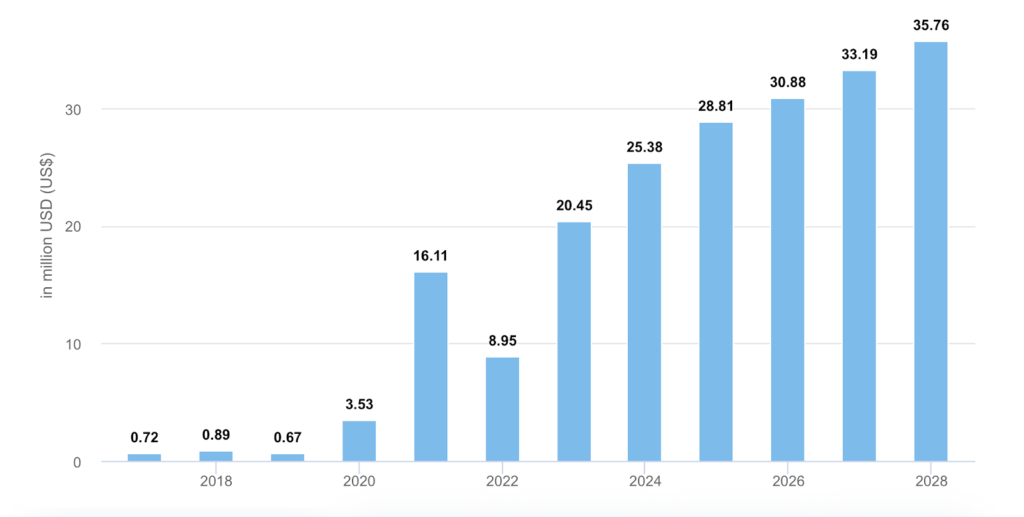
The market projections for Latvia, according to Statista for 2025-2026, are as follows:
- Revenue: US$4.4 million in 2025.
- Average Revenue Per User (ARPU): US$29.30 in 2025.
- User Penetration: 8.04% in 2025, rising to 8.49% (155,800 users) by 2026.
A significant challenge noted by the central bank and FIU is a recent decline in crypto investment, attributed to widespread fraud, market insolvency, and money laundering concerns.
FIU Latvia’s reports show that the vast majority of suspicious transaction reports related to crypto come from credit institutions reporting their customers as victims of investment fraud (e.g., “bogus brokers”).
In response, Latvia is actively working to build a safe and innovative environment.
Innovation Hub: The Bank of Latvia runs an “Innovation Hub” and “Regulatory Sandbox” to provide free consultations to fintech projects and help them navigate the licensing process.
Pro-Crypto Legislation: In a significant move, amendments to the Latvian Commercial Law now make it possible to pay for a company’s share capital using crypto-assets.
In the cryptocurrency market, the number of users is expected to amount to 155,800 users by 2026.
Cryptocurrency Usage in Various Sectors in Latvia
Cryptocurrency is being adopted across various sectors in Latvia, each with unique use cases and benefits
Finance and Banking
This is the most dynamic sector. Latvia has a stated ambition to become a leading European fintech destination. Key developments include:
- Direct SEPA Access: In a “groundbreaking step,” the Bank of Latvia grants non-bank payment service providers (like Payment Institutions, EMIs, and licensed CASPs) direct access to its retail payment system (EKS) and, by extension, SEPA . This allows fintechs to execute client payments without relying on commercial banks.
- Fighting De-Risking: The government and Bank of Latvia are actively fighting the “unreasonable de-risking” approach of commercial banks, many of which have been reluctant to offer services to fintech and crypto companies.
- Bank Exploration: Traditional banks like Rietumu Banka and BlueOr Bank are exploring blockchain solutions to improve cross-border payments and other processes.
Retail Sector
In retail, cryptocurrency adoption is progressing as consumers in Latvia show increasing interest in digital assets.
Although cryptocurrency is not yet universally accepted as a payment method across all stores, several e-commerce platforms and select physical retailers in Latvia now accept popular cryptocurrencies like Bitcoin and Ethereum.
This allows retailers to cater to crypto-savvy customers and extend their market reach beyond Latvia’s borders. For example, some retailers find that cryptocurrency payments, which bypass intermediaries, reduce transaction fees, offering potential savings.
Also, blockchain applications in retail can support supply chain transparency and product authenticity, which are valuable in sectors like luxury goods and pharmaceuticals.
Supply Chain and Logistics
The logistics and supply chain industry in Latvia benefits from blockchain technology’s transparency and traceability features. Blockchain’s application in supply chains helps companies track goods from origin to destination, addressing common issues like fraud, counterfeiting, and delays.
Smart contracts facilitate the automation of payments and order processes, leading to faster and more efficient logistics management.
Cross-border transactions using cryptocurrency reduce dependency on banks and traditional financial institutions, allowing for near-instantaneous payments, which is particularly beneficial for Latvia’s import/export businesses.
Though this transformation is still in its early stages, the gradual adoption is helping Latvian companies participate in a global supply chain ecosystem.
Public Sector and Government Initiatives
While the Latvian government maintains a cautious approach to direct cryptocurrency usage, it has shown interest in blockchain’s potential to improve public sector efficiency. Blockchain’s transparent and tamper-resistant nature is suitable for record-keeping and data management, offering the potential for land registries, tax records, and digital identities.
Government-led pilot programs and collaborations with blockchain firms aim to explore these applications, even though cryptocurrency itself is strictly regulated. This interest in blockchain without full endorsement of cryptocurrency payments aligns with Latvia’s focus on minimizing risks related to digital asset volatility and illicit activities
According to the Latvian Blockchain and Crypto Association (LBAA), there are currently around 30 companies in Latvia actively working in the fields of crypto-assets and blockchain.
Benefits of Cryptocurrency Integration in Latvia

(Source: Fintech News)
Latvia offers a unique and highly competitive set of advantages for licensed crypto-asset businesses.
- EU Passporting for Crypto Services
A CASP license obtained in Latvia grants full passporting rights across all 30 European Economic Area (EEA) countries under MiCA. A single, compliant license allows a business to access the entire EU market, saving significant time and compliance costs.
- Tax-Efficient Corporate Environment
Latvia’s 0% corporate tax on undistributed profits is a major draw. This allows crypto companies to reinvest 100% of their earnings tax-free, fostering rapid growth and innovation.
- Transparent and Supportive Regulator
The Latvijas Banka is known for its clear communication and support for innovation. It offers pre-application consultations and an Innovation Sandbox to help companies align with MiCA requirements from the start.
- Competitive Operational and Supervisory Costs
Latvia offers lower operational and labor costs than Western Europe. Furthermore, its supervisory fees for CASPs are considered the “best in the Baltics,” capped at 0.6% of gross income, compared to potentially higher fees elsewhere .
- Advanced Fintech Infrastructure
Licensed CASPs that offer payment services can gain direct access to the central bank’s SEPA payment system, a rare advantage that provides independence from traditional banks.
- Remote Incorporation & Licensing
The entire process of setting up a company and applying for a license can be completed remotely via a Power of Attorney, making it highly accessible for international founders.
- Enhanced Financial Inclusion
Cryptocurrency offers a way for unbanked or underserved populations in Latvia to access financial services easily.
For example, the Latvian platform Mintos provides peer-to-peer lending options, allowing individuals to invest in and access credit without a traditional bank account.
Residents in remote areas can perform transactions and send remittances globally without depending on bank branches by using crypto wallets and decentralized finance (DeFi) apps. When crypto solutions like Mintos grow, more Latvians can engage in the financial system regardless of their access to banks.
- Enhanced Security and Privacy
Blockchain technology offers high levels of security due to its transparent, decentralized ledger system, which records each transaction permanently. In Latvia, companies like TWINO, a regulated P2P platform, use blockchain to ensure secure transactions.
This helps reduce fraud risk, as blockchain transactions are immutable and traceable. Latvian consumers benefit from this enhanced security, which builds trust in digital finance and reduces data privacy concerns.
Challenges of Cryptocurrency Integration in Latvia

(Source: Depositphotos)
Despite its advantages, Latvia faces significant, documented challenges.
- Risk of Financial Crime
The FIU Latvia report details extensive financial crime associated with crypto. The primary challenges are investment fraud (bogus brokers) , “money mule” schemes, and the use of crypto to pay for illicit goods on the DARKNET.
- Commercial Bank “De-Risking”
A major hurdle for the industry is the reluctance of Latvian credit institutions to open bank accounts for VASPs/CASPs. Banks classify the sector as high-risk, hindering operators’ ability to conduct business. The government is actively working to combat this “unreasonable” de-risking.
- Lack of Reporting and Gaps in Understanding
The FIU noted that in the second half of 2022, it had not received a single suspicious transaction report from a VASP. Reports primarily come from banks reporting victims of fraud. This points to a “lack of common understanding” of the technology and risks in parts of the public and private sectors.
- Law Enforcement Gaps
Investigative bodies report obstacles in tackling crypto-crime, including a lack of technical resources, professional analytical software, and clear international information-sharing mechanisms with foreign VASPs.
- Consumer Protection Concerns
The high incidence of Latvians falling victim to crypto investment fraud highlights a significant consumer protection challenge.
Future Prospects and Trends for Cryptocurrency Adoption in Latvia
Here are some key trends and prospects for crypto in Latvia:
Full MiCA Implementation
With the MiCA framework now in place and Latvijas Banka offering pre-licensing consultations, Latvia is positioned to attract new, compliant crypto businesses.
Growth in Blockchain Use by Financial Institutions
Latvian banks and financial institutions are gradually exploring blockchain’s potential, especially for enhancing operational efficiency in cross-border payments. Latvian banks aim to reduce costs and increase speed for international transactions, a key benefit for a country with significant cross-border trade, by using blockchain technology.
While Latvian banks remain cautious of crypto’s volatility, blockchain’s utility in secure, low-cost transactions is expected to continue drawing interest from the financial sector.
Digital Innovation Initiatives
By offering competitive fees, not adding extra “gold-plating” rules, and providing a clear path to an EU passportable license, Latvia is actively encouraging CASPs to choose it as their European base.
The Latvian government views digital innovation, including blockchain and cryptocurrency integration, as central to economic growth. Latvia’s Ministry of Economics has allocated substantial funds to support smart technologies, aiming to double the economy by 2035.
This focus on technology includes a vision for blockchain to transform digital transactions across various sectors, offering a streamlined system that benefits both the private and public sectors.
Potential for Crypto and Blockchain Startups
Latvia’s growing tech ecosystem, combined with government backing, is fostering a favorable environment for blockchain and crypto startups.
The Latvian Blockchain Association and various initiatives are helping local businesses navigate the complex regulatory landscape while driving innovation.
This environment, bolstered by the forthcoming MiCA regulations, could position Latvia as an attractive destination for European crypto and blockchain startups, especially those looking to leverage the country’s favorable business climate.
Rising Popularity of Digital Payments
The popularity of digital and mobile payments in Latvia is encouraging more individuals and businesses to explore cryptocurrencies for everyday transactions.
While crypto is not yet widely used for payments in Latvia, increasing interest in decentralized digital finance may spur more businesses to accept crypto payments in the coming years. However, widespread adoption will likely depend on regulatory clarity, improved financial literacy, and increased consumer trust in crypto’s stability.
Conclusion
Latvia’s crypto adoption strategy shows a careful balance between promoting innovation and ensuring financial stability and compliance with EU standards.
By being one of the first to fully implement MiCA, offering a supportive regulator, and providing unique advantages like 0% corporate tax on retained profits and direct SEPA access, Latvia is building a powerful, supportive environment for digital finance.
As these new regulatory frameworks strengthen, Latvia is making a serious bid to become a primary, compliant hub for crypto and blockchain businesses in the Baltics and across Europe.