


Crypto adoption in Palau is taking a sophisticated turn, as the small island nation is making waves in a way you might not have anticipated. While the world’s eyes often focus on giants like the U.S. and China, Palau is quietly implementing a robust regulatory framework for the digital age.
Despite its small size and population of approximately 18,000 people, Palau is aiming to carve out a space in digital currency. The country has moved beyond initial testing to propose a fully regulated digital payment system that issues “tokenized dollars” on a government-backed blockchain.
Why does this matter? For a nation like Palau, which relies heavily on tourism, crypto isn’t just a tech trend. It’s a real opportunity to reshape how they interact with the world economically and financially.
This move isn’t just about staying trendy or getting attention. It’s about making everyday transactions more efficient, lowering high credit card transaction fees for local merchants, and offering better services to visitors.
Stick around as we take an in-depth look at the bold steps Palau is taking and what this could mean not only for the island but for the global crypto community.
“Palau has a population of approximately 18,000 people.”
Current Economic Situation in Palau
Palau’s economy is experiencing a strong rebound following the challenges of the past few years.
The island nation has seen its economy recover robustly, with growth reaching an estimated 6.7% in FY2025. This marks a significant turnaround from the sharp contractions seen during the pandemic era.
The tourism-dependent economy is revitalizing, supported by the launch of the new “Sustainable Tourism Strategy 2025–2028,” which aims to deliver stronger benefits for Palauans while protecting the environment.
While the construction and tourism sectors are driving this recovery, the country has also managed to contain costs. Inflation has stabilized significantly, experiencing a decrease of –0.9% in FY2025, a stark improvement from the price spikes driven by global supply chain disruptions in previous years.
In response to economic evolution, Palau has maintained fiscal prudence. The government continues to implement tax reforms, including the Palau Goods and Services Tax (PGST), which has helped improve the fiscal position and turn deficits into surpluses.
Notably, the country is formalizing its fintech initiatives. The government is moving to establish a “National Digital Payment System” by law, designed to reduce dependence on expensive foreign payment networks and credit cards. This legislation marks a significant maturity in Palau’s economic strategy, positioning the nation as a regulated leader in the global digital economy.
Current State of Crypto Adoption in Palau
Source: Image by Freepik
The Republic of Palau is taking significant strides in cryptocurrency adoption, moving from experimental pilots to a proposed permanent national framework.
In partnership with Ripple, Palau successfully completed phases of its stablecoin pilot program. The success of these trials has led to the drafting of a new bill in 2025 that seeks to amend Title 40 of the Palau National Code, officially establishing a government-sponsored digital payment system.
This new legislation defines the “tokenized dollar” not as a speculative cryptocurrency, but as a digital token issued by the Ministry of Finance, backed one-to-one by the U.S. Dollar held in reserve. This distinction is crucial for stability; the value does not fluctuate and cannot be mined.
The pilot confirmed that such a system could improve efficiency and transparency while maintaining the country’s monetary alignment with the U.S. dollar. The proposed system allows individuals and businesses to use digital wallets for lawful transactions, including paying taxes and government fees.
The system is designed to be inclusive. The Ministry of Finance is authorized to collaborate with private partners to manage technical operations, ensuring that the infrastructure is secure and compliant with anti-money laundering (AML) laws.
Palau’s venture into a regulated tokenized dollar system is a notable example of how blockchain can drive financial innovation in small nations. By adopting a government-backed model, Palau is prioritizing regulatory safety while positioning itself as a leader in digital finance within the Pacific region.
Factors Driving Crypto Adoption in Palau
Source: Soramitsu
The factors driving crypto adoption in Palau reflect a blend of practical financial needs, government partnerships, and regional digital innovation.
Collaboration with Ripple
Notably, Palau has actively leveraged blockchain technology to advance financial inclusion and economic growth. This is evident through its partnership with Ripple to create the technical infrastructure for the tokenized dollar.
The proposed National Digital Payment System leverages this technology to provide citizens with a secure digital currency option that promotes efficient transactions and lowers remittance costs.
Given Palau’s reliance on the U.S. dollar and the high fees associated with foreign credit card networks, such initiatives address both accessibility and affordability.
Palau Invest Initiative
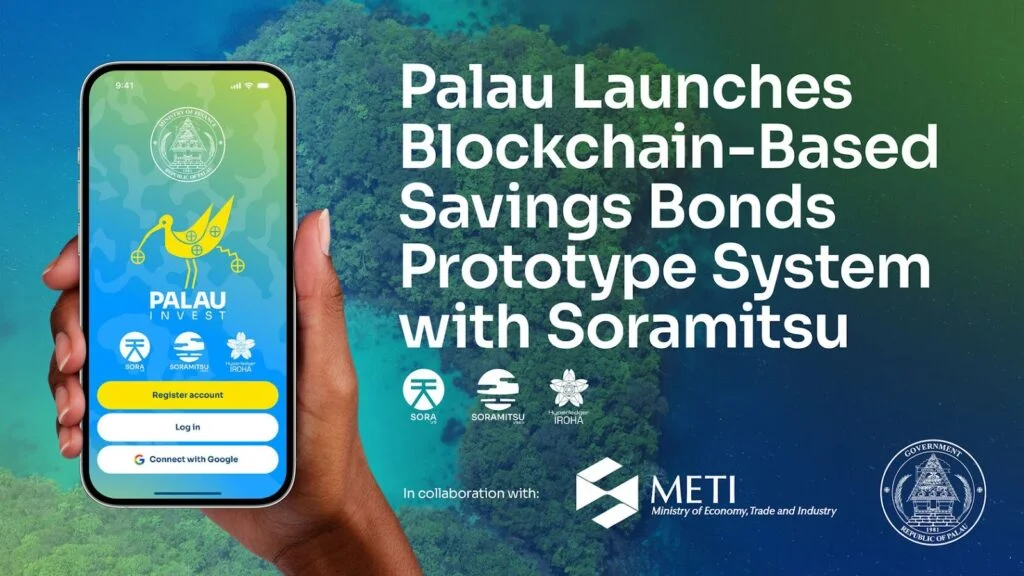
Palau’s efforts extend beyond payment systems to investment innovation. Through the Palau Invest initiative, developed in collaboration with Japan’s Soramitsu, the country has launched a prototype system for blockchain-based government savings bonds. This platform enables residents to participate in economic growth directly by investing in national infrastructure projects via a mobile app.
The appeal of blockchain for these projects stems from its transparency, security, and accessibility. This resonates with Palauan citizens looking for straightforward, tech-enabled financial solutions.
Digital Transformation of Asia-Pacific region
The region’s broader digital transformation also contributes to adoption. The Asia-Pacific area, known for its proactive embrace of blockchain, sees Palau joining other island nations in utilizing blockchain solutions to modernize financial services.
This cultural receptivity to tech-driven finance and Palau’s strategic partnerships place it as a proactive player in blockchain innovation.
“Palau’s digital currency, PSC, is built on the XRP Ledger, ensuring secure transactions.”
Cryptocurrency Usage in Various Sectors
Cryptocurrency is steadily advancing across various sectors in Palau, offering tailored solutions that address unique financial and operational needs.
Finance
In finance, Palau’s partnership with Ripple to develop a government-backed stablecoin, exemplifies how countries without central banks are leveraging cryptocurrency to enhance financial inclusion and streamline payments.
This initiative, backed by Palau’s Ministry of Finance and Ripple’s blockchain technology, supports the local economy. It simplifies transactions, reduces costs, and provides financial access to populations through digital wallets instead of traditional bank accounts.
Travel Sector
In the travel sector, the push for digital payments aligns with the new Sustainable Tourism Strategy 2025–2028. By reducing transaction costs for tourists and businesses, the digital payment system supports a more efficient economy.
Tourists can utilize digital wallets to conduct lawful transactions within the Republic, simplifying their spending experience.
Logistics and Supply Chains
Blockchain technology also benefits logistics and supply chains, enabling transparent and efficient tracking of goods from origin to destination. This is particularly valuable in industries that require stringent quality control, such as pharmaceuticals and agriculture.
Cryptocurrency Regulation in Palau
Source: Harris Beach PLLC
Cryptocurrency regulation in Palau has seen significant developments in 2025 as the country seeks to both attract crypto innovation and ensure financial security.
The legislative landscape is maturing rapidly with the introduction of Chapter 28 to Title 40 of the Palau National Code. This bill establishes strict regulatory safeguards for the digital payment system, including measures to prevent money laundering and terrorist financing (AML/CFT).
The Ministry of Finance serves as the primary regulator, authorized to promulgate regulations regarding technology protocols, user eligibility, and consumer protection. Importantly, the law mandates that any private partner operating the system must be subject to licensing and compliance with the Money Laundering and Proceeds of Crime Act.
In addition, the Digital Residency Program continues to be a cornerstone of Palau’s regulatory innovation. Governed by the Digital Residency Program Cyber Security Regulation, the program offers global citizens a government-issued digital ID. The program fee structure is now established at $248 for one year, $1,039 for five years, or $2,039 for ten years.
This program allows non-residents to access a legal identity on the blockchain, facilitating KYC verification on major crypto exchanges like Binance and Kraken. However, the regulation explicitly states that this digital ID provides residency status only, not citizenship.
“Palau is one of the first Pacific nations to embrace blockchain for financial inclusion.”
Challenges Facing Crypto Adoption in Palestine
Palau faces a range of challenges in adopting cryptocurrency, influenced by regulatory, infrastructural, and environmental concerns.
Firstly, while the new National Digital Payment System bill provides a framework, implementing it requires careful navigation. The International Monetary Fund (IMF) in its 2025 Article IV mission recommended a “cautious approach” to digital initiatives like the tokenized dollar, advising the government to address inherent risks and gaps in the legal and prudential frameworks before full scale-up.
Environmental concerns also present challenges. While the tokenized dollar is pre-mined and does not require energy-intensive mining, the broader crypto sector’s energy consumption remains a consideration for Palau, which is committed to environmental sustainability and net-zero goals.
Lastly, digital infrastructure impacts adoption. While internet penetration is improving, ensuring consistent, high-speed access across all scattered islands is vital for a fully digital economy. The Ministry of Finance has mandated that the new system must be secure and efficient, but the technical execution of such a nationwide platform remains a complex logistical task.
“Various local businesses in Palau, like Surrangel and Sons, accept cryptocurrencies for payment.”
The Potential for Cryptocurrency in Palau
The potential for cryptocurrency in Palau is promising, especially as the nation leverages digital finance to improve economic growth and financial inclusion.
With the legislative advancement of the tokenized dollar, Palau is moving toward a system where digital assets are backed 1:1 by the USD. This offers a secure alternative for transactions, potentially easing remittance flows and providing Palauans with an accessible and stable digital currency that avoids the volatility of speculative assets.
Beyond local benefits, cryptocurrency positions Palau as an attractive hub for digital nomads and businesses interested in blockchain. Through Palau’s Digital Residency Program, foreign entrepreneurs gain access to a trusted digital identity that bridges the gap between Web3 and traditional finance.
This digital residency and currency initiative aligns with Palau’s vision to create a tech-friendly environment that attracts global interest and stimulates economic diversification.
Conclusion
Palau’s progressive embrace of cryptocurrency marks a unique step for a small island nation aiming to redefine its economic future.
By advancing the National Digital Payment System and refining its digital residency offerings, Palau has strategically positioned itself within the global crypto market. The 2025 economic outlook is positive, with robust growth of 6.7%, suggesting that the nation’s modernization strategies are beginning to bear fruit.
While challenges such as infrastructure limitations and the need for cautious regulatory implementation remain, Palau’s commitment to integrating digital finance presents a pathway to economic resilience and financial inclusion.
Crypto adoption in Palau stands as a compelling example of how small nations can harness blockchain technology to unlock new opportunities for growth and sustainability.