


Im Jahr 2025 werden weltweit über 659 Millionen Menschen Kryptowährungen nutzen, doch die meisten von ihnen können sie nicht ausgeben, ohne einen Reisepass, einen Kontoauszug und ein Selfie vorzulegen. Bitcoin sollte eigentlich digitales Bargeld sein.
Eine Möglichkeit, Geld direkt von einer Person an eine andere zu senden, ohne eine Bank als Zwischenhändler. Doch irgendwann haben sich die meisten Krypto-Zahlungsdienstleister in digitale Kopien desselben Systems verwandelt, von dem die Menschen sich eigentlich abwenden wollten.
Heute verlangen 68 % der Krypto-Zahlungsabwickler eine vollständige Know Your Customer (KYC) -Verifizierung, bevor ein Händler auch nur eine einzige Zahlung annehmen kann.
Und die Daten zu den weiteren Entwicklungen sind nicht ermutigend: 41 % der Nutzer brechen den Zahlungsvorgang vollständig ab, wenn sie ihre Identität verifizieren müssen (Chainalysis, 2025). Diese Hürde bedeutet entgangenes Geld und widerspricht dem eigentlichen Sinn der Akzeptanz von Kryptowährungen.
Doch es gibt auch eine andere Seite der Medaille. Anonyme Krypto-Zahlungsportale, Dienste, die keinerlei Identitätsprüfung erfordern, verarbeiten mittlerweile jährlich Händlertransaktionen im Wert von über 2.8 Milliarden US-Dollar.
Diese Gateways haben sich zu einer echten, funktionierenden Alternative sowohl zu herkömmlichen Prozessoren als auch zu ihren KYC-intensiven Krypto-Äquivalenten entwickelt.
Ob Sie ein Unternehmen in einer Branche führen, die Zahlungsabwickler meiden, Kunden in Regionen ohne zuverlässigen Bankzugang bedienen oder einfach Wert auf finanzielle Privatsphäre legen – anonyme Zahlungsgateways sind zu einer ernstzunehmenden Option geworden, die es wert ist, genauer betrachtet zu werden.
Das Problem ist, dass die meisten verfügbaren Informationen entweder oberflächlich, veraltet oder von den Gateways selbst verfasst sind. Dieser Artikel ist anders.
Folgendes behandelt dieser Artikel:
- Eine klare Erklärung, was anonyme Krypto-Zahlungsportale eigentlich sind und wie sie funktionieren
- Eine vollständige Geschichte der Entwicklung (und des Überlebens) des Zahlungsverkehrs ohne KYC-Prüfung.
- Wie die Technologie hinter diesen Gateways in einfachen Worten funktioniert
- Die verschiedenen Arten von Anonymisierungsportalen und für welche Situationen sie jeweils geeignet sind
- Ein Vergleich der führenden Anbieter, die im November 2025 tätig sind
- Die zugrunde liegenden Datenschutztechnologien, darunter Monero, Zcash und das Lightning Network.
- Die rechtlichen Risiken und das regulatorische Umfeld, die Sie verstehen müssen, bevor Sie eines verwenden
- Ein praktischer Rahmen für die Auswahl des richtigen Gateways für Ihr Unternehmen
Dies ist keine Produktwerbung. Es handelt sich um einen vollständigen Leitfaden, der im März 2026 auf Basis aktueller Marktdaten und regulatorischer Entwicklungen verfasst wurde.
Holen Sie sich die UPay Crypto Card
Erleben Sie das Beste aus Online-Zahlungen und nahtlosen Krypto-Transaktionen.
Jetzt registrierenWer nutzt anonyme Zugangsportale und warum?
Es ist hilfreich zu verstehen, wer diese Dienste tatsächlich nutzt, bevor man sich damit beschäftigt, wie sie funktionieren.
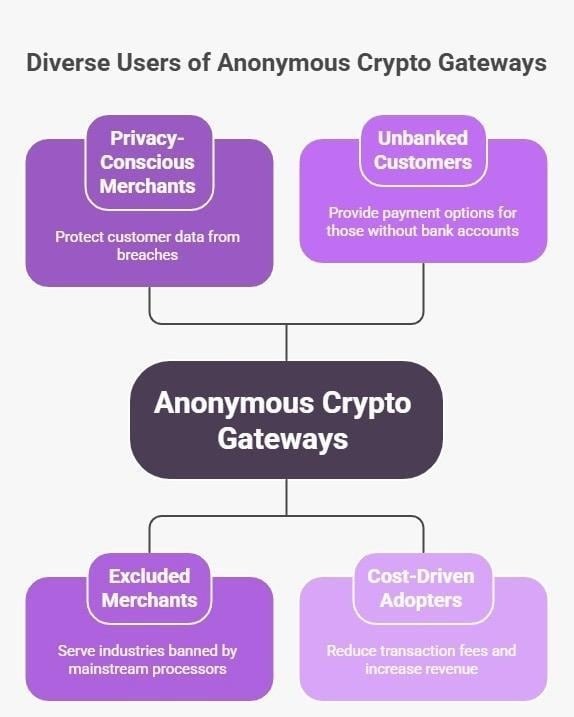
Datenschutzbewusste Händler (42 % der Nutzer) : Allein im Jahr 2024 wurden durch Datenpannen über 15 Milliarden Datensätze offengelegt. Viele Händler vertrauen daher nicht mehr zentralisierten Plattformen die Zahlungsdaten ihrer Kunden an.
Anonyme Zugangsgateways erfassen keinerlei Daten, wodurch auch keine Sicherheitslücke besteht. Ein Unternehmen, das den Scan des Kundenpasses nie gespeichert hat, kann ihn auch nicht verlieren.
Von gängigen Zahlungsdienstleistern ausgeschlossene Händler (27 % der Nutzer) : Branchen mit hohem Risiko sind von systematischer Deplatformierung betroffen. Erwachsene Inhalte, legales Cannabis, VPN-Dienste, Nahrungsergänzungsmittel, Waffenzubehör, Spieleplattformen und politische Organisationen haben allesamt flächendeckende Kündigungen durch Zahlungsdienstleister erlebt.
PayPal, Stripe und Square verwenden weit gefasste, vage Nutzungsbedingungen, die ihnen die Möglichkeit geben, Konten aus nahezu jedem beliebigen Grund zu schließen. Anonyme Krypto-Zahlungsgateways treffen solche Entscheidungen nicht.
Händler, die Kunden ohne Bankkonto oder mit grenzüberschreitenden Geschäften bedienen (18 % der Nutzer) : Weltweit besitzen rund 1.4 Milliarden Erwachsene kein Bankkonto. Sie können weder PayPal nutzen noch beim Bezahlen eine Kreditkartennummer eingeben. Viele von ihnen besitzen jedoch Smartphones und Krypto-Wallets.
Anonyme Zahlungsportale akzeptieren Zahlungen von diesen Kunden, ohne dass diese ein Bankensystem nutzen müssen, zu dem sie möglicherweise keinen Zugang haben. Für Händler, die in Teilen Subsahara-Afrikas, Südostasiens oder Lateinamerikas tätig sind, stellt dies eine bedeutende Erleichterung dar.
Kostenorientierte Anwender (13 % der Nutzer) : Die Berechnung der Gebühren für die Zahlungsabwicklung ist einfach. Ein Unternehmen, das jährlich 500,000 US-Dollar über Stripe abwickelt, zahlt etwa 14,500 US-Dollar an Transaktionsgebühren. Das gleiche Volumen über ein anonymes Krypto-Gateway mit 0.5 % Gebühren kostet 2,500 US-Dollar. Diese jährliche Differenz von 12,000 US-Dollar deckt einen wichtigen Kostenfaktor an anderer Stelle im Unternehmen ab.
Die Verbraucherstudie Chainalysis 2025 ergab, dass 41 % der Nutzer den Zahlungsvorgang abbrechen, wenn sie zur Identitätsprüfung (KYC) gezwungen werden. Das ist keine geringe Zahl. Sie steht für tatsächliche Kaufabbrüche, reale Umsatzeinbußen und ein deutliches Signal dafür, dass die Identitätsprüfung am Point of Sale erhebliche Hürden mit sich bringt, für die Händler – ob bewusst oder unbewusst – bezahlen müssen.
Lesen Sie auch: Die besten Krypto-Zahlungs-APIs für Startups: 10 Top-Empfehlungen für 2026
Was ist ein anonymes Krypto-Zahlungsgateway?
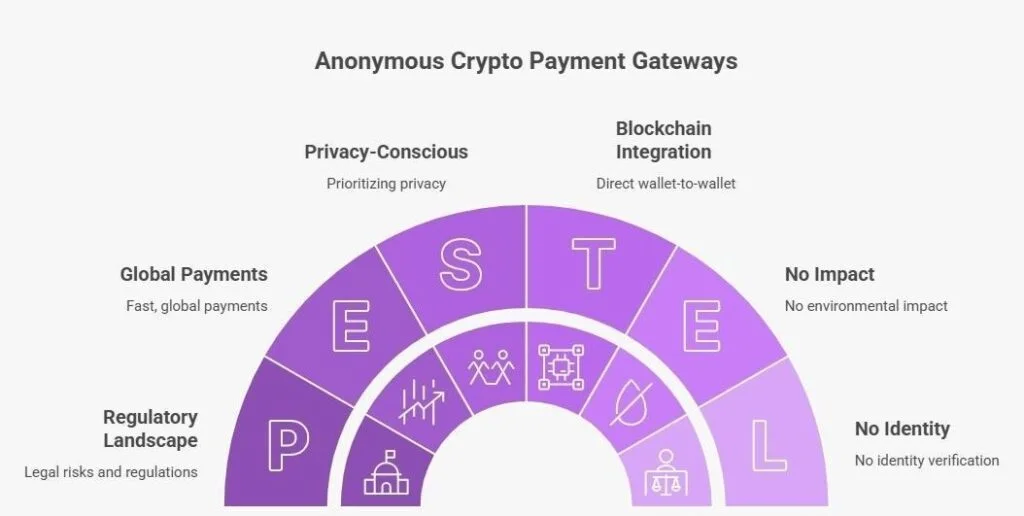
Anonyme Krypto-Zahlungsgateways ermöglichen es Unternehmen, Kryptowährungszahlungen zu akzeptieren, ohne Kundendaten zu erfassen (keine KYC-Prüfung ). Diese Gateways funktionieren über Wallet-zu-Wallet-Transaktionen, bei denen Gelder direkt vom Kunden an den Händler überwiesen werden und somit die Verwahrung durch Zwischenhändler entfällt.
Im Gegensatz zu herkömmlichen Zahlungsdienstleistern, die eine Passprüfung erfordern, priorisieren anonyme Zahlungsgateways den Datenschutz durch eine Architektur ohne Verwahrung, unterstützen Privacy Coins (Monero, Zcash) und die sofortige Abwicklung über das Lightning Network von Bitcoin für schnelle, globale Zahlungen ohne Identitätsprüfung.
Diese Definition lohnt es sich, in ihre drei Kernbestandteile zu zerlegen.
Anonym
Das bedeutet, dass weder vom Kunden noch vom Händler ein Identitätsnachweis erforderlich ist. Keine Passscans. Keine Selfies mit Ausweis. Kein Adressnachweis. Keine Gewerbeanmeldung.
Sie erstellen ein Konto (in der Regel nur mit einer E-Mail-Adresse, manchmal auch ohne jegliche Angabe) und beginnen, Zahlungen entgegenzunehmen.
Der Kunde bezahlt mit seinem Wallet. Der Händler erhält das Geld auf seinem Wallet. Dabei werden keine personenbezogenen Daten erfasst.
Dies unterscheidet sich grundlegend von KYC-basierten Zahlungsabwicklern , die die Identitätsprüfung als unabdingbaren Schritt vor jeglichen Geldflüssen betrachten.
Crypto
Diese Zahlungsportale verarbeiten Kryptowährungen. Dazu gehören Bitcoin, Ethereum, Litecoin, Stablecoins wie USDT und USDC sowie in vielen Fällen datenschutzorientierte Coins wie Monero und Zcash. Zahlungen werden direkt auf der jeweiligen Blockchain abgewickelt, nicht in einem internen, vom Zahlungsdienstleister kontrollierten Register.
Zahlungs tor
Ein Payment-Gateway ist die Softwareschicht zwischen dem Bezahlvorgang des Kunden und der Wallet des Händlers. Es generiert eindeutige Zahlungsadressen, rechnet Währungen direkt am Point of Sale um, überwacht die Blockchain auf eingehende Transaktionen, bestätigt Zahlungen und sendet Benachrichtigungen per Webhook an die Plattform des Händlers. Die anonyme Version erfüllt dieselben Funktionen, jedoch ohne die Identitätsprüfung.
Wie sich anonyme Gateways von den Alternativen unterscheiden
Hier ein direkter Vergleich der drei Hauptoptionen:
Identitäts Verifikation
- Traditionelle Zahlungsanbieter (PayPal, Stripe): Vollständige KYC-Prüfung erforderlich, Reisepass, Kontoauszüge, Geschäftsdokumente
- KYC-Krypto-Gateway (Coinbase Commerce, BitPay): Vollständige KYC-Prüfung, amtlicher Ausweis, Adressnachweis
- Anonymes Krypto-Gateway (BTCPay Server, Paymento): Keine KYC-Prüfung, sofortige Einrichtung
Fondsverwahrung
- Traditioneller Zahlungsdienstleister: Der Zahlungsdienstleister behält die Gelder 7 bis 30 Tage lang ein.
- KYC-Krypto-Gateway: Das Gateway hält Kryptowährungen vorübergehend und wandelt sie in Fiatgeld um.
- Anonymes Zahlungsgateway: Keine Verwahrung, die Gelder fließen direkt in die Wallet des Händlers.
Transaktions Gebühren
- Traditioneller Zahlungsdienstleister: 2.9 % plus 0.30 $ pro Transaktion
- KYC-Krypto-Gateway: 1 bis 2 % pro Transaktion
- Anonymes Gateway: 0.4 bis 1 % pro Transaktion
Abwicklungszeit
- Traditioneller Prozessor: 2 bis 7 Werktage
- KYC-Krypto-Gateway: 1 bis 2 Werktage
- Anonymes Gateway: Sofort über Lightning Network oder 10 bis 60 Minuten On-Chain
Rückbuchungsrisiko
- Traditioneller Zahlungsdienstleister: Hoch (jährlicher Chargeback-Betrug in Höhe von 125 Milliarden US-Dollar)
- KYC oder anonymes Krypto-Gateway: Keine (Krypto-Transaktionen sind unumkehrbar)
Deplatforming-Risiko
- Traditioneller Zahlungsdienstleister: Sehr hohe Gebühren, Konten werden kurzfristig geschlossen.
- KYC-Krypto-Gateway: Mittel, Compliance erforderlich
- Anonymes Gateway (selbstgehostet): Null, der Händler kontrolliert die Software
Geografische Einschränkungen
- Traditioneller Prozessor: Über 180 Länder auf verschiedene Weise blockiert
- KYC-Krypto-Gateway: Mehr als 40 Länder blockiert
- Anonymes Gateway: Keine Einschränkungen, weltweiter Zugriff
Lesen Sie auch: Leitfaden zur API-Integration von Krypto-Zahlungsgateways: Alles, was Sie wissen müssen
Warum dies wichtig ist
Finanzüberwachung ist zur Normalität geworden. Blockchain-Analyseunternehmen wie Chainalysis, Elliptic und CipherTrace verfolgen die Aktivitäten in der Blockchain für Regierungen und Finanzinstitute. Anonyme Zahlungsgateways bieten eine der wenigen praktikablen Möglichkeiten, digitale Zahlungen zu akzeptieren, ohne dieses System zu speisen.
Abgesehen vom Datenschutz gibt es ganz praktische Gründe für die Existenz dieser Zahlungsportale. Weltweit haben etwa 1.4 Milliarden Erwachsene keinen Zugang zu Bankdienstleistungen. Anonyme Zahlungsportale ermöglichen es Händlern, diese Kunden zu bedienen, ohne deren finanzielle Identität verifizieren zu müssen.
Für risikoreiche Branchen wie Erwachseneninhalte, VPN-Dienste, Spieleplattformen und Nahrungsergänzungsmittel besteht die Alternative nicht in KYC-konformer Kryptowährung, sondern im vollständigen Verzicht auf einen Zahlungsdienstleister. PayPal schloss allein im Jahr 2024 4.5 Millionen Konten, viele davon von völlig legalen Unternehmen.
Das Kostenargument ist ebenfalls berechtigt. Ein Händler, der monatlich 100,000 US-Dollar umsetzt, zahlt etwa 2,900 US-Dollar an Stripe. Das gleiche Transaktionsvolumen über ein anonymes Krypto-Gateway kostet je nach Anbieter zwischen 400 und 1,000 US-Dollar. Dieser Unterschied summiert sich.
Die vollständige Geschichte anonymer Kryptozahlungen
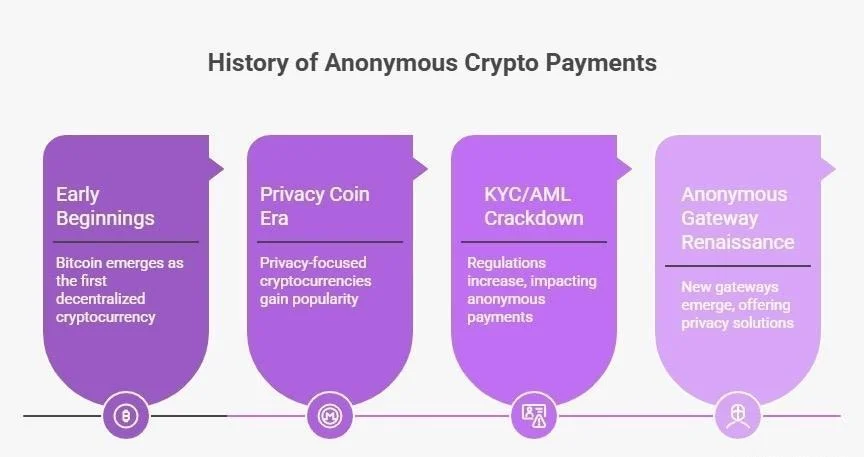
Anfänge (2009 bis 2014)
Satoshi Nakamotos Bitcoin-Whitepaper, veröffentlicht 2008 und eingeführt 2009, beschrieb ein System für elektronisches Geld, das ohne zwischengeschaltetes Finanzinstitut zwischen den Parteien transferiert werden konnte. Die ersten Bitcoin-Nutzer verstanden dies als Versprechen echter finanzieller Privatsphäre.
Dieses Versprechen wurde fast umgehend auf die Probe gestellt. Silk Road, der Online-Marktplatz, der von 2011 bis 2013 existierte, bewies, dass anonymer Handel mit Bitcoin möglich ist. Er zeigte aber auch die Grenzen von Bitcoin als Instrument zum Schutz der Privatsphäre auf. Bitcoin-Transaktionen sind pseudonym, nicht anonym.
Jede Transaktion wird dauerhaft in einem öffentlichen Register aufgezeichnet, und Wallet-Adressen können oft über Börsendaten oder IP-Adressenanalysen zu realen Identitäten zurückverfolgt werden.
In dieser Zeit wurden die ersten etablierten Krypto-Zahlungsabwickler eingeführt. BitPay startete 2011, Coinbase folgte 2012.
Beide führten die KYC-Anforderungen nahezu umgehend ein, teils auf Druck der Regulierungsbehörden, teils weil sie Bankpartner benötigten, die anonyme Transaktionen nicht tolerieren würden. Bis 2014 war die Kluft zwischen Bitcoins ursprünglicher Vision und seiner kommerziellen Realität deutlich erkennbar.
Die Ära der Privacy Coins (2014 bis 2017)
Die Antwort der Krypto-Community auf das Transparenzproblem von Bitcoin bestand darin, wirklich private Alternativen zu entwickeln.
Monero wurde 2014 mit Ringsignaturen, Stealth-Adressen und RingCT (Ring Confidential Transactions) eingeführt. Diese Technologien verschleiern Sender, Empfänger und Betrag jeder Transaktion. Im Gegensatz zum transparenten Transaktionsbuch von Bitcoin hinterlassen Monero-Transaktionen standardmäßig keine verlässlichen Spuren.
Zcash wurde 2016 mit Zero-Knowledge-Beweisen, genauer gesagt mit einer Technologie namens zk-SNARKs, eingeführt. Diese ermöglicht es dem Absender, den Versand einer gültigen Transaktion nachzuweisen, ohne Details zur Transaktion selbst preiszugeben. Zcash bietet sowohl transparente als auch geschützte Transaktionsoptionen.
Der BTCPay Server wurde 2017 als direkte Reaktion auf die Gebührenerhöhungen und Kontosperrungen von BitPay ins Leben gerufen. Er wurde von Entwickler Nicolas Dorier nach einem Streit mit BitPay entwickelt und ist vollständig Open Source, selbstgehostet und benötigt keine Drittanbieter. Er bildete die Grundlage für moderne anonyme Zahlungsgateways.
Lesen Sie auch: Krypto-ETF-Trends im Jahr 2026: Bitcoin, Ethereum und die Altcoin-Welle
Der Zeitraum der verstärkten KYC/AML-Maßnahmen (2017 bis 2021)
Im Jahr 2013 stufte das US-amerikanische Financial Crimes Enforcement Network (FinCEN) Kryptobörsen als Geldtransferunternehmen (Money Services Businesses, MSBs) ein und verpflichtete sie damit zur Implementierung von KYC- und AML-Compliance- Programmen. Zahlungsabwickler fielen unter dieselbe Regelung.
Europa folgte 2018 mit der 5. Geldwäscherichtlinie (5AMLD) und 2021 mit der 6. Geldwäscherichtlinie, wodurch die KYC-Anforderungen auf alle in der EU tätigen Krypto-Dienstleister ausgeweitet wurden. Dies zwang anonyme Zahlungsportale, entweder den europäischen Markt zu verlassen oder Verifizierungsverfahren einzuführen.
Privacy Coins erlitten in diesem Zeitraum direkte Einbußen:
- Januar 2021: Bittrex nahm Monero, Zcash und Dash vom Handel.
- März 2021: Südkorea verbot alle datenschutzorientierten Kryptowährungen.
- November 2021: Kraken hat Monero für britische Kunden aus dem Angebot genommen
Die Folge war ein Einbruch bei der Akzeptanz von datenschutzfreundlichen Kryptowährungen im Zahlungsverkehr, da die wichtigsten Ein- und Auszahlungswege für Fiatgeld wegfielen. Händler, die anonyme Zahlungen wünschten, wechselten zu Bitcoin Lightning oder zu Peer-to-Peer-Börsen.
Die Anklage gegen Tornado Cash im August 2022 markierte einen Wendepunkt. Das Office of Foreign Assets Control (OFAC) des US-Finanzministeriums verhängte Sanktionen gegen Tornado Cash, ein Datenschutzprotokoll.
Nicht die Entwickler, sondern der Code selbst. Der Entwickler Alexey Pertsev wurde in den Niederlanden verhaftet, acht Monate ohne Gerichtsverfahren festgehalten und schließlich im Mai 2024 zu mehr als fünf Jahren Haft verurteilt.
Die abschreckende Wirkung auf Entwickler von Krypto-Datenschutzlösungen war erheblich, und viele verlegten ihren Firmensitz auf die Seychellen, die Kaimaninseln und die Britischen Jungferninseln.
Die Renaissance des anonymen Gateways (2023 bis 2025)
Trotz der Repressionen, oder vielleicht auch gerade deswegen, wuchs der anonyme Zugangsraum zwischen 2023 und 2025 erheblich.
Der BTCPay-Server wurde bei über 100,000 Händlern installiert. Die Kapazität des Lightning-Netzwerks überstieg 5,000 BTC. Eine neue Generation gehosteter No-KYC-Gateways wurde eingeführt, die sich an technisch weniger versierte Händler richtet, die keine eigene Lösung hosten können.
Die EU-Verordnung über Märkte für Krypto-Assets (MiCA) trat im Dezember 2024 vollständig in Kraft und verpflichtete alle lizenzierten Krypto-Dienstleister zur Implementierung von KYC-Verfahren und zur Zahlung von Lizenzgebühren zwischen 150,000 und 250,000 Euro. Paradoxerweise beschleunigte MiCA die Verbreitung anonymer Zahlungsgateways, da die Kosten für die Legalisierung für kleinere Händler unerschwinglich wurden.
Die dramatischste Entwicklung ereignete sich in den letzten Monaten des Jahres 2025. Zcash legte zwischen September und November 2025 um 741 % zu und überholte Monero hinsichtlich der Marktkapitalisierung. Monero konnte im selben Zeitraum trotz der Streichung von Zcash von Binance im Februar 2024 einen Zuwachs von 54 % verzeichnen.
Die Anmeldungen anonymer Zahlungsportale stiegen im dritten Quartal 2025 im Vergleich zum zweiten Quartal 2025 um 180 %. Die Strafverfolgung im Fall Tornado Cash hatte genau den Aufmerksamkeitseffekt erzeugt, den die Regulierungsbehörden wahrscheinlich nicht beabsichtigt hatten: Mehr Menschen wurden sich der Bedeutung des Datenschutzes im Finanzbereich als schützenswertes Konzept bewusst.
Bis November 2025 wird der globale Markt für Krypto-Zahlungsgateways auf 1.68 Milliarden US-Dollar geschätzt und soll bis 2035 jährlich um 19.2 % wachsen. Das anonyme Segment macht 18 bis 22 % dieses Gesamtvolumens aus.
Wie funktionieren anonyme Krypto-Zahlungsportale?
Das Verständnis der Funktionsweise dieser Gateways ist wichtig, da es erklärt, warum sie überhaupt ohne Identitätsprüfung funktionieren können. Die Antwort liegt in einer zentralen architektonischen Entscheidung: Nicht-Verwahrung.
Der vierstufige Zahlungslebenszyklus
Phase 1: Händlereinrichtung und -integration
Der Einrichtungsprozess variiert je nachdem, ob Sie sich für eine selbstgehostete, eine gehostete oder eine White-Label-Lösung entscheiden.
Bei einem gehosteten Zahlungsgateway wie Paymento oder NOWPayments erstellen Sie ein Konto lediglich mit Ihrer E-Mail-Adresse. Sie erhalten einen API-Schlüssel. Anschließend installieren Sie ein Plugin für WooCommerce, Shopify oder Ihre bevorzugte Plattform oder integrieren die Plattform direkt über die REST-API. Der gesamte Vorgang dauert etwa fünf Minuten.
Bei einer selbstgehosteten Lösung wie BTCPay Server richten Sie einen Linux-Server ein (ein VPS kostet in der Regel 20 bis 100 US-Dollar pro Monat), installieren Bitcoin Core, synchronisieren die gesamte Blockchain, richten einen Lightning-Knoten ein, wenn Sie Sofortzahlungen wünschen, und konfigurieren BTCPay Server so, dass er auf Ihre Wallet verweist.
Dies dauert zwei bis acht Stunden und erfordert Grundkenntnisse in der Serveradministration. Der Lohn dafür ist die vollständige Unabhängigkeit von Dritten.
White-Label-Zahlungsgateways wie OxaPay oder Plisio fungieren als Bindeglied. Sie nutzen deren Infrastruktur, konfigurieren diese aber so, dass sie unter Ihrer eigenen Domain und mit Ihrem Branding läuft. Ihre Kunden bekommen den zugrundeliegenden Anbieter nie zu Gesicht.
Phase 2: Erstellung der Zahlungsanforderung
Wenn ein Kunde auf Ihrer Website zur Kasse geht und Kryptowährung als Zahlungsmethode auswählt, erstellt das Zahlungsgateway eine eindeutige Einzahlungsadresse oder Lightning-Rechnung für diese spezifische Transaktion.
Bei Bitcoin und anderen On-Chain-Zahlungen handelt es sich um eine standardmäßige Blockchain-Adresse, die für jede Transaktion neu generiert wird. Das Zahlungsgateway überwacht diese Adresse auf eingehende Zahlungen.
Bei Zahlungen über das Lightning Network generiert das Gateway eine Lightning-Rechnung, eine Zahlungsanforderung, die in einem QR-Code oder einer URI-Zeichenfolge kodiert ist und nach einem festgelegten Zeitfenster (in der Regel 10 bis 15 Minuten) abläuft.
Bei Monero-Zahlungen generiert das Zahlungsgateway eine einmalige Stealth-Adresse. Selbst wenn jemand die Blockchain überwacht, kann er diese Adresse nicht mit der Haupt-Wallet des Händlers verknüpfen.
Die Wechselkurse werden zum Zeitpunkt der Rechnungserstellung fixiert, in der Regel für 10 bis 15 Minuten, um zu verhindern, dass Preisschwankungen den Zahlungsbetrag beeinflussen.
Phase 3: Kundenzahlung und was während des Transports geschieht
Der Kunde scannt den QR-Code oder kopiert die Adresse in seine Wallet und sendet die Zahlung. Keine Kontoerstellung. Keine Verifizierung. Einfach eine Wallet, die Geld an eine andere Wallet sendet.
Was als Nächstes passiert, hängt von der Kryptowährung ab:
- Bitcoin (On-Chain)Die Transaktion wird an den Bitcoin-Mempool gesendet und wartet darauf, von den Minern in einen Block aufgenommen zu werden. Die Verarbeitung eines Blocks dauert etwa 10 Minuten. Die meisten Händler benötigen ein bis sechs Bestätigungen, bevor eine Zahlung als endgültig gilt.
- Bitcoin-BlitzDie Zahlung wird sofort über Lightning Network-Kanäle abgewickelt. Es findet keine On-Chain-Transaktion statt. Die Abwicklung erfolgt umgehend und die Transaktion ist – abgesehen vom Öffnen und Schließen der beteiligten Zahlungskanäle – nicht öffentlich in der Blockchain sichtbar.
- MoneroRingsignaturen verschleiern den Absender, indem sie seine Transaktion mit mehreren anderen vermischen. Stealth-Adressen bedeuten, dass jede Zahlung an eine einmalige Adresse geht, die ohne den privaten Schlüssel des Händlers nicht mit dessen öffentlichem Schlüssel verknüpft werden kann. RingCT verbirgt den Transaktionsbetrag. Zehn Bestätigungen, typischerweise etwa 20 Minuten, sind für die endgültige Abrechnung erforderlich.
- Zcash (abgeschirmt)Zero-Knowledge-Beweise beweisen mathematisch die Gültigkeit der Zahlung, ohne Absender, Empfänger oder Betrag preiszugeben. Nur die beteiligten Parteien können die Details einsehen.
Phase 4: Bestätigung und Abwicklung
Sobald die erforderliche Anzahl an Bestätigungen erreicht ist, sendet das Zahlungsgateway eine Webhook-Benachrichtigung an Ihre Plattform. Ihr Auftragsverwaltungssystem markiert die Bestellung als bezahlt. Das Geld befindet sich bereits in Ihrer Wallet.
Das ist der entscheidende Unterschied zu Verwahrungssystemen. Das Gateway hat Ihr Geld nie verwahrt. Es hat lediglich die Blockchain überwacht und Sie benachrichtigt, sobald eine Zahlung eingegangen ist.
Wenn der Zahlungsdienstleister morgen wegfallen würde, wären Ihre Gelder immer noch in Ihrer Wallet und Sie bräuchten lediglich ein anderes Tool, um zukünftige Zahlungen zu überwachen.
Wie das Lightning Network das Bild verändert
Das Lightning Network verdient eine eigene Erklärung, da es mehrere der ursprünglichen Einschränkungen von Bitcoin auf einmal behebt.
Bitcoin-Transaktionen auf der Blockchain kosten Geld (Miner-Gebühren), benötigen Zeit (über 10 Minuten pro Block) und werden dauerhaft in einem öffentlichen Register gespeichert. Für viele Anwendungsfälle im Zahlungsverkehr sind diese Einschränkungen ein Ausschlusskriterium.
Lightning behebt alle drei Probleme. So funktioniert es:
Zwei Parteien eröffnen einen Zahlungskanal, indem sie gemeinsam einen festgelegten Bitcoin-Betrag in einer gemeinsamen Adresse auf der Haupt-Blockchain sperren.
Dies ist eine einzelne On-Chain-Transaktion. Innerhalb dieses Kanals können sie beliebig oft und sofort Transaktionen für Bruchteile eines Cents durchführen, ohne dass neue Blockchain-Einträge erstellt werden. Wenn sie den Kanal schließen und abrechnen möchten, senden sie eine letzte On-Chain-Transaktion mit dem Nettosaldo.
Der Netzwerkeffekt entsteht durch die Verbindung dieser Kanäle. Wenn Sie einen Kanal mit Partei A haben und Partei A wiederum einen Kanal mit Partei B, können Sie Partei B bezahlen, ohne direkt einen Kanal mit ihr zu öffnen. Die Zahlung läuft über Partei A. Dadurch wird Lightning zu einem Zahlungsnetzwerk und nicht nur zu zwei Kanälen.
Lightning bietet insbesondere bei anonymen Zahlungen einen entscheidenden Vorteil: Die meisten Transaktionen werden gar nicht in der öffentlichen Blockchain aufgezeichnet. Sichtbar sind lediglich Kanalöffnungen und -schließungen. Einzelne Zahlungen zwischen diesen Ereignissen sind für Blockchain-Analysen nicht erkennbar.
Zu den derzeit in Betrieb befindlichen Lightning-Gateways gehören:
- Flash (paywithflash.com): Nur Lightning-Dienste, Fokus auf Bitcoin-Zahlungen
- BTCPay ServerVollständige native Lightning-Integration
- SchnelligkeitBlitzschnelle Bezahlung mit sofortiger Abrechnung
Die größte praktische Einschränkung von Lightning besteht darin, dass Händler Liquidität in ihren Zahlungskanälen benötigen, um Gelder zu erhalten.
Die Verwaltung dieser Liquidität erfordert entweder technisches Fachwissen oder einen entsprechenden Service. Lightning unterstützt derzeit außerdem nur Bitcoin; Stablecoins und Altcoins werden nicht unterstützt.
KYC-Gateway-Ablauf vs. Anonymer Gateway-Ablauf
KYC-Gateway-Prozess (Coinbase Commerce, BitPay)
- Der Händler erstellt ein Konto, lädt Geschäftsdokumente hoch und wartet 3 bis 14 Tage auf die Genehmigung.
- Der Kunde erreicht den Checkout, ein KYC-Popup erscheint, das zur Identitätsprüfung auffordert.
- Der Kunde lädt seinen Reisepass hoch und wartet 1 bis 48 Stunden auf die Genehmigung.
- Zahlung an die Wallet des Zahlungsanbieters gesendet (der Zahlungsanbieter verwahrt die Gelder).
- Gateway wandelt optional in Fiatgeld um und erhebt dafür eine Gebühr von 1 bis 2 % zuzüglich Spread.
- Fiatgeld wird auf das Händlerbankkonto überwiesen, 2 bis 7 Werktage
- Die Bank kann das Händlerkonto einfrieren, wenn ihr bestimmte Krypto-Einzahlungsmuster missfallen.
Anonymer Gateway-Prozess (BTCPay-Server, Paymento)
- Händler erstellt Konto nur mit E-Mail-Adresse, sofortige Einrichtung
- Der Kunde erreicht die Kasse, keine Verifizierung erforderlich
- Die Zahlung wurde direkt an die Wallet des Händlers gesendet.
- Die Blockchain bestätigt die Transaktion, die On-Chain-Bestätigung dauert 10 bis 60 Minuten, die Lightning-Übertragung erfolgt sofort.
- Der Händler behält die Kryptowährung oder wandelt sie manuell über die bevorzugte Börse um.
- Keine Bankabhängigkeit, Händler verwalten Gelder in ihrer eigenen Wallet.
Arten von anonymen Krypto-Zahlungsgateways
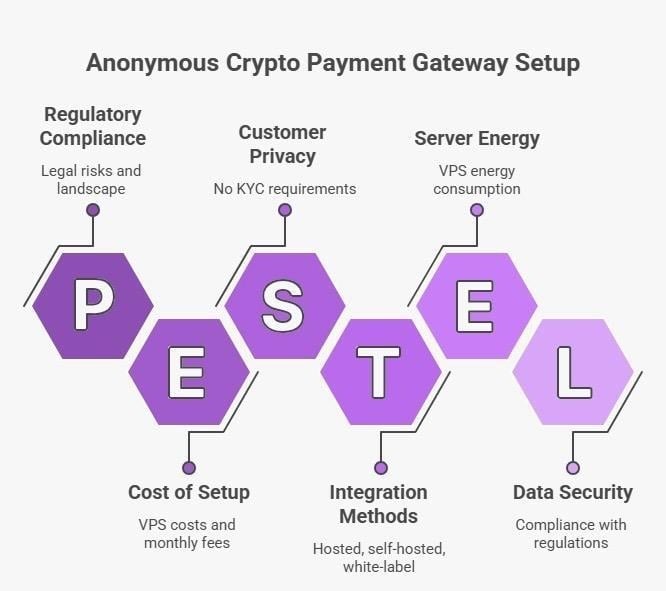
Anonyme Zugangsgateways sind nicht alle gleich aufgebaut oder für dieselben Anwendungsfälle geeignet. Es gibt vier Hauptkategorien, die sich hinsichtlich Datenschutz, Einrichtungsaufwand und Kosten deutlich unterscheiden.
Selbstgehostete Gateways
Ideal für : Technische Händler, Unternehmen mit hohem Transaktionsvolumen, Datenschutzmaximalisten
Beispiele : BTCPay Server, BitHide (selbstgehosteter Modus)
Selbstgehostete Gateways geben Ihnen die volle Kontrolle. Sie betreiben die Software auf Ihrem eigenen Server. Sie besitzen Ihre eigenen privaten Schlüssel.
Kein Dritter hat Einblick in Ihre Transaktionen, Ihre IP-Adresse oder Ihre Geschäftsaktivitäten. Selbst wenn das Entwicklungsteam des Gateways morgen nicht mehr erreichbar wäre, würde Ihre Installation weiterhin funktionieren.
Der Nachteil ist die Komplexität. Sie müssen mit dem Betrieb eines Linux-Servers, der Installation und Wartung von Bitcoin Core, der Verwaltung eines Lightning-Knotens für Sofortzahlungen sowie der eigenen Datensicherung und Sicherheitsvorkehrungen vertraut sein.
Die Einrichtung dauert zwei bis acht Stunden. Die monatlichen Serverkosten belaufen sich auf 20 bis 100 US-Dollar. Transaktionsgebühren fallen praktisch nicht an, da Sie selbst für die Zahlungsabwicklung zuständig sind.
Der BTCPay Server hat sich in dieser Kategorie als Goldstandard etabliert. Er verfügt über mehr als 500 Mitwirkende auf GitHub, eine große Community und Plugins für WooCommerce, PrestaShop, Magento und die meisten anderen gängigen Plattformen. Weltweit nutzen ihn voraussichtlich über 100,000 Händler (Stand: November 2025).
Die selbstgehostete Lösung eliminiert zudem das Risiko einer Kontosperrung vollständig. Es gibt kein Konto, das geschlossen werden könnte. Die Software läuft auf Ihrem Server und steht unter Ihrer Kontrolle.
Sie verzichten auf jegliche Form von Kundensupport. Probleme werden über Community-Foren und Dokumentation gelöst, nicht über einen Helpdesk.
Zusammenfassung
- Aufbauzeit: 2 bis 8 Stunden
- Datenschutzstufe: Maximal
- Erforderliche technische Fähigkeiten: Hoch
- Monatliche Kosten: 20 bis 100 US-Dollar (Serverkosten, keine Transaktionsgebühren)
- Deplatformierungsrisiko: Null
Gehostete anonyme Gateways
Ideal für : Händler ohne technische Vorkenntnisse, schnelle Bereitstellung, Unternehmen, die eine verwaltete Infrastruktur wünschen.
Beispiele : Paymento, NOWPayments, OxaPay, MaxelPay, XAIGATE
Gehostete Gateways stellen die Infrastruktur für Sie bereit. Sie erhalten einen API-Schlüssel, installieren ein Plugin oder integrieren die REST-API und sind innerhalb weniger Minuten live. Für den Betrieb dieser Dienste sind keine technischen Vorkenntnisse erforderlich.
Die meisten gehosteten anonymen Zahlungsportale nutzen ein Non-Custodial-Modell. Das bedeutet, dass Zahlungen direkt in Ihre Wallet fließen und der Anbieter Ihre Gelder nicht verwahrt. Stattdessen erheben sie Transaktionsgebühren von 0.4 bis 1 %.
Der Kompromiss in puncto Datenschutz besteht darin, dass der Anbieter Ihre IP-Adresse, Transaktionszeitmuster und grundlegende Kontoaktivitäten einsehen kann, selbst wenn er keine Identitätsdokumente erfasst.
Sie stehen zudem unter regulatorischem Druck ihrer Bankpartner, was dazu geführt hat, dass einige optionale oder obligatorische KYC-Maßnahmen für Händler in bestimmten Rechtsordnungen (insbesondere in der EU nach MiCA) eingeführt haben.
NOWPayments unterstützt über 300 Kryptowährungen und bietet seit der Einführung von MiCA eine teilweise KYC-Prüfung für Händler mit Sitz in der EU an. Paymento arbeitet mit einem strikten Wallet-zu-Wallet-Modell ohne Datenerfassung. OxaPay konzentriert sich auf White-Label-Lösungen. MaxelPay erhebt 0.4 % pro Transaktion und gehört damit zu den Anbietern mit den niedrigsten Gebühren am Markt.
Zusammenfassung
- Einrichtungszeit: 5 Minuten
- Datenschutzniveau: Hoch (aber der Anbieter sieht Metadaten)
- Erforderliche technische Kenntnisse: Gering
- Kosten: 0.4 bis 1 % pro Transaktion
- Deplatformierungsrisiko: Gering, aber nicht zu vernachlässigen, wenn der Anbieter unter Druck von Banken gerät.
White-Label-Gateways
Ideal für : Agenturen, SaaS-Plattformen, Händler, die ein individuelles Zahlungserlebnis wünschen.
Beispiele : OxaPay, Plisio, BitHide (White-Label-Modus)
White-Label-Zahlungsgateways stellen Ihnen die Infrastruktur des Anbieters zur Verfügung, verbergen aber dessen Branding vollständig. Ihre Kunden sehen Ihre Domain (z. B. payments.ihrewebsite.de), Ihr Logo und Ihren Checkout-Prozess. Aus Kundensicht sind Sie der Zahlungsabwickler.
Die Einrichtung dauert ein bis zwei Stunden und erfordert die Konfiguration Ihrer Domain und Ihres SSL-Zertifikats. Die Kosten betragen 0.5 bis 1.5 % pro Transaktion zuzüglich einer einmaligen Einrichtungsgebühr von 50 bis 500 US-Dollar.
Diese Kategorie eignet sich gut für Unternehmen, bei denen Markenvertrauen wichtig ist und die Sichtbarkeit eines externen Zahlungsanbieters an der Kasse die Konversionsrate verringern würde.
Zusammenfassung
- Aufbauzeit: 1 bis 2 Stunden
- Datenschutzniveau: Hoch (Kunde sieht den Anbieter nie)
- Erforderliche technische Kenntnisse: Mittel
- Kosten: 0.5 bis 1.5 % zuzüglich Einrichtungsgebühr
- Deplatformierungsrisiko: Gering
Datenschutzorientierte Coin-Gateways
Ideal für : Händler in datenschutzkritischen Branchen und solche, die datenschutzbewusste Kunden bedienen
Beispiele : NOWPayments (Monero-Unterstützung), Paymento (Monero und Zcash), Blockonomics (Schwerpunkt Bitcoin-Datenschutz)
Einige Zahlungsgateways legen besonderen Wert auf die Unterstützung von Privacy Coins, d. h. sie unterstützen neben Bitcoin und Ethereum auch Monero, Zcash, Dash und Beam.
Dies sind die datenschutzfreundlichsten Zahlungsoptionen, da die zugrunde liegende Blockchain-Technologie nicht nur die Gateway-Architektur, sondern auch die Transaktionsdetails verschleiert.
Die praktische Herausforderung bei Privacy-Coin-Gateways besteht darin, dass Kunden diese Coins zunächst besitzen müssen. Da Monero nach dem Delisting bei Binance im Februar 2024 die Unterstützung von Börsen verloren hat, ist es schwieriger geworden, XMR an Kunden zu bringen. Zcash ist weiterhin leichter zugänglich.
Zusammenfassung
- Einrichtungszeit: 5 Minuten
- Datenschutzstufe: Maximal (Transaktionsbezogener Datenschutz durch Blockchain)
- Erforderliche technische Kenntnisse: Gering bis mittel
- Kosten: 0.5 bis 1 % pro Transaktion
Die besten anonymen Krypto-Zahlungsportale im Jahr 2025
Hier ist eine Übersicht der führenden Anbieter von Dienstleistungen ohne KYC-Prüfung, die im November 2025 aktiv sind.
BTCPay Server
Marktanteil: ~28% des Marktes ohne KYC-Prüfung
GebührenKeine Transaktionsgebühren (nur Serverkosten)
Unterstützte MünzenBitcoin, Lightning, Monero (über Plugin), Litecoin
KYCNiemals.
Der BTCPay Server setzt Maßstäbe. Er ist kostenlos, Open Source, selbstgehostet und seit 2017 im Produktiveinsatz.
Es deckt alles ab, von E-Commerce-Kassenprozessen über Kassenterminals bis hin zu Spendenbuttons. Die Lightning-Netzwerkintegration ist nativ.
Die größte Hürde ist der Einrichtungsaufwand. Sie benötigen einen Server, müssen die Bitcoin-Blockchain synchronisieren (was beim ersten Mal einige Zeit in Anspruch nimmt) und müssen die technischen Zusammenhänge verstehen. Für Händler, die bereit sind, diese Zeit zu investieren, ist es die datenschutzfreundlichste und kostengünstigste Option.
NOWPayments
Marktanteil: ~18% des Marktes ohne KYC-Prüfung
Gebühren0.5 bis 1 % pro Transaktion
Unterstützte Münzen: Über 300, darunter Monero und Zcash
KYCOptional für geringe Mengen; teilweise KYC für EU-Händler nach MiCA
NOWPayments ist gemessen an der Anzahl der Händler das größte gehostete anonyme Zahlungsgateway. Seine größte Stärke ist die breite Palette unterstützter Währungen. Wenn Sie neben Bitcoin auch Monero, Zcash oder weniger verbreitete Altcoins akzeptieren möchten, ist NOWPayments wahrscheinlich die einfachste Lösung.
Die EU-weite Anforderung zur teilweisen Identitätsprüfung (KYC) sollte beachtet werden. Wenn Ihre Kundschaft überwiegend aus Europa stammt, prüfen Sie den aktuellen Schwellenwert, bevor Sie sich anmelden.
Zahlung
Marktanteil: ~12% des Marktes ohne KYC-Prüfung
Gebühren: 0.5% pro Transaktion
Unterstützte MünzenBitcoin, Lightning, Monero, Zcash, USDT, USDC
KYC: Null-Datenerfassung
Paymento verfolgt einen strikten Wallet-zu-Wallet-Ansatz. Es werden keine Kundendaten erfasst oder gespeichert. Zahlungen erfolgen direkt vom Wallet des Kunden an das des Händlers. Die Unterstützung datenschutzfreundlicher Kryptowährungen (Monero und Zcash) macht Paymento zu einer attraktiven Option für Händler, die neben der Anonymität auf Gateway-Ebene auch Transaktionsvertraulichkeit benötigen.
Münzgeld
Marktanteil: ~11% des Marktes ohne KYC-Prüfung
Gebühren: 1% pro Transaktion
Unterstützte Münzen: über 70 Kryptowährungen
KYCOptionale KYC-Prüfung für Krypto-zu-Krypto-Transaktionen; erforderlich für Fiat-Währungsumwandlungen
CoinGate eignet sich gut für Händler, die ein gängiges Zahlungsgateway mit optionaler Anonymität suchen. Die Gebühr von 1 % ist etwas höher als bei der Konkurrenz, aber die Plattform ist etabliert und das Plugin-Ökosystem umfangreich.
Blockonomie
Marktanteil: ~9% des Marktes ohne KYC-Prüfung
Gebühren: 1% pro Transaktion
Unterstützte MünzenNur Bitcoin
KYC: Keine
Blockonomics ist ein reines Bitcoin-Zahlungsgateway, das Zahlungen direkt an die Bitcoin-Adresse des Händlers sendet. Es ist kein Benutzerkonto mit Benutzernamen erforderlich. Die Zahlungen gehen direkt in Ihre bestehende Bitcoin-Wallet. Für Bitcoin-Händler, die eine möglichst einfache Einrichtung ohne Verwahrung durch Dritte wünschen, ist Blockonomics die ideale Lösung.
OxaPay
Marktanteil: ~7% des Marktes ohne KYC-Prüfung
Gebühren0.4 bis 0.8 % pro Transaktion
Unterstützte MünzenBitcoin, Ethereum, USDT, USDC, Tron und andere
KYCFür den Standardgebrauch nicht erforderlich; für White-Label-Kunden verfügbar.
OxaPay konzentriert sich auf White-Label-Lösungen und die Unterstützung mehrerer Währungen. Die Gebührenstruktur ist wettbewerbsfähig und die White-Label-Option ist gut umgesetzt, inklusive individueller Domains und Branding.
MaxelPay
Marktanteil: ~5% des Marktes ohne KYC-Prüfung
Gebühren: 0.4% pro Transaktion
Unterstützte MünzenBitcoin, Ethereum, USDT, USDC, Litecoin
KYC: Keine
MaxelPay erhebt mit 0.4 % die niedrigste Transaktionsgebühr aller gehosteten Zahlungsanbieter. Es handelt sich um einen nicht-verwahrenden Dienst, der keine Identitätsprüfung erfordert. Für Händler mit hohem Transaktionsvolumen, bei denen die Gebührenhöhe eine wichtige Rolle spielt, ist MaxelPay daher eine ernsthafte Überlegung wert.
Plisio
Marktanteil: ~6% des Marktes ohne KYC-Prüfung
Gebühren: 0.5% pro Transaktion
Unterstützte MünzenBitcoin, Ethereum, Litecoin, Zcash, Monero, Ripple, Tron und andere
KYCFür Standardkonten fallen keine Kosten an.
Plisio positioniert sich als das günstigste anonyme Zahlungsgateway auf dem Markt und kombiniert angemessene Gebühren mit solider Unterstützung mehrerer Währungen.
Es eignet sich gut für Händler, die Kryptowährungen mit Datenschutzfunktion akzeptieren möchten, ohne auf NOWPayments oder Paymento aufzubauen. Die White-Label-Option ist im Vergleich zu OxaPay eingeschränkt, die Plattform wird jedoch aktiv weiterentwickelt und die API-Dokumentation ist umfassend.
Anmerkung zur Gateway-Auswahl in der EU im Jahr 2025
Nach der vollständigen Implementierung von MiCA sollten Händler mit Sitz in EU-Ländern die aktuellen Bedingungen der einzelnen Anbieter prüfen, bevor sie sich anmelden. NOWPayments und CoinGate haben beide teilweise KYC-Anforderungen für EU-Händler ab einem bestimmten monatlichen Umsatz eingeführt.
BTCPay Server bleibt davon völlig unberührt, da das selbstgehostete Modell die Verantwortung für die Einhaltung gesetzlicher Bestimmungen dem Händler und nicht einem Dienstanbieter überträgt. Wenn die Einhaltung der EU-Vorschriften ein wichtiges Anliegen ist, stellt BTCPay Server in dieser Hinsicht die sicherste Option dar.
Die Datenschutztechnologien hinter anonymen Gateways
Der Grad an Privatsphäre, den Sie über ein anonymes Gateway erhalten, hängt zum Teil von der Gateway-Architektur und zum Teil von der verwendeten Kryptowährung ab. So funktionieren die wichtigsten Datenschutztechnologien.
Monero: Ringsignaturen und Stealth-Adressen
Monero gewährleistet Datenschutz durch drei kombinierte Mechanismen.
Ringsignaturen vermischen eine Transaktion mit mehreren anderen aus der Blockchain und bilden so einen Ring plausibler Absender. Jemand, der die Blockchain untersucht, kann nicht feststellen, welches Mitglied des Rings die Gelder tatsächlich gesendet hat. Die Ringgröße in Monero ist auf 16 festgelegt, was bedeutet, dass jede Transaktion von 15 anderen nicht zu unterscheiden ist.
Stealth-Adressen bedeuten, dass, obwohl ein Händler eine öffentliche Adresse für den Zahlungsempfang veröffentlicht, jede Zahlung tatsächlich an eine neue, einmalige Adresse geht. Ein Außenstehender kann anhand der Blockchain nicht feststellen, ob mehrere Zahlungen demselben Händler zugeordnet werden können.
RingCT (Ring Confidential Transactions) verbirgt den Transaktionsbetrag mithilfe eines kryptografischen Bestätigungsverfahrens. Das Netzwerk kann zwar überprüfen, ob keine Monero erstellt oder vernichtet wurden, die tatsächlichen Beträge sind jedoch nur für Sender und Empfänger sichtbar.
Das praktische Ergebnis ist, dass Monero-Transaktionen standardmäßig nicht nachverfolgbar sind. Im Oktober 2025 behauptete Chainalysis, einen Durchbruch bei der probabilistischen Nachverfolgung von Monero erzielt zu haben, doch die Kryptografie-Forschungsgemeinschaft stellte die Methodik infrage. Der Monero-Kurs erholte sich nach einem anfänglichen Rückgang von 22 %.
Die anhaltende Herausforderung für die Akzeptanz von Monero ist der Zugang zu Börsen. Binance nahm Monero im Februar 2024 vom Handel, nachdem zuvor bereits Kraken (UK), Bittrex und Huobi Monero vom Handel ausgesetzt hatten. Kunden, die mit Monero bezahlen möchten, müssen es nun über Peer-to-Peer-Märkte oder dezentrale Börsen erwerben, was den Zahlungsverkehr erschwert.
Zcash: Zero-Knowledge-Beweise
Zcash verwendet zk-SNARKs (zero-knowledge succinct non-interactive arguments of knowledge), eine Form des Zero-Knowledge-Beweises, die es jemandem ermöglicht zu beweisen, dass er etwas weiß, ohne preiszugeben, was er weiß.
Im Zahlungsverkehr gilt: Der Absender kann nachweisen, dass er über ausreichend Zcash für eine Zahlung verfügt und die Transaktion gültig ist, ohne seine Adresse, die Adresse des Empfängers oder den Betrag preiszugeben. Lediglich der Zahlungsnachweis selbst wird im Netzwerk übertragen.
Zcash bietet sowohl transparente Transaktionen (ähnlich dem öffentlichen Ledger-Modell von Bitcoin) als auch geschützte Transaktionen (unter Verwendung von zk-SNARKs für vollständige Privatsphäre).
Die 2024 eingeführte Zashi-Wallet machte geschützte Transaktionen zum Standard, was eine wichtige Verbesserung der Benutzerfreundlichkeit darstellt, da optionale Datenschutzfunktionen tendenziell selten genutzt werden.
Der Preisanstieg von Zcash um 741 % zwischen September und November 2025 spiegelt das wachsende Interesse von institutionellen Anlegern und Händlern an einer datenschutzorientierten Kryptowährung mit einer unkomplizierteren regulatorischen Situation als Monero wider (das Gründerunternehmen von Zcash, die Electric Coin Company, hat in der Vergangenheit bei begrenzten Offenlegungsanfragen mit den Strafverfolgungsbehörden kooperiert, was von einigen als praktischer Mittelweg angesehen wird).
Bitcoin Lightning Network: Datenschutz durch verschiedene Ebenen
Das Lightning Network verbessert die Privatsphäre von Bitcoin nicht dadurch, dass Transaktionsdetails in der Blockchain verborgen werden, sondern dadurch, dass die meisten Transaktionen vollständig außerhalb der Blockchain abgewickelt werden.
Bei Zahlungen mit Lightning wird der Zahlungsvorgang über ein Netzwerk von Zahlungskanälen geleitet. Die einzelnen Routing-Schritte sind für die beteiligten Knotenpunkte sichtbar, nicht jedoch für die Öffentlichkeit.
Quelle und Ziel werden zusätzlich durch Onion-Routing verschleiert, einer Technik, die der Funktionsweise von Tor beim Verbergen des Internetverkehrs ähnelt. Dabei kennt jeder Routing-Knoten nur den vorherigen und den nächsten Hop im Zahlungspfad.
Für Händler bedeutet Lightning sofortige Abwicklung, Gebühren unter 0.01 % und Zahlungen, die nur minimale Spuren in der Blockchain hinterlassen.
Die Hauptbeschränkungen bestehen darin, dass es nur Bitcoin unterstützt und ein kontinuierliches Liquiditätsmanagement im Kanal erfordert.
CoinJoin: Bitcoin-Transaktionen mischen
CoinJoin ist eine Methode, mehrere Bitcoin-Transaktionen zu einer einzigen Transaktion zusammenzufassen, wodurch es schwieriger wird, die Zuordnung von Eingabe zu Ausgabe zu bestimmen. Wallets wie Wasabi und JoinMarket implementieren diese Funktion nativ. Einige Zahlungsanbieter integrieren ein CoinJoin-ähnliches Mixing für eingehende Zahlungen, bevor diese an die endgültige Adresse des Händlers weitergeleitet werden.
Rechtliche Risiken und das regulatorische Umfeld im Jahr 2025
Anonyme Zugangsportale bewegen sich in einem realen, rechtlichen Umfeld, nicht außerhalb davon. Bevor Sie ein solches Portal nutzen, müssen Sie sich über die damit verbundenen Risiken und deren Anwendungsbereiche im Klaren sein.
1. Die Vereinigten Staaten
Das US-amerikanische Netzwerk zur Bekämpfung von Finanzkriminalität (FinCEN) verpflichtet Krypto-Zahlungsdienstleister mit einem jährlichen Transaktionsvolumen von über 10,000 US-Dollar zur Registrierung als Geldtransferunternehmen (Money Services Businesses, MSBs) und zur Implementierung von Programmen zur Bekämpfung von Geldwäsche (AML). Die Nutzung eines Zahlungsgateways ohne KYC-Prüfung befreit Händler nicht von ihren Steuer- und Meldepflichten.
Die US-Steuerbehörde IRS führte 2025 das Formular 1099-DA ein, das Krypto-Zahlungsdienstleister verpflichtet, Händlertransaktionen über 600 US-Dollar an die IRS zu melden. Zahlungsportale ohne KYC-Verfahren mit Sitz außerhalb der USA übermitteln diese Meldungen in der Regel nicht, wodurch die Meldepflicht vollständig auf den Händler verlagert wird.
In 43 US-Bundesstaaten sind Lizenzen für Geldtransferdienste erforderlich. Anonyme, im Ausland ansässige Zahlungsdienstleister besitzen diese Lizenzen in der Regel nicht und operieren daher in einer rechtlichen Grauzone auf dem US-Markt.
Händler riskieren Geldwäschevorwürfe, wenn sie unwissentlich Gelder aus illegalen Quellen annehmen, und Verstöße gegen die OFAC-Sanktionen (z. B. die Annahme von Zahlungen aus sanktionierten Wallets) können unabhängig von der Absicht des Händlers zu automatischen Kontosperrungen und strafrechtlicher Verfolgung führen.
2. Die Europäische Union
MiCA trat im Dezember 2024 vollständig in Kraft. Jeder Krypto-Dienstleister, der Kunden in der EU bedient, wird nun als Anbieter von Dienstleistungen für virtuelle Vermögenswerte (Virtual Asset Service Provider, VASP) eingestuft und muss für 150,000 bis 250,000 Euro lizenziert werden. Seit der Einführung von MiCA haben etwa 40 % der Anbieter ohne KYC-Verfahren ihre Aktivitäten auf den EU-Märkten eingeschränkt oder diese ganz verlassen.
Die FATF-Reiseregel, die Börsen und Zahlungsdienstleister verpflichtet, Absender- und Empfängerinformationen für Überweisungen zwischen 1,000 und 3,000 US-Dollar (die Schwellenwerte variieren je nach Land/Region) auszutauschen, wurde von EU-Regulierungsbehörden massiv vorangetrieben. Mehrere europäische Zahlungsportale ohne KYC-Verfahren stellten im April und Mai 2025 ihren Betrieb ein, nachdem Bankpartner ihre Zusammenarbeit beendet hatten.
Revolut wurde im März 2025 von der litauischen Aufsichtsbehörde wegen Mängeln bei der Bekämpfung von Geldwäsche im Zusammenhang mit der Überwachung von Kryptotransaktionen mit einer Geldstrafe von 3.5 Millionen Euro belegt.
Barclays wurde im Juli 2025 von der britischen Finanzaufsichtsbehörde FCA wegen Verstößen gegen die KYC-Richtlinien (Know Your Customer) bei Kryptokonten mit einer Geldstrafe von 42 Millionen Pfund belegt. Diese Fälle zeigen, dass die Aufsichtsbehörden bereit sind, nicht nur die Zahlungsplattformen selbst, sondern auch Banken zu belangen, die anonyme Kryptozahlungen ermöglichen.
3. Asien-Pazifik
In Japan müssen sich alle Krypto-Zahlungsdienstleister bei der Finanzdienstleistungsbehörde registrieren lassen. Anonyme Zahlungsgateways sind in Japan nicht legal. Singapur verlangt Lizenzen gemäß dem Zahlungsdienstleistungsgesetz mit obligatorischer KYC-Prüfung ab einem monatlichen Transaktionsvolumen von 1,000 SGD. Südkorea hat Privacy Coins seit 2021 vollständig verboten.
Wo anonyme Gateways freier operieren
El Salvador, das Bitcoin 2021 als gesetzliches Zahlungsmittel einführte und diesen Status 2025 wieder aufhob, bleibt kryptofreundlich und erlaubt anonyme Zahlungsportale ohne Lizenzpflicht. Argentinien, das mit strengen Kapitalverkehrskontrollen zu kämpfen hat, verzeichnete ein signifikantes Wachstum anonymer Krypto-Zahlungsportale bei minimaler Durchsetzung der Vorschriften.
Die VAE, insbesondere Dubai und Abu Dhabi, verfügen über eine fortschrittliche Krypto-Regulierung, die lizenzierte anonyme Zahlungsgateways mit teilweiser KYC-Implementierung zulässt.
Lateinamerika und Teile Subsahara-Afrikas sind nach wie vor die Regionen mit dem geringsten Regulierungsdruck, teils weil die Durchsetzungskapazitäten begrenzt sind, teils weil Kryptowährungen dort echten Bedürfnissen nach finanzieller Inklusion dienen.
Was das für Händler bedeutet
Kurz gesagt: Die Nutzung eines Zahlungsportals ohne KYC-Prüfung macht Sie nicht unsichtbar für die Aufsichtsbehörden und entbindet Sie nicht von Ihren eigenen Compliance-Pflichten. Es ermöglicht Ihnen lediglich, Zahlungen anzunehmen, ohne Ihre Kunden einer Identitätsprüfung unterziehen zu müssen.
Ihr Risiko hängt stark davon ab, wo Ihr Unternehmen seinen Sitz hat, wo sich Ihre Kunden befinden und was Sie verkaufen. Ein Entwickler in El Salvador, der Bitcoin für Software-Dienstleistungen akzeptiert, ist praktisch keinem Risiko ausgesetzt.
Ein in den USA ansässiger E-Commerce-Händler, der Monero als Zahlungsmittel für Nahrungsergänzungsmittel akzeptiert, ist einem erheblichen Risiko ausgesetzt, wenn er seine Steuererklärung nicht ordnungsgemäß abwickelt.
Bei den 68 % der Nutzer von No-KYC-Gateways, die über die Kündigung ihres Bankkontos berichteten (Umfrage 2025), handelt es sich nicht in erster Linie um Personen, die gegen das Gesetz verstoßen haben.
Es handelt sich um Menschen, deren Banken entschieden haben, dass die Verbindung mit anonymen Kryptowährungen ein zu hohes Risiko darstellt. Das ist ein reales operationelles Risiko, das in die Planung einbezogen werden muss.
Lesen Sie auch: Dezentrale KI: Vorteile, Herausforderungen und Top-Projekte erklärt
Die praktischen Schritte, die Händler zur Bewältigung regulatorischer Risiken ergreifen
Händler, die langfristig im No-KYC-Bereich tätig sind, neigen dazu, einige Dinge zu tun, um ihr Risiko zu reduzieren.
1. Führen Sie saubere Steuerunterlagen.
Unabhängig davon, ob Ihr Zahlungsportal an die Steuerbehörden meldet, sollten Sie Ihre Krypto-Einnahmen korrekt angeben. Die US-Steuerbehörde (IRS) verfolgt die nicht deklarierte Steuerlücke im Kryptobereich, die auf jährlich schätzungsweise 28 Milliarden US-Dollar beläuft.
Ein Zahlungsgateway ohne KYC-Verfahren, das keine Transaktionsaufzeichnungen speichert, bietet keinen Schutz vor Steuerfahndung. Ihre Transaktionshistorie in der Blockchain ist dauerhaft und überprüfbar.
2. Verwenden Sie ein separates Bankkonto für Kryptoeinnahmen.
Viele Händler unterhalten separate Bankkonten oder Krypto-zu-Fiat-Transaktionen speziell für ihre anonymen Gateway-Einnahmen, getrennt von ihren primären Geschäftskonten.
Dadurch verringert sich die Wahrscheinlichkeit, dass eine Änderung der Krypto-Richtlinien einer einzelnen Bank den gesamten Geschäftsbetrieb gleichzeitig beeinträchtigt.
3. Halten Sie eine Backup-Gateway-Option bereit.
Wenn Ihr Hosting-Anbieter seinen Zuständigkeitsbereich verlässt oder KYC-Anforderungen einführt, bedeutet die bereits als Fallback konfigurierte BTCPay-Server-Konfiguration, dass Sie weiterhin Zahlungen ohne Unterbrechung akzeptieren können.
Mehrere Händler, die Anfang 2025 EU-basierte No-KYC-Gateways nutzten, gerieten in Schwierigkeiten, als die Anbieter ohne große Vorwarnung ihre Dienste einstellten.
4. Dokumentieren Sie den legitimen Geschäftszweck.
Wenn Sie in einer risikoreichen Branche tätig sind, die auf anonyme Zahlungsportale angewiesen ist, verschafft Ihnen eine klare Dokumentation darüber, was Ihr Unternehmen tut, wer Ihre Kunden im Allgemeinen sind und warum Sie datenschutzkonforme Zahlungen benötigen, eine bessere Ausgangslage, falls Banken oder Aufsichtsbehörden jemals Fragen stellen.
Hierbei geht es weniger um formale KYC-Prüfungen, sondern vielmehr darum, eine kohärente und ehrliche Erklärung Ihres Geschäftsmodells parat zu haben.
Wie man das richtige anonyme Krypto-Gateway auswählt
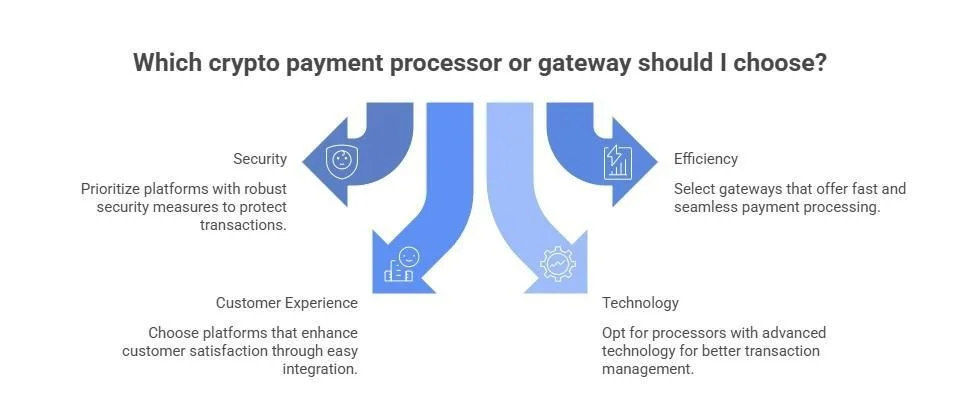
Nachdem die Hintergründe geklärt sind, folgt hier ein praktischer Rahmen für die Entscheidungsfindung.
Schritt 1: Schätzen Sie Ihre technischen Fähigkeiten ein
Wenn Sie einen Linux-Server betreiben können und mit Kommandozeilen-Tools vertraut sind, bietet Ihnen BTCPay Server höchste Privatsphäre, keine laufenden Gebühren und vollständige Unabhängigkeit. Falls Sie ohne technisches Know-how innerhalb eines Nachmittags live gehen müssen, ist ein gehostetes Zahlungsgateway wie Paymento oder MaxelPay die realistische Wahl.
Schritt 2: Entscheiden Sie, welches Datenschutzniveau Sie benötigen
Die Anonymität auf Gateway-Ebene (keine KYC-Prüfung bei der Registrierung, nicht-verwahrende Architektur) ist für die meisten Händler ausreichend. Das bedeutet, dass Ihre Kunden sich nicht identifizieren müssen und Sie keine Daten an den Gateway-Anbieter weitergeben.
Transaktionsbezogene Privatsphäre (wie bei Monero oder Zcash) ist erforderlich, wenn Zahlungen auf der Blockchain selbst nicht nachverfolgbar sein sollen. Dies stellt die höchsten Anforderungen dar und setzt voraus, dass Ihre Kunden ebenfalls bereit sind, datenschutzorientierte Kryptowährungen zu verwenden.
Schritt 3: Berücksichtigen Sie Ihren Kundenstamm
Wenn Ihre Kunden hauptsächlich Bitcoin nutzen, sind Lightning-fähige Zahlungsanbieter wie BTCPay Server oder Flash ideal. Für datenschutzbewusste Kunden, die bereits Monero oder Zcash halten, bieten sich Paymento oder NOWPayments mit ihrer Unterstützung für Privacy Coins an. Nutzen Ihre Kunden überwiegend Stablecoins, sind OxaPay und MaxelPay mit ihrer starken Unterstützung für USDT und USDC die richtige Wahl.
Schritt 4: Gebührenauswirkungen berechnen
Bei einem monatlichen Volumen von 50,000 US-Dollar:
- BTCPay-Server: 20 bis 100 US-Dollar pro Monat (nur Serverkosten)
- MaxelPay zu 0.4 %: 200 $ pro Monat
- Paymento zu 0.5 %: 250 $ pro Monat
- NOWPayments zu 0.5 bis 1 %: 250 bis 500 US-Dollar pro Monat
- Stripe bei 2.9 %: 1,450 $ pro Monat
Der Unterschied zwischen BTCPay Server und Stripe beträgt bei diesem Volumen über 1,300 US-Dollar pro Monat bzw. rund 16,000 US-Dollar pro Jahr.
Schritt 5: Machen Sie sich mit Ihren regulatorischen Risiken vertraut
Bevor Sie mit Ihrem Krypto-Geschäft beginnen, sollten Sie sich von einem Anwalt beraten lassen, der sich in Ihrem Land mit Kryptowährungen auskennt. Die regulatorischen Rahmenbedingungen sind im Jahr 2025 nicht einheitlich. Was in Argentinien zulässig ist, kann in Deutschland illegal sein. Was für ein B2B-Softwareunternehmen akzeptabel ist, kann für ein Einzelhandelsunternehmen mit Endkundenkontakt riskant sein.
Holen Sie sich die UPay Crypto Card
Erleben Sie das Beste aus Online-Zahlungen und nahtlosen Krypto-Transaktionen.
Jetzt registrierenFazit
Anonyme Krypto-Zahlungsportale sind im Jahr 2025 ein realer, funktionierender Bestandteil des Zahlungsökosystems. Der Markt hat sich von einer technischen Nischenlösung zu einer Kategorie entwickelt, die Hunderttausende von Händlern weltweit bedient und jährlich Transaktionen im Wert von über 2.8 Milliarden US-Dollar abwickelt.
Die zugrundeliegende Technologie ist deutlich ausgereifter. Der BTCPay-Server ist im großen Maßstab produktionserprobt. Das Lightning Network hat die Geschwindigkeits- und Kostenprobleme von Bitcoin für die meisten Zahlungsanwendungen gelöst. Datenschutzorientierte Kryptowährungen haben trotz Börsenstreichungen und regulatorischem Druck Ende 2025 ein deutliches Comeback erlebt.
Das regulatorische Umfeld ist komplex und unterliegt einem rasanten Wandel. MiCA hat den EU-Markt grundlegend verändert. In den USA wurden die Anforderungen an die Registrierung von Geldtransferdienstleistern verschärft. Mehrere Anbieter von No-KYC-Gateways haben sich aus regulierten Märkten zurückgezogen. All dies hat das Wachstum des Segments nicht gebremst, sondern lediglich die Nutzer und deren Nutzungsgewohnheiten verändert.
Der richtige Ansatz besteht darin, anonyme Zahlungsgateways nicht als regulatorische Lücke, sondern als legitimes Zahlungsinstrument mit spezifischen Datenschutzfunktionen zu betrachten. Sie sind die richtige Wahl für Händler, die globale Zahlungen akzeptieren müssen, ohne Kunden zu einer Identitätsprüfung zu zwingen, Märkte bedienen, in denen traditionelle Bankdienstleistungen unzuverlässig sind, oder in Branchen tätig sind, in denen etablierte Zahlungsdienstleister willkürlich die Zusammenarbeit ablehnen.
Sie erfordern ein ehrliches Nachdenken über Ihre eigenen rechtlichen Verpflichtungen, Ihre technischen Möglichkeiten und den konkreten Datenschutzbedarf Ihrer Situation. Mit diesem Verständnis bieten sie echte Vorteile, die KYC-konforme Systeme nicht erreichen können.
Die Frage, die sich die meisten Händler stellen sollten, ist nicht, ob anonyme Zahlungsportale legitim sind, sondern ob die Vorteile hinsichtlich Datenschutz und Kosten den erforderlichen betrieblichen Aufwand für deren optimale Nutzung rechtfertigen. Für eine wachsende Zahl von Unternehmen im Jahr 2025 lautet die Antwort: Ja.
Wenn Sie anonyme Zahlungsgateways für Ihr Unternehmen evaluieren, sollten Sie sich zunächst drei Fragen stellen: Welche Währungen halten meine Kunden tatsächlich? Verfüge ich über die technischen Ressourcen für eine selbstgehostete Lösung oder benötige ich eine Managed-Lösung? Und wie sieht die regulatorische Situation in den Ländern aus, in denen ich tätig bin?
Die Antworten auf diese drei Fragen werden die Auswahl schnell eingrenzen. Die Technologie ist vorhanden. Die Anbieter sind ausgereift. Die Hauptaufgabe besteht darin, sich im Klaren darüber zu sein, was man bekommt und worauf man sich einlässt.
Häufig gestellte Fragen
Ist die Annahme anonymer Kryptozahlungen legal?
Das hängt ganz davon ab, wo Sie sich befinden und was Sie tun. In den USA ist die Annahme von Kryptowährungszahlungen legal, aber Sie haben unabhängig vom verwendeten Zahlungsanbieter Ihre eigenen Steuererklärungspflichten.
Die Nutzung eines No-KYC-Gateways bedeutet nicht, dass die US-Steuerbehörde (IRS) Ihre Einkünfte nicht kennen muss. In der EU ist die Rechtslage nach dem MiCA komplexer.
In Ländern wie El Salvador oder Argentinien funktionieren anonyme Zahlungsportale mit wenigen Einschränkungen. Lassen Sie sich vor der Einrichtung solcher Portale stets rechtlich beraten, insbesondere im Hinblick auf Ihr jeweiliges Land.
Kann die Polizei anonyme Kryptozahlungen nachverfolgen?
Bitcoin-Transaktionen sind pseudonym, nicht anonym, was bedeutet, dass sie häufig durch Blockchain-Analysen nachverfolgt werden können. Lightning-Network-Transaktionen sind deutlich schwieriger nachzuverfolgen.
Monero-Transaktionen gelten mit den derzeitigen Methoden als praktisch nicht nachverfolgbar, obwohl Chainalysis (umstrittene) Fortschritte bei der probabilistischen Nachverfolgung behauptet hat.
Mit zk-SNARKs geschützte Zcash-Transaktionen sind kryptografisch privat.
Was passiert, wenn ein No-KYC-Gateway ausfällt?
Bei einem Non-Custodial-Gateway bleiben Ihre Gelder in Ihrer Wallet, unabhängig davon, was mit dem Zahlungsdienstleister passiert. Ihr Geld ist nicht gefährdet.
Sie verlieren den Überwachungs- und Benachrichtigungsdienst. Um weiterhin Zahlungen entgegennehmen zu können, müssten Sie auf ein anderes Zahlungsgateway umsteigen, bereits eingegangene Gelder bleiben jedoch sicher.
Muss ich Kryptozahlungen melden, die ich über anonyme Zahlungsportale erhalte?
Ja, in den meisten Ländern. In den USA sind Kryptowährungen, die als Zahlung für Waren oder Dienstleistungen erhalten werden, steuerpflichtiges Einkommen. Die Tatsache, dass das Zahlungsportal keine 1099-DA-Meldung eingereicht hat, ändert nichts an Ihrer Meldepflicht.
Die US-Steuerbehörde IRS geht zunehmend aktiv gegen nicht deklarierte Krypto-Einkünfte vor.
Sind anonyme Zugangssysteme nur für risikoreiche Unternehmen geeignet?
Nein. Die Mehrheit der anonymen Gateway-Nutzer sind Händler, die Wert auf Datenschutz legen oder Kunden in Regionen mit eingeschränktem Zugang zu Bankdienstleistungen bedienen.
Viele davon sind Softwareentwickler, Freiberufler und kleine Einzelhändler, die ihren Kunden einfach keine Identitätsprüfung für einen Kauf aufzwingen wollen.
Worin besteht der Unterschied zwischen nicht-verwahrenden und verwahrenden Gateways?
Ein Non-Custodial-Gateway verwahrt niemals Ihre Gelder. Es überwacht lediglich Blockchain-Adressen und benachrichtigt Sie, sobald Zahlungen eingehen.
Ihre privaten Schlüssel bleiben bei Ihnen. Ein Verwahrungsdienstleister verwahrt die Gelder in Ihrem Namen und gibt sie auf Anfrage oder nach einem festgelegten Zeitplan frei, ähnlich wie PayPal das Guthaben eines Händlers verwaltet.
Bei anonymen Zahlungsportalen ist die Verwahrung ohne Verwahrung in der Regel die bessere Wahl, da kein Risiko besteht, dass der Anbieter Ihre Gelder einfriert oder beschlagnahmt.
Wie kann ich Zahlungen von Kunden akzeptieren, die keine Kryptowährung besitzen?
Sie müssten entweder die Kunden darüber aufklären, wie man Kryptowährungen kauft (indem Sie sie auf Börsen oder Peer-to-Peer-Dienste hinweisen) oder ein Gateway mit integrierter Fiat-zu-Krypto-Umrechnungsoption nutzen.
Einige Anbieter, darunter NOWPayments, bieten ein Zahlungs-Widget an, mit dem Kunden Kryptowährungen kaufen und in einem einzigen Vorgang bezahlen können. Dies führt zwar zu einem gewissen Mehraufwand, macht Kryptozahlungen aber einem breiteren Publikum zugänglich.
Ab welchem Mindestvolumen lohnt sich der Wechsel zu einem anonymen Gateway?
Es gibt keinen wirklichen Mindestbetrag. Selbst ein kleiner Freiberufler, der nur gelegentlich internationale Zahlungen erhält, profitiert von der sofortigen Auszahlung, dem Verzicht auf Rückbuchungen und der erzwungenen Währungsumrechnung.
Die Gebühreneinsparungen werden mit steigendem Volumen immer bedeutsamer.
Bei einem monatlichen Umsatz von 10,000 US-Dollar spart der Wechsel von Stripe zu einem anonymen Zahlungsanbieter mit 0.5 % Gebühren etwa 240 US-Dollar pro Monat. Bei einem monatlichen Umsatz von 100,000 US-Dollar beträgt die Ersparnis 2,400 US-Dollar pro Monat.