



Decentralized finance (DeFi) is changing how people borrow and lend, without banks, brokers, or long waiting times.
In mid-2025 alone, lending protocols like Aave, Maple, and Morpho helped drive total value locked in DeFi lending past $55 billion, powered by everyday users depositing crypto to earn interest or borrow against their holdings.
That number keeps climbing, and it’s not by chance. It’s about access.
No paperwork. No approval queues. Just connect your wallet, deposit your crypto, and lend or borrow instantly—thanks to smart contracts doing all the work in the background.
But that convenience comes with questions. How exactly do these platforms operate without a central authority? What makes DeFi lending different from traditional loans? And what’s the catch?
This guide breaks down how DeFi lending works, what powers it, and what you should know before getting involved.
Key Takeaways
- DeFi lending enables users to borrow and lend crypto assets instantly using smart contracts without relying on banks or intermediaries.
- Lending protocols like Aave, Compound, and MakerDAO use over-collateralization, lending pools, and real-time interest models to automate and secure transactions.
- Key benefits of decentralized lending include fast execution, transparent systems, global access, and passive income opportunities for users.
- Market volatility, liquidity limitations, and network scalability remain critical challenges for sustaining secure and efficient DeFi lending platforms.
- The future of DeFi lending points toward under-collateralized loans, institutional involvement, and real-world use cases powered by improved blockchain infrastructure.
What is DeFi Lending?
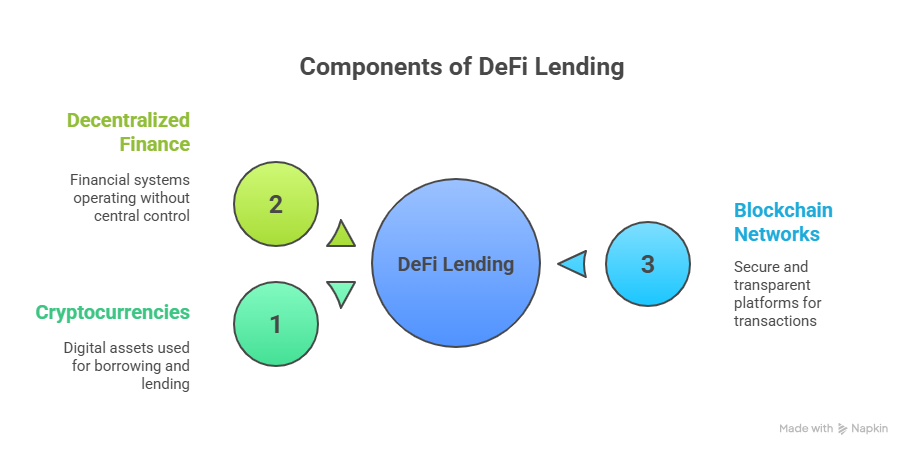
DeFi lending is a way to borrow and lend cryptocurrencies using decentralized finance protocols built on blockchain networks.
Unlike traditional lending, which relies on banks or financial institutions as intermediaries, DeFi lending operates through smart contracts—self-executing programs that automatically manage loan agreements without the need for a middleman.
In a DeFi lending system, users can supply their crypto assets to lending pools, which are then available for borrowers to access. Borrowers typically provide collateral in the form of other cryptocurrencies to secure the loan, ensuring the lender’s funds are protected.
Interest rates, loan terms, and repayments are all governed transparently and automatically by the underlying smart contracts.
This process allows anyone with a digital wallet to participate as a lender or borrower, enabling faster, permissionless, and borderless access to credit, all while maintaining security and transparency on the blockchain.
How Does DeFi Lending Work?
DeFi lending operates through blockchain technology and smart contracts, creating an automated, trustless system for borrowing and lending crypto assets.
Here’s a breakdown of the key components and processes involved.
Role of Smart Contracts in Automating Loans
Smart contracts are programmable agreements that automatically enforce the terms of a loan without human intervention.
When a borrower meets the necessary conditions, such as providing collateral, the smart contract releases funds instantly.
Repayments and interest calculations are also handled automatically, reducing delays and eliminating the need for intermediaries. This automation ensures transparency, security, and efficiency throughout the lending process.
Lending Pools and Liquidity Provisioning
Instead of traditional one-to-one loans, DeFi lending often uses pooled funds contributed by multiple lenders. These lending pools aggregate crypto assets, which borrowers can access as needed.
Lenders earn interest based on the demand for loans and the size of the pool, while borrowers benefit from quick access to liquidity. This pooling system helps optimize capital use and distribute risk among participants.
Collateralization Types
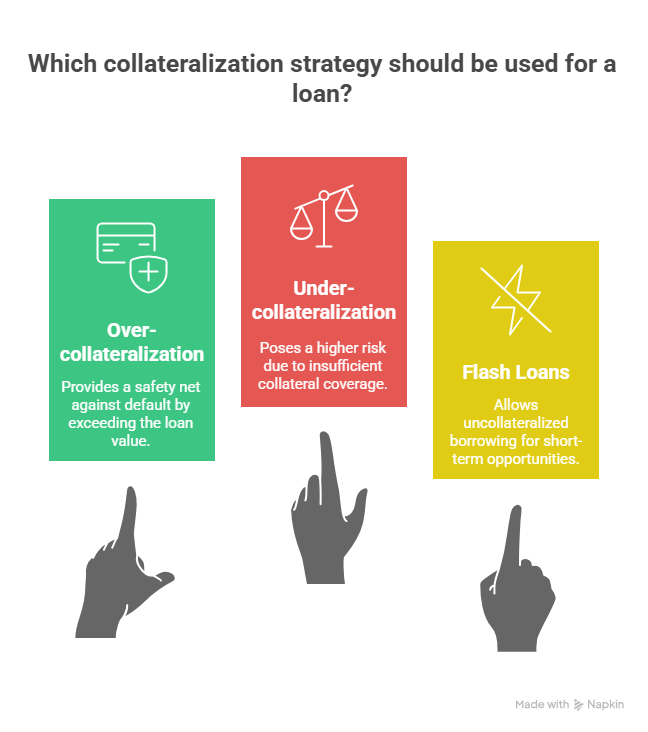
To protect lenders, DeFi loans generally require collateral, but the form and amount vary:
Over-collateralization
Borrowers must lock assets worth more than the loan amount. For example, depositing $150 worth of crypto to borrow $100. This reduces risk for lenders due to market volatility and is the most common method used in DeFi.
Under-collateralization
Loans are granted with collateral worth less than the loan amount, often based on creditworthiness or reputation within the network. This approach is less common and carries a higher risk but allows greater capital efficiency.
Flash Loans
These are uncollateralized loans that must be borrowed and repaid within a single blockchain transaction. Flash loans enable advanced financial operations like arbitrage or refinancing without upfront capital but require precise execution to avoid default.
By combining these mechanisms, DeFi lending creates a flexible, transparent, and efficient way for users to access credit using blockchain technology.
Key Components of a DeFi Lending Protocol
A DeFi lending protocol is made up of several essential elements that work together to enable trustless borrowing and lending. Each component plays a specific role in ensuring the protocol is secure, transparent, and efficient.
Lenders and Borrowers
At the core of any DeFi lending platform are lenders and borrowers.
- Lenders supply liquidity to the protocol by depositing their crypto assets into lending pools. In return, they earn interest based on the demand for loans.
- Borrowers access these funds by providing collateral, typically in the form of crypto tokens. They pay interest on the borrowed amount, which is distributed back to the lenders.
This peer-to-peer model removes intermediaries and allows anyone with a Web3 wallet to participate globally.
Collateral Tokens and Loan Tokens
DeFi loans are collateralized, meaning borrowers must lock up assets (collateral tokens) to secure a loan. These tokens are typically well-established cryptocurrencies like ETH, BTC, or stablecoins such as USDC or DAI.
In exchange, borrowers receive loan tokens—the asset they intend to borrow, often stablecoins or another cryptocurrency. If the value of the collateral falls below a certain threshold, the protocol may automatically liquidate it to cover the loan.
Lending Pools and Interest Rate Models
DeFi platforms use lending pools rather than matching individual lenders with borrowers. These pools are funded by users and made available for borrowing by others.
Interest rates in these pools are determined by interest rate models, which can be:
- Variable (dynamic): Rates adjust automatically based on supply and demand. The more liquidity borrowed, the higher the interest to encourage more deposits.
- Fixed: Some protocols offer fixed-term loans with preset interest rates, offering more predictability for both parties.
Oracle Services and Risk Management
DeFi protocols rely on oracle services to fetch real-time market data, such as crypto prices. These oracles are crucial for assessing the value of collateral, triggering liquidations, and maintaining overall protocol accuracy.
Risk management mechanisms also include:
- Collateral ratios to prevent undercollateralized loans
- Liquidation thresholds to protect lenders
- Insurance or reserve funds to cover unforeseen losses
Together, these components form a self-governing ecosystem that powers decentralized lending—secure, permissionless, and scalable.
Advantages of DeFi Lending

DeFi lending offers a range of benefits that make it a compelling alternative to traditional lending systems.
These advantages are:
Speed and Automation Through Smart Contracts
Smart contracts eliminate the need for intermediaries by automating the entire lending process. Loans are executed, collateral is secured, and repayments are tracked instantly without delays or manual approval. This reduces friction and enables borrowers to access funds quickly, often within minutes.
Immutability and Transparency of Blockchain-Based Systems
All transactions on DeFi lending platforms are recorded on a public blockchain, making them tamper-proof and verifiable. This immutability ensures data integrity, while transparency allows users to audit the protocol’s activity, monitor liquidity pools, and verify loan histories in real time.
Borderless and Permissionless Access
DeFi lending is open to anyone with an internet connection and a crypto wallet. There are no gatekeepers, credit checks, or geographic restrictions. This permissionless model promotes financial inclusion, particularly for individuals in regions underserved by traditional banking systems.
Interoperability and Programmability Across DeFi Protocols
DeFi platforms are built using open-source code and shared standards, enabling interoperability between different protocols. This allows users to move assets across platforms, build custom lending strategies, or integrate with decentralized exchanges, wallets, and other applications without friction.
Savings and Earnings for Both Lenders and Borrowers
Lenders earn passive income by supplying assets to liquidity pools and collecting interest. Borrowers, on the other hand, can unlock liquidity from idle assets without needing to sell them. This creates a system where both parties can benefit financially in a decentralized, trustless environment.
Lending Analytics for Tracking Performance and Returns
Many DeFi platforms offer real-time analytics dashboards to help users track lending performance, interest earned, collateral ratios, and loan history. These tools provide better financial visibility and decision-making without relying on third-party advisors or institutions.
Asset Management Tools in DeFi Ecosystems
From automated rebalancing to collateral optimization, DeFi ecosystems offer a variety of asset management tools. These tools help users maximize yield, reduce risk, and maintain healthy loan-to-value (LTV) ratios, making asset management more efficient and customizable.
Accountability via Trustless Protocols
Since smart contracts enforce rules automatically and are open for anyone to audit, DeFi lending platforms encourage accountability through code. There’s no need to trust an institution or individual—just the protocol itself. This reduces counterparty risk and enhances user confidence.
Read Also: A Simple Guide to How Crypto Lending Works
Major Challenges in Decentralized Lending
While DeFi lending unlocks powerful financial opportunities, it also comes with a unique set of challenges.
These issues can affect performance, user trust, and long-term sustainability if not properly addressed.
They are:
Uncertainty and Volatility of Crypto Markets
The crypto market is highly volatile. Asset values can shift dramatically within minutes, directly impacting the collateral securing loans.
If the value of a borrower’s collateral falls below the liquidation threshold, the protocol may automatically liquidate their position—sometimes at a loss. This volatility creates a risk-heavy environment for both lenders and borrowers, especially during rapid market downturns.
Scalability Issues with Blockchain Networks
Most DeFi lending platforms run on public blockchains like Ethereum. When network demand spikes, congestion can lead to slow transaction times and high gas fees. These scalability issues reduce user experience and increase operational costs, making it harder for the protocol to handle large-scale adoption efficiently.
Liquidity Constraints and Capital Inefficiency
To minimize risk, DeFi lending often requires over-collateralization, meaning borrowers must lock up more value than they receive.
While this protects lenders, it also results in capital inefficiency—a large amount of idle assets that could otherwise be used more productively. Additionally, smaller or newer platforms may struggle to maintain consistent liquidity in their pools, limiting borrowing capacity.
Shared Responsibility Between Users and Platforms
DeFi operates without traditional customer support or centralized oversight. Users are responsible for managing private keys, understanding protocol mechanics, and monitoring market conditions.
This shared responsibility can lead to costly mistakes if users make errors or fail to act during a market crash. Meanwhile, protocol developers must ensure the code is secure, reliable, and updated—any oversight can lead to smart contract exploits or system failure.
Popular DeFi Lending Platforms and Protocols
As decentralized finance continues to reshape how people interact with money, several platforms have emerged as leaders in the DeFi lending space.
These platforms enable users to lend and borrow digital assets without intermediaries, relying on smart contracts to automate the process.
Below, we explore some of the most influential DeFi lending protocols and platforms:
Aave – Flash Loans and Interest Rate Switching
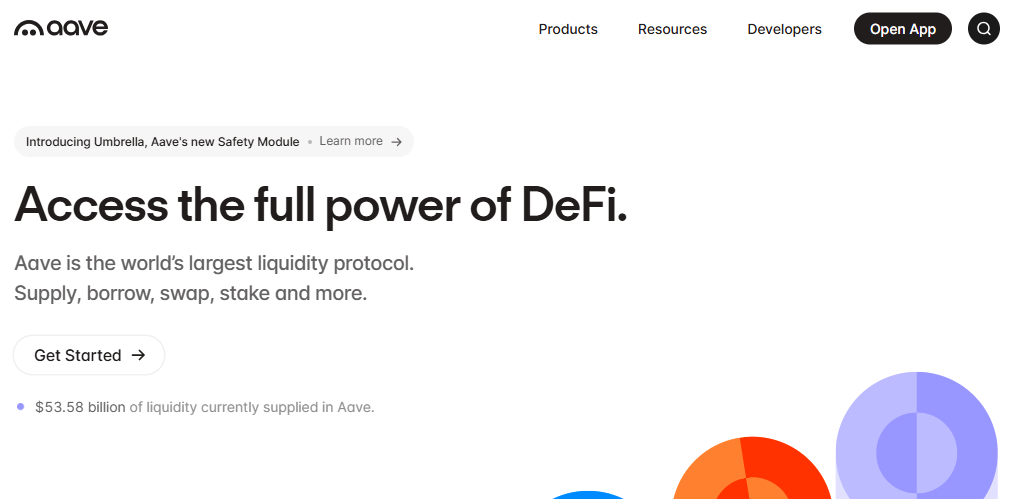
Aave is one of the most advanced and user-friendly DeFi lending protocols in the crypto ecosystem. Originally launched as ETHLend in 2017 and later rebranded to Aave, the protocol enables users to supply liquidity or borrow assets in a non-custodial, decentralized way.
Key features include:
- Flash Loans: Aave pioneered flash loans, a unique type of uncollateralized loan where users can borrow assets as long as the loan is repaid within the same transaction block. This feature is mainly used for arbitrage, refinancing, and collateral swapping, though it requires some technical expertise.
- Interest Rate Switching: Users borrowing from Aave can switch between stable and variable interest rates, allowing greater flexibility and control over loan costs depending on market volatility.
- aTokens: When users deposit assets, they receive interest-bearing aTokens (e.g., aDAI, aUSDC), which accrue interest in real-time.
- Multi-market Support: Aave supports a wide variety of assets across different markets, including Ethereum, Avalanche, Optimism, and Polygon.
Aave’s protocol governance is decentralized, with AAVE token holders participating in decision-making via the Aave DAO.
Compound – Algorithmic Interest Rate Model
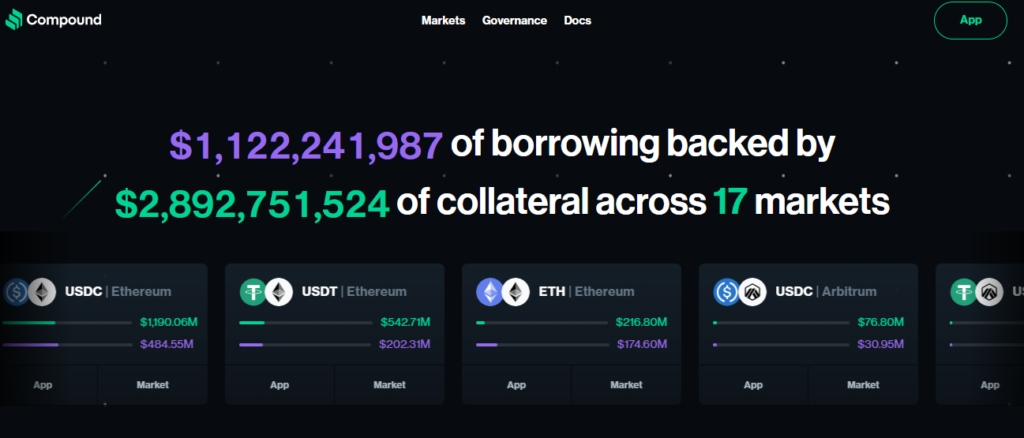
Compound Finance is another cornerstone in the DeFi lending space. Launched in 2018, it offers a fully automated money market protocol that allows users to supply or borrow cryptocurrencies.
Key features are:
- Algorithmic Interest Rates: Unlike fixed-rate lending systems, Compound uses a dynamic interest rate model that adjusts based on supply and demand. This model ensures the interest rate remains market-competitive and sustainable.
- cTokens: When users supply an asset, they receive a cToken (e.g., cETH, cDAI), representing their deposit and accruing interest over time. These cTokens can also be used in other DeFi platforms, increasing capital efficiency.
- Governance via COMP Token: Compound introduced the COMP token to decentralize protocol governance. Token holders can propose and vote on protocol upgrades, asset listings, and parameter changes.
- Security and Simplicity: The platform is known for its minimal interface, robust documentation, and secure smart contracts, making it a popular choice for developers and investors alike.
YouHodler – CeDeFi Hybrid Lending

YouHodler stands out as a CeDeFi (Centralized-Decentralized Finance) platform. While not fully decentralized like Aave or Compound, it blends the flexibility of DeFi with the safety nets of traditional finance, catering to users who prefer a slightly more centralized structure with regulatory compliance.
Key features include:
- Crypto-Backed Loans: Users can deposit crypto as collateral and borrow fiat (USD, EUR) or stablecoins (USDT, USDC) without selling their assets.
- High Loan-to-Value (LTV) Ratios: YouHodler offers up to 90% LTV, which is significantly higher than most DeFi protocols. This makes it attractive to users needing high liquidity quickly.
- Multi HODL Tool: A unique tool that lets users multiply their assets based on market trends, combining aspects of trading and lending.
- Savings Accounts with Interest: YouHodler offers interest-earning accounts with APYs ranging from 3% to over 12%, depending on the asset and market conditions.
- Security & Custody: Although it uses elements of DeFi, YouHodler keeps most assets in insured cold wallets through partnerships with custody providers, offering users an additional layer of security.
Uniswap – Liquidity and Lending Functionalities
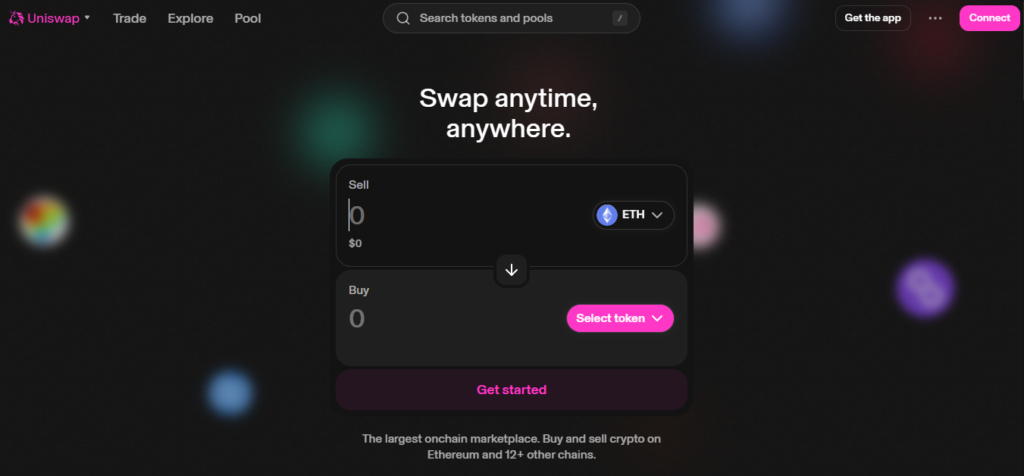
Uniswap is primarily known as a decentralized exchange (DEX), but its automated market maker (AMM) model also plays a critical role in DeFi lending by powering liquidity provision, which is indirectly related to lending and borrowing activities.
Key features are:
- Liquidity Pools: Uniswap allows users to deposit token pairs into pools, facilitating trading while earning a share of trading fees. These deposits act similarly to lending pools, where users “lend” their tokens for use in swaps.
- Passive Yield through LP Tokens: Liquidity providers (LPs) receive LP tokens that can be staked, farmed, or used across other DeFi protocols to earn additional yield—essentially lending capital across platforms.
- Flash Swaps: A Uniswap-native feature similar to Aave’s flash loans, where users can withdraw any ERC-20 token and execute operations provided that the funds are returned by the end of the transaction.
- Uniswap v3 Innovations: The latest version introduces concentrated liquidity, allowing LPs to allocate liquidity more efficiently, which affects how returns and risks are managed—an essential concept in lending-related operations.
Although Uniswap doesn’t offer direct lending/borrowing like Compound or Aave, its liquidity functionality serves as the foundation for composable lending protocols across DeFi.
MakerDAO – Collateral-Backed Stablecoin Lending (DAI)
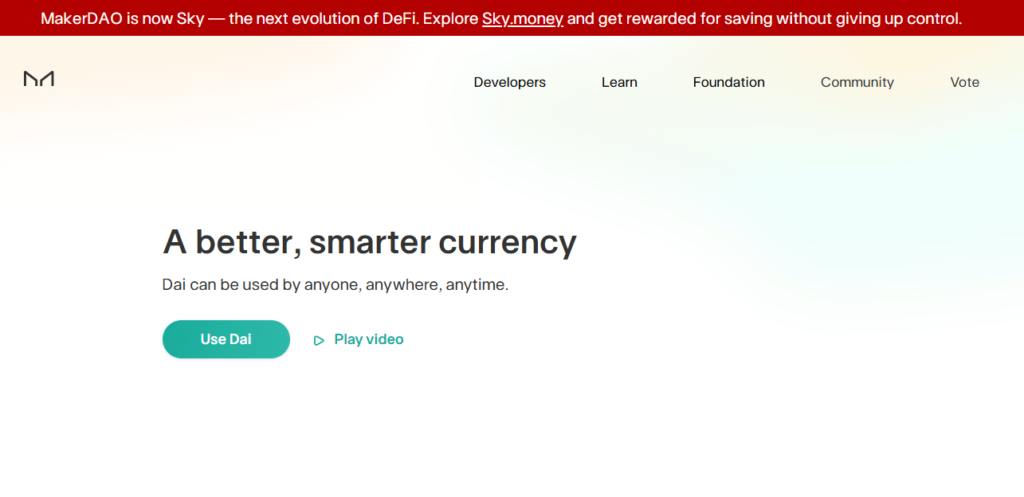
MakerDAO is the protocol behind DAI, the first decentralized, crypto-collateralized stablecoin. It allows users to generate DAI by locking crypto assets in smart contracts known as Vaults.
Key features are:
- Overcollateralized Lending: To mint DAI, users must deposit collateral worth more than the loan—typically ETH, wBTC, or other accepted tokens. If the collateral value drops below the required threshold, the system automatically liquidates the position.
- Decentralized Governance: MakerDAO is governed by MKR token holders who vote on risk parameters, collateral types, and system upgrades.
- Stability Mechanisms: The system uses Target Rate Feedback Mechanisms (TRFM) and Stability Fees to maintain DAI’s peg to the USD.
- Multi-Collateral DAI (MCD): Supports a diverse range of crypto assets as collateral, offering more flexibility to users.
- Real-World Asset Integration: MakerDAO has expanded to support tokenized real-world assets (RWAs) such as trade finance and real estate, bridging DeFi and traditional finance.
MakerDAO is foundational to the DeFi ecosystem, providing a stable medium of exchange while offering decentralized borrowing that doesn’t rely on credit scores or intermediaries.
How to Start Lending or Borrowing on a DeFi Platform
Getting started with DeFi lending or borrowing is easier than ever, thanks to user-friendly tools and platforms.
Here’s a step-by-step guide to help you begin, from setting up your wallet to managing your crypto loans or deposits.
Setting Up a Crypto Wallet
To use a DeFi platform, you first need a non-custodial crypto wallet—one that gives you full control over your private keys. The most commonly used wallet is MetaMask, a browser extension and mobile app that supports Ethereum and many other blockchains.
Steps:
- Download and install MetaMask from the official website or app store.
- Create a wallet and securely back up your seed phrase.
- Fund your wallet by transferring crypto assets (e.g., ETH, USDC) from an exchange or another wallet.
- Make sure to keep some native tokens like ETH or MATIC in your wallet to cover network gas fees.
Connecting to a DeFi Protocol
Once your wallet is ready, you can connect to a DeFi platform like Aave, Compound, or MakerDAO.
Steps:
- Visit the official website of the lending protocol.
- Click “Connect Wallet” and choose MetaMask (or your preferred wallet).
- Approve the connection in your wallet interface.
Once connected, the platform will automatically read your wallet balance and show the available options for lending or borrowing.
Supplying Crypto Assets or Borrowing Against Collateral
You can either become a lender or a borrower, depending on your goals:
To Lend:
- Choose the asset you want to deposit into a lending pool (e.g., DAI, USDC, ETH)
- Approve the token transaction in your wallet, then confirm the deposit.
- You’ll begin earning interest based on demand and the platform’s rate model.
To Borrow:
- First, supply collateral (e.g., ETH or WBTC) by depositing it into the protocol.
- Then, select the asset you wish to borrow (e.g., stablecoins like DAI or USDT).
- The protocol will allow you to borrow up to a certain percentage of your collateral’s value (usually 50–75%).
- Confirm the loan transaction in your wallet.
Always monitor your loan-to-value (LTV) ratio to avoid liquidations if market prices drop.
Managing Repayments and Withdrawals
Once you’ve borrowed or deposited funds:
For Borrowers:
- You can repay your loan (partially or in full) anytime using the borrowed token.
- After full repayment, your collateral becomes available for withdrawal.
For Lenders:
- Your deposit accrues interest in real time.
- You can withdraw your principal and earned interest at any time, depending on pool liquidity.
Some platforms offer tools to track your performance metrics, health factor, and interest earnings, giving you real-time control over your assets.
Read Also: Top Crypto Lending Rates in 2026: Compare Rates & Maximize Returns
Future of Lending in the Decentralized Finance Space
The future of lending in decentralized finance (DeFi) is being shaped by innovation, scalability, and increasing real-world adoption.
Expansion of Real-World Use Cases
DeFi lending is steadily moving beyond crypto trading into more practical applications. From financing small businesses in underserved regions to tokenizing real-world assets like real estate and invoices, lending platforms are exploring how blockchain-backed credit can meet everyday needs.
Projects are already piloting tokenized loans linked to off-chain assets, creating bridges between decentralized finance and traditional markets.
Improved Credit Models and Under-Collateralized Lending
Today’s DeFi lending primarily relies on over-collateralization to reduce risk. But this limits borrowing potential and locks up valuable capital.
The future points toward under-collateralized lending—enabled by on-chain identity, credit scoring, and social reputation systems. These innovations will help users access credit based on transaction history or behavioral data rather than purely on the value of held assets.
Layer 2 Solutions and Cross-Chain Lending
One major challenge—network congestion and high gas fees—is being addressed by Layer 2 scaling solutions like Arbitrum, Optimism, and zkSync.
These technologies promise faster and cheaper transactions, making DeFi lending more accessible to users with smaller portfolios. Additionally, cross-chain protocols are enabling seamless asset movement and lending across multiple blockchain ecosystems, expanding market liquidity and user options.
Regulatory Integration and Institutional Involvement
As DeFi platforms grow, so does interest from regulators and institutions. Rather than resisting oversight, many protocols are exploring ways to implement compliant lending solutions—including identity verification, AML/KYC integrations, and modular compliance frameworks.
This will open the door for institutional capital, bridging the gap between centralized finance and decentralized innovation.
Smarter Risk Management and Protocol Security
Future DeFi lending protocols will likely feature enhanced risk management tools, including AI-powered analytics, dynamic collateral ratios, and real-time liquidation engines.
Smart contract auditing, bug bounties, and decentralized insurance mechanisms will also be critical in protecting user funds and improving trust in the system.
Greater Personalization and Financial Autonomy
DeFi lending is trending toward user-centric design. Platforms are beginning to offer personalized interest rates, advanced loan terms, automated yield strategies, and modular asset management—giving users full control over how they lend, borrow, or earn.
With increasing interoperability and programmability, individuals will be able to build their own lending ecosystems tailored to their needs.
Final Thoughts
Now, you know how DeFi lending works and why it’s becoming a practical option for crypto users worldwide. The tools are available, the protocols are live, and the opportunity to earn, borrow, or build around decentralized credit is real.
But like every financial decision, it starts with understanding the risks, managing your collateral, and choosing the right platform. DeFi doesn’t require permission—it requires informed action.
So before lending or borrowing, evaluate your goals, use verified protocols, and stay updated with the space. Smart moves in DeFi begin with smart decisions.
Frequently Asked Questions
How Does Lending Work in DeFi?
In DeFi, lending works by users depositing crypto assets into smart contract-based lending pools, which borrowers can access by providing collateral—interest rates and repayments are managed automatically without intermediaries.
Is DeFi Lending Risky?
Yes, DeFi lending carries risks such as smart contract bugs, market volatility, liquidation of collateral, and lack of regulatory protection.
Is DeFi Lending Haram?
DeFi lending may be considered haram if it involves interest (riba), which is prohibited in Islamic finance. However, its permissibility depends on the specific platform’s structure and compliance with Shariah principles. It’s best to consult a qualified Islamic scholar for guidance.
Can You Lose Money on DeFi?
Yes, you can lose money on DeFi due to smart contract bugs, market volatility, liquidation risks, or platform exploits. Always research and manage risk before participating.
What Is DeFi Explained Simply?
DeFi, or decentralized finance, is a blockchain-based system that lets people access financial services like lending, borrowing, and trading without banks or middlemen—using smart contracts instead.