


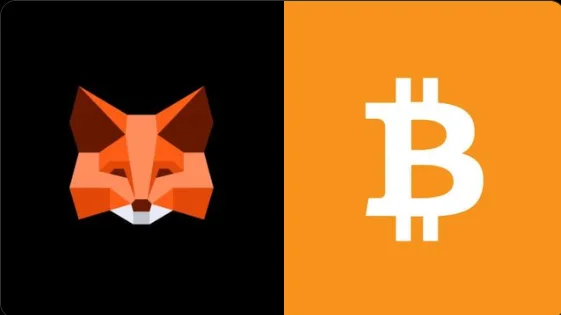
MetaMask has taken a major step toward becoming a true multichain wallet with the launch of native Bitcoin ($BTC) support. For the first time, users can hold, send, swap, and buy Bitcoin directly within MetaMask, alongside their Ethereum and Solana assets.
This update marks a significant shift for one of the most widely used crypto wallets, long associated primarily with Ethereum and EVM-compatible networks.
Bitcoin Joins MetaMask’s Multichain Wallet
With this rollout, every new MetaMask account now automatically generates a Bitcoin address. This change is part of MetaMask’s new multichain account structure, which creates EVM, Bitcoin, and Solana addresses under a single account. In practice, this means users no longer need separate wallets just to manage BTC and ETH.
“When you create a new MetaMask account, a Bitcoin address is automatically generated for you.”
MetaMask’s Bitcoin integration uses the Native SegWit derivation path by default. This is a widely adopted Bitcoin standard that offers lower transaction fees and better efficiency compared to legacy formats.
At launch, MetaMask only supports Native SegWit for Bitcoin accounts, meaning any imported BTC wallet must follow the same derivation path to work correctly.
Importing Existing Bitcoin Wallets
Users who already hold Bitcoin in another wallet are not left out. MetaMask allows the import of existing Bitcoin accounts using a 12- or 24-word Secret Recovery Phrase (SRP) or a compatible secret key. Once imported, MetaMask restores all supported accounts tied to that phrase, including Bitcoin, Solana, and EVM addresses.
This unified approach removes friction for users managing assets across different blockchains. Instead of juggling multiple wallet apps, balances can now be monitored and managed from one interface.
Finding and Using Your Bitcoin Address
Bitcoin addresses are accessible directly within MetaMask on both the browser extension and mobile app. Users can view their BTC address from the address dropdown under their account name, copy it with a single click, or display a QR code for transfers.
That address can be used to receive BTC from centralized exchanges like UEEx or Binance, from other Bitcoin wallets. Once a transaction is confirmed on the Bitcoin network, the balance appears automatically in MetaMask.
Swapping, Sending, and Buying BTC
MetaMask’s Bitcoin support goes beyond simple storage. Users can now interact with BTC using familiar wallet features.
Swapping to Bitcoin
MetaMask’s built-in swap tool allows users to convert assets from Ethereum or Solana ecosystems directly into BTC. For example, ETH on Ethereum can be swapped into Bitcoin by selecting Bitcoin as the destination network and BTC as the asset. Once confirmed, the BTC balance updates after the transaction settles.
“Bitcoin transactions are much slower than Ethereum or Solana networks.”
This reminder is critical for new users. Unlike Ethereum or Solana, Bitcoin prioritizes security and decentralization over speed, so confirmations can take longer.
Sending BTC
Sending Bitcoin from MetaMask works the same way as receiving it. Users simply paste their MetaMask Bitcoin address into the sender wallet or exchange and confirm the transfer. MetaMask currently only supports Native SegWit addresses, so sending from incompatible address formats may result in issues.
Buying Bitcoin with Fiat
MetaMask also enables direct BTC purchases using local currency. Depending on the user’s region, payment options may include debit or credit cards, bank transfers, PayPal, or Apple Pay. After selecting Bitcoin and confirming a quote, the purchased BTC appears in the wallet once the transaction is completed.
Why This Update Matters
Bitcoin and Ethereum were designed with different goals and architectures. Bitcoin proved that a decentralized, trustless digital currency could work on a global scale. Ethereum expanded that idea by introducing programmable smart contracts and decentralized applications.
“The Bitcoin network was, in many ways, the ‘proof of concept’ for public blockchain technology.”
Each blockchain has its own native currency used for transactions and network activity. Bitcoin uses BTC, while Ethereum uses ETH. Because of technical differences in how these networks are built, assets cannot be sent directly from one blockchain to another without special mechanisms like wrapped tokens.
MetaMask’s native Bitcoin support does not change those fundamentals, but it simplifies how users interact with them. Instead of relying on wrapped BTC or third-party wallets, users can now manage real BTC directly within MetaMask.
A Shift in MetaMask’s Role
This move signals a broader change in MetaMask’s identity. What started as an Ethereum-focused wallet is becoming a general-purpose gateway for major blockchains. By supporting Bitcoin and Solana under one account structure, MetaMask positions itself as a central hub for users navigating a multi-chain crypto environment.
For everyday users, the benefit is convenience. For the broader crypto space, it reflects a growing push toward interoperability without forcing blockchains to compromise their core design principles.
MetaMask supporting Bitcoin is not just a feature update—it is a statement. One wallet, multiple chains, and fewer barriers between the world’s most important cryptocurrencies.