



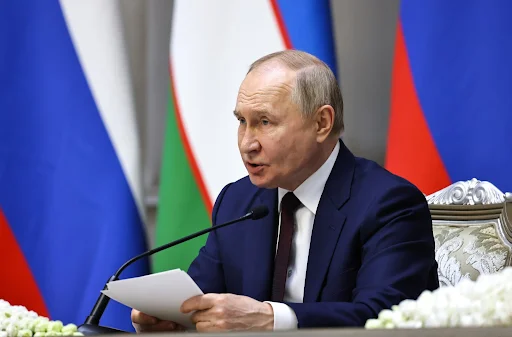
Russian President Vladimir Putin has signed Russia’s first comprehensive cryptocurrency law, establishing a regulatory framework for crypto exchanges, brokers, custodians, digital asset service providers, and investors. The legislation legalizes regulated cryptocurrency trading while maintaining the country’s ban on using digital assets for domestic payments, with most provisions scheduled to take effect from September 1, 2026.
Key Takeaways
- Russia has adopted its first comprehensive cryptocurrency law regulating exchanges, custodians, brokers, and digital asset service providers.
- Most provisions will take effect on September 1, 2026, while some licensing and operational requirements extend into 2027.
- Retail investors will be limited to purchasing 300,000 rubles worth of approved cryptocurrencies annually through each licensed intermediary after passing a suitability test.
- Qualified investors will be allowed to trade without annual investment limits after meeting regulatory requirements.
- Cryptocurrency remains prohibited as a domestic payment method but can be used for approved cross-border settlements and foreign trade.
Russia Introduces Its First Comprehensive Crypto Framework
President Vladimir Putin signed the law titled “On Digital Currency and Digital Rights,” creating Russia’s first unified legal framework governing cryptocurrency markets.
The legislation regulates cryptocurrency exchanges, brokers, digital depositories, asset managers, organized trading platforms, clearing providers, and other financial intermediaries involved in digital asset services. Most provisions of the law will become effective on September 1, 2026, while additional operational and licensing requirements will be phased in during 2027.
The Bank of Russia will oversee the regulated crypto market and publish additional rules covering trading, custody, pricing, market supervision, and approved digital assets.
Retail Investors Face Purchase Limits and Suitability Tests
The new framework introduces different requirements for retail and qualified investors. Beginning September 2026, non qualified investors will only be permitted to purchase cryptocurrencies approved by regulators as sufficiently liquid. Before investing, retail participants must complete a suitability or knowledge assessment designed to evaluate their understanding of cryptocurrency risks.
Annual purchases will also be capped at 300,000 rubles through each licensed intermediary. Qualified investors, however, will be allowed to purchase virtually unlimited amounts of cryptocurrency after satisfying regulatory qualification requirements.
The Bank of Russia has not yet published the final list of approved digital assets or the detailed testing requirements.
Exchanges and Custodians Must Meet License Requirements
The legislation establishes strict licensing and capital requirements for crypto market operators. Crypto exchange providers must register in a special government register, maintain at least 15 million rubles in equity capital, and become members of a recognized financial market self regulatory organization. Digital depositories will also be subject to minimum capital requirements ranging from 50 million to 250 million rubles, depending on the services they provide.
Existing providers may continue operating during a transition period lasting until July 1, 2027, after which full compliance with the licensing framework will be required.
Domestic Crypto Payments Remain Prohibited
Although the law legalizes regulated cryptocurrency investment and trading, it continues Russia’s longstanding prohibition on using cryptocurrencies as payment for goods and services within the country. The legislation also prohibits advertising cryptocurrencies as a domestic payment method. However, investors will be permitted to exchange cryptocurrencies for securities and Russian law digital financial rights through regulated channels.
Banks and financial institutions will also be required to block transactions involving unauthorized crypto exchange providers or suspicious digital asset activities.
Cross-Border Crypto Settlements Remain Permitted
The law preserves an important exception for international commerce. Russian businesses engaged in foreign trade may continue using cryptocurrencies for cross-border settlements with foreign counterparties.
Exporters and importers may conduct crypto transactions either through licensed intermediaries or directly using digital wallets without transaction limits, provided they comply with reporting and tax obligations.
The legislation does not override international sanctions, meaning foreign exchanges, wallet providers, and financial institutions must continue complying with applicable sanctions imposed by their respective jurisdictions.
Additional Regulations Will Continue Through 2027
The Bank of Russia is continuing work on implementing regulations needed to fully operationalize the new framework. Future rules will address organized crypto trading, pricing methodologies, custody standards, digital asset registries, and broader supervisory procedures.
Several technical provisions, including certain transfer requirements and rules governing digital depositories, are scheduled to take effect during 2027 as regulators finalize the supporting infrastructure.
Conclusion
Russia’s new cryptocurrency law establishes the country’s first comprehensive regulatory framework for digital assets by creating licensing requirements for exchanges and custodians, introducing investor protection measures, and defining rules for cryptocurrency trading.
While the legislation expands legal access to cryptocurrency investments and supports cross-border digital asset transactions, it maintains the prohibition on using cryptocurrencies for domestic payments. As additional regulations are introduced over the coming year, the framework is expected to become the foundation of Russia’s regulated digital asset market.