




Spain’s left-wing Sumar party has ignited a fierce policy debate after submitting amendments that would dramatically increase cryptocurrency taxes and expand regulatory control over digital assets.
The proposal seeks to reclassify crypto profits from “savings income” to “general income,” pushing the tax on high-end crypto gains to a top rate of 47%—up from the current 30% ceiling.
A Fundamental Shift in How Spain Treats Crypto Gains
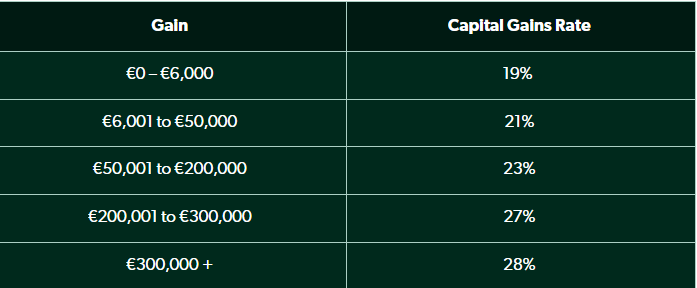
Right now, cryptocurrency profits in Spain fall under the savings tax framework, with rates ranging from 19% to a maximum of 28–30% depending on the profit amount. Under Sumar’s amendment, profits from crypto—including Bitcoin, Ethereum, XRP, and others—would instead be taxed like wages or business earnings.
High-income investors with more than €300,000 in annual profits could face the 47% bracket—and potentially more if regional surcharges apply.
Corporate entities would also face a flat 30% tax rate on crypto-related profits, reflecting Sumar’s broader attempt to align crypto gains with traditional taxable activities.
The amendments target three major laws:
- General Tax Law (58/2003)
- Personal Income Tax Law (IRPF – Law 35/2006)
- Inheritance & Gift Tax Law (Law 29/1987)
If passed, the law would not only redefine taxation, but also reclassify all digital tokens as “seizable assets.”
The Controversial “Risk Traffic Light” System
The Sumar proposal also mandates the National Securities Market Commission (CNMV) to introduce a visual risk rating system—described as a “risk traffic light”—for all cryptocurrencies offered in Spain.
Trading platforms would be required to visibly display:
- Whether a token is regulated or unregulated
- Whether it is backed by reserves
- Its liquidity characteristics
- Whether it is registered or supervised
According to the bill, there should be “no justification for different treatment between regulated and unregulated crypto-assets,” arguing that all digital tokens share the same economic nature as transferable, electronically stored representations of value.
Supporters say the measure will protect retail investors, who often enter the market without fully understanding the volatility or custodial variations among different crypto assets.
Critics Call It a “Useless Attack on Bitcoin”
The reaction from economists, tax experts, and legal analysts was swift and pointed.
Economist and tax advisor José Antonio Bravo Mateu branded the amendments as “useless attacks against Bitcoin.” He argues that:
- Bitcoin in self-custody is inaccessible to state seizure.
- Enforcement presumes centralized control, which does not exist for decentralized assets.
In his words, self-custodied crypto “cannot be supervised or seized through conventional processes.” In essence, one cannot freeze a private wallet without the private key—something the government cannot compel cryptographically.
Lawyer Cris Carrascosa echoed this criticism, calling the proposal unenforceable. She cited stablecoins such as USDT, which fall outside EU MiCA custodial requirements and often have no regulated custodian.
Without a custodian, there is no entity to comply with a court seizure order. She warned that the amendments “complicate the lives of CASPs [crypto asset service providers]” and risk creating “animal chaos throughout the crypto tax regime in Spain.”
A Push-Out Effect: Will Crypto Holders Leave Spain?
Crypto is geographically portable. No assets are physically tied to the territory. A resident holding €15 million in BTC can relocate to another tax jurisdiction in weeks and liquidate assets there.
Critics warn that:
- Italy offers a 26% flat capital gains tax.
- Andorra taxes crypto gains at just 10%.
- Japan is shifting toward a 20% flat crypto tax to attract industry growth.
Bravo warns that
“the only thing they achieve with these measures is that their holders residing in Spain think about fleeing when BTC rises so much that they don’t care what politicians say.”
If Spain pushes crypto gains into the highest income brackets, it risks placing itself among the highest-taxed cryptocurrency jurisdictions in Europe at a time when others are moving in the opposite direction.
Spain’s Larger Crypto Crackdown
This amendment does not exist in isolation. Spain has already begun tightening crypto compliance.
In 2023:
- The Spanish tax agency issued 328,000 warning notices to crypto holders.
In 2024:
- That number jumped to 620,000.
Service providers must now report all relevant crypto transactions to both the Bank of Spain and the CNMV. Individuals must declare:
- Total holdings
- Transaction volumes
- Wallet-to-wallet transfers
This framework is part of Spain’s implementation of the EU’s MiCA regime, which aims to prevent tax evasion and money laundering.
Spanish authorities have demonstrated aggressive enforcement capacity, as seen in the recent arrest of the alleged operator of the “CryptoSpain” fraud ring, accused of running a €260 million international investment scam involving crypto, real estate, whisky, and digital art.
Political Outlook: Can the Proposal Pass?
Sumar currently holds 26 of 350 seats in Congress. It is a minority partner in a governing coalition led by Spain’s Socialist Party (PSOE). For the tax hike to pass, PSOE would need to formally support the measure.
PSOE has taken a cautious approach to crypto but may hesitate to support a move that:
- Risks a capital flight of high-net-worth investors
- Harms Spain’s fintech-startup appeal
- Complicates crypto reporting and custodial mechanics
The proposal is now part of broader negotiations surrounding the 2025 fiscal budget.
Consequences for Spanish Crypto Investors
If the bill appears likely to pass, analysts expect a wave of:
- Relocation of high-net-worth crypto holders
- Accelerated profit realization before the new tax takes effect
- Growth in Bitcoin self-custody and cold-storage usage
- Offshore entity creation in more crypto-friendly jurisdictions
In the short term, experienced investors may execute tax-loss harvesting strategies or realize gains under the current 30% cap before year-end.
Final Outlook
The proposed shift to treating cryptocurrency as general income rather than capital gains signals a major ideological stance: crypto is not an investment—it is income. That shift alone carries significant symbolic weight.
For now, the amendment is still just a proposal. But it has already triggered pushback from economists, legal experts, industry advocates, and investors who view it as politically motivated and technically unenforceable.
Spain now faces a choice: follow a punitive regulatory model—or remain competitive in a sector where capital, developers, and companies can move across borders with unprecedented speed.
If this tax reform passes, it could mark the end of Spain’s nuanced middle-ground approach and the beginning of a much harsher regime for digital asset holders—one that may ultimately drive innovation and capital elsewhere.