



API integration is the technical backbone of the modern cryptocurrency ecosystem. Every time a wallet checks a balance, a merchant accepts a crypto payment, a trading bot executes an order, or a DeFi application interacts with a smart contract, an API is handling the communication between systems. Understanding how cryptocurrency APIs work, which ones are most relevant to your use case, and how to implement them well is increasingly important for developers, businesses, and fintech builders. This guide covers the core roles of crypto APIs, the top options available, best practices for implementation, and direct answers to the most common questions about payment APIs, tools, and reliable service providers.
Key Takeaways
- Cryptocurrency APIs enable applications to interact with blockchain networks for wallet management, payment processing, exchange integration, and data analytics.
- The top crypto APIs for different use cases include Coinbase, BitPay, Binance, CoinGecko, Chainlink, Ripple, and Infura.
- For e-commerce payment processing, BitPay, CoinGate, and Coinbase Commerce are the most established API options.
- Reliable API integration services are provided by companies including Chainlink Labs, Infura (ConsenSys), BitPay, and Ripple.
- Key tools for API integration include Postman, Swagger, API gateways, and webhook management platforms.
- Security, scalability, and regulatory compliance are the three most critical factors in any crypto API implementation.
The Crucial Role of Cryptocurrency APIs in Blockchain Technology
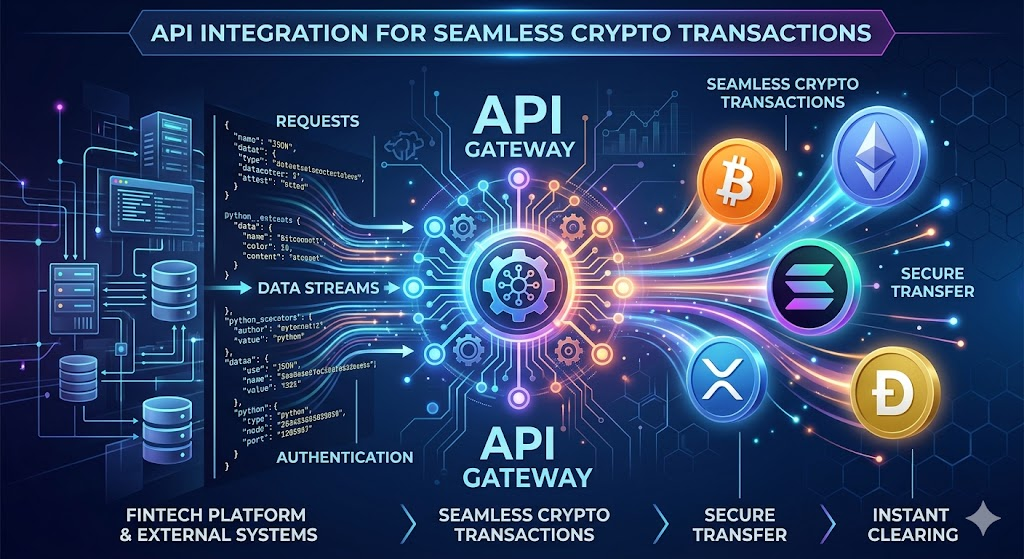
Source: Gemini
An Application Programming Interface (API) is a set of protocols and tools that allows one software application to communicate with another. In the cryptocurrency space, APIs serve as the bridge between applications and blockchain networks, allowing developers to build products without needing to run full blockchain nodes or build core infrastructure from scratch.
Blockchain Integration
Crypto APIs allow developers to connect their applications to blockchain networks directly. Through these interfaces, an application can query transaction details, retrieve wallet balances, check block confirmations, and access smart contract functions. APIs reduce the complexity of blockchain integration from weeks of infrastructure work to a matter of hours or days.
Wallet Functionality
Wallet APIs provide the functions necessary to generate and manage cryptographic keys, create and sign transactions, and interact with blockchain nodes. They form the foundation of any application that needs to store, send, or receive cryptocurrency, from custodial exchange wallets to non-custodial mobile apps.
Payment Processing
Payment APIs give businesses the infrastructure to accept cryptocurrency from customers. They handle the generation of unique payment addresses, transaction validation, confirmation monitoring, and payment status updates. Without a payment API, accepting crypto at scale would require significant custom infrastructure development.
Exchange Integration
Exchange APIs allow developers to access live market data, execute trades, manage orders, and retrieve account information programmatically. They are the foundation of trading bots, portfolio management tools, and any application that needs to interact with a crypto exchange in real time.
Blockchain Analytics
Analytics APIs provide structured access to on-chain data: transaction histories, block information, wallet activity, and network-level statistics. These APIs power applications that monitor blockchain activity, detect fraud, track fund flows, and visualise network behaviour.
Smart Contract Interaction
Smart contract APIs enable applications to deploy, call, and retrieve state from contracts on blockchain networks. They are central to DeFi applications, NFT platforms, DAO tooling, and any product built on programmable blockchain logic.
Read Also: Can You Use Crypto Cards for Gambling?
Key Advantages of Using Cryptocurrency APIs
Employing cryptocurrency APIs offers several primary benefits for businesses and developers. Here are some key advantages:
Seamless Integration
Cryptocurrency APIs provide a streamlined and efficient way to integrate blockchain technology into existing applications and systems. APIs offer standardized interfaces and protocols that simplify the integration process, allowing businesses to leverage the benefits of cryptocurrencies without the need for extensive development or technical expertise.
Enhanced Payment Options
By employing cryptocurrency APIs, businesses can expand their payment options and accept cryptocurrencies as payment. This enables them to cater to a broader customer base, including tech-savvy individuals and cryptocurrency enthusiasts. Cryptocurrency payments offer benefits such as faster transactions, reduced fees, and increased security.
Increased Security
Cryptocurrency APIs incorporate robust security measures to protect digital assets and transactions. These APIs leverage cryptographic protocols and secure authentication mechanisms, ensuring the safe storage and transfer of cryptocurrencies.
By utilizing cryptocurrency APIs, businesses can enhance the security of their payment systems and minimize the risks associated with traditional payment methods.
Access to Real-Time Data
Cryptocurrency APIs provide real-time access to blockchain data, including transaction details, account balances, and market information. This enables businesses to monitor and analyze cryptocurrency-related activities, make informed decisions, and offer up-to-date information to their users.
Real-time data access is particularly beneficial for financial institutions, traders, and businesses that rely on accurate and timely information.
Automation and Efficiency
Cryptocurrency APIs enable automating various processes related to cryptocurrency transactions and management. These APIs offer automatic payment processing, account reconciliation, and transaction monitoring functionalities. By automating these tasks, businesses can improve operational efficiency, reduce manual errors, and free up resources for other critical activities.
Customization and Flexibility
Cryptocurrency APIs often provide a range of customizable options, allowing businesses to tailor their cryptocurrency-related solutions to their specific needs. APIs may offer different functionalities, integration methods, and data formats, enabling businesses to choose the most suitable options for their requirements.
This flexibility allows seamless integration with existing systems and customization based on business preferences.
Innovation and Scalability
Cryptocurrency APIs empower developers to build innovative applications and services on blockchain technology.
By leveraging APIs, developers can create decentralized applications (DApps), smart contract integrations, trading platforms, and other solutions that harness the potential of cryptocurrencies and blockchain networks.
Cryptocurrency APIs facilitate scalability and foster innovation in the rapidly evolving cryptocurrency ecosystem.
Exploring Top Cryptocurrency APIs for Seamless Transactions
When it comes to integrating APIs for seamless crypto transactions, there are several top options worth exploring. These APIs provide the tools and functionalities to facilitate smooth and secure cryptocurrency transactions within applications or systems. Here are some notable API options:
Coinbase API
Coinbase is a popular cryptocurrency exchange that offers developers a comprehensive API. The Coinbase API allows for the seamless integration of wallet functionality, transaction processing, and account management.
It supports a wide range of cryptocurrencies, provides real-time market data, and enables the creation and management of orders.
BitPay API
BitPay is a leading cryptocurrency payment processor that offers a user-friendly API for businesses to accept cryptocurrency payments. The BitPay API allows for easy integration of payment functionality, including generating payment invoices, receiving payment notifications, and managing transactions.
It supports multiple cryptocurrencies and provides extensive documentation and developer resources.
Binance API
Binance, one of the largest cryptocurrency exchanges, provides a robust API that enables integration with their trading platform. The Binance API allows developers to access real-time market data, execute trades, manage account balances, and retrieve transaction history. It offers a wide range of trading functionalities and supports many cryptocurrencies.
CoinGecko API
CoinGecko is a popular cryptocurrency data platform that offers an API for accessing comprehensive market data. The CoinGecko API provides information on cryptocurrency prices, market trends, trading volumes, etc. It is widely used for retrieving up-to-date market data and can be integrated into applications or systems that require real-time cryptocurrency information.
Chainlink API
Chainlink is a decentralized oracle network that offers an API to connect smart contracts with real-world data and external APIs. The Chainlink API allows for secure and reliable data feeds, enabling applications to interact with external systems and access off-chain data.
It is particularly useful for applications that require trusted, tamper-proof data for executing smart contracts involving cryptocurrency transactions.
Ripple API
Ripple provides an API suite, including the Ripple Data API and Ripple Payment API, for seamless integration of its blockchain-based payment protocol.
The Ripple API allows developers to access transaction details, account information, and perform real-time payments using the XRP cryptocurrency. It is designed for businesses looking to leverage Ripple’s fast and low-cost cross-border payment solutions.
Infura API
Infura is an infrastructure provider for Ethereum and other blockchain networks. It offers an API that allows developers to connect to blockchain networks without running their nodes. The Infura API simplifies the integration process and provides access to various Ethereum functionalities, such as submitting transactions, retrieving data, and interacting with smart contracts.
Read Also: The Top Privacy Coins You Should Know in 2026
Maximizing Benefits from Cryptocurrency APIs
To maximize the benefits of cryptocurrency APIs, consider the following strategies:
Thoroughly Understand API Documentation
Carefully study the documentation provided by the cryptocurrency API provider. Understand the available functionalities, endpoints, parameters, and authentication methods. This knowledge will help you leverage the API to its full potential and avoid common implementation mistakes.
Plan for Scalability
Design your integration with scalability in mind. Cryptocurrency APIs should handle increasing transaction volumes and growing user bases. Ensure your infrastructure can handle the anticipated growth and implement efficient caching and request batching techniques to optimize API usage.
Implement Robust Security Measures
Cryptocurrency APIs deal with sensitive data and financial transactions. Implement strong security measures, such as secure authentication mechanisms, encryption of data in transit and at rest, and adherence to best practices for secure coding. Regularly update your integration to address security vulnerabilities and stay updated with the latest security standards.
Optimize Performance
Fine-tune your integration for optimal performance. Minimize unnecessary API calls, employ efficient data caching strategies, and consider implementing load-balancing techniques to distribute API requests across multiple endpoints. Monitor API performance and response times to identify and address any bottlenecks or performance issues.
Error Handling and Resilience
Implement robust error handling mechanisms to gracefully handle API failures. Plan for network outages, rate limiting, and API downtime. Implement retries, fallback mechanisms, and proper logging to ensure resilience and minimize the impact of potential failures.
Leverage Webhooks and Event Notifications
Many cryptocurrency APIs provide webhooks or event notifications to receive real-time updates on transactions, account balances, and other relevant events. Utilize these features to automate processes, trigger actions, and keep your application or system in sync with the latest cryptocurrency data.
Stay Up to Date with API Updates
Cryptocurrency APIs undergo updates and improvements over time. Stay informed about API version updates, new features, and deprecation notices. Regularly review the API provider’s release notes and changelogs to ensure your integration remains compatible and takes advantage of the latest enhancements.
Monitor and Analyze Data
Utilize the data provided by the cryptocurrency APIs to gain insights into user behavior, transaction patterns, and market trends. Leverage analytics tools to monitor transaction volumes, identify usage patterns, and make data-driven decisions to optimize your cryptocurrency-related services.
Stay Abreast of Regulatory Compliance
Cryptocurrency regulations and compliance requirements can vary across jurisdictions. Stay informed about cryptocurrencies’ legal and regulatory aspects and ensure your integration adheres to applicable laws, such as Know Your Customer (KYC) and Anti-Money Laundering (A.M.L.) regulations.
Conclusion
Cryptocurrency APIs facilitate the seamless integration of blockchain technology and cryptocurrencies. They simplify complex processes, provide real-time market data, enhance security, and enable businesses to offer their customers a seamless payment experience.
By leveraging the value of cryptocurrency APIs, businesses can unlock new opportunities, reduce costs, and stay ahead in the rapidly evolving world of digital finance.
Frequently Asked Questions
What are the best APIs for integrating payment processing in e-commerce?
BitPay, CoinGate, and Coinbase Commerce are the most established options for e-commerce crypto payment processing. BitPay offers the broadest platform plugin support and fiat settlement, making it the lowest-friction choice for existing online stores. CoinGate supports over 70 cryptocurrencies and multiple e-commerce platforms. Coinbase Commerce enables self-custody payment receipt without a third-party custodian. For businesses that need to support a very wide range of assets, NOWPayments supports over 300 cryptocurrencies.
Which companies provide reliable API integration services?
The most reliable providers for crypto API integration services are Chainlink Labs for oracle and off-chain data needs, Infura for Ethereum infrastructure, Ripple for cross-border payment integration, BitPay for enterprise merchant payment infrastructure, and Binance Cloud for exchange-based product development. Each brings deep domain expertise and production-proven infrastructure to complex integrations.
What are the most important API integration tools?
Postman is the standard for API testing and documentation. Swagger defines and documents REST APIs. API gateways such as AWS API Gateway and Kong centralise authentication and routing across multiple integrations. Webhook management tools like Hookdeck ensure reliable event delivery. Secrets management tools like HashiCorp Vault protect API keys from exposure. Monitoring platforms like Datadog or Grafana provide the observability needed to maintain production integrations reliably.