


Trump’s Bitcoin Reserve Plan Hits Legal Authority Dispute

President Donald Trump’s plan to establish a Strategic Bitcoin Reserve has encountered fresh legal and administrative hurdles as federal agencies continue to debate who should oversee the government’s growing Bitcoin holdings. More than a year after the initiative was introduced through Executive Order 14233, the reserve remains without a finalized management structure despite the administration’s broader push to position the United States as a global leader in digital assets. The latest uncertainty centers on whether the Treasury Department has the legal authority to manage a national Bitcoin reserve or whether responsibility should instead fall to the Commerce Department. The dispute has delayed implementation while legal advisers examine the administration’s options. Key Takeaways Legal Uncertainty Delays Reserve Rollout President Trump signed Executive Order 14233 in March 2025, directing the federal government to establish a Strategic Bitcoin Reserve using Bitcoin seized through criminal and civil forfeiture proceedings. The order also instructed agencies to identify budget neutral methods of acquiring additional Bitcoin without relying on taxpayer funding. While the executive order envisioned the reserve operating under the Treasury Department, officials have since questioned whether existing law gives Treasury sufficient authority to hold Bitcoin indefinitely as a strategic reserve asset. According to Bloomberg, the Commerce Department has emerged as a possible alternative, creating an interagency debate over which department is best positioned to manage the reserve. The Department of Justice’s Office of Legal Counsel is now working alongside both departments to determine what legal framework is available before the administration moves forward. In a statement, the Justice Department said it is: “working closely with both the Treasury and Commerce departments to determine legally available options to accomplish the president’s policy of establishing a strategic Bitcoin reserve.” The wording indicates that while the administration remains committed to the proposal, key legal questions have yet to be resolved. White House Says Reserve Remains a Priority Despite the delays, the White House maintains that the Strategic Bitcoin Reserve remains an important part of President Trump’s digital asset agenda. White House spokesperson Liz Huston reaffirmed the administration’s commitment while acknowledging that discussions over the final structure are still ongoing. “President Trump campaigned on a vision of cementing America as the global capital of cryptocurrency and other cutting edge technologies. To deliver on the president’s vision, the Trump administration continues to evaluate the best structure for a Strategic Bitcoin Reserve and U.S. Digital Asset Stockpile.” The administration has previously argued that past government sales of seized Bitcoin resulted in an estimated $17 billion in lost value for taxpayers. Under the executive order, Bitcoin transferred into the reserve would generally be retained rather than liquidated after forfeiture proceedings conclude. Officials are also evaluating whether long term custody of such a volatile asset creates additional legal or operational challenges for the federal government. Congress Pushes for a Permanent Framework Lawmakers are also attempting to move the reserve beyond executive action. Senator Cynthia Lummis and Representative Nick Begich introduced the BITCOIN Act, which proposes that the United States acquire up to one million Bitcoin over five years using budget neutral funding methods. However, progress has slowed as Congress continues debating broader digital asset legislation. Separately, the American Reserve Modernization Act would formally establish the Strategic Bitcoin Reserve within the Treasury Department while creating a separate reserve for other digital assets. Neither proposal has completed the legislative process, leaving the executive branch to resolve custody and governance issues under existing authority. The United States Remains Bitcoin’s Largest Sovereign Holder Even without a formal reserve, the federal government already controls one of the largest known Bitcoin holdings globally. Blockchain analytics platform Arkham Intelligence estimates that U.S. government wallets currently contain more than 328,000 BTC worth over $20 billion at current market prices. Most of those assets originated from criminal investigations and civil forfeiture cases involving illicit activity. Rather than continuing the long standing practice of auctioning seized Bitcoin, the administration wants those holdings consolidated into a strategic reserve designed to strengthen America’s position in the digital asset economy. Conclusion The Strategic Bitcoin Reserve remains one of the Trump administration’s most ambitious crypto initiatives, but turning the proposal into an operational program is proving more complex than issuing an executive order. Questions surrounding legal authority, departmental oversight and long term custody must still be resolved before the reserve can begin operating as intended. For now, the administration continues to defend the initiative while legal teams evaluate the most appropriate structure. Until those questions are settled or Congress passes legislation providing explicit authority, the United States’ sizeable Bitcoin holdings will remain without a permanent strategic framework despite the government’s stated commitment to making digital assets a national priority.
Michael Saylor: MSTR’s BTC Breakeven ARR Is Misunderstood

Michael Saylor is pushing back against growing concerns over Strategy’s Bitcoin backed capital model, arguing that one of the company’s most discussed financial metrics has been widely misunderstood. In a post shared on X, the Strategy executive chairman said the company’s BTC Breakeven Annual Rate of Return (ARR) is often misinterpreted by investors. According to Saylor, Bitcoin does not need extraordinary price gains to support Strategy’s preferred dividend obligations over the long term. “One of the most misunderstood $MSTR metrics is BTC Breakeven ARR. If BTC appreciates faster than 3.3% over time, BTC capital gains can fund $STRC dividends indefinitely.” His comments come days after Strategy disclosed the sale of 3,588 BTC for approximately $216 million to fund preferred stock dividends under its recently introduced Bitcoin Monetization Program, prompting renewed scrutiny of the company’s capital structure. Key Takeaways Understanding the BTC Breakeven ARR The BTC Breakeven ARR represents the minimum long term annual appreciation Bitcoin must achieve for the gains on Strategy’s Bitcoin holdings to offset its preferred dividend commitments. Rather than measuring expected returns, the figure serves as a sustainability benchmark for the company’s treasury strategy. Saylor argues that many investors mistakenly view the metric as an aggressive performance target when it is instead a relatively modest hurdle. Under the current structure, he said Bitcoin appreciation exceeding roughly 3.3% per year would allow capital gains to finance STRC dividends indefinitely without requiring additional MSTR share issuance. The threshold has increased from earlier estimates near 2.05% as Strategy expanded its preferred stock offerings and dividend obligations grew. Rising Dividend Obligations Fuel Debate Strategy’s financing model has attracted increasing attention following the launch of several preferred securities, including STRC, which offers investors a variable monthly dividend. The company now faces approximately $1.5 billion to $1.76 billion in annual preferred dividend obligations across multiple preferred stock classes, depending on the reporting period used. Those commitments significantly exceed the annual revenue generated by Strategy’s software business, placing greater emphasis on Bitcoin appreciation and capital management. Critics argue that sustained periods of weak Bitcoin performance could force the company to continue selling portions of its Bitcoin treasury to meet those obligations. That debate intensified after Strategy completed its largest Bitcoin sale since abandoning its long standing “never sell” stance. Between June 29 and July 5, the company sold 3,588 BTC for roughly $216 million, explaining that the proceeds would help fund preferred dividends while maintaining adequate cash reserves. Even after the transaction, Strategy remained the world’s largest publicly traded corporate Bitcoin holder with 843,775 BTC and approximately $2.55 billion in U.S. dollar reserves. Supporters Point to Bitcoin’s Long Term History Supporters of Saylor’s position note that Bitcoin has historically delivered annualized returns well above the 3.3% threshold across longer investment periods despite experiencing significant drawdowns during bear markets. Saylor has repeatedly argued that Strategy’s financial model is built around long term compounded appreciation rather than yearly price gains. He has also suggested that even under flat market conditions, the company’s existing Bitcoin holdings and cash reserves provide substantial flexibility to continue meeting dividend obligations for many years. Still, analysts caution that historical performance cannot guarantee future returns. Extended periods of weak Bitcoin prices, rising financing costs, or reduced investor demand for Strategy’s preferred securities could place additional pressure on the company’s balance sheet. Several market observers have also questioned whether recurring Bitcoin sales could introduce additional supply into the market during periods of lower liquidity. Conclusion Michael Saylor’s latest comments reflect Strategy’s continued confidence in its Bitcoin focused treasury model despite growing questions surrounding its preferred dividend structure. By highlighting the BTC Breakeven ARR, Saylor aims to show that Strategy’s long term sustainability depends on relatively modest Bitcoin appreciation rather than extraordinary market performance. While supporters view the 3.3% threshold as conservative given Bitcoin’s historical growth, critics remain focused on how the company would navigate prolonged market weakness and rising financing obligations. As Strategy continues balancing capital management with its aggressive Bitcoin accumulation strategy, investors will likely watch both Bitcoin’s long term performance and the company’s dividend commitments to determine whether Saylor’s thesis holds over time.
Russia Approves Final Crypto Bill Draft for Second Reading

Russia has moved a step closer to overhauling its cryptocurrency regulations after the State Duma’s Financial Market Committee approved the final version of the government’s crypto bill ahead of its second parliamentary reading. The updated legislation introduces several notable changes, including simplified reporting requirements for crypto holders, broader use of digital assets in regulated financial markets, and a framework that could eventually allow licensed Russian firms to access foreign cryptocurrency exchanges. The latest revisions were announced by Financial Market Committee Chairman Anatoly Aksakov through his official Telegram channel. While the State Duma’s legislative database has yet to reflect the update following the bill’s first reading in April, the committee’s endorsement marks significant progress toward establishing a comprehensive legal framework for digital assets in Russia. Key Takeaways Reporting Rules Receive a Major Revision One of the most significant changes in the revised bill concerns how cryptocurrency holdings will be reported. Earlier drafts required users to disclose their wallet addresses alongside other information. The updated version removes that obligation, meaning investors would instead report only wallet balances and transaction activity. According to Aksakov, the amendment was designed to reduce the risk of exposing sensitive wallet information that could potentially compromise user security while still allowing authorities to monitor financial activity for regulatory and tax purposes. The adjustment reflects a more practical reporting framework without eliminating government oversight of digital asset transactions. Crypto Gains a Broader Role in Regulated Finance The revised legislation also expands the legal use of cryptocurrencies within Russia’s financial markets. Under the proposal, investors would be permitted to use cryptocurrencies when purchasing traditional securities and Russian Digital Financial Assets (DFAs). DFAs are tokenized financial instruments issued under Russia’s existing legal framework and remain distinct from decentralized cryptocurrencies such as Bitcoin. The measure signals Russia’s intention to integrate blockchain based financial products into regulated capital markets while maintaining separate legal treatment for cryptocurrencies and domestically issued digital assets. Licensed Firms Could Access Foreign Crypto Markets Another notable provision would eventually allow licensed Russian brokers and asset managers to trade through foreign cryptocurrency exchanges and overseas crypto service providers. Access, however, would remain subject to additional requirements. Aksakov indicated that regulators would consider factors such as whether the foreign jurisdiction is regarded as “friendly” under Russian policy before granting approval. The proposal highlights Russia’s effort to balance international market participation with broader geopolitical and regulatory considerations. Retail Restrictions Remain in Place Despite the broader reforms, lawmakers have retained investment limits for non qualified investors. Retail participants would continue to face an annual purchase cap of 300,000 rubles through a single licensed intermediary, with trading restricted to the country’s most liquid cryptocurrencies. The updated draft also introduces a new safeguard allowing authorities to suspend certain large cryptocurrency transfers involving overseas recipients or third parties for up to two days. While Aksakov confirmed the provision, he did not specify the transaction threshold that would trigger the temporary delay. He also did not clarify whether lawmakers intend to preserve an earlier proposal that could restrict the use of non custodial cryptocurrency wallets controlled exclusively by users. More Approvals Are Still Required Although committee approval represents an important milestone, the legislation has not yet become law. The bill must still pass its second and third readings in the State Duma before moving to the Federation Council for review. It would then require President Vladimir Putin’s signature before taking effect. Earlier versions of the legislation classified cryptocurrency as legal property, providing protections in areas such as bankruptcy and divorce proceedings while maintaining Russia’s prohibition on using cryptocurrencies for most domestic payments outside approved cross border transactions. The legislative process also comes ahead of the Bank of Russia’s planned rollout of the digital ruble on September 1, when major financial institutions and large merchants are expected to begin supporting the country’s central bank digital currency. Conclusion The Financial Market Committee’s approval moves Russia closer to establishing one of its most comprehensive cryptocurrency regulatory frameworks to date. By simplifying reporting requirements, expanding the legal use of cryptocurrencies in regulated financial products, and laying the groundwork for licensed firms to participate in international crypto markets, lawmakers appear to be pursuing a more structured approach to digital asset regulation. The bill still faces several legislative hurdles before becoming law, but its progress suggests Russia is continuing to build a regulated digital asset ecosystem that combines tighter oversight with broader institutional participation. Market participants will now be watching closely as the legislation advances to its second reading and beyond.
Wyden Urges Senate Leaders to Keep Dev Protections in Crypto Bill
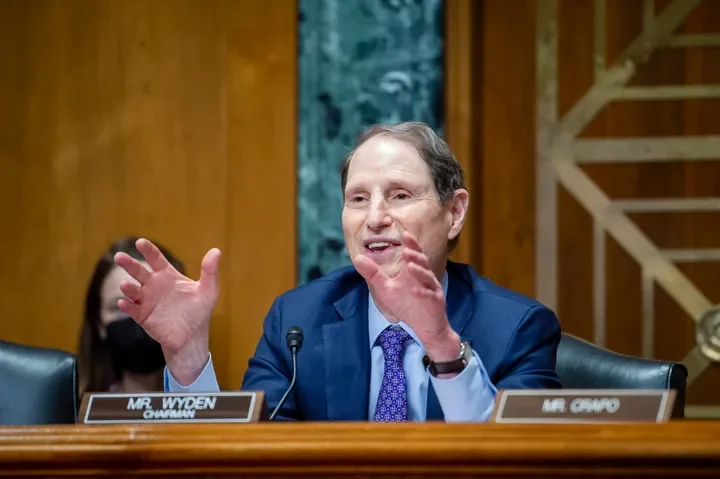
Senator Ron Wyden is calling on Senate leadership to preserve legal protections for non custodial blockchain developers as lawmakers continue work on the Digital Asset Market Clarity Act. In a letter sent on July 7 to Senate Majority Leader John Thune and Democratic Leader Chuck Schumer, the Oregon Democrat urged lawmakers to retain Section 604 of the bill, also known as the Blockchain Regulatory Certainty Act (BRCA). The request comes as negotiations continue over one of the most closely watched pieces of U.S. crypto legislation. Industry participants view the provision as essential for developers building decentralized applications, while some law enforcement groups have argued it could weaken oversight of illicit financial activity. Key Takeaways Wyden Seeks Legal Certainty for Blockchain Developers In his letter, Wyden argued that developers who create software allowing users to manage their own digital assets should not be regulated as financial intermediaries simply because they publish code. He said developers who never take custody of customer assets should not fall under money transmitter rules, adding that such an approach reflects existing guidance from the Financial Crimes Enforcement Network (FinCEN) and emerging legal precedent. According to Wyden, maintaining the provision would give developers greater confidence to continue building blockchain infrastructure in the United States rather than relocating to jurisdictions with clearer regulatory frameworks. “Developers who make and release software that allows people to manage their own digital assets and, critically, where the developer does not control user assets, should not be treated as money transmitters solely because they create or publish software.” Wyden added that treating software developers as financial institutions would discourage innovation in an industry where the United States is competing globally for talent and investment. Aml Enforcement Remains Part of the Proposal The senator also pushed back against claims that the Blockchain Regulatory Certainty Act would weaken anti money laundering or counter terrorism financing safeguards. Wyden said effective crypto legislation should continue to support robust enforcement against illicit finance, but argued that regulators should focus on criminals, unlicensed money transmitting businesses, and those directly handling illegal funds rather than developers writing neutral software. He also pointed to an important limitation within the proposed language. Developers would not receive protection if they actively transferred or used assets connected to criminal activity. “Smart policy will empower law enforcement to do its job and facilitate innovation at the same time.” Wyden argued that the proposal would better align congressional legislation with existing FinCEN guidance and Department of Justice policy while avoiding unnecessary legal uncertainty for open source software developers. Section 604 Remains One of the Bill’s Biggest Flashpoints The Blockchain Regulatory Certainty Act has emerged as one of the most debated sections of the Digital Asset Market Clarity Act. Supporters, including several crypto advocacy organizations and industry executives, argue that developers of non custodial protocols cannot control user funds and therefore should not face the same compliance obligations as custodial financial institutions. Critics, including several law enforcement organizations, have warned that broad exemptions could make it more difficult to investigate money laundering, sanctions evasion, terrorism financing, and other financial crimes involving decentralized technologies. The debate has become a central issue as Senate leaders work to build enough bipartisan support to move the legislation to the Senate floor. Senate Faces a Narrowing Legislative Window The timing of Wyden’s appeal is significant. The House previously approved the CLARITY Act with bipartisan support, while the Senate Banking Committee advanced its version earlier this year. However, lawmakers continue negotiating several outstanding provisions, including developer protections and ethics requirements related to public officials’ involvement in digital assets. Congress also faces a compressed legislative calendar before its August recess, increasing pressure on Senate leadership to finalize the bill. With Republicans holding 53 Senate seats, supporters will still need bipartisan backing to overcome procedural hurdles and move the legislation forward. Conclusion Senator Ron Wyden’s intervention adds bipartisan weight to the push for stronger legal protections for blockchain developers as the Senate finalizes the Digital Asset Market Clarity Act. By urging lawmakers to preserve the Blockchain Regulatory Certainty Act, Wyden argued that Congress can provide regulatory certainty for software developers without weakening anti money laundering enforcement. Whether Section 604 survives the final negotiations could shape the future of decentralized software development in the United States. As the Senate works against an approaching legislative deadline, the outcome of this debate may determine how blockchain innovation is regulated for years to come.
Phantom, Hyperliquid Ask Cftc to Modernize Rules for Onchain Derivatives

Phantom Technologies and the Hyperliquid Policy Center have urged the U.S. Commodity Futures Trading Commission (CFTC) to update its regulatory framework for decentralized financial markets, arguing that rules designed for traditional intermediaries no longer reflect how onchain infrastructure operates. In a joint comment letter submitted on July 9 in response to the CFTC’s Request for Information on financial technology, the two organizations proposed a series of regulatory changes aimed at providing legal clarity for blockchain developers, non custodial wallet providers, and regulated firms seeking to adopt blockchain based infrastructure. The recommendations come as U.S. regulators continue reviewing how existing financial rules should apply to decentralized finance and onchain derivatives markets. Key Takeaways Developers Should Not Be Treated as Financial Intermediaries The first recommendation focuses on blockchain protocol developers. According to the joint filing, writing and publishing open source software should not automatically require registration as an exchange, broker, or other regulated financial entity. The organizations argued that developers who simply create protocol code do not control customer assets, execute transactions, or operate financial markets. Instead, they believe regulatory obligations should apply only to businesses that actively hold customer funds or facilitate transactions on behalf of users. The filing also notes that developers of traditional financial software have not historically been classified as financial intermediaries simply because their applications are used in financial markets. The groups contend that blockchain developers should be treated under the same principle. Bringing Blockchain Infrastructure Into Regulated Markets A second proposal asks the CFTC to clarify how regulated derivatives firms can integrate blockchain technology into their operations. The organizations said current regulations do not provide sufficient guidance for exchanges, clearing organizations, and other regulated entities seeking to use blockchain networks for functions such as trade execution, settlement, collateral management, recordkeeping, and clearing. Hyperliquid, which operates a Layer 1 blockchain focused on derivatives trading, argued that onchain infrastructure can improve market transparency while reducing dependence on custodial intermediaries. The filing also highlighted that peer to peer settlement models may reduce operational risks associated with centralized custody without eliminating regulatory oversight. Phantom Seeks Permanent Regulatory Certainty The third request centers on Phantom’s regulatory status.Earlier this year, the CFTC issued No Action Letter No. 26-09, allowing Phantom’s non custodial wallet to connect users with registered derivatives markets without requiring registration as an Introducing Broker. Phantom does not custody customer assets, execute trades, or manage private keys. Instead, it provides software that allows users to access blockchain based services while maintaining control of their own funds. The company is now asking the CFTC to formalize that position through broader regulatory guidance instead of relying on individual no action relief. Such guidance, the filing argues, would establish a consistent framework for other wallet providers operating under similar non custodial models. A Broader Debate Over Onchain Regulation The recommendations arrive as regulators continue evaluating how decentralized financial infrastructure should fit within existing commodities law. Supporters argue that applying traditional intermediary rules to decentralized software creates legal uncertainty that discourages innovation and pushes developers to jurisdictions with clearer regulations. The filing also argues that regulated financial institutions should be allowed to adopt blockchain infrastructure without creating additional compliance uncertainty, provided they continue meeting existing regulatory obligations. For Hyperliquid and Phantom, clearer rules could eventually expand lawful access to regulated onchain derivatives markets in the United States while preserving user self custody. The proposal does not ask the CFTC to remove oversight from digital asset markets. Instead, it seeks to distinguish software developers and technology providers from businesses that actually custody customer funds or execute transactions. Conclusion Phantom and the Hyperliquid Policy Center are urging the CFTC to modernize regulations for blockchain based financial markets by recognizing the differences between decentralized software and traditional financial intermediaries. Their proposals seek clearer rules for developers, regulated exchanges, and non custodial wallet providers while maintaining oversight of businesses that directly handle customer assets. As the CFTC reviews industry feedback, the agency’s response could influence how decentralized derivatives platforms, wallet providers, and blockchain developers operate in the United States. The outcome may also shape the broader integration of onchain infrastructure into regulated financial markets in the years ahead.
Metaplanet Explores Bitcoin-Backed Digital Credit With Jpyc in Japan

Japanese Bitcoin treasury company Metaplanet has launched a joint feasibility study with Metaplanet Securities, stablecoin issuer JPYC, and tokenization platform Progmat to explore Bitcoin backed digital credit products. The initiative will examine how Bitcoin can be used as collateral for digital corporate bonds and other credit instruments while using blockchain technology to enable continuous trading, daily interest accrual, and regulated settlement in Japan. The project is part of Metaplanet’s broader strategy to transform its growing Bitcoin treasury into a productive financial asset rather than simply holding it on its balance sheet. Key Takeaways Four Companies Unite to Study Digital Credit The collaboration assigns each participant a specific role in the proposed framework. Metaplanet will provide the Bitcoin treasury that serves as collateral or credit enhancement for the planned products. The company currently holds approximately 43,000 BTC, making it one of the world’s largest publicly listed corporate Bitcoin holders. JPYC will contribute its regulated yen denominated stablecoin, which is expected to facilitate payments, settlements, redemptions, and distributions within the proposed ecosystem. Progmat, a digital asset infrastructure provider that has worked with several Japanese financial institutions, will supply the blockchain platform responsible for issuing security tokens, managing ownership records, handling transfers, and supporting regulatory compliance. Metaplanet Securities will oversee product structuring, investor distribution, administration, and operational management if the project advances beyond the research stage. Bitcoin Moves Beyond Treasury Holdings The study reflects Metaplanet’s ambition to expand the use of Bitcoin beyond corporate treasury management. Instead of allowing its Bitcoin reserves to remain idle, the company is exploring ways to use the asset to support regulated financial products that could improve access to Japan’s credit markets. According to the proposal, Bitcoin would function as collateral supporting digital corporate bonds and similar credit instruments, while blockchain infrastructure would automate many processes traditionally handled by financial intermediaries. The companies are also evaluating a model that would allow investors to trade these instruments around the clock while earning interest that accrues daily rather than following conventional payment schedules. Project Nova Drives the Strategy The initiative forms part of Project NOVA, Metaplanet’s long term plan to build a Bitcoin focused financial services ecosystem. Earlier this year, the company expanded into securities and venture investments, including backing JPYC through its venture business. The latest study builds on those efforts by combining Bitcoin, stablecoins, and tokenized securities into a unified financial framework. Japan’s regulatory environment also provides a foundation for the project. The country introduced stablecoin legislation ahead of many major economies, allowing regulated yen backed stablecoins such as JPYC to operate within an established legal framework. Progmat has also been active in developing compliant tokenization infrastructure for financial institutions, making it a natural partner for the study. Important Details Remain Undecided Although the companies have outlined the proposed structure, they emphasized that the initiative remains in the feasibility stage. No decision has been made regarding issuance volumes, launch dates, expected yields, collateral ratios, or investor eligibility. The partners also have not disclosed how the products would respond to significant Bitcoin price volatility or whether specific liquidation mechanisms would be included. Instead, the study will evaluate product design, legal and regulatory considerations, operational workflows, investor protection measures, technical feasibility, and settlement processes before any commercial decision is made. The companies stressed that any future issuance would require additional approvals and compliance with applicable Japanese regulations. Conclusion Metaplanet’s latest initiative signals a broader shift in how corporate Bitcoin reserves could be used within regulated financial markets. By combining Bitcoin collateral, a regulated yen stablecoin, and blockchain based security token infrastructure, the company is exploring whether digital credit products can make Japan’s debt markets more efficient and accessible. While no commercial product has been announced, the feasibility study represents another step in Metaplanet’s strategy to build financial services around its Bitcoin holdings. If successful, the project could provide a blueprint for integrating Bitcoin into traditional capital markets through regulated digital credit instruments.
Japanese Lender Cryl Launches Bitcoin-Backed Loans up to $6.2m

Japanese crypto lender CRYL has officially entered the country’s growing Bitcoin backed lending market with a new financing service that allows individuals and businesses to borrow Japanese yen by using Bitcoin as collateral instead of selling their holdings. The service, launched on July 9, offers loans ranging from 1 million yen, approximately $6,200, to 1 billion yen, or about $6.2 million. The move reflects increasing demand for crypto backed financing in Japan, where many long term Bitcoin investors seek liquidity without triggering taxable capital gains. The launch also comes as more Japanese financial firms explore Bitcoin’s role beyond investment, with companies such as Metaplanet studying Bitcoin backed digital credit products and tokenized financial instruments. Key Takeaways Bitcoin Holders Gain a New Financing Option CRYL’s lending product is designed for investors who want to retain exposure to Bitcoin while accessing cash for personal or business needs. Instead of liquidating BTC, borrowers transfer their Bitcoin to CRYL as collateral and receive Japanese yen in return. Loan amounts start at 1 million yen and extend up to 1 billion yen, making the product accessible to both retail investors and corporate clients. The standard loan term is one year, with the possibility of extension depending on the agreement between the borrower and the lender. Interest rates range from 3.5% to 7% annually, while loan to value ratios vary between 40% and 60%, depending on factors such as the loan structure and the borrower’s profile. CRYL also offers a revolving credit option, allowing customers to draw additional funds as long as the collateral ratio remains below the maximum permitted threshold. Avoiding Taxable Bitcoin Sales One of the biggest attractions of the service is its potential tax advantage. In Japan, profits from cryptocurrency sales are generally treated as miscellaneous income and can face tax rates of up to 55%, depending on an individual’s total taxable income. By borrowing against Bitcoin instead of selling it, investors can unlock liquidity while maintaining ownership of their digital assets and avoiding an immediate taxable event. CRYL said the product is intended for customers who require capital for expenses such as tax payments, business operations, property purchases, or everyday living costs without disrupting their long term investment strategy. Risks Remain Despite the Benefits Although the service allows investors to keep their Bitcoin exposure, borrowers still face risks associated with market volatility. Since Bitcoin serves as collateral, significant price declines could weaken collateral positions. CRYL also noted that overdue balances are subject to a 20% annual penalty rate, making timely repayment essential. Unlike some competing services, CRYL currently accepts only Bitcoin as collateral and does not support other cryptocurrencies such as Ether. Competition Grows in Japan’s Crypto Lending Market Crypto backed lending is no longer new in Japan, but the market remains relatively small. Fintertech, a joint venture backed by Daiwa Securities Group and Credit Saison, introduced Bitcoin and Ether backed loans in 2020. Its platform currently offers financing of up to approximately $3 million with annual interest rates between 4% and 8%. CRYL distinguishes itself by offering a higher borrowing limit and a lower minimum loan amount while focusing exclusively on Bitcoin. Meanwhile, Japanese investment firm Metaplanet recently announced a feasibility study with JPYC and Progmat to explore Bitcoin backed digital credit products, including blockchain based corporate bonds and tokenized debt instruments. While that initiative remains in the research phase, it highlights the broader shift toward integrating Bitcoin into regulated financial products. Global Demand for Bitcoin Backed Lending Continues to Rise Japan’s latest development mirrors a broader international trend as Bitcoin holders increasingly seek financing solutions without liquidating their assets. Several companies have expanded crypto backed lending services in recent months. In the United States, firms such as Strike have introduced Bitcoin collateralized loan products aimed at reducing forced liquidations during periods of market volatility. Institutional providers including BitGo have also expanded digital asset backed financing for professional investors. As Bitcoin adoption grows, lenders are increasingly treating the cryptocurrency as collateral for loans, business financing, and other credit products rather than simply as a speculative investment. Conclusion CRYL’s new lending platform marks another step in Japan’s expanding digital asset finance sector. By allowing individuals and businesses to borrow up to $6.2 million against their Bitcoin holdings, the company provides investors with an alternative to selling their assets to raise capital. While borrowers must carefully manage collateral requirements and repayment obligations, the service demonstrates how Bitcoin is increasingly being used as a financial asset that supports lending and credit markets. As more regulated firms introduce similar products, Bitcoin backed financing is becoming an increasingly important part of Japan’s broader digital asset ecosystem.