


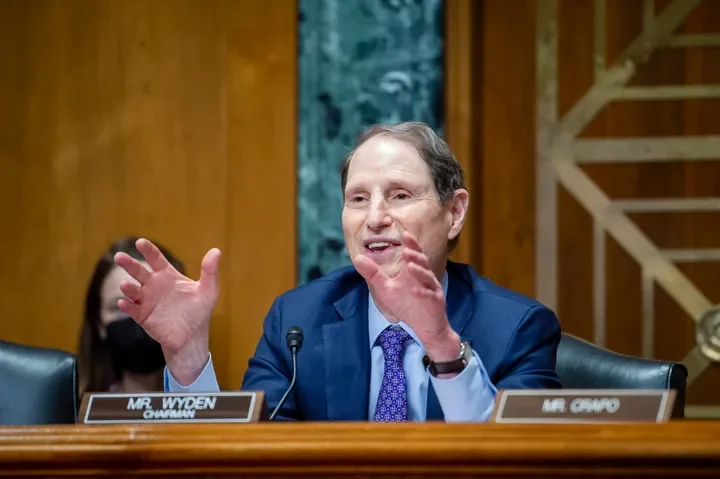
Senator Ron Wyden is calling on Senate leadership to preserve legal protections for non custodial blockchain developers as lawmakers continue work on the Digital Asset Market Clarity Act. In a letter sent on July 7 to Senate Majority Leader John Thune and Democratic Leader Chuck Schumer, the Oregon Democrat urged lawmakers to retain Section 604 of the bill, also known as the Blockchain Regulatory Certainty Act (BRCA).
The request comes as negotiations continue over one of the most closely watched pieces of U.S. crypto legislation. Industry participants view the provision as essential for developers building decentralized applications, while some law enforcement groups have argued it could weaken oversight of illicit financial activity.
Key Takeaways
- Senator Ron Wyden has asked Senate leaders to preserve the Blockchain Regulatory Certainty Act within the CLARITY Act.
- The provision would clarify that non custodial blockchain developers are not money transmitters if they do not control customer funds.
- Wyden argued the measure aligns with existing FinCEN guidance and supports innovation without weakening anti money laundering enforcement.
- The debate comes as the Senate races to advance the CLARITY Act before its August recess.
Wyden Seeks Legal Certainty for Blockchain Developers
In his letter, Wyden argued that developers who create software allowing users to manage their own digital assets should not be regulated as financial intermediaries simply because they publish code. He said developers who never take custody of customer assets should not fall under money transmitter rules, adding that such an approach reflects existing guidance from the Financial Crimes Enforcement Network (FinCEN) and emerging legal precedent.
According to Wyden, maintaining the provision would give developers greater confidence to continue building blockchain infrastructure in the United States rather than relocating to jurisdictions with clearer regulatory frameworks.
“Developers who make and release software that allows people to manage their own digital assets and, critically, where the developer does not control user assets, should not be treated as money transmitters solely because they create or publish software.”
Wyden added that treating software developers as financial institutions would discourage innovation in an industry where the United States is competing globally for talent and investment.
Aml Enforcement Remains Part of the Proposal
The senator also pushed back against claims that the Blockchain Regulatory Certainty Act would weaken anti money laundering or counter terrorism financing safeguards. Wyden said effective crypto legislation should continue to support robust enforcement against illicit finance, but argued that regulators should focus on criminals, unlicensed money transmitting businesses, and those directly handling illegal funds rather than developers writing neutral software.
He also pointed to an important limitation within the proposed language. Developers would not receive protection if they actively transferred or used assets connected to criminal activity.
“Smart policy will empower law enforcement to do its job and facilitate innovation at the same time.”
Wyden argued that the proposal would better align congressional legislation with existing FinCEN guidance and Department of Justice policy while avoiding unnecessary legal uncertainty for open source software developers.
Section 604 Remains One of the Bill’s Biggest Flashpoints
The Blockchain Regulatory Certainty Act has emerged as one of the most debated sections of the Digital Asset Market Clarity Act.
Supporters, including several crypto advocacy organizations and industry executives, argue that developers of non custodial protocols cannot control user funds and therefore should not face the same compliance obligations as custodial financial institutions.
Critics, including several law enforcement organizations, have warned that broad exemptions could make it more difficult to investigate money laundering, sanctions evasion, terrorism financing, and other financial crimes involving decentralized technologies.
The debate has become a central issue as Senate leaders work to build enough bipartisan support to move the legislation to the Senate floor.
Senate Faces a Narrowing Legislative Window
The timing of Wyden’s appeal is significant. The House previously approved the CLARITY Act with bipartisan support, while the Senate Banking Committee advanced its version earlier this year. However, lawmakers continue negotiating several outstanding provisions, including developer protections and ethics requirements related to public officials’ involvement in digital assets. Congress also faces a compressed legislative calendar before its August recess, increasing pressure on Senate leadership to finalize the bill.
With Republicans holding 53 Senate seats, supporters will still need bipartisan backing to overcome procedural hurdles and move the legislation forward.
Conclusion
Senator Ron Wyden’s intervention adds bipartisan weight to the push for stronger legal protections for blockchain developers as the Senate finalizes the Digital Asset Market Clarity Act. By urging lawmakers to preserve the Blockchain Regulatory Certainty Act, Wyden argued that Congress can provide regulatory certainty for software developers without weakening anti money laundering enforcement.
Whether Section 604 survives the final negotiations could shape the future of decentralized software development in the United States. As the Senate works against an approaching legislative deadline, the outcome of this debate may determine how blockchain innovation is regulated for years to come.