


How to Evaluate Crypto Projects: A Complete Guide for 2026

Thousands of crypto projects launch every year. Most of them fail. Some fail slowly, running out of funding after two or three years of minimal progress. Others collapse fast, the team disappears, the price drops to zero, and investors lose everything. A small number go on to build real products that millions of people use. The difference between a project worth your time and money and one that is not usually comes down to research. Not price charts, not X(Twitter) hype, not the number of followers a founder has but real research, the kind that looks at the technology, the team, the economics, the market, and the community before a single dollar goes in. This article walks through every layer of that research process. It covers what to look for, what to ignore, and the specific questions that separate well-built projects from ones that exist only on paper. Read Also: AI Crypto Trading: How It Works, Best Bots & Strategies (2026 Guide) Key Takeaways Start With the White Paper The white paper is where most serious research begins. A white paper is the project’s founding document. It explains what the project does, why it needs to exist, how the technology works, and how the token fits into the system. Reading it carefully tells you more about a project than any social media post or analyst report. A good white paper makes a clear argument. It identifies a specific problem, explains why existing solutions do not solve it adequately, and describes in concrete terms how this project solves it differently. It gives enough technical detail for someone with relevant knowledge to assess whether the approach is sound. It is honest about limitations and trade-offs. A bad white paper does the opposite. It uses vague language that sounds technical without saying anything specific. Phrases like “harnessing cutting-edge blockchain infrastructure to disrupt legacy financial systems” carry no information. They are designed to create an impression of sophistication without committing to anything that can be verified or tested. Look at how the white paper handles the technical architecture. Does it explain the consensus mechanism? Does it describe how the network handles scalability, security, and decentralisation, the three properties that blockchain systems constantly trade off against each other? Does it acknowledge these trade-offs honestly or pretend they do not exist? Also, read the economic section carefully. How are tokens distributed? What is the total supply? Are there inflation mechanisms? How does the project generate revenue, and does the token capture any of that value? These questions matter enormously, and a project that buries or ignores them in its white paper is signalling that the answers are not favourable. Ethereum’s original white paper from 2013 is a useful benchmark. It was technically detailed, acknowledged trade-offs, and made falsifiable predictions about what the platform could and could not do. Compare any project’s white paper to that standard and you will quickly see whether the team is communicating substance or performing it. Assess the Team The team is often the single most important factor in whether a project succeeds or fails. Technology can be rebuilt. Markets can shift. But a team that lacks the skills or the integrity to execute will run a project into the ground regardless of how good the idea is. Start with LinkedIn and public records. Are the founders who they claim to be? Have they worked in the roles they describe? A co-founder who claims to have led engineering at a major tech company should have a verifiable history, like colleagues who can confirm the work, projects that were publicly announced, and code that was committed under their name. This takes time to verify but it is worth doing for any significant investment. Look at their relevant experience. Crypto projects require a combination of technical depth, product sense, business development ability, and regulatory awareness. A team of PhDs with no product experience will struggle to build something people actually use. A team of marketers with no technical foundation will struggle to build something that actually works. The best founding teams have both, or know how to hire for what they lack. Check for any history of previous projects. Did the founders work on earlier crypto ventures? If those projects failed, that is not automatically disqualifying; failure is part of how people learn in a new industry. But it matters how they failed. Did they return investor funds when possible? Did they communicate clearly as the project struggled? Did they take responsibility or disappear? Past conduct is the strongest signal of future conduct. Anonymous teams often present a specific challenge. Some legitimate projects operate with pseudonymous founders. Bitcoin itself was created by Satoshi Nakamoto, whose real identity remains unknown. But an anonymous team is a higher-risk situation because there is no personal accountability if things go wrong. If a project has an anonymous team, the quality of its smart contracts, its governance structure, and its community accountability mechanisms need to be stronger to compensate for that risk. Look at advisors carefully, too. Many projects list prominent names in crypto or finance as advisors, but the actual involvement of those advisors varies enormously. Some are genuinely engaged, attending regular calls and contributing strategic guidance. Others signed on for a token allocation and have had no contact with the project since. When a project lists a well-known advisor, check whether that person has publicly mentioned the project anywhere through tweets, podcasts, or conference talks. If there is no public record of the advisor engaging with the project, their listing may be more marketing than substance. Understand the Technology You do not need to be a software engineer to evaluate a crypto project’s technology, but you do need to understand the basics of what the project is building and whether its technical claims are plausible. Start with the main question: Does this project actually need a blockchain? Blockchain technology is useful for specific things, creating systems where multiple parties who do not trust each other need
Who Is Ilya Lichtenstein? The Man Behind One of the Biggest Crypto Hacks in History
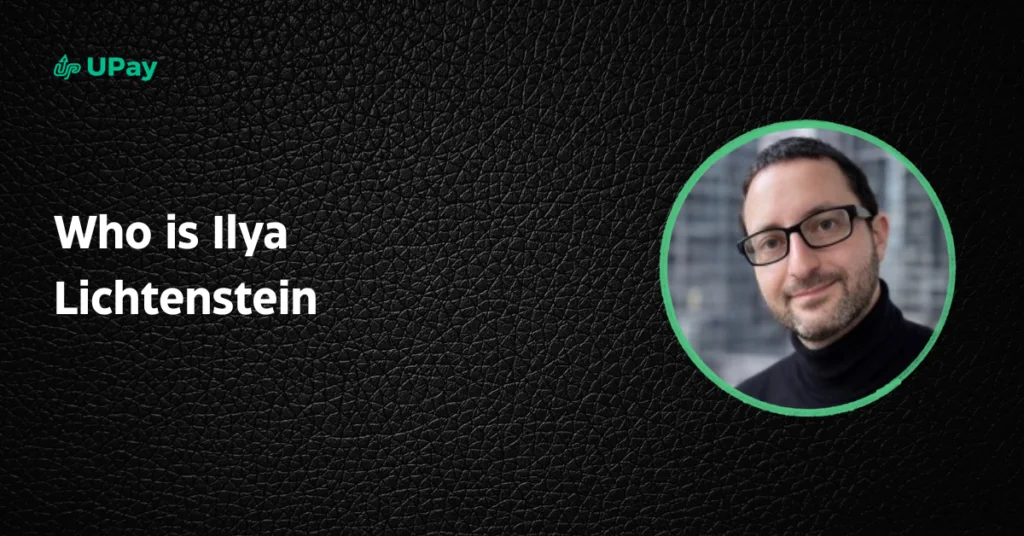
Ilya Lichtenstein is a Russian-American tech entrepreneur who became the central figure in one of the most audacious financial crimes in history. Ilya Lichtenstein, of New York City, was sentenced on November 14, 2024, in U.S. District Court in Washington D.C. to 60 months in federal prison for his involvement in a money laundering conspiracy arising from the hack and theft of approximately 120,000 Bitcoin from Bitfinex, a global cryptocurrency exchange. The numbers involved in this case are difficult to fully comprehend. The Bitfinex hack in August 2016 resulted in the theft of 119,754 BTC, worth approximately $71 million at the time, but more than $10 billion at current prices. A single hack, carried out by one person in the summer of 2016, sat dormant for years while Bitcoin’s price multiplied many times over, transforming what was already a significant crime into the largest cryptocurrency theft recovery in the history of the United States Department of Justice. His case touches almost every major theme in the modern crypto world: security vulnerabilities, money laundering, government investigation capabilities, and the question of what happens to crime proceeds when the underlying asset appreciates by 10,000% while sitting in a seized wallet. Key Takeaways Early Life and Background Ilya Lichtenstein is a Russian-American tech entrepreneur who built a public profile as a legitimate player in the technology and startup ecosystem long before the Bitfinex story broke. He was born in Russia and later immigrated to the United States, eventually building a life and career in New York City. His background combined computer science talent with an entrepreneurial instinct that made him credible in the startup world. Before his arrest, Lichtenstein had cultivated a presence in the tech community. According to his LinkedIn profile, Lichtenstein worked as a full-time investor at a company named Demandpath since November 2019. He is also an advisor at SalesFolk and worked as an advisor at Endpass for 2 years and 4 months. He moved in startup circles, attended industry events, and presented himself as a legitimate technology investor and entrepreneur. His wife, Heather Morgan, operated a similarly public professional profile. Morgan had cultivated a public persona as a successful tech businesswoman, describing herself in Forbes articles as an “economist, serial entrepreneur, software investor and rapper” while secretly helping her computer programmer husband launder the stolen fortune from Bitfinex. Morgan went by the online alias “Razzlekhan” and produced rap music videos that, in hindsight, took on a different character once the criminal charges were revealed. The combination of a tech entrepreneur identity and criminal activity running in parallel for years is one of the most striking aspects of the Lichtenstein story. He was not operating from the shadows of the dark web with no public identity. He was attending startup events and advising companies while simultaneously managing the most wanted Bitcoin wallet in the world. The 2016 Bitfinex Hack: What He Did and How He Did It To understand Ilya Lichtenstein, you need to understand what he actually did in August 2016. This was not a simple theft. It was a technically sophisticated breach of one of the most significant cryptocurrency exchanges operating at the time. Bitfinex was a major Hong Kong-based cryptocurrency exchange. In 2016, it used a multi-signature security system provided by BitGo, a digital wallet security company. Multi-signature systems require multiple approvals before a transaction can be authorized, which is specifically designed to prevent exactly the kind of unauthorized withdrawal Lichtenstein carried out. The fact that he found a way around it speaks to the level of technical skill involved. Lichtenstein found a way to bypass BitGo’s approval process, effectively allowing him to initiate and authorize withdrawals from Bitfinex without triggering the required BitGo approval. Once inside the network, Lichtenstein fraudulently authorized more than 2,000 transactions transferring 119,754 Bitcoin from Bitfinex to a cryptocurrency wallet in Lichtenstein’s control. Lichtenstein then took steps to cover his tracks by deleting from Bitfinex’s network access credentials and other log files that could have revealed his conduct to law enforcement. The scale of this operation deserves emphasis. More than 2,000 individual transactions took place to move the funds out. He then deleted the evidence of his access from Bitfinex’s own systems. This is not the work of someone who stumbled into a vulnerability. It reflects deliberate planning, technical execution, and an attempt at evidence destruction that gave him nearly six years of apparent freedom before investigators caught up with him. All stolen Bitcoin was directed to a single wallet, designated as 1CGA4s, which authorities later linked to Ilya Lichtenstein. The first major movement of the stolen Bitcoin occurred with 25,000 BTC transferred through a series of small, complex transactions designed to mask the trail. These initial movements suggested a cautious approach, with small amounts moving across multiple accounts and platforms. The patience he showed after the hack is itself remarkable. Rather than immediately trying to spend or convert the stolen funds at scale, he waited. He moved cautiously. He let the situation settle. About 80% of the stolen Bitcoin stayed in the original wallet for years, untouched, while Lichtenstein waited for what he presumably believed would be a safe window to begin converting it. Read Also: Who is Vitalik Buterin and Why is He Important? The Laundering Operation: Six Years of Hiding $10 Billion What followed the 2016 hack was one of the most complex and sustained money laundering operations in the history of financial crime. Lichtenstein and Morgan spent approximately six years attempting to clean the stolen funds and move them into usable assets, using an evolving toolkit of techniques that tracked with the development of the crypto ecosystem itself. Lichtenstein, at times with Morgan’s assistance, employed numerous sophisticated laundering techniques, including using fictitious identities to set up online accounts; utilizing computer programs to automate transactions; depositing the stolen funds into accounts at a variety of darknet markets and cryptocurrency exchanges and then withdrawing the funds; converting Bitcoin to other forms of cryptocurrency in a practice known as “chain
Who Is Nick Szabo? The Pioneer of Smart Contracts
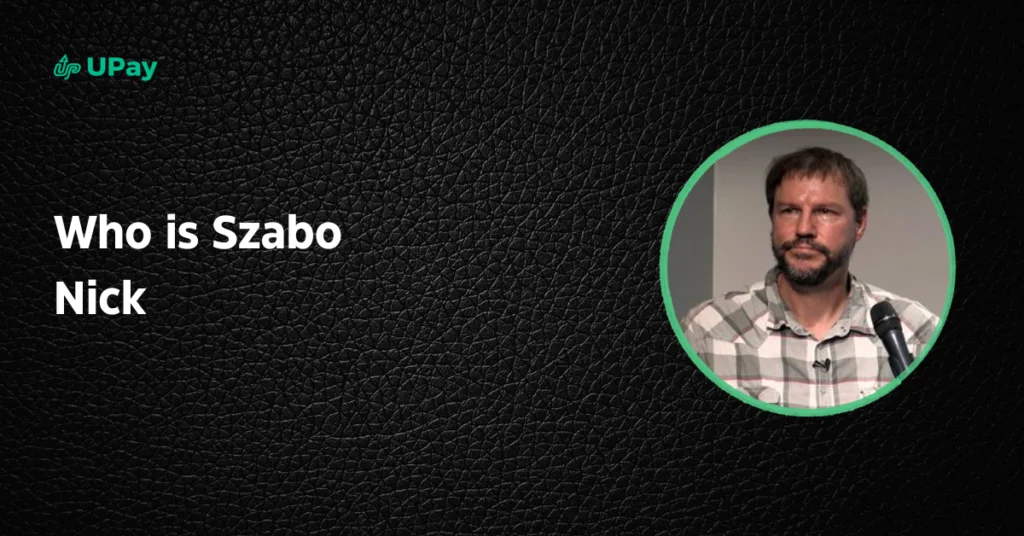
Nick Szabo is an American computer scientist, legal scholar, and cryptographer who is widely recognized as one of the most important intellectual figures in the history of cryptocurrency and blockchain technology. He is the person who coined the term “smart contracts” in 1994, proposed Bit Gold in 1998 (a decentralized digital currency that directly preceded Bitcoin), and spent decades thinking about how code, law, and cryptography could work together to replace the need for trusted third parties in financial transactions. His ideas did not just influence Bitcoin and Ethereum. They created the conceptual framework from which the entire decentralized finance ecosystem grew. He is 62 years old as of 2026, born on April 5, 1964, and is of Hungarian descent on his father’s side. Despite the scale of his influence on one of the fastest-growing sectors in modern finance, Szabo remains deliberately private, rarely gives interviews, and lets his published work do the talking. That combination of intellectual depth and personal obscurity makes him one of the most fascinating and important figures most people outside the crypto world have never heard of. Key Takeaways Early Life, Family Background, and What Shaped His Worldview Nick Szabo was born on April 5, 1964, in the United States. He is of Hungarian descent on his father’s side. His father participated in the 1956 Hungarian Revolution against Soviet occupation as a young man before immigrating to the United States. The stories of oppression and resistance his father shared had a profound influence on Szabo’s worldview, reinforcing his lifelong emphasis on decentralization, cryptography, and minimizing reliance on centralized authority. This family history is not a small biographical detail. It is the root of his philosophy. Growing up with stories of what happens when individuals have no protection against the power of the state shaped Szabo’s deep commitment to building systems where no single authority, government, bank, or institution can control or confiscate a person’s assets. Every significant idea he ever developed traces back to that same core belief: that trusted third parties are security holes and that individuals deserve financial systems that cannot be seized, censored, or shut down. Education: Where Law Meets Computer Science Szabo graduated from the University of Washington in 1989 with a bachelor’s degree in computer science and received a Juris Doctor degree from George Washington University Law School. The combination of these two degrees is not incidental. It is the central fact of his intellectual identity. Most cryptographers of his generation were pure engineers or pure mathematicians. Szabo was both a technologist and a legal thinker, and that dual expertise is what allowed him to ask questions nobody else was asking. He holds an honorary professorship at the Universidad Francisco Marroquín. This Guatemala-based university focuses on classical liberal economics, a natural intellectual home for someone with Szabo’s commitment to free markets, individual rights, and skepticism of centralized power. Read Also: Who is Crypto Wendy O and Why is She Influential? The Cypherpunk Movement: Where His Ideas Found a Home To understand Nick Szabo, you need to understand the cypherpunk movement. Nick Szabo, trained in computer science and law, entered the world of cryptography during the rise of the cypherpunk era. Drawn to questions of digital privacy, decentralized trust, and financial sovereignty, Szabo quickly became one of the movement’s most forward-thinking contributors. The cypherpunks were a loosely organized group of cryptographers, programmers, mathematicians, and activists who gathered on an email list in the late 1980s and 1990s to discuss using cryptography as a tool for protecting individual freedom. They believed that privacy was a fundamental right and that the right combination of mathematics and software could give people control over their own information and money, regardless of what governments or corporations wanted. Szabo became active in the cypherpunk movement during the 1990s, participating in the legendary cypherpunk mailing list where cryptographers, programmers, and activists discussed using mathematics to protect individual freedom from surveillance and state control. It was in this crucible of ideas that Szabo began developing his most influential concepts. Unlike many of his contemporaries who focused purely on technical problems, Szabo brought a unique interdisciplinary approach. He studied the history of money, the evolution of contracts, and the anthropology of trust, seeking to understand why humans developed the institutions they did and how cryptography might replace them. Other key members of the cypherpunk movement included Hal Finney, Wei Dai, Tim May, and Eric Hughes. These were the people who laid the intellectual groundwork for Bitcoin. Szabo himself acknowledged that at the time Bitcoin was invented, only he, Wei Dai, and Hal Finney were even interested in building something like Bitcoin. When Wei Dai was once asked who had the technical ability to have invented Bitcoin, he said simply, “Just Nick Szabo and me.” Smart Contracts: The Idea That Changed Everything The single most consequential contribution Nick Szabo has made to technology and finance is the concept of smart contracts. He coined the term in 1994 and spent the rest of the decade developing and refining the idea through published essays and papers. In 1994, Szabo coined the term “smart contracts” and described self-executing digital agreements that could operate without trusted intermediaries. A smart contract, in Szabo’s vision, is a protocol that automatically enforces the terms of an agreement using code and cryptography, removing the need for courts, lawyers, or enforcement agencies. The analogy he used to explain the concept was a vending machine. When you insert coins into a vending machine and make a selection, the machine delivers your product automatically. No cashier, no receipt, no dispute resolution, no middleman. The machine executes the terms of the transaction as soon as the conditions are met. Szabo asked a simple but powerful question: what if all contracts worked this way? Szabo coined the term “smart contracts” in 1994 and developed the concept further in a 1996 paper and a 1997 publication titled “Formalizing and Securing Relationships on Public Networks.” He described digital agreements that could automatically execute and enforce
Crypto Investment Strategies for 2026: How to Invest for Maximum Returns

Crypto investing in 2026 is very different from the early days of the market. The industry has grown from a highly speculative space into a global financial ecosystem supported by institutions, ETFs, governments, and blockchain innovation. Today, investors are no longer focusing only on hype and quick profits. More attention is now placed on long-term strategies, portfolio management, and sustainable wealth building. The crypto market has also expanded far beyond just Bitcoin and Ethereum. New sectors like AI crypto, decentralized finance, Layer-2 scaling, and tokenized real-world assets are creating fresh investment opportunities. At the same time, growing institutional adoption and clearer regulations are making the market more mature and competitive. Instead of relying on luck or social media hype, successful crypto investors in 2026 are focusing more on research, patience, and structured investing. Understanding how different strategies work can help investors avoid costly mistakes and take advantage of long-term opportunities in a rapidly evolving market. Key Takeaways What Is a Crypto Investment Strategy? A crypto investment strategy is a structured plan that guides how an investor buys, manages, and sells cryptocurrencies or blockchain-related assets. Instead of making emotional decisions based on market hype or fear, a strategy helps investors follow a consistent process designed around their financial goals and risk tolerance. In simple terms, a crypto investment strategy answers important questions such as: Without a strategy, many investors fall into common traps such as panic selling during market declines, buying into hype too late, or investing too much in risky assets. Crypto markets move quickly, and emotions often lead to poor decisions. A proper strategy creates discipline. It helps investors stay focused even when prices fluctuate dramatically. For example, some investors use long-term holding strategies focused on major assets like Bitcoin and Ethereum because they believe these networks will continue growing over time. Others use dollar-cost averaging, where they invest fixed amounts regularly regardless of market conditions. More advanced investors may combine trading, staking, decentralized finance, and tokenized asset exposure into diversified portfolios. The 7 Core Crypto Investment Strategies for 2026 Strategy Core Principle Best For Typical Allocation / Approach Expected Return Potential Risk Level Main Pros Main Cons Long-Term HODLing Buy strong crypto assets and hold long term through volatility Risk-averse investors, beginners, 3–5 year investors, minimal time commitment 60% Bitcoin, 30% Ethereum, 10% top altcoins Very high long-term growth potential Medium Simple strategy, lower stress, tax advantages, historically strong returns Requires patience, large drawdowns, and slower short-term gains Dollar-Cost Averaging (DCA) Invest fixed amounts regularly regardless of price All investor types, beginners, systematic investors Weekly or monthly recurring investments into BTC, ETH, and selected altcoins Moderate to high long-term returns Medium Reduces timing risk, removes emotions, beginner-friendly Slower gains during strong bull markets require consistency Portfolio Diversification Spread capital across multiple crypto sectors and assets Balanced investors, professional-style portfolio management Conservative, moderate, or aggressive allocations across BTC, ETH, stablecoins, DeFi, AI, and Layer-2s 25%–200%+ depending on allocation Low to High Reduces overall risk, exposure to multiple sectors, and better stability More research required, lower upside than concentrated bets DeFi Yield Farming & Staking Earn passive income by staking or providing liquidity Passive income seekers, DeFi users, and experienced investors Staking ETH, SOL, AVAX or farming liquidity pairs like USDC/USDT 5%–100%+ APY depending on strategy Medium to High Passive income, compounding returns, maximizes idle assets Smart contract risks, impermanent loss, protocol hacks Tactical Trading Actively trade market trends and momentum Experienced traders, active investors, and high-risk tolerance Swing trading, momentum trading, and technical analysis setups Fast short-term profit potential High Can profit from volatility, flexible strategy Stressful, time-intensive, most traders lose money Sector Rotation Rotate funds into trending crypto sectors with strong momentum Sophisticated investors, trend-focused investors Focus on Layer-2s, AI crypto, RWA tokens, and DeFi sectors High growth potential Medium to High Captures emerging narratives early, flexible capital allocation Requires constant monitoring, timing mistakes can hurt returns Risk-Adjusted Position Sizing Control risk by limiting exposure per investment All experience levels, capital preservation investors Use 1–5% position sizing rules and stop-loss management Improves long-term portfolio survival Low to Medium Protects capital, reduces catastrophic losses, and improves discipline Can limit maximum gains, may feel conservative during bull runs Below are the seven core crypto investment strategies shaping the market in 2026. Long-Term HODLing Best For: Risk-averse investors, long-term wealth builders, investors with a 3–5 year time horizon. Long-term HODLing is one of the simplest and most popular crypto investment strategies. The word “HODL” originally came from a misspelled word for “hold,” but it eventually became a term representing long-term conviction investing. The strategy involves buying strong cryptocurrencies and holding them through market volatility for several years rather than trying to trade short-term price movements. This strategy is best suited for risk-averse investors, beginners, investors with full-time jobs, people with a 3–5 year investment horizon, or Investors who do not want daily market stress The main idea behind HODLing is simple: despite short-term volatility, adoption of blockchain technology continues growing over time. Historically, this strategy has produced some of the largest returns in modern investing history. Pros Cons Dollar-Cost Averaging (DCA) Best For: All investor types, beginners, investors who want to reduce timing risk, and people who prefer systematic investing. Dollar-cost averaging, commonly called DCA, is one of the safest and most effective ways to build a crypto portfolio consistently over time. Instead of investing a large amount all at once, investors buy a fixed amount of cryptocurrency at regular intervals regardless of market price. For example, an investor may purchase $200 worth of Bitcoin every month, whether prices are rising or falling. This strategy helps reduce the stress of trying to perfectly time market tops and bottoms. DCA works especially well in crypto because the market is highly volatile. Prices can move dramatically within short periods, making it extremely difficult to predict the best entry points. By investing consistently, investors naturally buy more crypto during market dips and less during expensive periods. Pros Cons Portfolio Diversification Best For: Investors
AI Crypto Trading: How It Works, Best Bots & Strategies (2026 Guide)

Crypto trading is changing fast, and artificial intelligence is playing a major role in that shift. The AI crypto trading bot market is growing from about $607 million in 2023 to a projected $4.5 billion by 2032. At the same time, automated systems now account for nearly 40% of daily crypto trading activity. Despite this growth, many traders still don’t fully understand how these systems work or the risks involved. In August 2025, scammers used deepfake videos on YouTube to promote fake “AI trading bots,” stealing over $1 million from unsuspecting users. At the same time, legitimate platforms allow traders to automate their strategies and take advantage of market opportunities around the clock. This contrast shows an important truth: while AI trading can improve efficiency, it also comes with real risks. Traditional crypto trading is demanding. Markets run 24/7, prices change rapidly, and traders often make emotional decisions during volatility. Even basic automated bots have limitations, as they rely on fixed rules that don’t adjust when market conditions shift. AI driven trading aims to solve these challenges by analyzing large amounts of data, adapting strategies in real time, and reducing emotional decision making. However, it also introduces concerns such as scams, security vulnerabilities, and evolving regulations. Understanding both the benefits and the risks is essential before getting started and that’s what this guide is designed to help you do. Key Takeaway What is AI Crypto Trading? AI crypto trading is the use of artificial intelligence to analyze cryptocurrency market data, identify patterns, and automatically execute trades. It combines machine learning, real-time data processing, and automation to make faster and more accurate trading decisions. Instead of relying on human judgment, AI systems continuously monitor the market and place trades based on data driven insights and pre-defined strategies. Read Also: Best Open Source Crypto Trading Bots The Core Components Explained To fully understand how AI crypto trading works, it helps to break it down into three key components: artificial intelligence, automation, and crypto trading itself. Each plays a distinct role, but together they create a powerful system that can operate efficiently in crypto markets. Artificial intelligence is the “brain” behind AI crypto trading. It uses advanced techniques like machine learning to study large amounts of market data and uncover patterns that are often difficult for humans to detect. How AI Trading Differs from Traditional Rule Based Bots Aspect Traditional Rule-Based Bots AI-Powered Trading Bots Strategy Fixed rules (if X, then Y) Adaptive, learns from data Market Adaptation Fails when conditions change Dynamically adjusts strategies Data Processing Limited indicators Analyzes thousands of data points Learning No improvement over time Reinforcement learning improves performance Sentiment Analysis Cannot process news/social media NLP analyzes sentiment signals Decision Speed Fast but predictable Millisecond execution with pattern recognition Example Buy when RSI < 30 Analyze 80+ factors, predict trend, adapt position sizing Why AI Crypto Trading Matters in 2026 AI crypto trading has become more important than ever because the market is faster, more competitive, and always active. Market efficiency: One major reason is market efficiency. AI trading bots now handle a large share of crypto transactions, actively influencing prices by reacting instantly to supply and demand. Institutional adoption: Another key factor is institutional adoption. Hedge funds and asset managers are increasingly using AI to manage large portfolios, often worth over $100 million. These firms rely on AI for its ability to analyze complex data and execute trades with precision. Retail accessibility: At the same time, retail accessibility has improved. Platforms like Pionex provide built-in AI trading bots, making it easier for beginners to get started without advanced technical skills. 24/7 global market: Crypto markets also run 24/7, unlike traditional markets. AI ensures you don’t miss opportunities by constantly monitoring and trading, even while you sleep. Volatility management: Finally, AI helps with volatility management. Crypto prices can change rapidly, but AI systems adapt much faster than humans, helping traders respond quickly and reduce potential losses. The Complete History of AI in Crypto Trading AI crypto trading didn’t appear overnight. It developed gradually, moving from simple automated scripts to advanced systems used by both everyday traders and large institutions. Here’s a simplified breakdown of how it evolved. Early Algorithmic Trading (2010–2015) When Bitcoin first emerged, most trading was done manually. However, as interest in crypto grew, traders began experimenting with automation to make the process faster and more efficient. During this period, early trading bots were built using simple algorithms. These bots followed fixed instructions based on basic technical indicators like moving averages and the Relative Strength Index (RSI). For instance, a bot could be programmed to buy when the price dropped below a certain level and sell when it increased. Machine Learning Enters Crypto (2016–2018) As the market grew, developers started applying machine learning to predict price movements. Researchers used models like LSTM networks to analyze trends and improve accuracy. However, limited data and high volatility made it difficult to build reliable systems. Many models worked well only in bullish conditions. Still, some achieved around 60–70% accuracy in predicting price direction, showing clear potential. AI Trading Bot Platforms Emerge (2018–2020) Between 2018 and 2020, AI trading became more accessible through platforms like 3Commas, Cryptohopper, and TradeSanta. These platforms introduced cloud based bots that required little technical skill. Traders could now automate strategies easily, leading to rapid adoption. The 2020 DeFi boom further increased demand for bots due to fast-moving market opportunities. Advanced AI & Institutional Adoption (2021–2023) AI trading became more advanced with improved models and wider adoption. By 2023, AI bots accounted for a large share of trading activity, with institutions increasingly relying on them. However, risks also emerged, including increased regulatory attention from the Commodity Futures Trading Commission. Current State (2025 and Beyond) Today, AI crypto trading is more advanced and widely used. Modern systems include sentiment analysis, reinforcement learning, and multi-strategy execution. Regulators like the Securities and Exchange Commission and Commodity Futures Trading Commission are working toward clearer rules, while the industry continues to