

SEC Proposes Blockchain Updates to Decades Old Transfer Agent Rules
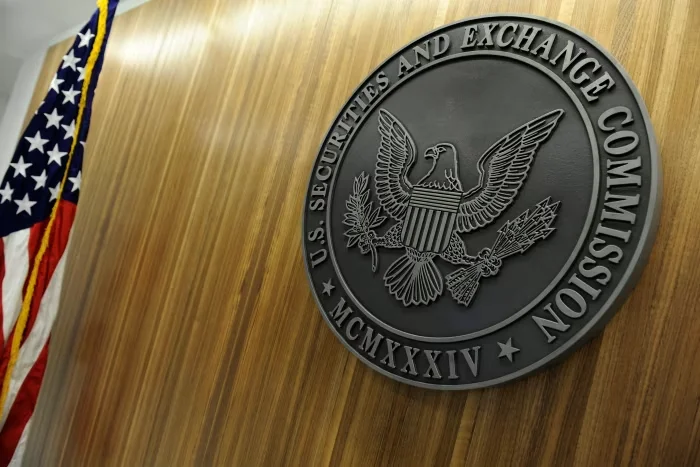
The U.S. Securities and Exchange Commission has proposed a sweeping overhaul of rules governing registered transfer agents, seeking to modernize a regulatory framework that has changed little since the late 1970s and early 1980s. Transfer agents maintain securities ownership records, process transfers, support corporate actions and form part of the infrastructure behind U.S. clearing and settlement. The SEC said the existing framework no longer fully reflects how these firms operate in an environment shaped by electronic communications, automated systems and blockchain based recordkeeping. The proposal also has direct implications for tokenized securities, as the agency explicitly addresses distributed ledger technology and blockchain native transfer agents while asking how current rules should apply to increasingly digital market infrastructure. Key Takeaways SEC Moves to Modernize Legacy Transfer Agent Rules The SEC said transfer agents now perform a broader range of services than when the existing rules were first adopted. The proposed changes would revise existing rules and forms, eliminate at least one outdated provision and introduce new requirements for registered transfer agents. SEC Chairman Paul Atkins said the agency is trying to align the framework with how securities markets actually operate today. “This proposal would streamline and modernize the Commission’s rules to reflect transfer agents’ current processes and operations, including the use of electronic communications and blockchain technology in connection with securities offerings and the transfer of shares.” The changes are expected to affect forms such as Form TA-1 and Form TA-2 while expanding disclosures around operations, financial information and other areas relevant to transfer agent supervision. Blockchain and Tokenized Securities Enter the Rulebook One of the most important aspects for digital asset markets is the SEC’s explicit treatment of blockchain based securities infrastructure. The agency said market participants are actively seeking to bring blockchain native, or onchain, transfer agents into the U.S. market. These firms can use distributed ledgers to maintain ownership records, administer tokenized securities and process transfers. The proposal acknowledges that these systems introduce risks that older transfer agent rules were not designed to address. The SEC said firms interacting with tokenized securities, distributed ledger technologies and smart contracts need to manage issues involving blockchain data integrity, security, operational models and the safeguarding of investor records. That does not amount to blanket approval of blockchain as a replacement for traditional transfer agent systems. Instead, the proposal seeks to bring those technologies within an updated regulatory framework. New Compliance Requirements Could Shape Onchain Securities The proposal would also strengthen requirements around securities transfers and recordkeeping. Among the areas under consideration are rules governing restrictive legends, third party service providers and the use of electronic systems. These issues are particularly relevant for tokenized securities because transfer restrictions may need to be enforced through digital infrastructure rather than through paper certificates or traditional account records. The SEC is also inviting comment on how blockchain based ownership records should interact with official transfer agent records, and how risks such as fraud, cybersecurity failures and operational disruptions should be handled. That could help determine how closely future onchain securities resemble conventional securities in legal and operational terms. Transfer Agents Gain Importance in Tokenization Push The proposal comes as more companies position themselves as regulated infrastructure providers for tokenized assets. Firms including Securitize, tZERO and Injective have obtained transfer agent registrations while building systems around blockchain-based securities. Traditional market operators are also moving further into tokenization. Intercontinental Exchange and tZERO recently agreed to work together on infrastructure for tokenized securities, while other exchanges and financial firms are developing blockchain based trading and settlement systems. That increases the importance of clear transfer agent rules because tokenized securities still require reliable records of ownership, transfer restrictions and investor rights. SEC Seeks 60 Days of Public Feedback The SEC has not adopted the changes yet. The proposal will be published in the Federal Register, after which market participants and other members of the public will have 60 days to submit comments. SEC Commissioner Hester Peirce said she supported the proposal and welcomed its progress before her departure from the agency. The feedback period is likely to draw close attention from traditional transfer agents, exchanges, tokenization companies and crypto-native infrastructure providers. Conclusion The SEC’s proposal represents a broad attempt to bring transfer agent regulation into line with modern securities markets after decades of limited change. While much of the overhaul concerns registration, reporting, safeguarding and operational requirements, its recognition of blockchain based recordkeeping is especially important for tokenized securities. Rather than creating a separate regime for onchain assets, the SEC appears to be asking how blockchain systems can fit within the existing securities ownership and transfer framework. The final rules, if adopted, could therefore play a major role in determining how tokenized shares and other digital securities are recorded, transferred and supervised in the U.S.
Hyperliquid Eyes US Entry Without Opening Existing Exchange
Hyperliquid could find a route into the U.S. market without directly opening its existing decentralized trading venue to American customers, as regulators and licensed exchanges explore ways to bring perpetual futures into the domestic derivatives framework. President Donald Trump recently said his administration wants Hyperliquid brought into the United States in a “fully compliant and legal fashion.” But that does not necessarily mean U.S. traders would gain access to the platform in its current form. A more practical structure could involve a regulated American exchange offering selected Hyperliquid-linked markets while handling customer identification, clearing, custody and other compliance obligations. The possibility comes as U.S. derivatives venues move quickly to establish regulated perpetual futures, potentially creating infrastructure that crypto native platforms could use to reach American traders. Key Takeaways Hyperliquid Could Take an Indirect Route Into the US Hyperliquid has become one of the largest venues for perpetual futures, derivatives that allow traders to maintain positions without a fixed expiration date. However, its existing platform was not designed around the regulatory structure governing U.S. derivatives exchanges. Bringing that venue directly into the country could therefore require significant changes to customer access, compliance, margin and other operational systems. Nansen Research analyst Nicolai Sondergaard has suggested an alternative: Hyperliquid could provide technology, liquidity or market infrastructure while a regulated U.S. company operates the customer facing venue. Such a structure could allow selected Hyperliquid-linked products to reach American traders without requiring the global platform itself to become a conventional U.S. exchange. Payward and Bitnomial Could Provide Regulatory Infrastructure One company already has infrastructure that could support such an arrangement. Payward, Kraken’s parent company, completed its acquisition of Bitnomial in May. The transaction gave Payward control of a U.S. derivatives business with exchange, clearing and brokerage capabilities regulated under the Commodity Futures Trading Commission framework. Bitnomial has also taken steps toward offering perpetual futures. A CFTC response to its filing in June confirmed that the company had submitted rule amendments covering perpetual futures contracts, with those changes becoming effective after the regulatory review process. That does not establish that Bitnomial will offer Hyperliquid products. No such partnership or product launch has been announced in the supplied material. However, it demonstrates that regulated U.S. infrastructure for perpetual contracts is already being built. A US Product Would Likely Look Different If Hyperliquid-linked markets eventually appear through a regulated American venue, they could operate differently from products available on Hyperliquid globally. A U.S. platform would likely need to meet requirements around customer identification, sanctions screening, margin controls, customer assets and market surveillance. Those requirements could result in fewer available markets or tighter trading conditions than users experience on the global platform.The benefit would be regulated access to a type of derivative that developed largely outside the U.S. market. Such a model could also provide regulators with a middle ground between allowing unrestricted access to an existing crypto native venue and preventing American traders from accessing perpetual products altogether. Perpetual Futures Gain Ground in the US Hyperliquid’s potential expansion comes as perpetual contracts receive greater attention from U.S. exchanges and regulators. The CFTC has already allowed crypto perpetual futures to enter regulated markets, including contracts offered through Kalshi. That decision has also triggered legal opposition from CME Group, which argues that perpetual contracts should be treated as swaps rather than futures. The dispute shows that the regulatory framework remains contested even as new products reach the market. Meanwhile, platforms are looking beyond crypto. Kalshi has filed for additional perpetual products tied to other markets, demonstrating how a structure popularized by crypto exchanges could spread into traditional asset classes. 24-Hour Trading Could Become the Larger Competition Perpetual contracts are also connected to another major shift: longer trading hours. Crypto venues operate continuously, allowing traders to respond immediately to geopolitical, economic and market developments. Traditional U.S. markets remain more dependent on fixed sessions. As exchanges introduce perpetual contracts and extend trading hours, the difference between crypto native and conventional market structures could begin to narrow. A regulated Hyperliquid-linked offering would add another competitor built around the expectation that markets should remain accessible for much longer periods. Conclusion Trump’s comments have raised the prospect of Hyperliquid entering the U.S., but that may not involve simply removing restrictions on American users of its existing platform. A more realistic route could involve Hyperliquid providing technology, liquidity or market design while a licensed U.S. derivatives operator manages compliance, clearing and customer access. Bitnomial’s progress toward regulated perpetual futures shows that infrastructure for such models is emerging, although no Hyperliquid-Bitnomial arrangement has been announced. How regulators handle these structures could ultimately determine whether crypto-native perpetual markets can enter the U.S. without being rebuilt entirely as traditional exchanges.
Bitcoin ETFs Pull In $731M As BTC Reclaims $80K

US spot Bitcoin exchange traded funds recorded $730.9 million in net inflows on September 3, marking their strongest single day since January 14, when inflows reached $843.6 million. The surge came as Bitcoin regained the $80,000 level and briefly climbed above $82,000, putting renewed attention on activity across the US spot ETF market. According to SoSoValue’s Bitcoin ETF data, BlackRock’s iShares Bitcoin Trust led the inflows with approximately $453.96 million, accounting for about 62% of the total daily inflow. Key Insights BlackRock Leads ETF Inflows BlackRock’s IBIT was responsible for the largest portion of Thursday’s inflows, bringing in approximately $453.96 million. ARK 21Shares Bitcoin ETF followed with $137.74 million, while Fidelity’s FBTC recorded $74.45 million. Grayscale’s Bitcoin Mini Trust attracted $48.79 million, Bitwise’s BITB added $24.76 million, and GBTC recorded $8.22 million. Morgan Stanley’s Bitcoin ETF also registered $7.71 million in inflows. Not every fund saw positive flows. VanEck’s HODL recorded approximately $19.58 million in outflows, while WisdomTree’s BTCW lost about $5.16 million. The concentration of inflows in IBIT was notable. Crypto analyst Rachael Lucas said the pattern points toward institutional allocation rather than short term retail positioning. Bitcoin Reclaims $80,000 Bitcoin’s move back above $80,000 coincided with the strong ETF inflows. The cryptocurrency briefly traded above $82,000 as investors responded to a combination of market activity and broader economic developments. Federal Reserve Governor Christopher Waller said on September 3 that he was inclined to keep interest rates steady if inflation continues to cool. His comments came as investors assessed the direction of US monetary policy, with stocks and crypto assets also seeing stronger activity. The broader market context was also covered in The Block’s report on the Bitcoin ETF inflows. Short Covering Also Played a Role The ETF inflows were not the only factor behind Bitcoin’s recent move. Crypto analytics firm CryptoQuant said the rally had been driven largely by short covering rather than a major increase in new long positions or fresh spot demand. The firm also reported that Bitcoin holders realized about 23,000 BTC in net profits on August 21, the highest daily amount recorded that year at the time. Since August 19, approximately 110,000 BTC had been realized in profits. The data provides additional context for the market’s recent price action, showing that existing positions and derivatives activity were significant parts of the move alongside ETF demand. Other Crypto ETFs See Inflows Bitcoin was not the only digital asset seeing ETF activity. US spot Ether ETFs recorded approximately $141.39 million in net inflows on September 3. BlackRock’s ETHA led with $72.07 million, followed by Fidelity’s FETH with $65.11 million. Invesco’s QETH added $5.39 million, while Grayscale’s Ethereum Mini Trust recorded $3.60 million. Grayscale’s ETHE, however, saw approximately $6.07 million in outflows. XRP ETFs recorded $6.14 million in net inflows, with Franklin Templeton’s XRPZ and Bitwise’s XRP ETF each attracting about $3.19 million. Solana ETFs also posted positive flows, recording approximately $6.40 million. Grayscale’s GSOL accounted for $4.38 million, while Bitwise’s BSOL brought in $2.02 million. For additional daily fund level tracking, investors can also view Farside’s Bitcoin ETF flow data. Conclusion The latest ETF figures show a significant return of capital into US listed Bitcoin investment products, with BlackRock’s IBIT absorbing the largest share of Thursday’s inflows. Bitcoin’s move back above $80,000 occurred alongside strong ETF demand, while data from CryptoQuant indicates that short covering also contributed to the market’s recent activity. The latest figures put institutional ETF flows and derivatives positioning at the center of the market’s most recent move, while broader monetary policy developments remain part of the backdrop for crypto trading.