


Hyperliquid could find a route into the U.S. market without directly opening its existing decentralized trading venue to American customers, as regulators and licensed exchanges explore ways to bring perpetual futures into the domestic derivatives framework.
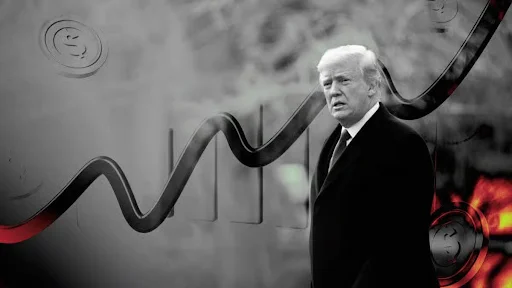
President Donald Trump recently said his administration wants Hyperliquid brought into the United States in a “fully compliant and legal fashion.” But that does not necessarily mean U.S. traders would gain access to the platform in its current form. A more practical structure could involve a regulated American exchange offering selected Hyperliquid-linked markets while handling customer identification, clearing, custody and other compliance obligations.
The possibility comes as U.S. derivatives venues move quickly to establish regulated perpetual futures, potentially creating infrastructure that crypto native platforms could use to reach American traders.
Key Takeaways
- Trump has said the U.S. is working toward bringing Hyperliquid into the country legally and compliantly.
- A U.S. expansion may involve a separate regulated trading layer rather than direct access to Hyperliquid’s existing platform.
- Kraken parent Payward’s acquisition of Bitnomial gives it access to a CFTC-regulated derivatives exchange, clearinghouse and brokerage infrastructure.
- Bitnomial has already moved to establish perpetual futures within its regulated framework.
- Hyperliquid’s potential entry comes as perpetual contracts and longer trading hours gain traction in U.S. derivatives markets.
Hyperliquid Could Take an Indirect Route Into the US
Hyperliquid has become one of the largest venues for perpetual futures, derivatives that allow traders to maintain positions without a fixed expiration date. However, its existing platform was not designed around the regulatory structure governing U.S. derivatives exchanges. Bringing that venue directly into the country could therefore require significant changes to customer access, compliance, margin and other operational systems.
Nansen Research analyst Nicolai Sondergaard has suggested an alternative: Hyperliquid could provide technology, liquidity or market infrastructure while a regulated U.S. company operates the customer facing venue.
Such a structure could allow selected Hyperliquid-linked products to reach American traders without requiring the global platform itself to become a conventional U.S. exchange.
Payward and Bitnomial Could Provide Regulatory Infrastructure
One company already has infrastructure that could support such an arrangement. Payward, Kraken’s parent company, completed its acquisition of Bitnomial in May. The transaction gave Payward control of a U.S. derivatives business with exchange, clearing and brokerage capabilities regulated under the Commodity Futures Trading Commission framework.
Bitnomial has also taken steps toward offering perpetual futures. A CFTC response to its filing in June confirmed that the company had submitted rule amendments covering perpetual futures contracts, with those changes becoming effective after the regulatory review process. That does not establish that Bitnomial will offer Hyperliquid products. No such partnership or product launch has been announced in the supplied material. However, it demonstrates that regulated U.S. infrastructure for perpetual contracts is already being built.
A US Product Would Likely Look Different
If Hyperliquid-linked markets eventually appear through a regulated American venue, they could operate differently from products available on Hyperliquid globally. A U.S. platform would likely need to meet requirements around customer identification, sanctions screening, margin controls, customer assets and market surveillance.
Those requirements could result in fewer available markets or tighter trading conditions than users experience on the global platform.The benefit would be regulated access to a type of derivative that developed largely outside the U.S. market. Such a model could also provide regulators with a middle ground between allowing unrestricted access to an existing crypto native venue and preventing American traders from accessing perpetual products altogether.
Perpetual Futures Gain Ground in the US
Hyperliquid’s potential expansion comes as perpetual contracts receive greater attention from U.S. exchanges and regulators. The CFTC has already allowed crypto perpetual futures to enter regulated markets, including contracts offered through Kalshi. That decision has also triggered legal opposition from CME Group, which argues that perpetual contracts should be treated as swaps rather than futures.
The dispute shows that the regulatory framework remains contested even as new products reach the market. Meanwhile, platforms are looking beyond crypto. Kalshi has filed for additional perpetual products tied to other markets, demonstrating how a structure popularized by crypto exchanges could spread into traditional asset classes.
24-Hour Trading Could Become the Larger Competition
Perpetual contracts are also connected to another major shift: longer trading hours. Crypto venues operate continuously, allowing traders to respond immediately to geopolitical, economic and market developments.
Traditional U.S. markets remain more dependent on fixed sessions. As exchanges introduce perpetual contracts and extend trading hours, the difference between crypto native and conventional market structures could begin to narrow.
A regulated Hyperliquid-linked offering would add another competitor built around the expectation that markets should remain accessible for much longer periods.
Conclusion
Trump’s comments have raised the prospect of Hyperliquid entering the U.S., but that may not involve simply removing restrictions on American users of its existing platform.
A more realistic route could involve Hyperliquid providing technology, liquidity or market design while a licensed U.S. derivatives operator manages compliance, clearing and customer access.
Bitnomial’s progress toward regulated perpetual futures shows that infrastructure for such models is emerging, although no Hyperliquid-Bitnomial arrangement has been announced.
How regulators handle these structures could ultimately determine whether crypto-native perpetual markets can enter the U.S. without being rebuilt entirely as traditional exchanges.