Think about the way we invest today. Buying a slice of real estate, owning a share of a bond, or even collecting royalties from creative work, it’s sometimes complicated, slow, and expensive.
Now imagine if you could turn these traditional assets into digital tokens that you could buy, sell, or trade instantly, from anywhere in the world. That’s the world of Real World Asset (RWA) tokenization.
RWA tokenization isn’t just a tech buzzword. It’s a way to bridge the gap between the tangible things we value and the digital systems we use to manage money today.
It lets you own a fraction of a high-value asset, receive automated income, and trade your holdings 24/7, all without the paperwork, long settlements, or geographical barriers of traditional finance.
This is more than digitizing assets, it’s about making investing faster, fairer, and more accessible. From real estate and gold to bonds, patents, and even carbon credits, tokenization is opening up opportunities that were once reserved for institutions or wealthy insiders
Key Takeaway
- RWA tokenization transforms physical, financial, and intangible assets into blockchain based digital tokens, making ownership more transparent, tradable, and globally accessible.
- With smart contracts, automated settlements, and 24/7 trading, tokenized assets move faster, reduce reliance on intermediaries
- Blockchain, smart contracts, custody solutions, and oracles maintain asset integrity, enforce rules, and provide immutable records, bridging the gap between real-world assets and their digital representations.
- While RWA tokenization opens new markets, increases accessibility, and lowers costs, it also comes with risks.
What is RWA Tokenization?
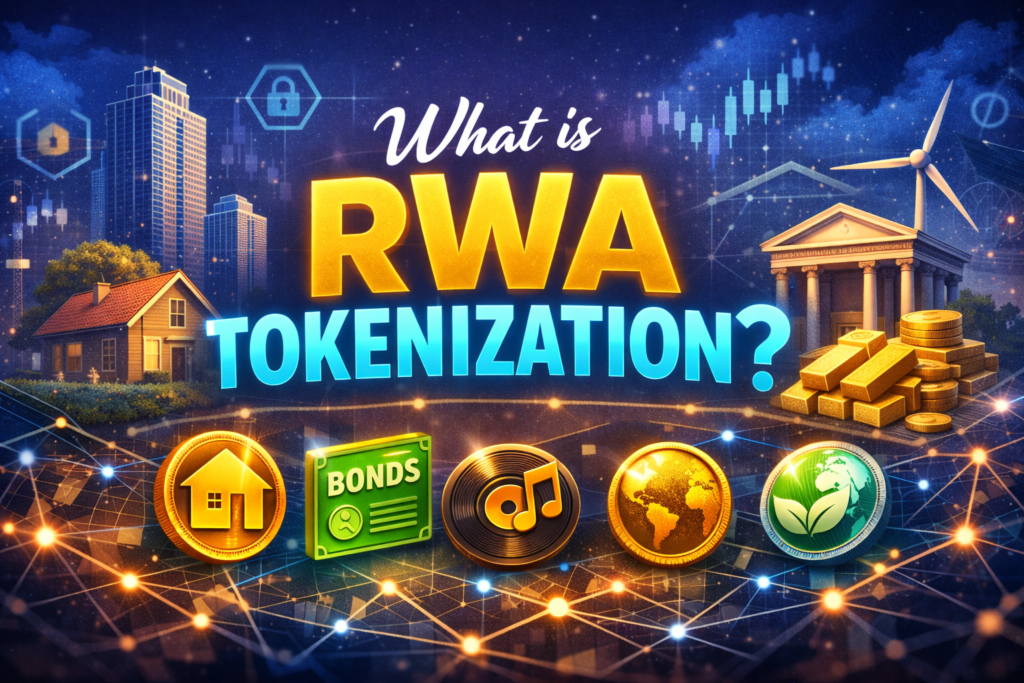
Real World Asset (RWA) tokenization is the process of converting ownership rights or economic value of a physical or traditional financial asset into a digital token recorded on a blockchain.
Think of it this way: instead of holding a paper deed to a property, a bond certificate, or a royalty agreement stored in a filing cabinet, ownership is represented by a secure digital token.
That token lives on a blockchain, where it can be transferred, tracked, and managed with cryptographic security. The blockchain becomes a transparent ledger that records who owns what. Each token corresponds to a defined legal or economic claim tied to the underlying asset.
Because blockchain records are tamper resistant and time stamped, ownership history becomes easier to verify and harder to manipulate. This digital representation unlocks new possibilities:
- Fractional ownership, where multiple investors can own small portions of high value assets.
- Faster settlement times compared to traditional financial systems.
- Global accessibility, allowing investors from different regions to participate more easily.
What Counts as a Real World Asset?
A real world asset is any asset that exists and holds value outside of blockchain networks. It is recognized within legal, financial, or commercial systems before being tokenized.
These assets typically fall into three broad categories: tangible assets, financial instruments, and intangible assets.
- Tangible Assets
Tangible assets are physical items with measurable value. Real estate is one of the most widely discussed examples. Residential properties, office buildings, industrial warehouses, and land parcels can all be tokenized, allowing investors to purchase fractional interests rather than entire properties.
- Financial Instruments
Financial instruments are contractual assets that derive their value from legal agreements. These include bonds, treasury bills, corporate shares, money market funds, and private credit.
- Intangible Assets
Not all valuable assets can be touched. Intellectual property, patents, copyrights, trademarks, licensing agreements, and royalty contracts generate income despite lacking physical form.
Also Read: Top 10 RWA Tokenization Companies for Investors and Institutions (2026)
Core Components of RWA Tokenization
Tokenization is not just about creating digital tokens. It requires an integrated system that connects physical assets, legal frameworks, and blockchain infrastructure. Several foundational components make this possible.
Blockchain Technology & Distributed Ledgers
Blockchain serves as the backbone of RWA tokenization. It is a distributed ledger that records transactions across a network of computers rather than in a single centralized database.
In the context of RWAs, blockchain provides clarity. Investors can verify ownership history. Issuers can track distribution. Regulators can audit activity if required. It replaces opaque record keeping systems with shared visibility.
Smart Contracts
Smart contracts are self-executing programs embedded in the blockchain. They automatically enforce predefined rules when certain conditions are met.
In RWA tokenization, smart contracts can handle tasks such as distributing rental income, paying bond interest, enforcing investor eligibility rules, or triggering redemptions. Instead of relying on manual processes and administrative oversight, these actions occur programmatically.
Asset Custody and Oracles
One of the most critical challenges in RWA tokenization is maintaining the integrity of the link between digital tokens and their real-world counterparts.
Asset custody refers to the secure holding and management of the underlying asset. If gold is tokenized, it must be stored in a verifiable vault. If real estate is tokenized, ownership must be legally documented. Custodians ensure that the asset exists, is properly maintained, and remains protected.
Token Standards (ERC-20, ERC-721, and Others)
Token standards determine how digital assets function on a blockchain and ensure they work smoothly with wallets, exchanges, and other applications.
ERC-20 is used for fungible tokens, where every unit is identical making it ideal for tokenized bonds, funds, or asset-backed stablecoins. ERC-721 is built for unique assets, such as property titles or artwork, where each token represents something distinct.
ERC-1155 combines both models, allowing projects to manage fungible and non-fungible assets within one system. By following these standards, RWA tokens remain interoperable, easier to trade, and compatible across the broader blockchain ecosystem.
How RWA Tokenization Works

Understanding RWA tokenization becomes much clearer when you see the mechanics behind it. This is not simply about creating a digital token and attaching it to an asset.
It is a structured process that connects legal ownership, technical infrastructure, and financial design into one coordinated system.Tokenizing a real-world asset follows a logical progression. Each step builds trust, compliance, and technical functionality into the system.
Asset Verification and Legal Structuring
Before anything can be tokenized, the asset must be verified. This means confirming that it exists, that ownership is clear, and that it is free from legal disputes or hidden liabilities.
In the case of real estate, this may involve reviewing property titles, valuations, zoning rights, and debt obligations. For financial instruments, it requires confirming contractual terms and issuer credibility.
Once verified, the asset must be legally structured in a way that supports tokenization. Often, this involves creating a special purpose vehicle (SPV) or legal entity that holds the asset. Investors then purchase tokens that represent rights or shares in that entity.
This step is critical. Tokenization does not override existing laws. Instead, it operates within legal frameworks. Proper structuring ensures that token holders have enforceable rights tied to the underlying asset. Without this legal clarity, the digital token would have no real world backing.
Token Creation and Minting
Token creation, often referred to as minting, involves generating blockchain based tokens that represent ownership or economic rights linked to the asset. Smart contracts are deployed to define how the tokens function.
These contracts encode rules regarding transfers, distributions, voting rights, or redemption terms. For example, if a commercial property is tokenized into 10,000 units, each token may represent a fractional claim on rental income and capital appreciation. The smart contract ensures that these rights are automatically enforced.
The number of tokens issued, their structure (fungible or non-fungible), and the blockchain network used are all determined at this stage. Technical security audits are typically conducted to reduce vulnerabilities before tokens are released.
Issuance and Distribution
Distribution can occur through private placements, regulated digital securities offerings, or specialized tokenization platforms. Investors undergo identity verification and compliance checks before participating.
This ensures that regulatory obligations are met and that only eligible participants gain access when required.
During issuance, funds raised from investors are typically used to acquire, refinance, or manage the underlying asset. Ownership records are immediately reflected on the blockchain, giving investors real-time confirmation of their holdings.
Secondary Market Trading and Settlement
One of the most transformative aspects of RWA tokenization is what happens after issuance.
In traditional markets, selling ownership in assets such as private real estate or private equity can be slow and complex. Tokenization introduces the possibility of secondary market trading, where investors can buy and sell tokens more easily on digital platforms.
When a token changes hands, the blockchain records the transaction instantly. Settlement can occur within minutes rather than days. Smart contracts automatically update ownership and, where applicable, adjust income distribution rights.
Also Read: Stablecoin Regulation in 2026: Global Laws, Benefits, and Challenges
Benefits of RWA Tokenization
RWA tokenization transforms traditional assets into digital instruments, unlocking advantages that were previously difficult or even impossible to achieve. From broader access to faster markets, the benefits touch every aspect of investing and asset management.
Access & Liquidity
One of the most compelling benefits of RWA tokenization is the new level of access it provides. Fractional ownership allows investors to own a portion of high value assets that would have been out of reach in traditional markets.
Because these tokens exist on a blockchain, trading is possible around the clock. Unlike conventional markets with opening and closing hours, investors can buy, sell, or transfer their holdings at any time from anywhere in the world.
Efficiency & Transparency
RWA tokenization also streamlines how assets are managed and transferred. Settlements, which traditionally could take days or even weeks, are accelerated through blockchain and smart contracts, often completing within minutes. This speed reduces uncertainty and risk associated with delayed ownership transfers.
By removing unnecessary intermediaries, the process becomes cleaner and more direct. Brokers, custodians, and clearinghouses are still relevant in certain cases, but their role is simplified, lowering the potential for errors and delays.
Cost Reduction and Market Access

Digitizing asset ownership lowers operational and transaction costs. With fewer manual processes and intermediaries, fees drop, and efficiency rises. Platforms can manage thousands of transactions automatically, freeing resources and reducing overhead.
Additionally, tokenization opens access to international pools of capital. Investors from different countries can participate without the friction of cross-border banking, legal barriers, or currency conversion complications
Challenges and Risks in RWA Tokenization
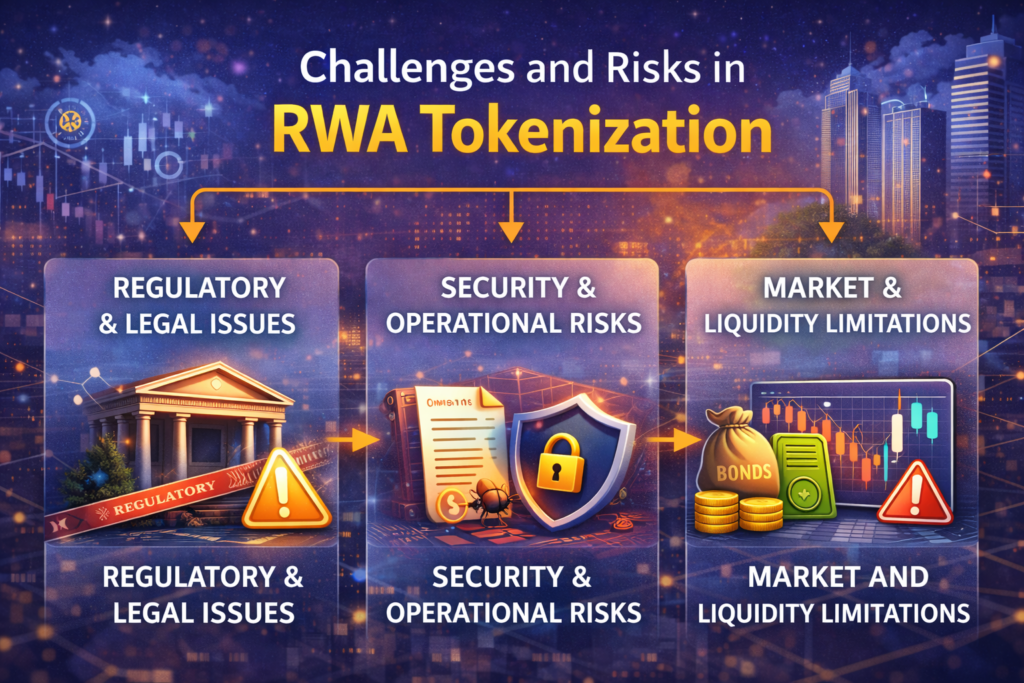
While RWA tokenization offers transformative benefits, it is not without challenges. Investors and issuers must ensure that tokenized assets maintain their intended value and credibility.
Regulatory and Legal Issues
Regulation remains one of the most significant hurdles in RWA tokenization. Jurisdictional variations mean that rules can differ dramatically depending on where the asset or investor is located. An asset tokenized in one country may face entirely different legal treatment elsewhere, creating complexity for global investors.
Another challenge is how tokens are classified. Are they securities, commodities, or something entirely new? Misclassification can trigger unexpected regulatory obligations, penalties, or restrictions
Security and Operational Risks
The technological side of tokenization introduces new risks. Smart contracts, while powerful, are vulnerable to bugs or exploits. Even small coding errors can lead to significant financial losses if not properly audited.
Market and Liquidity Limitations
Tokenization promises liquidity, but the reality can differ. Some tokenized assets remain thinly traded due to limited investor awareness, regulatory constraints, or lack of platform support.
Decentralized trading platforms offer new opportunities, but they also present challenges in terms of usability, cross-border accessibility, and regulatory compliance. Investors may struggle to fully understand tokenized assets, and adoption can lag if markets are not adequately educated or incentivized.
Key Real World Use Cases of RWA Tokenization
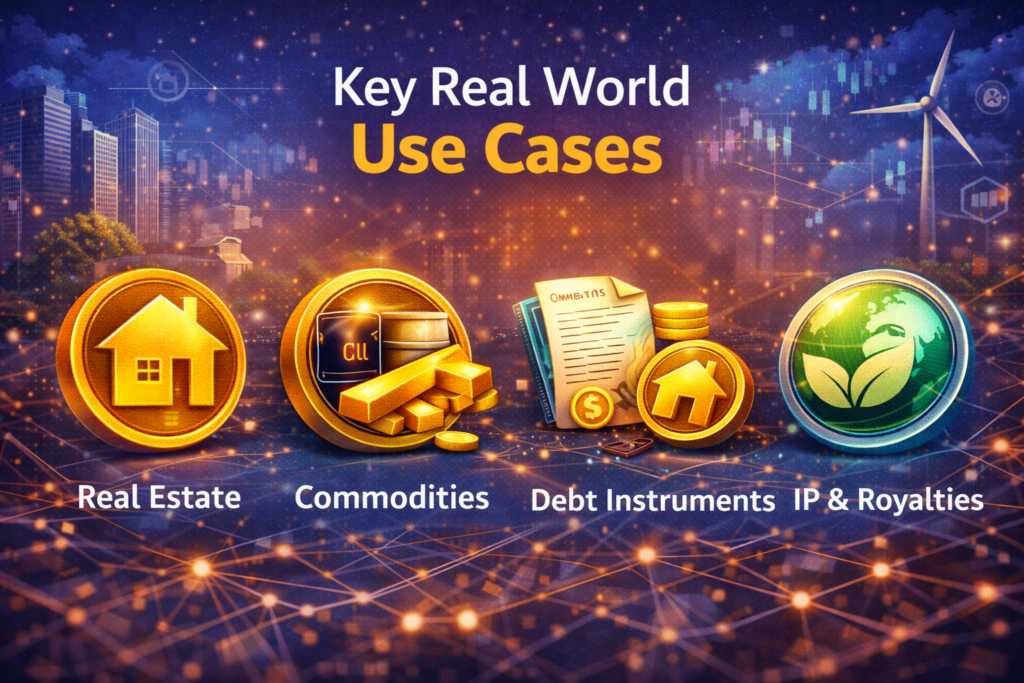
Despite challenges, RWA tokenization is already creating tangible opportunities across multiple sectors.
Real Estate
Tokenization is changing property investment. Fractional property ownership allows investors to buy portions of high-value real estate without needing to purchase the entire asset. Tokenized REITs are also emerging, providing liquidity and transparency in previously illiquid real estate markets.
Commodities and Natural Resources
Gold, oil, and other valuable goods can be tokenized to provide greater access and tradability. Even specialized commodities like rare wood or premium tea have been digitized, allowing global investors to participate in markets that were once geographically restricted.
Debt Instruments and Securities
Traditional financial products, such as bonds, treasury funds, and short-term debt, are being tokenized to streamline settlement, improve accessibility, and increase transparency. Tokenized debt enables real-time ownership tracking and automated payments, reducing administrative friction.
Intellectual Property & Royalties
Music rights, patents, trademarks, and licensing agreements can all be tokenized, allowing creators to monetize and sell fractional rights. Investors gain exposure to income streams from creative and intellectual assets that were previously inaccessible.
Carbon Credits and Environmental Tokens
Environmental initiatives are increasingly adopting tokenization. Carbon credits can be tokenized for more transparent and verifiable trading, ensuring that sustainability efforts are accurately tracked and incentivized. This approach enhances accountability in global environmental markets while opening new investment opportunities.
Also Read: Best Cryptos to Buy in 2026: A Beginner’s Honest Guide to the Top Coins
Conclusion
RWA tokenization represents a profound evolution in how value, ownership, and investment operate in the modern world. By bridging the gap between tangible assets, financial instruments, and blockchain technology, it transforms traditional markets into faster, more transparent, and globally accessible systems.
The benefits are clear, investors gain access to fractional ownership, round the clock trading, and previously untapped markets. Asset management becomes more efficient, settlements faster, and transparency far greater than what conventional frameworks allow.
At the same time, costs drop and opportunities expand, opening the door to a more inclusive and liquid financial system.
Yet, tokenization is not without challenges. Regulatory complexity, technological vulnerabilities, and market limitations demand careful planning, strong infrastructure, and ongoing vigilance. Custody systems, oracles, smart contracts, and interoperability frameworks are not optional, they are essential to ensuring that the digital tokens remain faithfully anchored to their real-world value.
FAQs
What is RWA tokenization?
RWA (Real-World Asset) tokenization is the process of converting physical, financial, or intangible assets into digital tokens on a blockchain. These tokens represent ownership or economic rights, allowing assets like real estate, bonds, or royalties to be traded, transferred, or managed digitally.
What types of assets can be tokenized?
Almost any asset with measurable value can be tokenized. This includes tangible assets like real estate or gold, financial instruments such as bonds or stocks, and intangible assets like intellectual property, royalties, or even carbon credits.
How does RWA tokenization improve liquidity?
Tokenization allows assets to be divided into smaller units, enabling fractional ownership. Combined with 24/7 global trading on blockchain platforms, this increases liquidity for traditionally illiquid assets, allowing investors to buy, sell, or transfer ownership more easily.
What technologies support RWA tokenization?
Blockchain platforms like Ethereum and Solana form the backbone of tokenization. Smart contracts automate payments and enforce compliance rules, while custody systems and oracles maintain the integrity and real-world linkage of the underlying assets. Interoperability frameworks also allow tokens to function across multiple blockchains.
What are the main risks of RWA tokenization?
Challenges include regulatory and legal uncertainties, smart contract vulnerabilities, custody and fraud risks, limited liquidity for some assets, and adoption barriers among investors unfamiliar with digital asset markets. Compliance and technological safeguards are critical to mitigate these risks.