


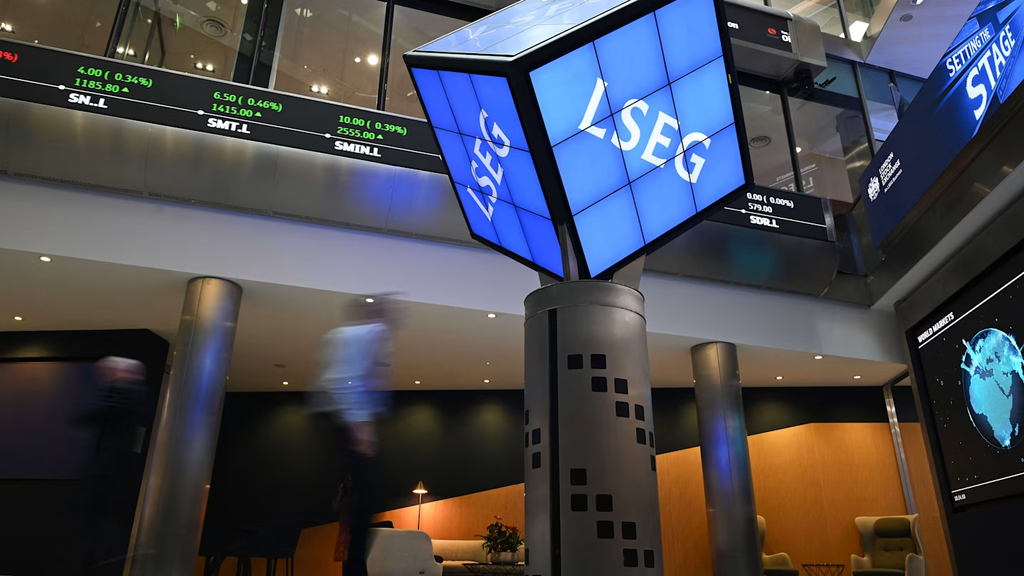
The London Stock Exchange is partnering with Kraken parent Payward to bring tokenized versions of major UK-listed stocks to blockchain based markets, as one of the world’s oldest stock exchanges expands its digital asset strategy.
Under the partnership, Payward plans to tokenize shares of the 100 largest companies listed on the LSE through its xStocks framework. The first products are expected to become available through Kraken and other supporting platforms within weeks, while the LSE intends to support xStocks on its upcoming LSE 24 extended hours venue in 2027, subject to regulatory approval.
The partnership also goes beyond tokenizing existing securities. The companies plan to explore native equity tokens that could eventually provide the same ownership rights as conventional shares.
Key Takeaways
- Payward plans to bring tokenized versions of the 100 largest LSE-listed companies to its xStocks framework.
- The first UK xStocks are expected within weeks and could reach eligible investors across more than 110 countries, although UK investors are currently excluded.
- LSE plans to support xStocks on its LSE 24 extended hours venue in 2027, subject to regulatory approval.
- xStocks has processed more than $40 billion in total trading volume and has over 200,000 holders.
- LSE and Payward will also explore native onchain shares that could carry the same rights as traditional equities.
Payward to Tokenize 100 Major UK Stocks
The initial phase will use Payward’s existing xStocks structure to create blockchain based representations of shares in 100 of the largest London listed companies. Each xStock is backed 1:1 by the underlying security. However, the Financial Times reported an important distinction between the tokenized product and direct share ownership: xStocks provide exposure to the underlying stock but do not currently give holders full legal ownership rights associated with conventional shares.
Simon McQuoid-Mason, who leads new product development, market structure and business development at the LSE, described the existing structure as synthetic exposure.
“It still tracks the underlying security without being the underlying security.”
The tokens are expected to become accessible to eligible investors in more than 110 countries. UK based investors, however, cannot currently access xStocks.
Payward Chief Commercial Officer Mark Greenberg said the model could lower the barrier for international investors seeking exposure to London listed companies while allowing the assets to move between supported blockchain platforms and wallets.
xStocks Has Processed More Than $40 Billion
Payward’s xStocks framework has already expanded significantly beyond its original U.S. equity offering. According to figures supplied by the company, xStocks has processed more than $40 billion in cumulative trading volume across more than 200,000 holders, including nearly $20 billion settled onchain. The broader tokenized equity market remains considerably smaller when measured by the value of outstanding assets. RWA.xyz data cited in the supplied material puts total tokenized equities at roughly $2.53 billion, with about $606.6 million represented by xStocks.
Payward has also been expanding the product geographically. In July, it partnered with financial infrastructure provider GTN to support an international expansion covering markets including Hong Kong, the UK, Europe and South Korea.
LSE 24 Could Bring xStocks Into a Regulated Exchange Venue
The partnership could eventually move xStocks beyond crypto native trading platforms. Subject to regulatory approval, LSE plans to list and support xStocks on LSE 24, its new extended hours trading venue expected to launch in the first half of 2027. LSE 24 is designed to operate separately from the exchange’s main market from Monday through Friday, extending access beyond traditional London trading hours.
According to the FT, tokenized stocks traded through the venue would remain subject to regulated market controls intended to keep prices within appropriate ranges and aligned with the underlying shares.
LSE CEO Julia Hoggett said the technology needs to develop without weakening the protections associated with established markets.
“Tokenisation has the potential to change how investors access, and how issuers use, financial markets, but it must develop in a way that preserves the trust, rights and role of regulated markets.”
The planned LSE 24 listing remains dependent on approval from the UK’s Financial Conduct Authority.
LSE and Payward Explore Native Onchain Shares
The longer term part of the partnership could represent a more significant change to how equities themselves are structured.
Payward and the LSE plan to explore issuing native equity tokens through LSE infrastructure. Unlike the current xStocks structure, these securities could be designed to carry the same rights and ownership as conventional shares while remaining fully fungible with them. No timetable has been announced for introducing such products.
The initiative also comes as other major exchange operators increase their involvement in tokenization. Nasdaq has pursued tokenized securities infrastructure, while Deutsche Börse invested $200 million in Payward in April as part of a wider partnership covering crypto assets, tokenized markets and institutional services.
Conclusion
The LSE’s partnership with Payward moves tokenized equities closer to established regulated market infrastructure. The immediate plan centers on blockchain based representations of 100 major UK stocks through xStocks, followed by potential trading on LSE 24 in 2027 if regulators approve the arrangement.
More consequentially, the companies are exploring native onchain shares that could eventually provide investors with the same rights as conventional stockholders. For now, however, that remains exploratory, while the planned LSE 24 rollout still requires regulatory clearance.