


Spend money to make money, that used to be advice for investors, not shoppers. Crypto card cashback rewards flipped it.
Every coffee, every grocery run, every flight now books Bitcoin or USDC directly into your wallet. Not points. Not miles. Not promises. Actual digital assets with actual growth potential.
The best rewards program isn’t one you redeem. It’s one that compounds.
How Crypto Card Cashback Rewards Work
Every time you use your card to pay for a purchase, whether you’re dining at a restaurant, shopping online, or making everyday transactions, a portion of your spending is automatically returned to you in the form of crypto rewards.
Most crypto cashback cards operate on major payment networks such as Visa or Mastercard, allowing cardholders to use them at millions of merchants around the world.
From the merchant’s perspective, the transaction functions like any standard card payment, with no special crypto integration required.
This smooth experience enables users to earn digital asset rewards on their regular spending without changing how or where they shop.
There are two main card types:
- Crypto debit cards pull from your existing crypto balance. When you swipe, your digital assets convert to the local currency at the point of sale.
- Crypto credit cards work like a traditional credit card; you get a spending limit, pay a monthly bill, and earn crypto rewards on every qualifying purchase. You don’t need to own crypto upfront to earn it.
Both types pay rewards in different ways. Some credit your wallet in real time after every transaction, while others batch rewards at the end of the billing cycle.
A handful require you to stake a native token to unlock higher cashback tiers, which matters a lot when you’re comparing headline rates to what you’ll actually earn.
Read Also: Coin Ticker: The Three Letters That Speak for a Whole Crypto Project.
Why Crypto Cashback Makes Sense in 2026
A traditional rewards card usually offers around 1.5% to 2% cash back, paid in dollars. However, once deposited into a bank account, those rewards generally remain static and do not generate additional value.
In contrast, receiving a 1.5% reward in Bitcoin gives cardholders exposure to an asset that has the potential to appreciate over time. Of course, Bitcoin’s price is volatile, and its value can decline as well as rise.
However, for long-term crypto believers, earning rewards in an asset they already support may provide greater value than accumulating points or airline miles that often go unused.
Rather than collecting rewards with limited utility, they can steadily build their Bitcoin holdings through everyday spending while retaining the opportunity to benefit from future price appreciation.
There are also practical wins. Many crypto cards charge zero foreign transaction fees, which alone can save international travelers 2–3% per purchase compared to a standard bank card.
Several cards also offer instant settlement, airport lounge access, and subscription rebates on services like Netflix and Spotify.
8 Best Crypto Cards for Cashback Rewards
1. UPay Card
Source: x.com/UPayOfficial
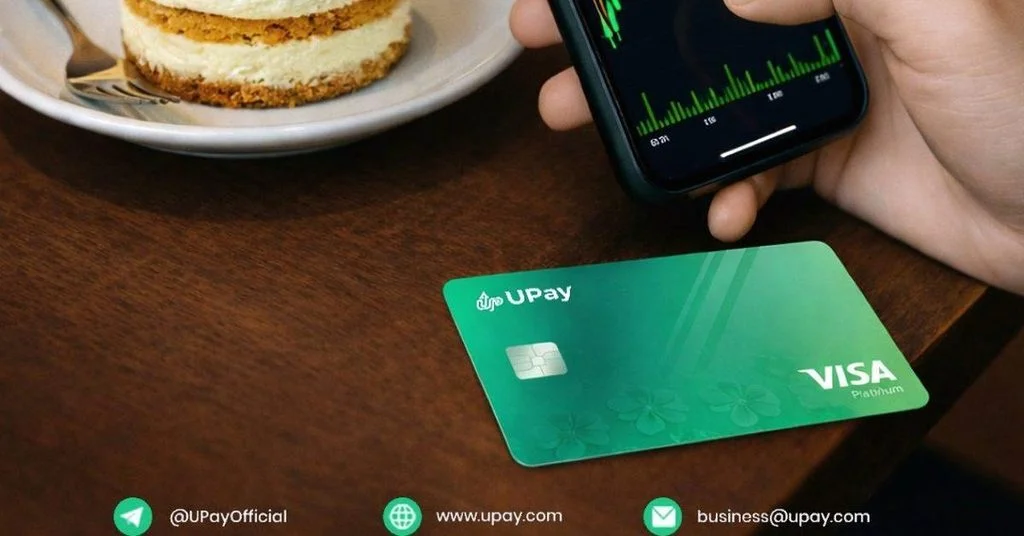
UPay is a Dubai-based crypto card issued through Visa and Mastercard, designed for users who prioritize global usability and fee transparency over flashy headline cashback rates.
The card is accepted at over 55 million merchants in over 180 countries and supports real-time crypto-to-fiat conversion across BTC, ETH, USDT, USDC, and other major assets.
One standout feature is UPay Savings, which lets users lock idle BTC, ETH, USDT, or USDC for fixed terms to earn daily interest returns that can be accessed directly through the card at maturity; however, specific terms and yields may vary based on market conditions and platform developments.
UPay also supports Apple Pay, Google Pay, and direct ATM withdrawals without requiring exchange-side liquidation.
The card operates with no cross-border transaction fees and offers both virtual and physical card tiers. UPay is a serious contender in 2026 for internationally mobile users, freelancers, and crypto holders who prefer low costs and global reach over tiered token rewards.
Read Also: Cycle High: Obvious Only in Hindsight.
2. Crypto.com Prepaid Visa Card
Source: Pinterest.com
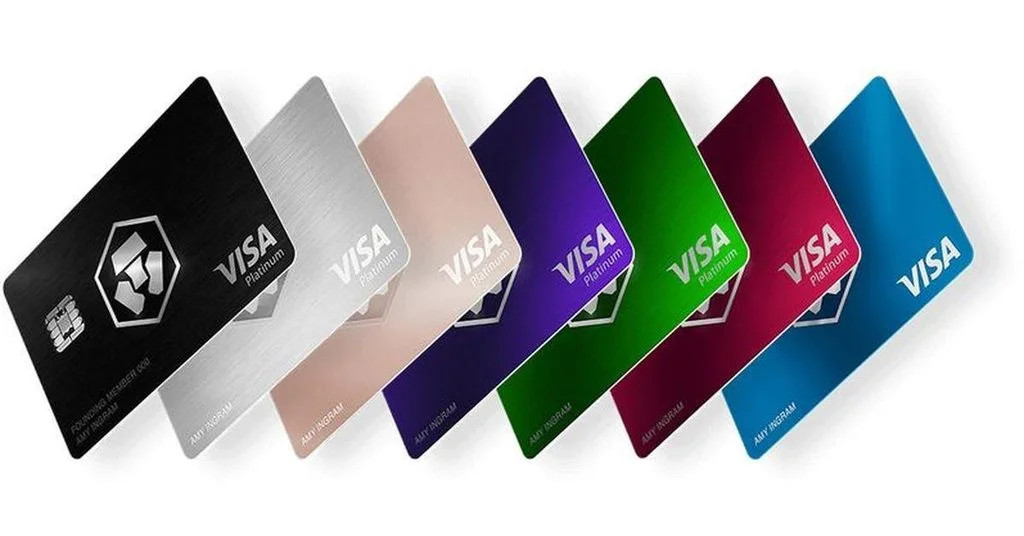
Crypto.com’s prepaid Visa Card remains one of the most recognized crypto cards in the market. It operates on a tiered system where cashback rates climb from 1% at the base level up to 5% for the highest tier.
The catch is that higher tiers require staking CRO, Crypto.com’s native token. The entry-level card (midnight blue) is free and offers no cashback. Higher tiers (like Ruby Steel and Obsidian) unlock perks like full Spotify and Netflix rebates, airport lounge access through LoungeKey, and higher ATM limits.
The rewards are paid in CRO, not Bitcoin, so their real value depends on CRO’s price. For users already in the Crypto.com ecosystem and comfortable holding CRO, it’s a compelling card.
For everyone else, the staking requirement is a meaningful trade-off to consider before committing.
3. Coinbase Card
Source: Pinterest.com
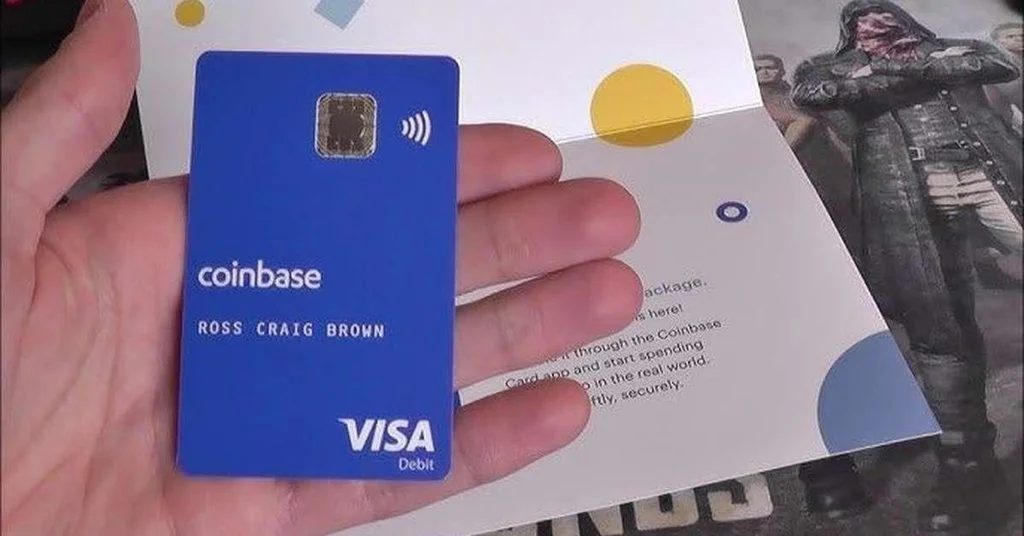
The Coinbase Card is a credit card on the American Express network, linked to a Coinbase account. It is accepted across the American Express network and offers up to 4% back paid in Bitcoin for Coinbase One members, with the exact rate depending on your membership tier and spending.
There are no annual fees, and the interface is clean enough for first-time crypto card users. The downside is that you have to pay a subscription fee of $49.99/year to become a Coinbase One member, and there is also a conversion spread on non-USDC assets that can quietly offset a portion of the rewards you earn.
This card is a solid starting point for anyone already using Coinbase who wants a low-friction way to earn crypto on daily spending without navigating a complex tiered system.
4. Gemini Credit Card
Source: gemini.com
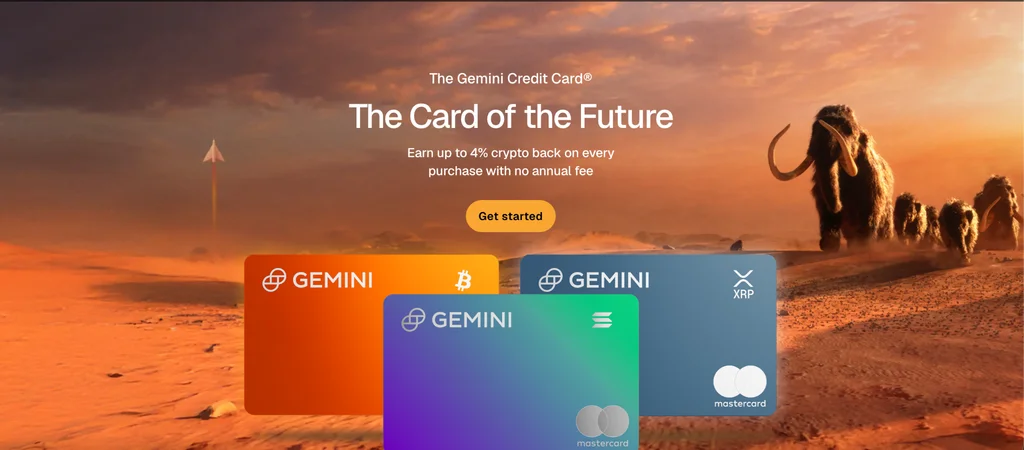
The Gemini Credit Card uses a category-based reward model that will feel familiar to anyone who has used a premium travel or cashback credit card. It pays 4% back in crypto on gas and transit, 3% on dining, 2% on groceries, and 1% on everything else.
Rewards land in your Gemini account in real time after each purchase, not at the end of a billing cycle. You can auto-stake rewards in Solana for an additional yield of up to 6% APR (annual percentage rate) if you want to go further.
There is no annual fee and no staking requirement to access the reward rates. For users who want higher returns on specific spending categories rather than a flat rate, the Gemini card is one of the most straightforward earners on the market right now.
Read Also: Quick tips on how to convert crypto to cash.
5. Wirex Card
Source: wirex.com
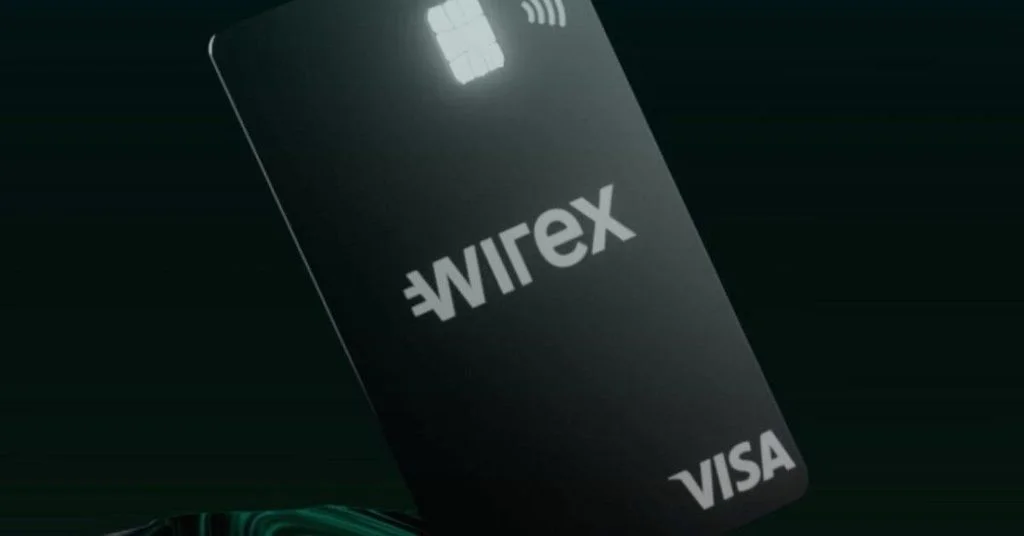
Wirex has been around since the early days of crypto cards and remains a strong option in 2026. It supports over 100 cryptocurrencies and offers up to 8% cashback through its Cryptoback program, paid in WXT, its native token.
The rewards are accessible with over 80 million merchants globally, and Wirex operates across Europe, the UK, and Australia.
The challenge with Wirex is that the 8% headline rate requires significant WXT token staking, and the base rate for unstaked users sits at just 0.5%.
If you’re a frequent spender who’s already invested in the Wirex ecosystem and willing to hold WXT, the returns are attractive.
If you’re not, the actual reward is modest, and WXT’s price volatility adds a layer of unpredictability to what you earn.
6. Nexo Card
Source: nexo.com
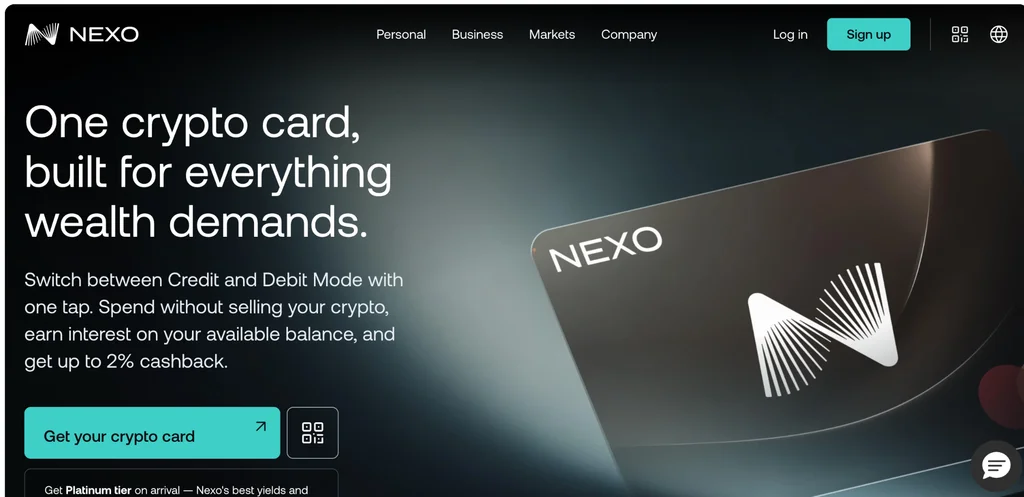
The Nexo Card takes a different approach from most cards on this list. It operates in both credit and debit modes. In debit mode, you spend crypto you already own.
In credit mode, you can use your crypto as collateral to borrow and spend it without selling.
Cashback reaches up to 2% and is paid in Bitcoin or NEXO tokens, but rewards are only available in credit mode, and your specific cashback rate depends on your Nexo Loyalty tier.
The Nexo Card is best suited for holders who want spending power without reducing their portfolio. It’s not the highest cashback card on this list, but the credit model gives it a utility that others don’t offer.
Read Also: Top DeFi Protocols by Category: Banking Without the Bank.
7. COCA Card
Source: x.com/coca_card
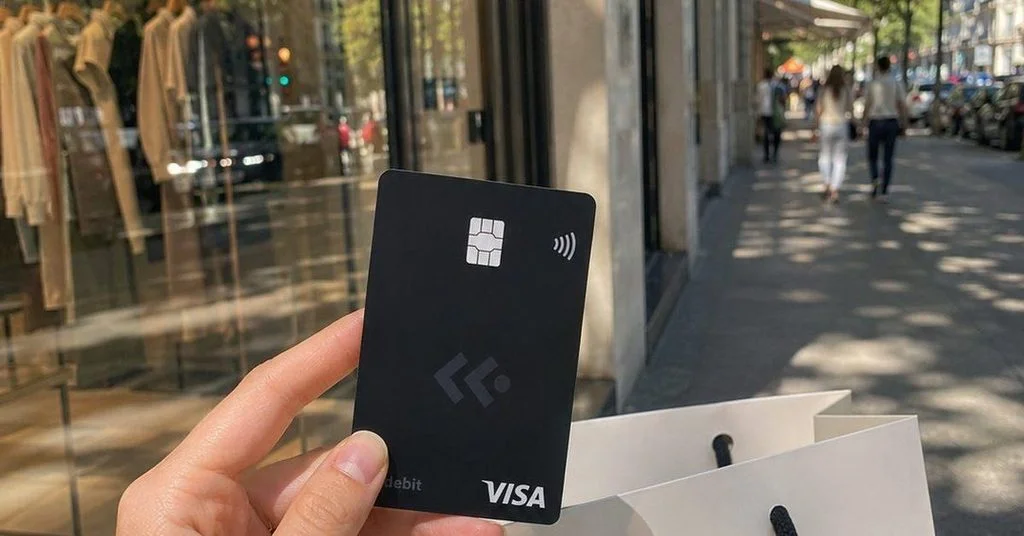
COCA is one of the newer entries on this list and offers both physical and virtual cards, allowing you to spend your stablecoins and fiat at over 100 million merchants across 200+ countries.
It pays up to 8% cashback in your choice of USDT, USDC, or EURC, which removes the price volatility that comes with earning rewards in native tokens.
The card pairs with a non-custodial wallet, charges zero monthly or foreign exchange fees, and gives 50% cashback on eligible subscription services like Netflix and Spotify.
For users who want strong, predictable rewards without locking up capital in a platform’s token, COCA stands out.
8. Bybit Card
Source: bybit.com
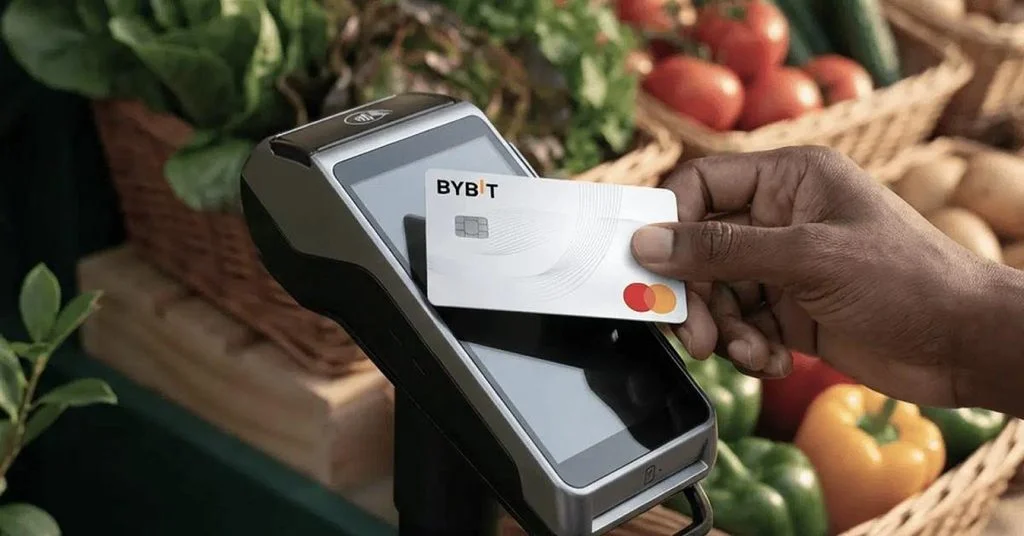
Bybit offers from 2% to 10% cashback with no mandatory staking requirement, which makes its headline rate more credible than most.
Rewards are based on monthly spending volume rather than token holdings; the more you spend, the higher your cashback tier.
However, there is a $600 monthly cap on rewards, which means high spenders will hit a ceiling. The card supports Apple Pay and Google Pay and earns 8% APR on idle balances via the auto-earn feature.
The main limitation is geography, as the Bybit Card is not available in the US, Canada, Singapore, or several other major markets.
Within its supported regions, it’s one of the most accessible high-cashback options available, especially for users who don’t want to commit to a staking arrangement.
Read Also: Cross Chain Trading: No More Bridge Headaches.
Frequently Asked Questions
Can I use a crypto cashback card internationally?
Yes, most major crypto cards run on Visa or Mastercard and work at millions of merchants worldwide. Cards like UPay and OKX Card specifically emphasize zero foreign transaction fees, making them cost-effective for international use.
Are crypto card rewards taxable?
Yes, in most countries. Receiving crypto as a reward is typically treated as income. In the US, spending crypto also triggers a capital gains event. Earning rewards in stablecoins reduces some of this complexity. Always check your local tax rules.
Conclusion
Spend money to make money- the saying finally works for everyday spending. Crypto card cashback rewards have turned grocery runs and gas stops into portfolio builders.
The right card is the one whose terms survive a close read. Find that card, use it consistently, and your wallet grows every time you swipe. That’s not a reward program, that’s a strategy.