


Crypto ETFs: From Impossible to Inevitable — The Complete Investment Guide
For decades, buying Bitcoin meant creating a wallet, managing private keys, and hoping you never lost the seed phrase. Then January 2024 arrived and Wall Street solved that problem with three letters: ETF. Crypto ETF investment crossed $150 billion in assets before the market even finished celebrating. The entry point into crypto just moved from a download link to a brokerage account. Here’s everything that changes because of that. What Are Crypto ETFs? Crypto ETFs (exchange-traded funds) let everyday investors gain exposure to cryptocurrency without directly buying, storing, or securing digital assets themselves. These funds track the price of cryptocurrencies or the performance of companies operating in the crypto space, and they trade just like stocks on familiar exchanges. As of 2026, there are around 170 to 174 crypto ETFs traded on U.S. markets, with combined assets that peaked near $195 billion in late 2025 before the 2026 drawdown, signaling rapidly growing mainstream adoption. Crypto ETFs trade on major traditional exchanges like the NYSE, Nasdaq, and Cboe during standard market hours. Because they’re regulated by the U.S. Securities and Exchange Commission (SEC), they offer institutional-grade oversight, transparency, and investor protections that direct crypto ownership often lacks. Read Also: Coin Ticker: The Three Letters That Speak for a Whole Crypto Project. Spot vs Futures vs Blockchain ETFs These three sound similar but work very differently. Feature Spot ETFs Futures ETFs Blockchain ETFs Holdings Actual BTC/ETH CME futures contracts Stocks of crypto companies Price Tracking Near-perfect (0.01-0.15% deviation) Moderate (roll costs, contango) Indirect (company performance) Examples IBIT, FBTC, ETHA BITO, SOLT, EETH BITQ, BKCH, BLOK Volatility High (matches crypto) Very High (leverage effect) Moderate (diversified) Best For Direct crypto exposure Tactical trading Crypto industry exposure Custody Risk Coinbase/Fidelity custody No custody (derivatives) Traditional stock custody For long-term investors, spot ETFs generally provide a more accurate reflection of the underlying asset’s long-term price trend, while futures ETFs may be influenced by structural characteristics like contango or roll costs.” – CoinGlass ETF education notes How Crypto ETFs Work: The Creation and Redemption Mechanism Source: Pinterest.com Large trading firms called authorized participants can create new ETF shares by handing the fund real Bitcoin (or cash that gets converted to Bitcoin), and they can redeem shares by handing them back for coins or cash. If the ETF price drifts too far above or below the actual Bitcoin price, these firms step in, buy low, sell high, and pocket the difference. That constant buying and selling keeps the fund’s price honest. The SEC’s July 2025 rule change also allowed in-kind creation and redemption for crypto ETFs, meaning firms can now exchange actual coins for shares instead of only cash. This lowers costs and tax friction behind the scenes, which is good news for long-term holders. Crypto ETFs: The 2024 Revolution That Redefined Digital Asset Investing For years, crypto investors settled for futures-based exposure. BITO’s October 2021 launch offered a taste, but the real transformation began January 11, 2024, when the SEC approved 11 spot Bitcoin ETFs simultaneously, a watershed moment ending years of regulatory hesitation. Ethereum followed swiftly, with 9 spot ETH ETFs greenlit on July 23, 2024, but the momentum didn’t stop there. By August 2025, regulators approved in-kind creation and redemption, streamlining fund operations and reducing tax drag for investors. Then, on September 17, 2025, generic listing standards were approved, effectively creating a faster, more predictable pathway for new crypto ETFs to reach the market, no longer requiring case-by-case rule changes. The result? By October 2025, more than 92 altcoin ETF applications sat before the SEC, signaling a fundamental shift from gatekeeping to structured enablement. As noted by SEC Chair Paul Atkins, appointed in 2025, The agency’s mission is to balance fair markets and investor protection while enabling innovation. What began as a niche futures product has become a mainstream investment category, reshaping how everyday investors, institutions, and advisors access digital assets and cementing crypto’s place within traditional portfolio construction. Read Also: Cycle High: Obvious Only in Hindsight. The Crypto ETF Market Here are the popular spot ETFs in the crypto market Bitcoin ETFs: The Spot lineup as of July 2026 There are now around a dozen spot Bitcoin ETFs trading in the U.S., plus new entrants like Morgan Stanley’s fund launched in April 2026. Here’s how the field breaks down by cost, since that’s the single biggest differentiator between funds holding the same asset. Ticker Issuer Expense Ratio AUM (Jul 2026) Custody Launch Date Key Feature IBIT BlackRock 0.25% $47.35B Coinbase Jan. 11, 2024 Still dominant by AUM, though down sharply from its late-2025 peak FBTC Fidelity 0.25% $11.04B Fidelity Digital Assets Jan. 11, 2024 Self-custodied GBTC Grayscale 1.50% $8.70B Coinbase Jan. 11, 2024 Converted from a trust; highest fee in the category BTC Grayscale Mini 0.15% $3.70B Coinbase Jul. 2024 Low-cost GBTC alternative with rare positive inflows BITB Bitwise 0.20% $2.35B Coinbase Jan. 11, 2024 Strong institutional focus ARKB ARK Invest / 21Shares 0.21% $2.15B Coinbase Jan. 11, 2024 Cathie Wood-backed fund HODL VanEck 0.20% $1.07B Gemini Jan. 11, 2024 Uses Gemini as custodian BRRR Valkyrie 0.49% $0.38B Coinbase / BitGo Jan. 11, 2024 Memorable ticker symbol MSBT Morgan Stanley 0.14% $0.38B Coinbase / BNY Apr. 8, 2026 First spot Bitcoin ETF from a major U.S. bank; lowest expense ratio EZBC Franklin Templeton 0.19% $0.37B Coinbase Jan. 11, 2024 Among the lowest-fee ETFs in the original launch group BTCO Invesco / Galaxy 0.25% $0.35B Coinbase Jan. 11, 2024 Partnership with Galaxy Digital BTCW WisdomTree 0.25% $0.15B Coinbase Jan. 11, 2024 Strong international presence AUM is down across the board: IBIT alone fell from roughly $97–100B to $47.35B; total category AUM sits around $78B versus a category that was north of $155B in October 2025. This tracks Bitcoin’s price decline over the period rather than mass redemptions, as BTC holdings for most funds have stayed relatively stable while dollar value dropped. Note: AUM and fee figures for these funds move daily and even intraday with bitcoin’s price. Read Also: Quick tips on how
Spend and Stack: The 8 Best Crypto Card Cashback Rewards
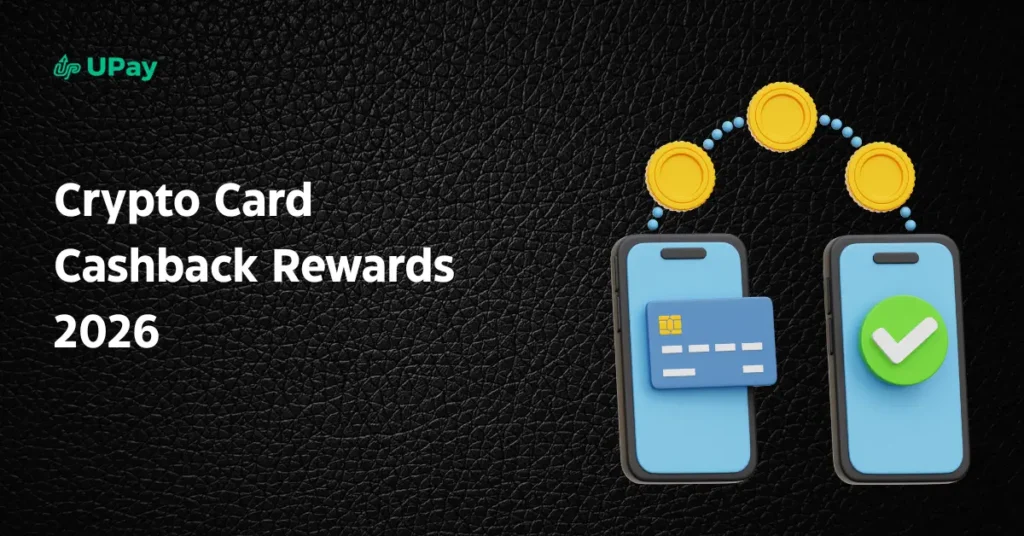
Spend money to make money, that used to be advice for investors, not shoppers. Crypto card cashback rewards flipped it. Every coffee, every grocery run, every flight now books Bitcoin or USDC directly into your wallet. Not points. Not miles. Not promises. Actual digital assets with actual growth potential. The best rewards program isn’t one you redeem. It’s one that compounds. How Crypto Card Cashback Rewards Work Every time you use your card to pay for a purchase, whether you’re dining at a restaurant, shopping online, or making everyday transactions, a portion of your spending is automatically returned to you in the form of crypto rewards. Most crypto cashback cards operate on major payment networks such as Visa or Mastercard, allowing cardholders to use them at millions of merchants around the world. From the merchant’s perspective, the transaction functions like any standard card payment, with no special crypto integration required. This smooth experience enables users to earn digital asset rewards on their regular spending without changing how or where they shop. There are two main card types: Both types pay rewards in different ways. Some credit your wallet in real time after every transaction, while others batch rewards at the end of the billing cycle. A handful require you to stake a native token to unlock higher cashback tiers, which matters a lot when you’re comparing headline rates to what you’ll actually earn. Read Also: Coin Ticker: The Three Letters That Speak for a Whole Crypto Project. Why Crypto Cashback Makes Sense in 2026 A traditional rewards card usually offers around 1.5% to 2% cash back, paid in dollars. However, once deposited into a bank account, those rewards generally remain static and do not generate additional value. In contrast, receiving a 1.5% reward in Bitcoin gives cardholders exposure to an asset that has the potential to appreciate over time. Of course, Bitcoin’s price is volatile, and its value can decline as well as rise. However, for long-term crypto believers, earning rewards in an asset they already support may provide greater value than accumulating points or airline miles that often go unused. Rather than collecting rewards with limited utility, they can steadily build their Bitcoin holdings through everyday spending while retaining the opportunity to benefit from future price appreciation. There are also practical wins. Many crypto cards charge zero foreign transaction fees, which alone can save international travelers 2–3% per purchase compared to a standard bank card. Several cards also offer instant settlement, airport lounge access, and subscription rebates on services like Netflix and Spotify. 8 Best Crypto Cards for Cashback Rewards 1. UPay Card Source: x.com/UPayOfficial UPay is a Dubai-based crypto card issued through Visa and Mastercard, designed for users who prioritize global usability and fee transparency over flashy headline cashback rates. The card is accepted at over 55 million merchants in over 180 countries and supports real-time crypto-to-fiat conversion across BTC, ETH, USDT, USDC, and other major assets. One standout feature is UPay Savings, which lets users lock idle BTC, ETH, USDT, or USDC for fixed terms to earn daily interest returns that can be accessed directly through the card at maturity; however, specific terms and yields may vary based on market conditions and platform developments. UPay also supports Apple Pay, Google Pay, and direct ATM withdrawals without requiring exchange-side liquidation. The card operates with no cross-border transaction fees and offers both virtual and physical card tiers. UPay is a serious contender in 2026 for internationally mobile users, freelancers, and crypto holders who prefer low costs and global reach over tiered token rewards. Read Also: Cycle High: Obvious Only in Hindsight. 2. Crypto.com Prepaid Visa Card Source: Pinterest.com Crypto.com’s prepaid Visa Card remains one of the most recognized crypto cards in the market. It operates on a tiered system where cashback rates climb from 1% at the base level up to 5% for the highest tier. The catch is that higher tiers require staking CRO, Crypto.com’s native token. The entry-level card (midnight blue) is free and offers no cashback. Higher tiers (like Ruby Steel and Obsidian) unlock perks like full Spotify and Netflix rebates, airport lounge access through LoungeKey, and higher ATM limits. The rewards are paid in CRO, not Bitcoin, so their real value depends on CRO’s price. For users already in the Crypto.com ecosystem and comfortable holding CRO, it’s a compelling card. For everyone else, the staking requirement is a meaningful trade-off to consider before committing. 3. Coinbase Card Source: Pinterest.com The Coinbase Card is a credit card on the American Express network, linked to a Coinbase account. It is accepted across the American Express network and offers up to 4% back paid in Bitcoin for Coinbase One members, with the exact rate depending on your membership tier and spending. There are no annual fees, and the interface is clean enough for first-time crypto card users. The downside is that you have to pay a subscription fee of $49.99/year to become a Coinbase One member, and there is also a conversion spread on non-USDC assets that can quietly offset a portion of the rewards you earn. This card is a solid starting point for anyone already using Coinbase who wants a low-friction way to earn crypto on daily spending without navigating a complex tiered system. 4. Gemini Credit Card Source: gemini.com The Gemini Credit Card uses a category-based reward model that will feel familiar to anyone who has used a premium travel or cashback credit card. It pays 4% back in crypto on gas and transit, 3% on dining, 2% on groceries, and 1% on everything else. Rewards land in your Gemini account in real time after each purchase, not at the end of a billing cycle. You can auto-stake rewards in Solana for an additional yield of up to 6% APR (annual percentage rate) if you want to go further. There is no annual fee and no staking requirement to access the reward rates. For users who want higher returns on specific spending categories rather