



For decades, buying Bitcoin meant creating a wallet, managing private keys, and hoping you never lost the seed phrase.
Then January 2024 arrived and Wall Street solved that problem with three letters: ETF. Crypto ETF investment crossed $150 billion in assets before the market even finished celebrating.
The entry point into crypto just moved from a download link to a brokerage account. Here’s everything that changes because of that.
What Are Crypto ETFs?
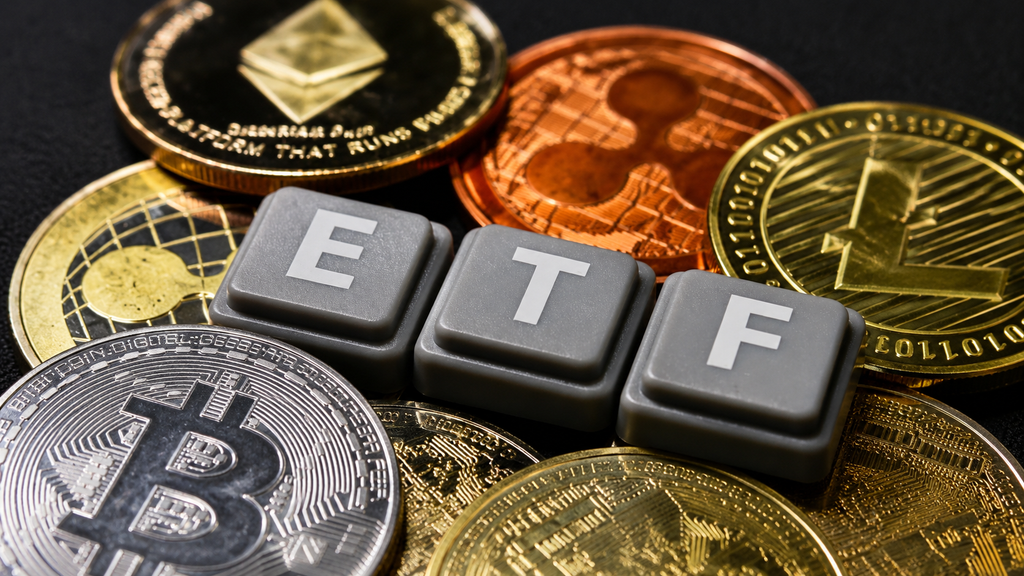
Crypto ETFs (exchange-traded funds) let everyday investors gain exposure to cryptocurrency without directly buying, storing, or securing digital assets themselves.
These funds track the price of cryptocurrencies or the performance of companies operating in the crypto space, and they trade just like stocks on familiar exchanges.
As of 2026, there are around 170 to 174 crypto ETFs traded on U.S. markets, with combined assets that peaked near $195 billion in late 2025 before the 2026 drawdown, signaling rapidly growing mainstream adoption.
Crypto ETFs trade on major traditional exchanges like the NYSE, Nasdaq, and Cboe during standard market hours.
Because they’re regulated by the U.S. Securities and Exchange Commission (SEC), they offer institutional-grade oversight, transparency, and investor protections that direct crypto ownership often lacks.
Read Also: Coin Ticker: The Three Letters That Speak for a Whole Crypto Project.
Spot vs Futures vs Blockchain ETFs
These three sound similar but work very differently.
- Spot ETFs hold the actual cryptocurrency. If you buy a spot Bitcoin ETF, the fund owns real Bitcoin sitting with a custodian. The share price tracks the coin’s price closely.
- Futures ETFs don’t hold any coins. They hold contracts that bet on where the price will be at a future date. Because those contracts need to be rolled over every month, futures funds often drift away from the real spot price over time. ProShares’ BITO is the best-known example.
- Blockchain industry ETFs don’t hold crypto at all. They hold stocks of companies working in the crypto space, like exchanges, miners, and payment firms. BITQ, BKCH, and BLOK fall into this group. You get exposure to the industry’s growth without touching the coins directly.
| Feature | Spot ETFs | Futures ETFs | Blockchain ETFs |
| Holdings | Actual BTC/ETH | CME futures contracts | Stocks of crypto companies |
| Price Tracking | Near-perfect (0.01-0.15% deviation) | Moderate (roll costs, contango) | Indirect (company performance) |
| Examples | IBIT, FBTC, ETHA | BITO, SOLT, EETH | BITQ, BKCH, BLOK |
| Volatility | High (matches crypto) | Very High (leverage effect) | Moderate (diversified) |
| Best For | Direct crypto exposure | Tactical trading | Crypto industry exposure |
| Custody Risk | Coinbase/Fidelity custody | No custody (derivatives) | Traditional stock custody |
For long-term investors, spot ETFs generally provide a more accurate reflection of the underlying asset’s long-term price trend, while futures ETFs may be influenced by structural characteristics like contango or roll costs.” – CoinGlass ETF education notes
How Crypto ETFs Work: The Creation and Redemption Mechanism
Source: Pinterest.com
Large trading firms called authorized participants can create new ETF shares by handing the fund real Bitcoin (or cash that gets converted to Bitcoin), and they can redeem shares by handing them back for coins or cash.
If the ETF price drifts too far above or below the actual Bitcoin price, these firms step in, buy low, sell high, and pocket the difference. That constant buying and selling keeps the fund’s price honest.
The SEC’s July 2025 rule change also allowed in-kind creation and redemption for crypto ETFs, meaning firms can now exchange actual coins for shares instead of only cash.
This lowers costs and tax friction behind the scenes, which is good news for long-term holders.
Crypto ETFs: The 2024 Revolution That Redefined Digital Asset Investing
For years, crypto investors settled for futures-based exposure. BITO’s October 2021 launch offered a taste, but the real transformation began January 11, 2024, when the SEC approved 11 spot Bitcoin ETFs simultaneously, a watershed moment ending years of regulatory hesitation.
Ethereum followed swiftly, with 9 spot ETH ETFs greenlit on July 23, 2024, but the momentum didn’t stop there. By August 2025, regulators approved in-kind creation and redemption, streamlining fund operations and reducing tax drag for investors.
Then, on September 17, 2025, generic listing standards were approved, effectively creating a faster, more predictable pathway for new crypto ETFs to reach the market, no longer requiring case-by-case rule changes.
The result? By October 2025, more than 92 altcoin ETF applications sat before the SEC, signaling a fundamental shift from gatekeeping to structured enablement.
As noted by SEC Chair Paul Atkins, appointed in 2025, The agency’s mission is to balance fair markets and investor protection while enabling innovation.
What began as a niche futures product has become a mainstream investment category, reshaping how everyday investors, institutions, and advisors access digital assets and cementing crypto’s place within traditional portfolio construction.
Read Also: Cycle High: Obvious Only in Hindsight.
The Crypto ETF Market
Here are the popular spot ETFs in the crypto market
Bitcoin ETFs: The Spot lineup as of July 2026
There are now around a dozen spot Bitcoin ETFs trading in the U.S., plus new entrants like Morgan Stanley’s fund launched in April 2026.
Here’s how the field breaks down by cost, since that’s the single biggest differentiator between funds holding the same asset.
| Ticker | Issuer | Expense Ratio | AUM (Jul 2026) | Custody | Launch Date | Key Feature |
| IBIT | BlackRock | 0.25% | $47.35B | Coinbase | Jan. 11, 2024 | Still dominant by AUM, though down sharply from its late-2025 peak |
| FBTC | Fidelity | 0.25% | $11.04B | Fidelity Digital Assets | Jan. 11, 2024 | Self-custodied |
| GBTC | Grayscale | 1.50% | $8.70B | Coinbase | Jan. 11, 2024 | Converted from a trust; highest fee in the category |
| BTC | Grayscale Mini | 0.15% | $3.70B | Coinbase | Jul. 2024 | Low-cost GBTC alternative with rare positive inflows |
| BITB | Bitwise | 0.20% | $2.35B | Coinbase | Jan. 11, 2024 | Strong institutional focus |
| ARKB | ARK Invest / 21Shares | 0.21% | $2.15B | Coinbase | Jan. 11, 2024 | Cathie Wood-backed fund |
| HODL | VanEck | 0.20% | $1.07B | Gemini | Jan. 11, 2024 | Uses Gemini as custodian |
| BRRR | Valkyrie | 0.49% | $0.38B | Coinbase / BitGo | Jan. 11, 2024 | Memorable ticker symbol |
| MSBT | Morgan Stanley | 0.14% | $0.38B | Coinbase / BNY | Apr. 8, 2026 | First spot Bitcoin ETF from a major U.S. bank; lowest expense ratio |
| EZBC | Franklin Templeton | 0.19% | $0.37B | Coinbase | Jan. 11, 2024 | Among the lowest-fee ETFs in the original launch group |
| BTCO | Invesco / Galaxy | 0.25% | $0.35B | Coinbase | Jan. 11, 2024 | Partnership with Galaxy Digital |
| BTCW | WisdomTree | 0.25% | $0.15B | Coinbase | Jan. 11, 2024 | Strong international presence |
AUM is down across the board: IBIT alone fell from roughly $97–100B to $47.35B; total category AUM sits around $78B versus a category that was north of $155B in October 2025.
This tracks Bitcoin’s price decline over the period rather than mass redemptions, as BTC holdings for most funds have stayed relatively stable while dollar value dropped.
Note: AUM and fee figures for these funds move daily and even intraday with bitcoin’s price.
Read Also: Quick tips on how to convert crypto to cash.
Ethereum ETFs: The 10 Spot Lineup
Here’s the updated table with the latest Ethereum Spot ETF data as of July 2026:
| Ticker | Issuer | Expense Ratio | AUM (Jul 2026) | Key Feature |
| ETHA | BlackRock | 0.25% (waiver expired) | $4.75B | Largest ETH ETF |
| ETH | Grayscale Ethereum Staking Mini | 0.15% | $1.46B | Passes through staking rewards |
| ETHE | Grayscale Ethereum Staking | 2.50% | $1.30B | Converted to staking; highest fee (legacy) |
| FETH | Fidelity | 0.25% | $800M | Self-custodied |
| ETHB | BlackRock (iShares Staked Ethereum) | 0.25% | $549M | Native staking yield; launched Mar. 2026 |
| ETHW | Bitwise | 0.20% | $181M | Competitive fee |
| EZET | Franklin Templeton | 0.19% | $34M | Lowest fee |
| ETHV | VanEck | 0.20% | $82M | Mid-tier option |
| TETH | 21Shares | 0.21% | $16M | Swiss expertise (rebranded from CETH) |
| QETH | Invesco | 0.25% | $16M | Galaxy partnership |
Note: Figures shift daily given crypto ETF volatility.
Ten spot Ethereum ETFs trade in the U.S. today, with the newly launched ETHB. Combined spot ETH ETF AUM sits near $9.6B (4.4% of ETH’s market cap), down sharply from late-2025 highs as ETH price cooled.
After eight straight weeks of outflows, the category turned positive in mid-July with $84M in weekly inflows, led by ETHA. The staking gap is closing as BlackRock’s ETHB and Grayscale’s converted ETHE/ETH now pass through a native 3-5% staking yield.
Note: staking-enabled Ethereum ETFs, like ETHB, now let the fund stake a large share of its ETH and pass along network rewards. That’s extra yield, but it also adds a new risk, called slashing, where misbehaving validators can cause the fund to lose a small amount of ETH.
Altcoin ETFs: The Next Wave
Everything changed on September 17, 2025, when the SEC voted to approve generic listing standards for exchange-traded products holding spot commodities, including digital assets.
Before this, every single crypto ETF needed its own individual SEC review, which could take 240 days or longer. Under the new rules, that timeline dropped to as little as 75 days.
“The pace of ETF launches rose from roughly 117 per year to 370 per year after the SEC created generic listing standards for traditional ETFs in 2019. Expect the same kind of expansion for crypto.” – Matt Hougan, Chief Investment Officer, Bitwise Investments.
Solana ETFs
Solana ETFs reached the market by November 2025, and several now offer staking rewards on top of price exposure, since Solana’s network pays yield to those who stake it.
Bitwise’s BSOL is one of the names to know here. VanEck also filed a post-effective amendment for its Solana product in December 2025, a signal that its fund had moved well past the early planning stage.
Dogecoin ETFs
Yes, the meme coin made it to Wall Street. The REX-Osprey Dogecoin ETF (DOJE) launched using futures exposure through a Cayman Islands structure in September 2025.
NYSE Arca certified approval for Bitwise’s Dogecoin ETF in November 2025, showing exchange-level progress toward a true spot product.
It’s a small fund by dollar terms, but its existence tells you something important: the bar for what counts as a legitimate ETF asset has dropped a lot in twelve months.
Litecoin, Cardano, and What’s Coming Next
Litecoin has quietly become one of the strongest candidates for fast approval, largely because it’s simple to structure compared to more complex blockchain ecosystems.
Canary’s Litecoin ETF (LTCC) already launched with an inception date of October 27, 2025.
Cardano and Avalanche both have pending applications, and industry watchers expect more coins to qualify as their futures markets on regulated exchanges mature, since six months of trading on a regulated futures exchange is one of the key paths to ETF eligibility under the new rules.
The Multi-Asset Filing: One Fund, Several Coins
Not every investor wants to pick coins one by one. Grayscale’s Digital Large Cap Fund (GDLC) became the first multi-crypto ETF to trade in the U.S., giving exposure to Bitcoin, Ethereum, XRP, Solana, and Cardano in a single ticker, at a 0.59% expense ratio.
Expect more of these basket-style products in 2026 as issuers race to offer diversified crypto exposure without forcing investors to manage five separate positions.
In addition, more than 126 crypto ETF filings sat in the SEC pipeline as of early 2026, and U.S. crypto ETFs pulled in over $42 billion in net inflows in 2025 alone.
The floodgates are open. The question now isn’t really regulatory approval anymore but whether enough trading infrastructure and investor demand exist to support dozens of new niche funds at once.
Read Also: Top DeFi Protocols by Category: Banking Without the Bank.
How to Choose the Right Crypto ETF
Source: Pinterest.com
Before you buy anything, run through these seven questions:
- Is it spot or futures? For long-term holding, spot almost always wins.
- What’s the expense ratio? Lower is better, all else being equal.
- How big is the fund, and how much does it trade daily? Bigger and busier means tighter spreads.
- Who holds the custody? Coinbase, Fidelity Digital Assets and Gemini are the main names. Know who’s actually guarding the coins.
- Can I hold it in a retirement account? Most major spot ETFs can go in an IRA. Direct crypto usually can’t.
- Does it offer staking yield? If so, understand the slashing risk that comes with it.
- What’s the issuer’s track record? A fund from a firm with decades of asset management experience carries less operational risk than a brand-new boutique shop.
Expense Ratio
Here’s a simple example. Say you invest $10,000 and hold for 20 years, with the underlying asset growing at 8% a year before fees.
- At a 0.15% fee, you’d end up with roughly $45,700.
- At a 1.50% fee, you’d end up with roughly $34,900.
That’s a gap of nearly $11,000, just from the fee difference, assuming identical price performance.
The difference between a 0.15% and a 1.50% expense ratio on a $50,000 position over 20 years is tens of thousands of dollars in lost returns. Fees are the one variable you fully control. Everything else about a spot ETF’s future price is out of your hands.
Liquidity
A fund with $50 billion in assets and millions of shares trading daily will let you get in and out at a price very close to the real market value.
A fund with $50 million in assets might have a wider gap between the buy price and sell price, called the bid-ask spread. That gap is a hidden cost every time you trade.
Tax Efficiency
Spot crypto ETFs held in a normal taxable brokerage account are generally taxed like any other investment: gains held over a year get long-term capital gains treatment, and gains held under a year get taxed as regular income. Selling shares to rebalance can trigger a taxable event, so many long-term holders try to limit how often they trade.
Security and Custody: Evaluating Counterparty Risk
Spot Bitcoin ETF holdings are legally separate from the issuer’s own balance sheet. If the fund company went bankrupt, the coins would still belong to shareholders, not creditors.
That’s a real protection you don’t get from an unregulated crypto exchange. The main custodians in 2026 are Coinbase Custody, Fidelity Digital Assets, and Gemini, and it’s worth knowing which one backs any fund you’re considering.
Investing in Crypto ETFs: Practical Strategies
Portfolio Allocation Models
There’s no single right number, but here’s how different risk appetites tend to break down:
- 5% allocation: A cautious starting point for investors testing the waters.
- 10% allocation: A common target for investors who believe in crypto’s long-term case but still want their portfolio anchored in stocks and bonds.
- 15% allocation: A more aggressive stance, usually held by investors comfortable with large short-term swings.
- 25%+ allocation: High-conviction territory. Only appropriate for investors who can stomach drops of 50% or more without panic-selling, since Bitcoin has historically seen drawdowns of 50% or more on a regular basis.
A related data point worth knowing: a 2026 institutional survey found nearly 80% of investment professionals planned to allocate 2% to 5% of total assets to crypto.
Most large institutions are still treating crypto as a small satellite position, not a core holding.
IRA and 401(k) Strategies
Because spot crypto ETFs trade like normal stocks, most brokerages let you hold them inside a Traditional IRA, Roth IRA, or a 401(k) plan that offers a brokerage window.
This is one of the biggest practical wins of the ETF structure over direct ownership: tax-advantaged crypto exposure without needing a self-directed crypto IRA custodian.
Dollar-Cost Averaging vs Lump Sum
Dollar-cost averaging means buying a fixed amount on a regular schedule, say $200 every month, no matter what the price is doing. It won’t get you the best possible price, but it takes emotion out of the decision and smooths out the wild price swings crypto is known for.
Lump-sum investing, putting all your money in at once, historically wins more often in rising markets, but it’s a much harder ride psychologically, especially in an asset as volatile as crypto.
Rebalancing Strategies for Volatile Assets
If you set a 10% crypto target and a strong rally pushes it to 18% of your portfolio, rebalancing means selling some crypto ETF shares to bring it back down to 10% and putting that money into your other holdings. I
t feels counterintuitive to sell your winner, but it’s exactly how you lock in gains and control risk in an asset this volatile.
Tax-Loss Harvesting
If your crypto ETF position is down, you can sell it to realize the loss, use that loss to offset other gains on your tax return, and then buy back in after waiting the required period to avoid wash-sale issues (where applicable). This turns a rough year into a small tax advantage.
Regulatory Picture and Future Outlook
Here are some of the initiatives to expect in the future of crypto ETFs
SEC’s Project Crypto Initiative
On July 31, 2025, SEC Chairman Paul Atkins unveiled Project Crypto, a commission-wide initiative to modernize securities regulation and support the goal of making the U.S. the crypto capital of the world.
The plan rests on a few pillars: clear rules for classifying which crypto assets count as securities, modernized custody rules, support for super-apps that combine crypto and traditional trading under one roof, and a friendlier stance toward decentralized finance.
By November 2025, Atkins had gone further, previewing a token classification framework anchored in the Howey test, the long-standing legal standard for what counts as a security.
His basic argument is that a token isn’t automatically a security forever just because it started out that way; once a network matures and control disperses, it can trade freely.
Generic Listing Standards: What Changed on September 17, 2025
This is the single most important regulatory event covered in this guide, because it’s the reason altcoin ETFs exist at all in 2026.
The SEC’s new standards let exchanges list qualifying crypto ETPs without a lengthy individual review, cutting the process from 240-plus days to about 75 days.
Risks, Challenges, and How to Manage Them
Here are the risks involved in investing in crypto ETFs:
1. Volatility and Portfolio Impact
Crypto ETFs inherit all of the underlying asset’s volatility. For instance, Bitcoin fell from an October 2025 high near $126,000 to roughly $58,000-$63,000 by mid-2026, and Glassnode estimated the average ETF investor’s entry price around $83,800, putting many holders underwater by roughly 26% at the low point.
If you can’t emotionally handle a chart that looks like that, size your position accordingly, or skip it.
2. Tracking Error and NAV Discounts
Spot ETFs generally track their coin closely, but futures-based funds can drift meaningfully from the spot price over time because of contract rolling costs.
Always check a fund’s historical tracking difference before assuming it moves one-for-one with the coin.
3. Regulatory and Legal Risks
Even with Project Crypto easing the path forward, rules can and do change with new administrations, court rulings, or congressional action.
A framework built by one SEC chairman can be revised by the next one.
4. Custody and Counterparty Risks
You’re trusting the fund’s custodian to keep the coins secure. While these are professional, insured operations, they aren’t immune to hacks or operational failures, and a major incident at a single custodian could ripple across every fund that uses it.
5. Tax Reporting Complexities
Crypto ETFs simplify tax reporting compared to juggling multiple wallets and exchange accounts, but you still need to track cost basis, especially if you’re dollar-cost averaging into a position over many months or years. Keep your brokerage statements organized.
7. Liquidity Concerns in Market Stress
In a sharp, sudden crash, bid-ask spreads on smaller ETFs can widen quickly, meaning you might sell at a worse price than you expected. This is another reason fund size and daily trading volume matter, not just for cost but for how the fund behaves exactly when you need to sell fast.
Read Also: Cross Chain Trading: No More Bridge Headaches.
Frequently Asked Questions
What’s the difference between a spot and a futures crypto ETF?
A spot ETF holds the real cryptocurrency, so its price tracks the market closely. A futures ETF holds contracts betting on the coin’s future price, which can drift from the spot price over time due to rolling costs.
Are there ETFs for coins other than Bitcoin and Ethereum?
Yes, following the SEC’s September 2025 rule changes, spot and futures ETFs now exist for Solana, XRP, Dogecoin, and Litecoin, with more coins expected to qualify throughout 2026 as their regulated futures markets mature.
Conclusion
Crypto ETFs didn’t just open a new door into digital assets, they moved the door to a building everyone already uses. The brokerage account. The IRA. The retirement plan.
Whether you allocate 5% or 25%, the structure finally matches the ambition. Crypto ETF investing in 2026 isn’t a bet on technology anymore. It’s a position in the financial system that technology already won.
This article is for educational purposes only and is not financial or investment advice. Crypto ETF investments carry a substantial risk of loss. Always do your own research and consider speaking with a licensed financial advisor before trading crypto ETFs.