Trading digital assets requires more than quick decisions, it demands structured insights, reliable signals, and a clear strategy. With markets moving fast, many traders now explore how artificial intelligence can support their workflow.
Among these tools, ChatGPT has become a practical option for generating crypto strategy signals that help refine market decisions.
By combining well-crafted prompts with clear objectives, traders can utilize ChatGPT to interpret technical indicators, assess sentiment, and conceptually test strategies before risking capital. This creates a more informed approach to trading, reducing guesswork while encouraging smarter planning.
In this guide, we’ll break down how to use ChatGPT for crypto strategy signals effectively, showing practical steps, example prompts, and ways to integrate it with other trading tools.
Key Takeaways
- Defining clear trading goals helps align ChatGPT prompts with specific crypto strategy signals for better decision-making.
- Well-structured prompts allow ChatGPT to deliver actionable insights on technical analysis, sentiment, and risk management.
- ChatGPT enhances crypto signal generation by explaining indicators, summarizing sentiment, and simulating strategies conceptually.
- Limitations such as a lack of live market data and potential sentiment bias require traders to apply human judgment.
- Pairing ChatGPT with trading bots, charting platforms, and on-chain analytics creates a hybrid workflow for more effective crypto strategies.
What Are Trading Signals in Cryptocurrency?
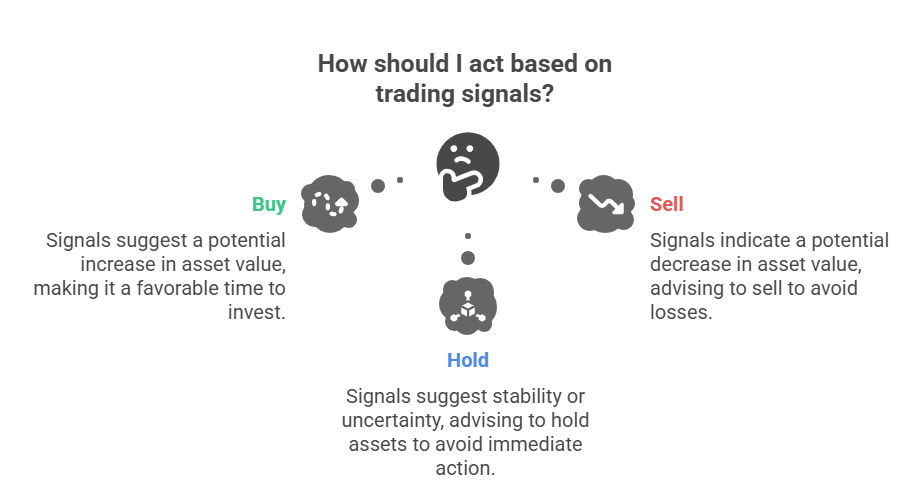
Trading signals in cryptocurrency are indicators or suggestions that help traders make buy, sell, or hold decisions in the digital asset market. These signals are generated from a combination of technical analysis, fundamental analysis, market sentiment, or even automated algorithms.
A typical crypto signal provides details such as:
- The asset to trade (e.g., Bitcoin, Ethereum, or altcoins)
- The suggested action (buy, sell, or hold)
- Entry price and exit price targets
- Stop-loss levels to manage risk
Crypto trading signals can come from professional analysts, AI-driven tools, or dedicated trading platforms. Their primary purpose is to guide traders toward more informed decisions, reduce emotional bias, and develop structured strategies rather than relying solely on speculation.
Step-by-Step Guide on How to Use ChatGPT for Crypto Strategy Signals
One of the most versatile tools available today is ChatGPT, which can help refine strategies, analyze market data, and even simulate possible outcomes.
While ChatGPT does not replace real-time data feeds or financial advice, it serves as a powerful assistant for building structured, well-informed trading strategies, if used properly.
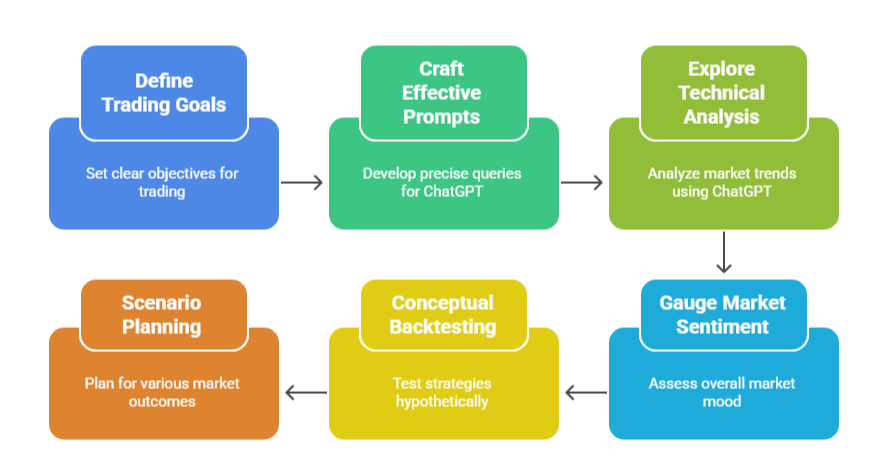
Below is a step-by-step breakdown of how you can use ChatGPT for crypto strategy signals:
Step 1: Define Your Trading Goals
Before asking ChatGPT for insights, you need clarity on what you want to achieve in the crypto market. Without defined goals, AI-generated insights can become vague or even misleading.
Short-Term vs. Long-Term Objectives
Short-term traders (day traders or scalpers) focus on rapid entry/exit signals, momentum indicators, and risk alerts. They might ask ChatGPT for help interpreting 1-hour RSI or 15-minute MACD divergences.
Long-term investors are more concerned with trend direction, on-chain health, and macro news impact. They might request summaries of Bitcoin adoption news or Ethereum staking data to guide investment timing.
Identify the Type of Signals You Need
This includes:
- Trend signals: Is the market bullish, bearish, or sideways?
- Entry/exit signals: Where should you ideally buy or sell?
- Risk alerts: What factors could increase volatility (e.g., regulatory news, whale movements, macroeconomic shifts)?
Step 2: Craft Effective Prompts
The way you structure your question determines the quality of the answer you get. ChatGPT thrives on specific, detailed prompts, and vague questions often produce generic insights.
Let’s take a look at these examples below:
Weak Prompt Example:
“What do you think about Bitcoin right now?”
(Too broad – ChatGPT may provide an unfocused answer.)
Strong Prompt Example:
“Analyze Bitcoin’s trend on the daily timeframe using RSI, MACD, and 200-day moving average. Highlight possible entry and exit zones and mention risks to watch for.”
(Specific, structured, and context-driven.)
By giving ChatGPT clear context, timeframe, and technical indicators, you receive actionable trading signals rather than surface-level opinions.
Step 3: Explore Technical Analysis with ChatGPT
While ChatGPT does not have live access to real-time price feeds, it can still help you interpret technical indicators and build strategies around them.
Using ChatGPT for Common Indicators
Popular indicators include:
- RSI (Relative Strength Index): Ask ChatGPT how RSI levels (e.g., overbought above 70, oversold below 30) might affect short-term Bitcoin moves.
- MACD (Moving Average Convergence Divergence): Request explanations on crossovers, histogram strength, and trend confirmation.
- Moving Averages (MA): Use prompts to compare short-term vs. long-term moving averages, identify golden crosses/death crosses, and understand their historical reliability.
Limitations in Real-Time Data:
ChatGPT cannot fetch live market prices or charts unless connected to third-party plugins or APIs. Instead, it is best used as a strategy builder and educational assistant that helps you interpret the indicator’s meaning.
Read Also: How To Use Google Gemini In Crypto Trading
Step 4: Gauge Market Sentiment
Beyond charts, market psychology plays a huge role in crypto price movement. ChatGPT can help you assess sentiment from multiple sources.
Summarizing News & Social Media:
You can ask ChatGPT to analyze the tone of crypto headlines or summarize trending discussions from Twitter (X), Reddit, or news sites.
For instance, you can tell ChatGPT to do this:
“Summarize the latest news on Ethereum ETF approval and explain its potential impact on investor sentiment.”
Why Sentiment Matters for Signals
- Positive sentiment: May indicate momentum toward bullish breakouts.
- Negative sentiment: Could warn of panic selling or regulatory concerns.
- Mixed sentiment: Helps you prepare for sideways or volatile markets.
Step 5: Conceptual Backtesting of Strategies
While ChatGPT cannot run full statistical backtests like professional trading software, it can simulate historical scenarios conceptually.
How to Backtest with ChatGPT:
Example prompt:
“If I applied a moving average crossover strategy (50-day vs. 200-day) to Bitcoin between 2020–2022, what general trends or signals would it have produced?”
Benefits of Conceptual Backtesting:
- Identifies strengths (e.g., trend-following reliability during bull runs).
- Reveals weaknesses (e.g., false signals in choppy sideways markets).
- Helps traders refine rules before committing capital.
Step 6: Scenario Planning and Predictive Outcomes
One of ChatGPT’s greatest strengths is scenario simulation. You can test how your strategy might hold under different market conditions.
Simulating Market Conditions
You can use this prompt in a:
- Bullish scenario: “If Bitcoin breaks above $80,000, how should I adjust my RSI-based swing trading strategy?”
- Bearish scenario: “If Ethereum drops 20% due to negative regulation news, what exit plan could protect capital?”
- Sideways market: “How should I adapt if Bitcoin stays range-bound between $60,000 and $65,000 for months?”
Why This Matters:
Scenario planning helps traders stress-test their strategies, ensuring they are prepared for multiple market outcomes instead of relying on a single prediction.
Different Types of Signals
Crypto trading signals come in various forms, each designed to guide traders toward smarter entry and exit points, better risk management, and improved decision-making.
Understanding these categories helps you choose the type of signal that best matches your trading style and goals.
Technical Signals
These signals are generated from price charts, patterns, and indicators. Common tools include:
- Moving averages for identifying trends.
- RSI (Relative Strength Index) for spotting overbought or oversold conditions.
- MACD (Moving Average Convergence Divergence) for momentum shifts.
Technical signals are popular among short-term traders who rely on chart movements.
Fundamental Signals
Fundamental signals are based on project strength, adoption rate, partnerships, regulatory updates, or tokenomics. For example, a new upgrade on Ethereum or a favorable regulation could generate a bullish signal. These signals matter most for long-term investors.
Sentiment Signals
Market psychology drives volatility, and sentiment signals measure investor mood through:
- Social media discussions
- News headlines
- Fear and Greed Index
If overall sentiment is positive, it may confirm bullish signals from technical indicators.
Automated or Bot-Generated Signals
Some platforms provide AI- or algorithm-driven alerts. These use pre-set strategies, scanning markets in real-time to generate buy or sell notifications. Automated signals are useful for traders who want quick execution with minimal manual analysis.
Copy or Community Signals
Many traders follow signal providers, influencers, or trading groups. These signals are shared through Telegram, Discord, or paid communities. While convenient, they require caution, as quality varies widely.
Risk Management Signals
These signals focus on stop-loss levels, take-profit targets, and position sizing. Instead of just buy/sell suggestions, they emphasize protecting capital and reducing exposure during volatile swings.
Example Prompts for Generating Crypto Signals with ChatGPT
The effectiveness of using ChatGPT for crypto trading depends heavily on the quality of your prompts. A well-structured prompt can help the AI provide insights into technical analysis, sentiment evaluation, risk management, and strategy refinement.
However, it’s important to remember that ChatGPT can make mistakes or provide inaccurate information. The model does not have access to live market data, and its responses are based on historical knowledge and general analysis principles.
Every fact, sentiment, or trading insight it provides should be independently verified before making any financial decisions.
Below are practical examples you can adapt directly into your trading workflow.
Technical Analysis Prompts
Technical indicators help traders identify momentum, support/resistance, and trend reversals. While ChatGPT cannot pull live data, it can interpret indicators and explain their potential signals.
You can use the following prompts:
- “Explain how the RSI, MACD, and 50-day moving average might suggest entry and exit points for Bitcoin in a bullish trend.”
- “If Ethereum breaks above a resistance level at $2,500, what technical indicators should I monitor to confirm a continuation pattern?”
- “Describe the difference between EMA and SMA and explain how I could use both to generate short-term trading signals for altcoins.”
- “Compare the usefulness of Fibonacci retracements vs. Bollinger Bands when generating entry signals in volatile market conditions.”
Sentiment-Based Prompts
Market psychology often influences price swings more than pure technicals. ChatGPT can summarize and analyze sentiment factors from news, updates, and community chatter.
- “Summarize how positive regulatory news in the U.S. could impact Bitcoin’s short-term trading signals.”
- “Explain how Twitter and Reddit discussions can influence altcoin momentum, and what type of sentiment patterns usually precede price rallies.”
- “Compare the sentiment around Solana and Cardano in the last three months and explain how a trader could use that to confirm buy or sell signals.”
- “If the Fear and Greed Index shows extreme fear, how should I adjust my interpretation of other technical signals?”
Risk Management Prompts
No trading strategy is complete without risk controls. Prompts that guide ChatGPT toward stop-loss levels, position sizing, and exit planning are valuable for protecting capital.
- “Suggest appropriate stop-loss and take-profit levels if I plan to trade Bitcoin with a 2:1 risk-reward ratio.”
- “How should I calculate position size for Ethereum trades if my total capital is $5,000 and I want to risk no more than 2% per trade?”
- “List risk management strategies that I can pair with trend-following signals to avoid large drawdowns.”
- “Explain how trailing stop-loss orders could work in a breakout trading strategy for altcoins.”
Strategy Refinement Prompts
Once a basic plan is in place, ChatGPT can help refine strategies through comparisons, optimizations, and conceptual testing.
- “Compare the strengths and weaknesses of swing trading vs. day trading strategies for volatile altcoins.”
- “Explain how combining MACD with RSI could create stronger entry signals, and outline an example scenario for Bitcoin.”
- “If my strategy focuses only on bullish signals, what adjustments can I make to account for bearish market conditions?”
- “How can I refine a moving average crossover strategy to avoid false signals in sideways markets?”
Read Also: Best Open Source Crypto Trading Bots
Benefits of Incorporating ChatGPT into Crypto Signals
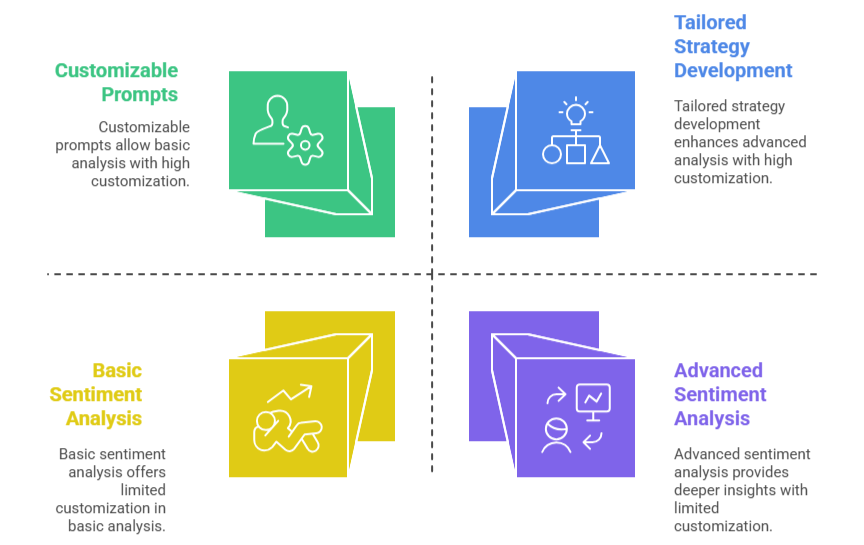
Integrating ChatGPT into your trading workflow can enhance how you generate, interpret, and refine crypto signals. While it does not replace professional tools or human judgment, it provides several advantages that make trading more structured and efficient.
Faster Research and Analysis
Markets move quickly, and gathering insights from multiple sources can be time-consuming. ChatGPT helps summarize market conditions, technical indicators, and sentiment factors in minutes, saving valuable time. Instead of scanning endless charts and news, traders get structured summaries that speed up decision-making.
Improved Technical and Fundamental Understanding
Not every trader is fluent in advanced technical terms or blockchain fundamentals. ChatGPT explains complex concepts, like how MACD works, what tokenomics means, or how regulations may affect markets, in a clear, simplified way. This makes it easier to understand how different signals are formed and applied in practice.
Customizable Prompts for Strategy Development
Unlike static signal providers, ChatGPT responds to tailored prompts. Traders can customize queries to match their strategy, whether it’s short-term scalping, long-term holding, or risk-based trading. This flexibility allows for highly personalized signals that fit individual goals rather than generic alerts.
Sentiment Analysis Integration
Price is often driven by investor psychology, and ChatGPT can analyze and summarize sentiment from news reports, market narratives, and social discussions. By combining sentiment insights with technical signals, traders gain a more balanced perspective that improves the accuracy of decision-making.
Limitations of Using ChatGPT for Crypto Strategy Signals
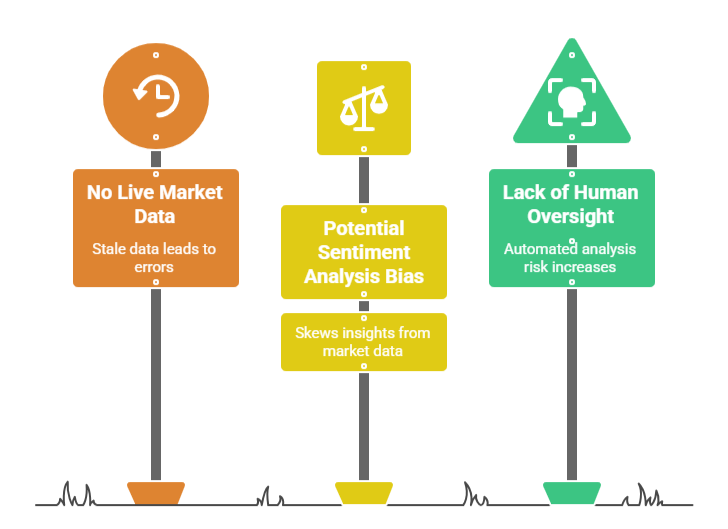
While ChatGPT offers valuable support in developing crypto strategies and generating signals, it has several limitations. Traders should understand these constraints to avoid over-reliance on the tool and to use it effectively alongside other resources.
ChatGPT cannot Provide Live Market Data..
ChatGPT does not have access to real-time charts, order books, or price feeds. This means it cannot generate signals based on the most current market movements.
Instead, it works conceptually, using historical examples or hypothetical scenarios. For accurate and timely decisions, traders still need charting software, on-chain analytics, or trading platforms that deliver live data.
Potential Bias in Text-Based Sentiment Analysis
When analyzing sentiment, ChatGPT relies on patterns from text-based information such as news summaries or community discussions. This approach can sometimes introduce bias, as not all sources reflect true market sentiment.
For instance, overly positive news coverage or echo chambers on social media may distort analysis. Traders must cross-check sentiment insights with reliable tools and independent research before acting.
The Need for Human Judgment in Final Trading Decisions
ChatGPT should be treated as a supportive assistant, not a replacement for human judgment. While it can help interpret signals, explain indicators, or refine strategies, it cannot predict markets with certainty.
Crypto trading involves risk, and final decisions must be made by the trader, considering personal risk tolerance, capital allocation, and broader market context.
Combining ChatGPT with Other Crypto Tools
ChatGPT is a powerful resource for generating insights, refining strategies, and interpreting market signals. However, its value increases significantly when combined with other crypto tools.
By integrating ChatGPT with platforms that provide live data, automation, and deep analytics, traders can create a well-rounded and efficient trading system.
Pairing with Trading Bots and Charting Platforms
While ChatGPT can generate conceptual strategies and signals, trading bots and charting platforms provide real-time execution and visualization.
For instance:
- Charting platforms like TradingView or Coinigy allow traders to apply indicators directly on live charts.
- Trading bots can automate ChatGPT-informed strategies, executing buy/sell orders instantly based on pre-set rules.
This combination bridges the gap between conceptual insights from ChatGPT and actionable, real-time trading decisions.
Using Alongside On-Chain Analytics and News Aggregators
On-chain analytics tools (e.g., Glassnode, IntoTheBlock) provide insights into blockchain data such as wallet activity, transaction flows, and liquidity movement. ChatGPT can help interpret these metrics and explain how they may influence signals.
Similarly, news aggregators like CryptoPanic or CoinDesk feeds offer continuous updates on regulatory developments, partnerships, and market events. ChatGPT can summarize this information, highlight trends, and connect news-driven sentiment with technical signals.
Creating a Hybrid Strategy Workflow
The most effective way to use ChatGPT is by integrating it into a hybrid trading workflow. This means:
- Gather data from charting platforms, analytics tools, and news sources.
- Ask ChatGPT to interpret patterns, sentiment, and strategy implications.
- Refine and execute the strategy through bots or manual trading platforms.
This workflow ensures traders benefit from real-time data and automation while still using ChatGPT for interpretation, scenario testing, and risk planning.
Final Thoughts
ChatGPT offers traders a valuable way to refine strategies, generate crypto signals, and test ideas with clarity. By setting clear goals, crafting structured prompts, and combining technical insights with sentiment analysis, it becomes a reliable support tool for decision-making.
While it cannot provide live data or replace human judgment, pairing ChatGPT with charting platforms, on-chain analytics, and trading bots creates a more balanced workflow. Used wisely, it helps reduce guesswork, improve planning, and support traders in building smarter, signal-driven crypto strategies.
Frequently Asked Questions
How To Use ChatGPT To Predict Crypto?
ChatGPT cannot predict crypto prices with certainty, but it can help by analyzing technical indicators, summarizing market sentiment, simulating scenarios, and refining strategies, making it a supportive tool for informed trading decisions.
Can ChatGPT Help With Crypto Trading?
Yes, ChatGPT can help with crypto trading by providing strategy insights, interpreting technical indicators, summarizing market sentiment, and conceptually testing strategies, but it cannot give live market data or replace human judgment.
How To Use ChatGPT To Turn Crypto News into Trade Signals?
Use ChatGPT to summarize crypto news, extract the sentiment, and connect it with technical or fundamental factors, then combine those insights with charting tools to confirm trade signals before execution.
Can ChatGPT Predict Bitcoin’s Next Move?
ChatGPT cannot predict Bitcoin’s next move with real-time accuracy, but it can analyze historical patterns, technical indicators, and sentiment data to help traders think through possible scenarios.
Can ChatGPT Give Trading Signals?
ChatGPT can generate conceptual trading signals by interpreting technical indicators, sentiment, and strategies, but it cannot provide real-time signals or live market data, so it should be used as a supportive tool, not a direct signal provider.