




A customer in Jakarta had her card open, items in the cart, finger on the button. Checkout failed. Not her card.
Not her connection. Just a payment system that didn’t speak her language. She closed the tab. The sale died quietly like the forty-three before it that month.
Learning how businesses can integrate crypto payments into a website started with that one closed tab. This guide exists because of it.
What You Need Before You Integrate Crypto Payments Into a Website
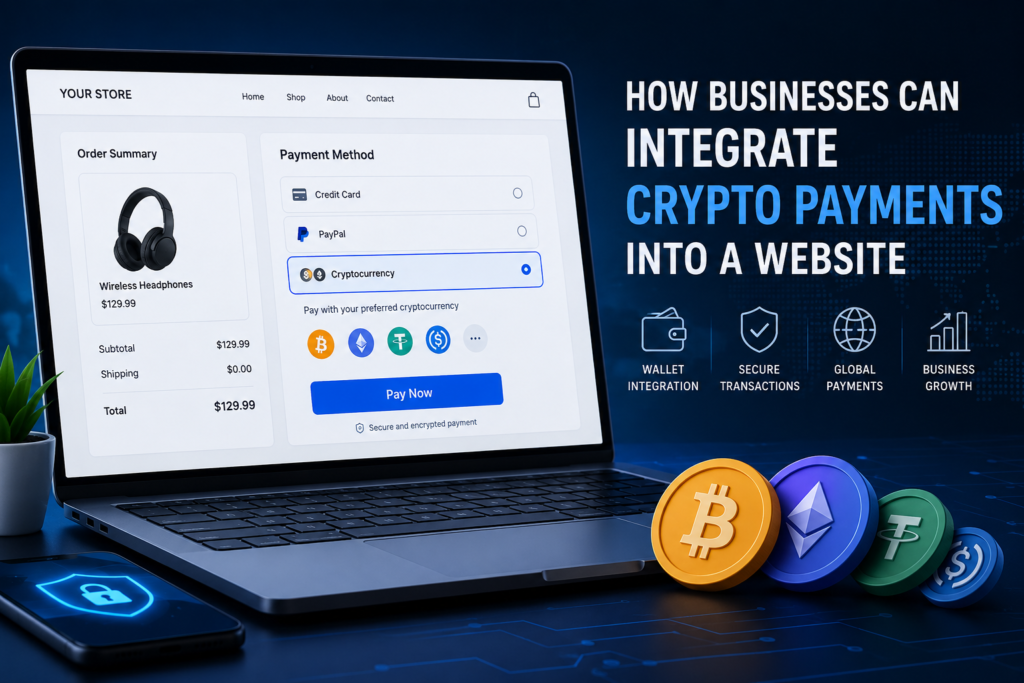
Before integrating crypto payments into your website, you need reliable systems in place. Here are some of the things you need to take into account:
A Crypto Payment Gateway or API
The first requirement is choosing a crypto payment gateway or API that supports website payment processing and transaction management.
These providers handle wallet connectivity, blockchain confirmations, payment routing, and crypto-to-fiat conversion without requiring custom infrastructure development internally.
Wallet and Blockchain Network Support
Businesses also need compatibility with supported wallets and blockchain networks before enabling cryptocurrency payments on their websites successfully.
A payment system supporting Bitcoin, Ethereum, USDT, and USDC generally provides broader accessibility for international customers making transactions online.
Multi-chain support is equally important because customers often use different blockchain networks depending on transaction speed and network fees.
Fiat Settlement and Conversion Infrastructure
Many businesses still operate primarily in fiat currencies, making settlement infrastructure essential for managing cryptocurrency payment transactions efficiently.
A strong crypto payment provider should support automatic crypto-to-fiat conversion to reduce exposure to sudden cryptocurrency market volatility.
For instance, an e-commerce business receiving USDT payments may prefer instant settlement directly into USD business accounts automatically.
Security and Compliance Infrastructure
Security infrastructure is another important requirement because crypto payment systems operate within highly regulated global financial environments today.
You should also ensure your provider supports KYC verification, AML monitoring, transaction screening, and encrypted API authentication for safer operations.
Compliance-ready systems reduce legal risks while helping businesses maintain trust with customers using crypto payments for online transactions regularly.
Developer Documentation and Integration Tools
Even the most powerful crypto payment API becomes difficult to implement without clear documentation and reliable developer integration resources.
It is important to look for providers offering sandbox environments, API references, SDKs, webhook support, and responsive technical integration assistance consistently.
These tools make testing easier while helping development teams launch payment systems faster without unnecessary implementation delays or configuration problems.
Read Also: How USDT payments work?
How Crypto Website Payments Work
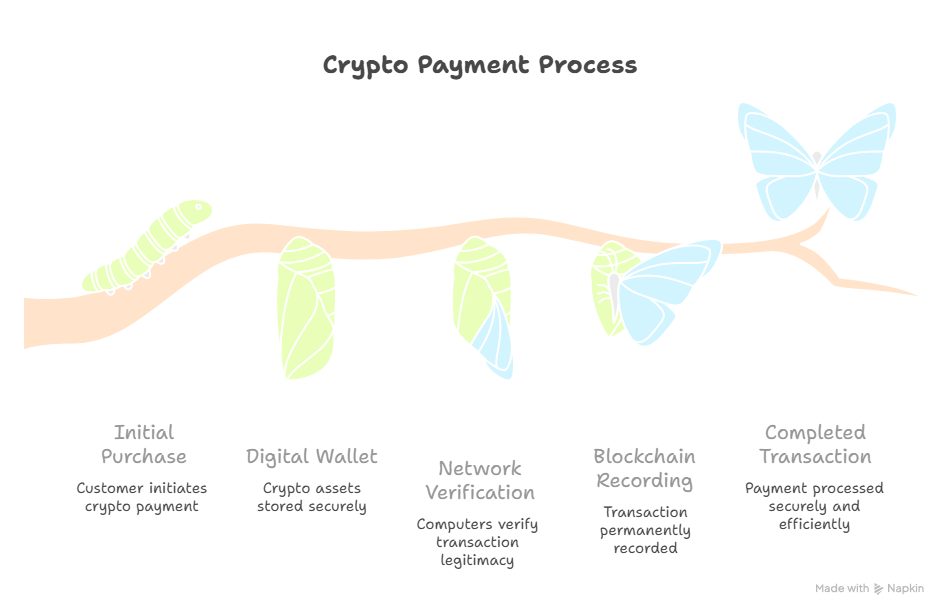
Customer Selects Cryptocurrency at Checkout
The payment process usually begins when a customer selects cryptocurrency as their preferred payment method during online checkout transactions.
The website then communicates with the payment provider’s API to generate a wallet address or secure payment request automatically.
Some systems also generate QR codes, making mobile crypto payments significantly easier for customers completing transactions through smartphone wallets.
Payment Request and Wallet Authorization
After receiving the payment request, the customer sends cryptocurrency directly from their wallet using supported blockchain networks securely.
The wallet transaction includes payment details such as the destination address, transaction amount, blockchain fees, and transaction authentication information securely.
For example, a customer purchasing digital software may send USDT through the TRC20 network because of lower transaction costs.
Blockchain Verification and Transaction Confirmation
Once payment is submitted, the blockchain network begins verifying and validating the transaction before processing payment settlement successfully online.
The number of confirmations required usually depends on the cryptocurrency, blockchain speed, and provider-specific transaction security requirements implemented.
Bitcoin payments may require several confirmations, while stablecoin transactions on faster networks are typically processed much more quickly online.
Crypto-to-Fiat Conversion and Settlement
After verification, the payment provider may automatically convert cryptocurrency into fiat currency depending on the business settlement preferences configured.
This conversion process protects businesses from cryptocurrency price volatility while simplifying accounting and operational financial management processes considerably.
For instance, an online retailer accepting Bitcoin payments may still receive settlement directly in USD or EUR business accounts automatically.
Payment Notifications and Transaction Updates
Modern crypto payment systems also provide real-time transaction updates through webhooks, dashboards, and automated payment status notifications consistently.
These notifications help websites confirm successful payments instantly while updating customer orders and reducing manual transaction verification requirements significantly.
See Also: Open source crypto trading bots.
Ways to Integrate Crypto Payments Into a Website
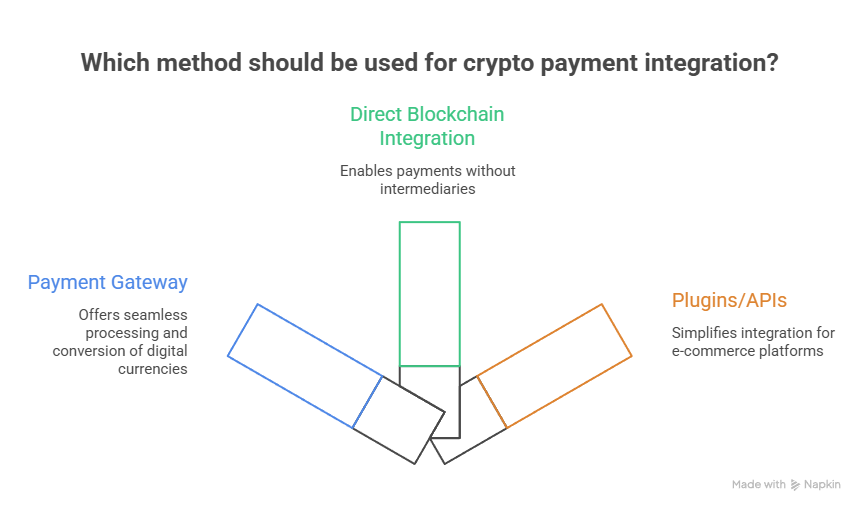
These different methods are as follows:
Using a Crypto Payment Gateway
One of the most common methods involves integrating a crypto payment gateway directly into the website’s checkout infrastructure.
Payment gateways manage wallet generation, blockchain confirmations, transaction monitoring, and settlement processes without requiring extensive technical development internally.
This option works particularly well for businesses wanting faster deployment without building dedicated blockchain payment systems from the ground up.
For example, an e-commerce website can integrate a provider like UPay to accept crypto payments globally through APIs.
Using Hosted Crypto Checkout Pages
Some businesses prefer hosted checkout pages because they reduce integration complexity and simplify cryptocurrency payment processing considerably for merchants.
With this method, customers are temporarily redirected to a secure payment page hosted by the crypto payment provider externally.
The provider handles transaction processing, payment verification, and wallet infrastructure before redirecting customers back after successful payment completion online.
This approach is often suitable for smaller businesses without dedicated development teams or advanced technical infrastructure available internally currently.
Using API-Based Crypto Payment Infrastructure
API-based integrations provide businesses with more customization, flexibility, and control over the payment experience offered to customers online consistently.
Through APIs, developers can create custom payment flows, automate transaction handling, and integrate crypto payments directly within existing applications.
This method is ideal for fintech companies, SaaS platforms, and marketplaces requiring deeper control over payment operations and customer experiences.
For instance, a subscription-based platform could automatically generate payment addresses and recurring billing workflows through integrated crypto payment APIs.
Using White-Label Crypto Payment Solutions
White-label crypto payment solutions allow businesses to launch branded payment systems without building backend infrastructure from scratch internally.
These solutions usually include customizable payment interfaces, wallet infrastructure, compliance tools, and transaction management systems under the company’s branding.
Fintech startups often use white-label infrastructure to launch crypto-enabled financial products faster while reducing operational and development complexity significantly.
Read Also: Exchanges in crypto with low fees.
How to Integrate Crypto Payments Into a Website
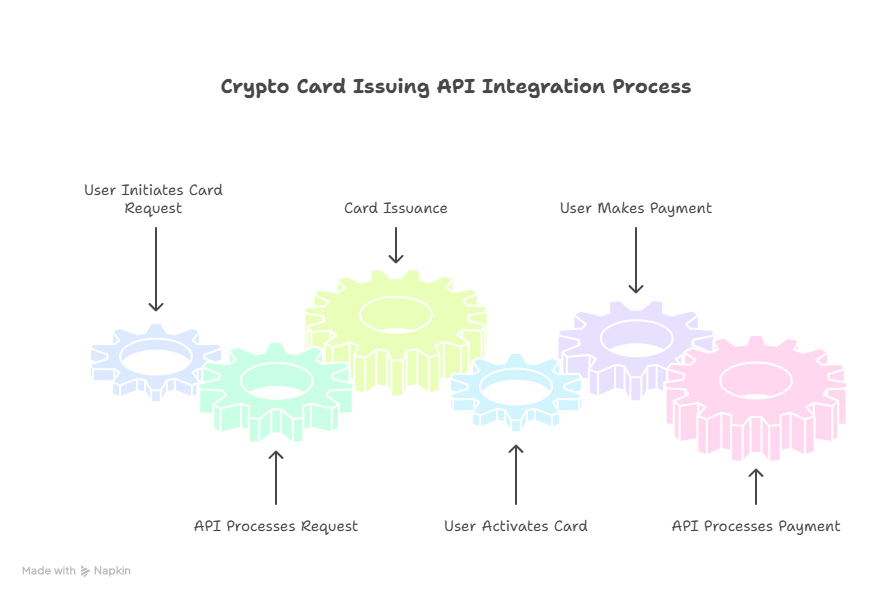
Alt text: Process of integrating crypto payments into a website
Integrating crypto payments into a website usually involves selecting a provider, connecting APIs, and configuring secure payment processing workflows properly
1. Choose a Crypto Payment Provider
The first step involves selecting a provider offering secure infrastructure, strong documentation, and support for relevant blockchain payment networks globally.
Businesses should compare transaction fees, supported cryptocurrencies, settlement options, compliance features, and integration flexibility before making final decisions carefully.
Providers like UPay simplify integration by combining payment processing, wallet infrastructure, and settlement systems within one platform efficiently.
2. Create a Merchant or Developer Account
After choosing a provider, businesses usually register for a merchant or developer account to access payment integration tools securely online.
The registration process may involve business verification, compliance checks, and account approval before production-level payment processing becomes available officially.
Once approved, businesses gain access to dashboards, developer environments, and API management systems necessary for successful payment infrastructure configuration.
3. Obtain API Credentials
The provider then issues API credentials such as secret keys, tokens, or application identifiers for secure system authentication purposes.
These credentials allow the website to communicate securely with the provider’s infrastructure while processing payment requests and transaction confirmations automatically.
Proper credential management is important because exposed API keys can create serious security vulnerabilities and unauthorized transaction risks for businesses.
4. Integrate Payment Endpoints Into the Website
Developers next integrate payment endpoints directly into the website’s checkout flow using APIs or software development kits provided officially.
This integration enables the website to generate payment requests, wallet addresses, QR codes, and transaction monitoring systems automatically during checkout.
For example, a digital marketplace could display cryptocurrency payment options beside traditional card payment methods within the checkout interface.
5. Configure Webhooks and Payment Notifications
Webhooks are then configured to send real-time payment updates from the provider directly to the business website automatically after transactions.
These notifications confirm payment completion, failed transactions, pending confirmations, refunds, and settlement updates without requiring manual transaction verification continuously.
Webhook integration improves operational efficiency while helping businesses automate order fulfillment and customer communication after successful payment completion online.
6. Test Transactions in Sandbox Mode
Before launching publicly, businesses should test payment workflows thoroughly using sandbox environments provided by crypto payment infrastructure providers securely.
Sandbox testing allows developers to simulate transactions, monitor payment confirmations, and identify integration problems without using real cryptocurrency funds.
Testing also helps businesses validate checkout experiences and ensure payment systems function correctly across devices and blockchain networks consistently.
7. Launch and Monitor Payment Activity
Once testing is complete, businesses can enable live payment processing and begin accepting cryptocurrency payments from customers globally online successfully.
After launch, transaction monitoring becomes essential for tracking payment performance, fraud risks, blockchain confirmations, and settlement activity continuously over time.
Most providers offer dashboards and analytics tools, helping businesses monitor payment trends, operational health, and customer transaction behavior efficiently.
Frequently Asked Questions
What is the easiest way to accept crypto payments on a website?
The easiest way to accept crypto payments is by using a crypto payment gateway. These providers handle payment processing, wallet generation, transaction monitoring, and crypto-to-fiat conversion with minimal technical setup.
Conclsuion
The process is no longer limited to highly technical crypto-native companies either. You can now choose between hosted payment pages, developer-focused APIs, or fully managed white-label solutions.
This would also largely depend on your operational goals and technical resources.
However, successful integration still requires careful planning around compliance, security, customer experience, and infrastructure scalability.