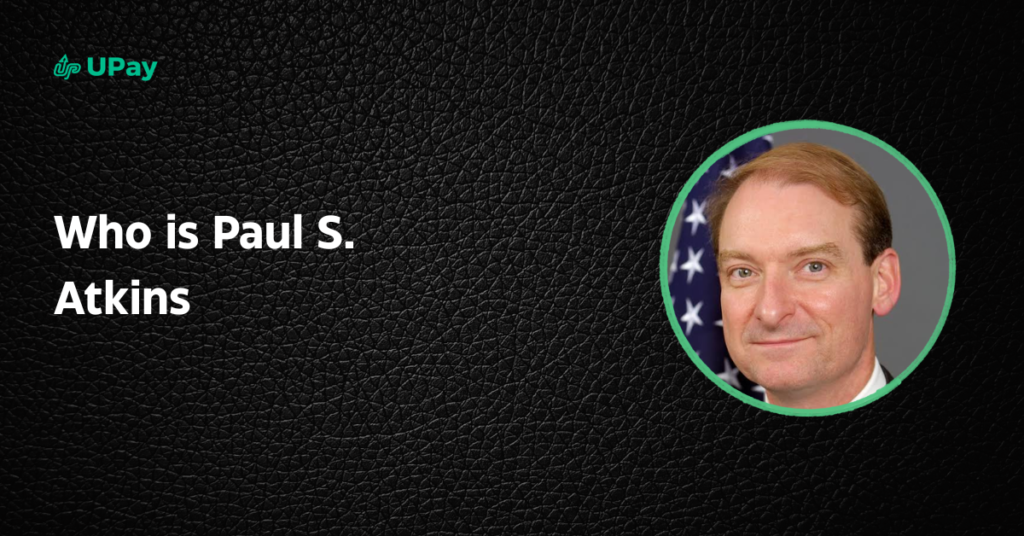
Paul S. Atkins is one of the most consequential figures in American financial regulation right now. He serves as the 34th Chairman of the U.S. Securities and Exchange Commission (SEC), a role he took on in April 2025 after being nominated by President Donald Trump.
He brings more than three decades of experience across law, private consulting, and government service to one of the most powerful regulatory positions in the world.
Since taking the chair, he has moved quickly to reshape how the SEC operates, particularly around digital assets and crypto regulation, and his decisions are already changing the direction of American financial markets.
Key Takeaways
- Sworn in as the 34th SEC Chairman on April 21, 2025; previously served as Commissioner (2002–2008).
- Founded and led Patomak Global Partners, a premier regulatory consultancy, from 2009 to 2025.
- Shifted the agency from enforcement-centric oversight toward a framework of regulatory clarity.
- Launched “Project Crypto” to modernize digital asset regulation and establish clear legal guidelines.
- Promotes market innovation while addressing scrutiny over enforcement pullbacks and prior crypto ties.
Early Life and Education
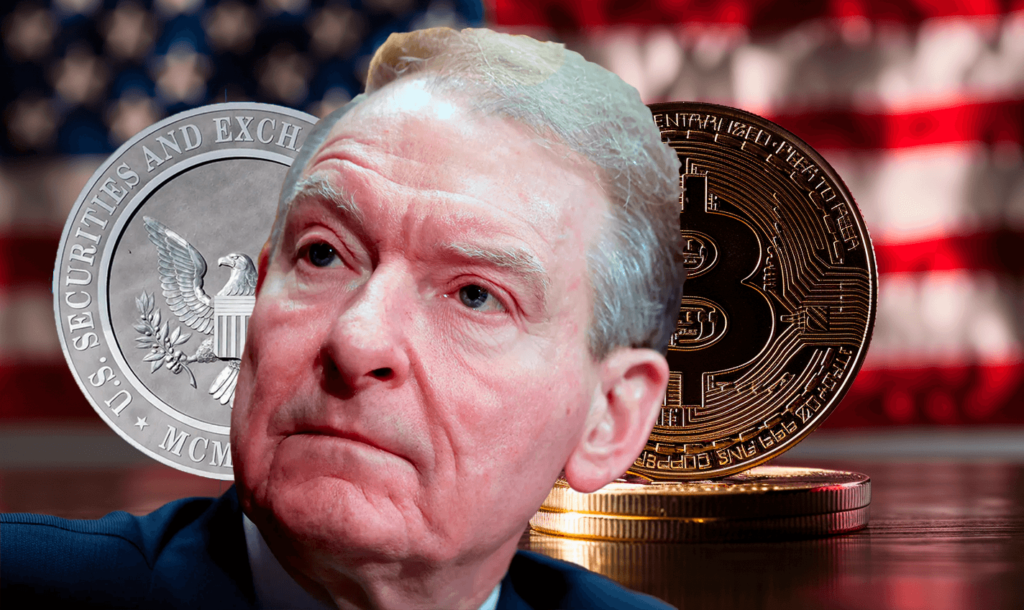
Paul Stewart Atkins was born in Lillington, North Carolina, and grew up in Tampa, Florida. He showed early academic ability and went on to study at Wofford College in Spartanburg, South Carolina, where he graduated in 1980 with a Bachelor of Arts degree, summa cum laude.
He was a member of Phi Beta Kappa and Kappa Alpha Order during his time there. Academic honors aside, Wofford was not a name that instantly signaled future SEC Chairman material, but Atkins used it as a launchpad for an impressive legal career.
He received his J.D. from Vanderbilt University School of Law in 1983 and was Senior Student Writing Editor of the Vanderbilt Law Review.
Vanderbilt gave him the legal grounding he needed, and his editorial role at the Law Review showed early attention to precision in language and policy, qualities that define his regulatory philosophy today.
Early Career: Law, Wall Street, and Paris
After graduating from law school, Atkins began his career as a lawyer in New York City with Davis Polk and Wardwell, a top-tier law firm, focusing on a wide range of corporate transactions for U.S. and foreign clients, including public and private securities offerings and mergers and acquisitions.
Davis Polk is one of the most selective legal employers in the country, and working there put Atkins at the center of complex corporate deals from day one.
He was resident for two and a half years in his firm’s Paris office and was admitted as conseil juridique in France.
This international chapter provided exposure to cross-border transactions and foreign capital markets as global finance became increasingly interconnected. It also demonstrated the adaptability that has defined his career arc.
After his time in private practice, Atkins was a partner of PricewaterhouseCoopers (previously Coopers and Lybrand) where he continued advising financial services firms on regulatory strategy, compliance, and risk management.
Read Also: Who is Vitalik Buterin and Why is He Important?
Joining the SEC: Chief of Staff Under Two Chairmen
From 1990 to 1994, Atkins served on the staff of two chairmen of the SEC, Richard C. Breeden and Arthur Levitt, ultimately as chief of staff and counselor, respectively.
This period gave him a deep, practical understanding of how the SEC operates from the inside. Serving two chairmen with different styles and priorities taught him how to navigate institutional politics while staying focused on policy outcomes.
He received the SEC’s 1992 Law and Policy Award for work regarding corporate governance matters. This recognition was not a routine award. It signaled that even as a staff member, Atkins was making substantive contributions to some of the most complex questions the agency faced. Corporate governance was a hot topic in the early 1990s as shareholder rights movements gained momentum, and Atkins was in the middle of it.
SEC Commissioner Under President George W. Bush (2002 to 2008)
Atkins was appointed by President George W. Bush to serve as a Commissioner of the SEC from 2002 to 2008. During his tenure, he advocated for transparency, consistency, and the use of cost-benefit analysis at the agency.
This six-year period shaped his public identity as a regulator. He was a vocal advocate for market-based solutions over heavy-handed enforcement. He regularly questioned whether new rules would cause more harm than good by adding compliance costs that fell disproportionately on smaller companies.
He pushed for rigorous cost-benefit analysis before any significant rulemaking, a position that put him at odds with more interventionist colleagues but won him credibility with the business community.
Atkins also represented the SEC at meetings of the President’s Working Group on Financial Markets and the U.S.-EU Transatlantic Economic Council. These roles took him beyond domestic securities regulation into international economic policy, where he helped represent American regulatory positions to European counterparts during a period of increasing global financial integration.
One area where he drew significant attention during this time was his approach to post-Enron regulations. After Enron collapsed in 2001, Congress passed the Sarbanes-Oxley Act in 2002, introducing strict financial reporting requirements for public companies.
Atkins frequently expressed concern that the compliance burden, particularly the internal control requirements under Section 404, was excessive for smaller firms. His position was not that investor protection did not matter. It was that regulation needed to be proportionate to the actual risk it addressed.
During his time as a Commissioner, Atkins emphasized the importance of capital market innovation and reducing regulatory burdens and advanced various reform efforts, such as modifying compliance requirements for smaller firms.
Building Patomak Global Partners (2009 to 2025)
After leaving the SEC in 2008, Atkins moved back into the private sector. In 2009, Atkins founded Patomak Global Partners, a financial services firm specializing in regulatory compliance and whose clients would come to include Fidelity Investments, Goldman Sachs, and the U.S. Chamber of Commerce.
Patomak was founded to help companies navigate the post-financial crisis regulatory maze. The timing was perfect. The 2008 financial crisis had triggered an avalanche of new regulation, including Dodd-Frank in 2010, and financial institutions urgently needed expert guidance on how to comply without disrupting their core business. Patomak filled that gap.
Over time, Patomak expanded its practice areas and geographic reach, serving clients across the United States and internationally.
The firm grew to include three former SEC commissioners, two former CFTC commissioners, a former Federal Reserve governor, a former SEC general counsel, a former chief economist of the SEC, and a former chief counsel of the Office of the Comptroller of the Currency. That kind of talent concentration made Patomak one of the most connected regulatory consulting firms in Washington.
The firm also worked in the digital asset space. One of Patomak’s clients was FTX, Sam Bankman-Fried’s failed crypto exchange. Patomak signed on as an adviser to FTX in January 2022, according to a filing in the FTX bankruptcy case. This connection attracted scrutiny during Atkins’ confirmation hearings, though FTX collapsed later that year and Atkins had no role in its operations.
Atkins also served as an independent director and non-executive chairman of the board of BATS Global Markets, Inc. from 2012 to 2015. BATS was one of the leading electronic stock exchanges in the United States before it merged with CBOE in 2017. His board role there kept him embedded in how modern trading infrastructure works, which matters a great deal for the SEC’s oversight of equity markets.
Atkins was co-chair of the Token Alliance, a cryptocurrency advocacy group for the Chamber of Digital Commerce. He also served on the advisory board of Securitize, Inc., a cryptocurrency firm. These roles in the crypto space were a signal of where his interests were heading long before his nomination as SEC Chairman.
Read Also: Who is Charlie Lee? Litecoin Founder, Crypto Enthusiast
Nomination and Confirmation as SEC Chairman
Atkins was nominated by President Donald J. Trump on January 20, 2025, and confirmed by the U.S. Senate on April 9, 2025. The confirmation vote was 52 to 44, largely along party lines.
He replaced Gary Gensler, who had served as SEC Chairman since 2021 and built a reputation for aggressive enforcement against the crypto industry. Gensler stepped down on January 20, 2025, the same day Atkins was nominated, and Commissioner Mark Uyeda served as acting chair until the Senate confirmed Atkins. Uyeda used the interim period to establish the Crypto Task Force, signaling the direction the new administration intended to take.
Atkins was sworn into office as the 34th Chairman of the Securities and Exchange Commission on April 21, 2025.
During his confirmation hearings, Atkins made clear what kind of regulator he intended to be. He said he wants to “return common sense” to the agency and seeks “clear rules of the road” with rigorous cost-benefit analysis for proposed rules to support emerging companies and position the U.S. as a desirable jurisdiction for capital formation. These were not throwaway phrases. They represented a deliberate contrast with the Gensler era, which critics characterized as combative and unpredictable.
At the time of his appointment, Atkins owned $6 million worth of holdings in crypto-related businesses. During his confirmation, he pledged to divest from these crypto-related businesses.
In July 2025, Atkins sold his stake in Patomak Global Partners to an undisclosed buyer for between $25 million and $50 million.
Personal Life and Net Worth
Atkins has three sons with his wife Sarah Humphreys Atkins, who is a major Republican donor. As of 2025, their combined net worth is estimated to be $327 million. Much of this wealth comes from his years running Patomak Global Partners and his various board positions in financial services. His wife’s family also has significant business interests.
His personal financial profile has drawn attention because of the scale of his crypto-related holdings at the time of his nomination.
Critics argue that someone who held millions in crypto-linked assets has an inherent interest in lightening regulations on that sector. Supporters counter that his experience with digital assets makes him better qualified to regulate them responsibly.
His Philosophy: Free Markets, Less Enforcement, More Clarity
Atkins’ regulatory philosophy is rooted in the conviction that excessive oversight can stifle innovation and burden businesses without meaningfully enhancing investor protection. He champions a “common sense” mandate where clear, consistent rules are established before enforcement actions are taken.
Central to his methodology is the rigorous application of cost-benefit analysis for every significant rule. He maintains that regulations must be proportionate to actual risk, ensuring that compliance costs do not disproportionately impact smaller companies or impede capital formation.
Under this framework, the SEC seeks to provide “clear rules of the road,” focusing enforcement on genuine fraud and market manipulation. By prioritizing transparency and predictability, Atkins aims to secure the U.S. as a competitive jurisdiction for global financial innovation.
Project Crypto: Atkins’ Defining Initiative
The most significant policy move of Atkins’ tenure so far is “Project Crypto,” the SEC’s formal effort to build a complete regulatory framework for digital assets.
On July 31, 2025, Atkins delivered a major policy address at the America First Policy Institute in Washington, D.C., unveiling Project Crypto as a Commission-wide initiative to modernize securities regulation in support of President Trump’s vision of the United States as the “crypto capital of the world.”
The initiative has several components. Atkins rejected the prior “regulation-by-enforcement” approach and committed to reshoring crypto businesses.
He directed Commission staff to draft clear rules for the distribution, custody, and trading of crypto assets, subject to public notice and comment, and to collaborate with the Crypto Task Force to develop rule proposals aligned with the President’s Working Group on Digital Asset Markets report recommendations.
One of the central arguments Atkins makes is about how to classify crypto assets. Atkins emphasized his view that most crypto assets are not securities and that being classified as a security should not be a deterrent to development. This is a direct reversal of the Gensler-era position, which treated most tokens as securities and pursued enforcement actions against major exchanges on that basis.
Atkins introduced two guiding principles for the SEC’s crypto framework.
First, form does not change substance: a stock remains a stock whether represented on paper, through a DTCC entry, or as a blockchain token.
Second, economic reality governs over labels: calling something a token or a non-fungible token does not exempt it from securities laws, but just because a token was part of a capital raise does not mean it is permanently a security.
He also proposed an “innovation exemption,” a framework that would let companies test novel business models under principles-based safeguards rather than requiring full compliance with existing rules from day one.
Atkins has reportedly called the innovation exemption one of his top priorities, indicating that the Commission aims to begin rulemaking by the end of 2025 or early 2026.
Landmark Actions in 2025 and 2026
Atkins has moved quickly. The list of concrete actions from his first year at the SEC is long.
1. Clarifying crypto asset classifications
In March 2026, the SEC released one of its most significant crypto statements in years. Atkins said: “After more than a decade of uncertainty, this interpretation will provide market participants with a clear understanding of how the Commission treats crypto assets under federal securities laws.
This is what regulatory agencies are supposed to do: draw clear lines in clear terms. It also acknowledges what the former administration refused to recognize: that most crypto assets are not themselves securities. And it reflects the reality that investment contracts can come to an end.”
2. SEC and CFTC coordination
On March 11, 2026, Atkins and CFTC Chairman Michael S. Selig signed a Memorandum of Understanding to guide coordination and collaboration on issues of shared regulatory concern.
The MOU reflects both agencies’ stated commitment to provide fair notice to market participants, respect individual liberty, and support lawful innovation with a “minimum effective dose” of regulation. The MOU identifies six core areas where the agencies will clarify, coordinate, and harmonize their regulatory approaches, most notably regarding digital asset markets.
3. Approving crypto ETFs
Key regulatory moves during the initial year have included the approval of multiple exchange-traded funds tied to crypto assets. This opened the door for mainstream institutional investment in digital assets through regulated, familiar financial instruments.
4. Tokenization of securities
On January 28, 2026, the SEC Division of Corporation Finance, Division of Investment Management, and Division of Trading and Markets issued a statement setting forth a basic taxonomy of tokenized securities, elaborating on the token taxonomy set forth by Atkins in his November 2025 speech.
5. Reducing public company reporting requirements
In September 2025, Atkins affirmed plans to reduce reporting requirements for public companies in the United States, changing reporting timelines from quarterly to every six months.
This was a major structural change with implications for every public company in America. Supporters say it reduces compliance costs and lets management focus on running businesses rather than managing quarterly disclosure cycles. Critics argue that less frequent reporting gives investors less timely information on which to make decisions.
6. Dropping enforcement cases against crypto firms
The SEC under Atkins settled or dropped a number of high-profile enforcement actions against crypto companies that the Gensler-era SEC had pursued.
Cases against Kraken, Coinbase, and others were pulled back. In a shift away from Gensler’s approach, Atkins took a lighter regulatory approach, consistent with his prior tenure at the SEC.
Controversy and Criticism
No figure who moves this fast in a contested regulatory space escapes criticism, and Paul Atkins is no exception.
1. Conflict of interest allegations
Because Atkins held crypto-related investments at the time of his nomination, critics raised conflict of interest concerns. Senator Elizabeth Warren was among the most vocal critics, pressing him on whether he could regulate an industry in which he had significant financial exposure. Atkins pledged to divest and did so, but the criticism continued.
2. Enforcement pullback concerns
Democratic lawmakers have raised consistent concerns about the pace and direction of his enforcement changes.
Democratic lawmakers, including Senator Elizabeth Warren, criticized the SEC for potential conflicts of interest after enforcement actions against entities tied to the Trump orbit were dropped or deprioritized, arguing that data from the 2025 fiscal year indicated a decline in enforcement actions relative to recent years.
3. The Director of Enforcement departure
In March 2026, Enforcement Director Margaret Ryan resigned after only six months. Her departure reportedly followed internal resistance from senior leadership as the Division of Enforcement pursued investigations into parties close to the administration. This high-profile exit intensified scrutiny regarding the potential influence of political considerations on the agency’s enforcement priorities.
4. The FTX connection
The fact that Patomak Global Partners had advised FTX before its collapse in 2022 was raised repeatedly during and after his confirmation. Critics argued this showed poor judgment about who to work with. Supporters pointed out that Atkins had no operational role at FTX and that Patomak provided regulatory consulting, not operational management.
5. Investor protection concerns
While industry participants may view the shift as positive for project development and fundraising, policymakers caution that ongoing oversight is essential to prevent regulatory capture and to maintain investor trust.
Atkins and his defenders argue that the previous enforcement-heavy approach did not actually protect investors well, because it created confusion rather than clear rules, and pushed crypto activity offshore to less regulated jurisdictions, which made things worse for American investors.
His Impact on the Crypto Industry
The practical effect of Atkins’ leadership on the crypto industry has been significant and fast-moving.
Companies that previously faced constant legal uncertainty about whether their tokens were securities now operate in a much clearer environment. The SEC’s interpretive statement in March 2026 gave the industry something it had been asking for since at least 2017. Whether that clarity adequately protects retail investors remains a live debate.
Crypto companies that had fled to offshore jurisdictions to avoid U.S. regulatory risk are reconsidering their positions. The explicit goal of Project Crypto is to bring crypto business back onshore to the United States, and early signs suggest some companies are responding to that signal.
The approval of crypto ETFs under Atkins has brought significant institutional money into the space through regulated channels. This is generally seen as a sign of market maturity, though it also concentrates more investor exposure to crypto price volatility within mainstream retirement and investment portfolios.
In a CNBC interview conducted in April 2026, Atkins said the agency has delivered “a new day” at the SEC, asserting that the move away from “regulation through enforcement” and opacity is already yielding results for American markets.
Atkins vs Gensler: A Direct Comparison
Understanding Atkins requires understanding what he replaced. Gary Gensler, his predecessor, ran the SEC as an enforcement-first agency. Gensler believed that existing securities laws already covered crypto and that companies operating in the space were largely doing so illegally. He sued Coinbase, sued Ripple, sued Kraken, and pursued dozens of other enforcement actions.
Atkins runs the SEC as a rulemaking-first agency. He believes the problem is not that companies broke existing law but that existing law was never designed for digital assets and was being applied in ways that made compliance impossible. His solution is to write new rules that fit the new technology, rather than forcing new technology to fit old rules.
This difference in philosophy leads to very different outcomes. Under Gensler, the U.S. crypto market was under constant legal pressure. Under Atkins, companies have more freedom to operate but also more responsibility to design their products within a framework that is still being written in real time.
Role in the Broader Trump Economic Agenda
Atkins does not operate in isolation from the broader Trump administration’s economic goals. His appointment was part of a deliberate effort to reshape financial regulation across multiple agencies, including the Federal Reserve, the CFTC, and the Consumer Financial Protection Bureau.
Atkins framed Project Crypto as aligned with President Trump’s vision of the United States as the crypto capital of the world, and described the President’s Working Group on Digital Asset Markets report as the blueprint to make America first in blockchain and crypto technology.
This alignment with the administration’s priorities gives him political support for his agenda but also makes him a target for critics who argue that financial regulation should be independent of political direction. The question of whether the SEC under Atkins is pursuing good regulatory policy or serving political goals is one that will be debated for years after his tenure ends.
What to Watch Next
Several things are worth tracking if you want to stay ahead of where Atkins takes the SEC.
The formal “Regulation Crypto” rulemaking, which he signaled would come in 2026, will define exactly how crypto assets are classified, what disclosures are required, and what exemptions are available. This will have binding legal force in a way that staff statements and speeches do not.
The innovation exemption, which he has called a top priority, will determine whether emerging blockchain companies can test new business models in a sandbox environment without risking enforcement action.
Congressional legislation on crypto market structure is moving in parallel with the SEC’s rulemaking. If Congress passes broad crypto legislation before the SEC finishes its rulemaking, that could supersede or significantly reshape what Atkins has been building.
His approach to traditional securities regulation, separate from crypto, will also develop over time. His signal that public companies may move from quarterly to semi-annual reporting is a preview of broader changes to how the SEC thinks about disclosure requirements.
Conclusion
Paul S. Atkins is not a typical SEC Chairman. He comes into the role with a clearly defined regulatory philosophy, a specific agenda for digital assets, and a track record that spans decades across law, government, consulting, and markets.
He is changing the SEC from a reactive enforcement agency into a proactive rulemaking agency, at least in the areas that matter most to him.
Whether his approach ultimately serves investors and markets well is a question that will take years to answer. The short-term effects are visible: more regulatory clarity, fewer enforcement actions, more crypto-friendly rules, and a closer working relationship with the CFTC.
The long-term effects, including whether fraud increases without strong enforcement, whether the new framework protects retail investors adequately, and whether America actually becomes the dominant center of global crypto markets, remain to be seen.
What is clear is that Atkins is not a passive caretaker. He arrived at the SEC with a mission, and he is executing it methodically.
For anyone with money in markets, whether traditional equities or digital assets, understanding who Paul S. Atkins is and what he is trying to do is not optional. It is essential.
Frequently Asked Questions
Who Is Paul S. Atkins?
Paul S. Atkins is the 34th Chairman of the U.S. Securities and Exchange Commission (SEC). Nominated by President Donald Trump on January 20, 2025, and confirmed by the Senate on April 9, 2025, he was sworn into office on April 21, 2025. Previously, he served as an SEC Commissioner from 2002 to 2008 and led Patomak Global Partners, a financial regulatory consulting firm he founded in 2009.
What Is Paul Atkins Known For?
Paul Atkins is known for his pro-market, free-market regulatory philosophy, his strong support for the digital asset and crypto industry, and his push to replace enforcement-driven regulation with clear, written rules.
He is widely recognized for launching “Project Crypto,” the SEC’s formal initiative to build a full regulatory framework for digital assets in the United States.
He is also known for reducing regulatory burdens on public companies and shifting the SEC away from the aggressive enforcement approach of his predecessor, Gary Gensler.
What Did Paul Atkins Do Before Becoming SEC Chairman?
Before becoming SEC Chairman, Paul Atkins built a career that spanned private law, government service, and financial consulting.
He started as a corporate lawyer at Davis Polk and Wardwell in New York, where he also worked out of the firm’s Paris office. He joined the SEC staff in 1990, serving as chief of staff and counselor to two SEC Chairmen. He then served as an SEC Commissioner from 2002 to 2008.
Is Paul Atkins Pro-Crypto?
Yes, Paul Atkins is widely regarded as pro-crypto. He co-chaired the Token Alliance, a cryptocurrency advocacy group, served on the advisory board of crypto firm Securitize, and held approximately $6 million in crypto-related investments at the time of his nomination.
As SEC Chairman, he launched Project Crypto, directed staff to write clear rules for digital asset distribution, custody, and trading, and stated publicly that most crypto assets are not securities.
He has also overseen the approval of multiple crypto exchange-traded funds (ETFs) and signed a coordination agreement with the CFTC to harmonize digital asset regulation.
What Is Paul Atkins’ Net Worth?
Paul Atkins’ net worth, combined with his wife Sarah Humphreys Atkins, is estimated at approximately $327 million as of 2025.
A significant portion of this wealth came from his 16 years running Patomak Global Partners, which he sold in July 2025 for between $25 million and $50 million.
His wife is also a major Republican donor with her own substantial financial interests. At the time of his nomination as SEC Chairman, he personally held around $6 million in crypto-related business investments, which he pledged to divest.
How Is Paul Atkins Different From Gary Gensler?
Paul Atkins differs from Gary Gensler in both philosophy and approach.
Gensler ran the SEC as an enforcement-first agency, treating most crypto tokens as unregistered securities and pursuing lawsuits against major exchanges including Coinbase and Kraken.
Atkins runs the SEC as a rulemaking-first agency, arguing that the existing legal framework was not designed for digital assets and that clear rules should come before enforcement.
Gensler brought hundreds of crypto-related enforcement actions during his tenure. Atkins has dropped or settled many of those cases and redirected the agency toward writing formal rules. Gensler was seen as hostile to the crypto industry. Atkins is seen as a constructive partner to it, though critics argue this shift has reduced investor protection.
Did Paul Atkins Face Controversy During His Confirmation?
Yes, Paul Atkins faced significant controversy during his confirmation process. Critics raised concerns about his crypto-related financial holdings, totaling around $6 million, and questioned whether he could regulate an industry in which he had a personal financial interest.
His firm Patomak Global Partners had also previously advised FTX, the crypto exchange that collapsed in 2022, which drew scrutiny.
Senator Elizabeth Warren and other Democratic lawmakers pressed him on conflicts of interest, and his confirmation vote of 52 to 44 was largely along party lines. Atkins pledged to divest from his crypto holdings and sold his stake in Patomak in July 2025.
What Are Paul Atkins’ Qualifications and Education?
Paul Atkins’ qualifications span law, financial regulation, and executive leadership across both government and the private sector. He graduated from Wofford College in 1980 with a Bachelor of Arts degree, summa cum laude, and is a member of Phi Beta Kappa.
He earned his law degree from Vanderbilt University School of Law in 1983, where he served as Senior Student Writing Editor of the Vanderbilt Law Review.
He is admitted to the bar in New York and Florida, and was also admitted as a legal adviser in France during his time in the Paris office of Davis Polk and Wardwell. He brings over 30 years of direct experience in securities law, regulatory compliance, and financial markets to his role as SEC Chairman.