


Fake Crypto Exchanges: Case-Studies, How to Identify a Fake Exchange
Fake crypto exchanges stole more money from victims in 2024–2025 than in any prior period with the FBI reporting $5.6 billion lost to crypto fraud in 2023 alone, a 45% year-over-year increase. The majority of these losses involved fake or fraudulent trading platforms. These platforms are no longer crude websites. The most dangerous ones used in pig butchering scams are sophisticated, mobile-optimised applications with live support chat, fabricated price charts, and real-looking withdrawal confirmations designed to extract multiple deposits before disappearing entirely. This guide covers how to identify a fake exchange before you deposit, the specific red flags scammers try to hide, a list of known fraudulent platforms, and what to do if you’ve already been targeted. How to spot a fake crypto exchange Full identification checklist, named examples, scam type breakdown, and reporting guide below. What Are Fake Cryptocurrency Exchanges? Fake cryptocurrency exchanges are fraudulent platforms that mimic the appearance and functionality of legitimate crypto exchanges but are designed to deceive users. Unlike genuine exchanges, which facilitate secure and transparent transactions, fake exchanges aim to scam investors out of their money. These fraudulent platforms may offer unrealistic trading benefits, extremely low fees, or promotions to lure users. They often lack proper security measures, regulatory compliance, and customer support. The primary goal of these fake exchanges is to collect personal and financial information or to take cryptocurrencies deposited by users without allowing them to withdraw funds. How to Identify a Fake Crypto Exchange — 10-Point Checklist 1. Regulatory registration Search FinCEN (US), FCA Register (UK), or ASIC (AU). If you can’t find it in 2 minutes, it likely isn’t registered. 2. KYC process present Legitimate exchanges require identity verification. A platform that accepts deposits without any identity check is violating AML law and is almost certainly fraudulent. 3. No deepfake celebrity endorsements Platforms using AI-generated videos of Elon Musk, Vitalik Buterin, or other tech figures to appear credible are fake. No legitimate exchange advertises this way. 4. Withdrawal tested before large deposit Deposit a small amount and attempt to withdraw it. If withdrawal is blocked, delayed, or requires additional fees to unlock, stop immediately. 5. Domain age verified Examine any promotional offers very carefully. Extremely low trading fees or offers that promise high returns with little or no risk are typical tactics used by scams to attract victims. Compare these offers with those of established exchanges. 6. Domain age verified Look for reviews on independent websites, social media, and cryptocurrency forums. A legitimate exchange will likely have a mixture of positive and negative reviews that reflect genuine user experiences. Be wary if there are no reviews or if all reviews seem overly positive and non-specific, as these could be fabricated. 7. Withdrawal Process Verify the withdrawal process by reading user feedback and official policies. Many fraudulent exchanges allow for deposits and trading but make it very difficult to withdraw funds, often requiring excessively high minimum balances or imposing unjustified fees. 8. Company Background and Leadership Investigate the history and reputation of the company running the exchange. Look into the backgrounds of the leadership team for their experience and credibility in the financial or tech industries. Lack of clear information about the company’s leadership or ownership should raise concerns. 9. Physical Address and Contact Information Verify the physical presence of the company through its registered address. Scams often do not provide an address, or the provided address may lead to non-business locations or virtual offices. 10. Use of Escrow for Transactions Check whether the exchange uses a secure and reputable third-party escrow service for transactions, which can protect both buyers and sellers by holding the funds until all parties fulfill the terms of the transaction. Related: Ultimate Guide To Recover Money From Crypto Scam Most Common Scams Linked to Fake Cryptocurrency Trading Platforms 1. Pig Butchering Scam (Sha Zhu Pan) — Most Financially Devastating Pig butchering (from the Chinese shā zhū pán, meaning slaughter the pig) is the single most prevalent and financially devastating scam type linked to fake crypto exchanges in 2024–2026, according to the FBI. The mechanics are as follows: 2. Pump and Dump via Fake Exchange Some fraudulent platforms list obscure or entirely fictitious tokens and artificially inflate their price using coordinated purchasing. Victims are recruited through social media to buy the token before it explodes. Once the price peaks and enough real buyer money has entered, the scammers sell their holdings, crashing the price to near zero. The fake exchange facilitates the transaction, takes its cut, and often blocks withdrawals after the crash. 3. lone Exchange Phishing A clone exchange replicates the design of a legitimate platform (Binance, Coinbase, Kraken) with a near-identical URL. When a victim enters their login credentials, those credentials are captured in real time and used to drain the genuine account. Unlike pig butchering, clone exchanges target existing crypto holders rather than newcomers, often more experienced users with larger balances who drop their guard because the platform looks exactly right. 4. Fake Initial Coin Offering (ICO) via Fraudulent Platform Fraudulent platforms host fake token sales, presenting professional whitepapers, countdown timers, and fabricated investor interest. The ICO raises real money, the token never launches or has any value, and the platform disappears. These scams are particularly common in bull markets when new project launches attract mainstream interest and less due diligence. What to Do If You Recognise One of These Scam Types If you have been targeted by any of the above, the following steps apply regardless of scam type: Case Studies of Fake Crypto Exchanges Spoofed Coinbase Pro (2024) — Clone Website Attack In 2024, Indian national Chirag Tomar was convicted in the United States for operating spoofed Coinbase Pro login pages that outranked the genuine site on Google Search results for brief periods. Visitors entering their login credentials had their accounts immediately drained. Impact: Over $20 million stolen from victims across multiple jurisdictions before the operation was shut down by US federal investigators. Lesson: Always navigate to crypto exchanges by typing the URL
How to Spot a Crypto Scammer in 2026

Knowing how to spot a crypto scammer is one of the most important skills any crypto user can develop. In 2023 alone, over $5.6 billion was lost globally to cryptocurrency scams, a figure that underscores just how sophisticated and widespread the threat has become. The crypto ecosystem is full of genuine opportunity, but it is also a breeding ground for fraudsters who prey on new users, exploit complexity, and move faster than regulators can keep up with. This guide breaks down the most common tactics, the clearest warning signs, how to protect yourself, what to do if you have been targeted, and how to report a cryptocurrency scammer if the worst happens. Key Takeaways Why Crypto Scams Are on the Rise Image by freepik Cryptocurrency scams are becoming increasingly prevalent, and there are several factors contributing to this alarming trend: Several factors have made crypto an attractive target for fraudsters, and understanding them helps you stay one step ahead. The promise of quick profit The crypto market’s volatility and its history of rapid gains attract newcomers hoping to build wealth quickly. Scammers exploit this enthusiasm by promising unrealistic or guaranteed returns, knowing that hope and urgency are powerful tools for bypassing critical thinking. Complexity and limited regulation Cryptocurrency is still a relatively new and technically complex ecosystem. Many users do not fully understand how it works, which creates openings for scammers to fabricate authority and exploit confusion. The regulatory framework remains incomplete in most jurisdictions, allowing fraudsters to operate with less accountability than in traditional finance. Anonymity and pseudonymity While privacy features are a legitimate and valued aspect of crypto, they also make it easier for scammers to hide their identities and operate across borders. Tracking and prosecuting crypto fraud is harder than traditional financial crime. Growing adoption As more people enter the crypto space, the pool of potential victims widens. Scammers actively monitor adoption trends and scale their operations accordingly. Increasingly sophisticated tactics Modern crypto scammers use professional-looking websites, run coordinated social media campaigns, launch fake token projects with detailed whitepapers, and impersonate legitimate businesses or individuals. The level of production quality behind many scams today would have been unrecognisable a decade ago. Read Also: Can You Trace a Crypto Scammer? Possible Steps to Take Common Crypto Scam Tactics Image by jcomp on Freepik Scammers employ a variety of tactics to trick people involved with crypto. Understanding these tactics is the first step to protecting yourself. Some of the most common crypto scamming tactics are explained below; Phishing Scams Scammers create fake websites or send emails and messages that mimic legitimate crypto platforms or services. These often contain links that lead to fake login pages or require you to enter your private keys or seed phrases. Once you provide this information, scammers can gain control of your funds. Phishing scams can take the form of fake exchange logins, wallet phishing, or even malicious airdrops. For example, some fraudsters used fake Google Play ads to target unsuspecting MetaMask users earlier this year. Victims who entered private keys or seed phrases on these sites lost the assets in their wallets. Investment Scams These scams prey on people’s desire to make money quickly in the crypto market. Investment scams can come in the form of Ponzi schemes, pyramid schemes, pump-and-dump schemes, fake ICOs, rug pulls and exit scams, and cloud mining scams. Ponzi Schemes Scammers promise high returns with little or no risk. Early investors are paid with funds from new investors, creating an illusion of profitability. The scheme eventually collapses when there aren’t enough new investors to pay off the earlier ones. Bitconnect is a good example of a notorious Ponzi scheme that promised unrealistic returns and collapsed in 2018, causing significant losses for investors. Pyramid Schemes Similar to Ponzi schemes, but often require participants to recruit new members to earn money. The focus is on recruiting, not on any actual product or service. Forsage was a crypto pyramid scheme that operated on the Ethereum blockchain. The scheme raised over $300 million from millions of investors in the U.S. and elsewhere before it was exposed. Pump-and-Dump Schemes With pump-and-dump schemes, a group of individuals artificially inflate the price of a cryptocurrency by spreading false information or hype. Once the price rises, they sell their holdings, leaving other investors with losses. This tactic is often used with low-cap or meme coins on social media platforms like Telegram or Discord. Chainalsysis data suggests that as much as 24% of newly launched tokens end up as pump-and-dump schemes Fake Initial Coin Offerings (ICOs) Scammers create fake websites or whitepapers for non-existent crypto projects and collect funds from investors during an ICO. They then disappear with the money without ever delivering a product or token. For example, Centra Tech was a fake ICO worth $25 million that received endorsements from boxing champion Floyd Mayweather and music producer DJ Khaled. The scammers claimed to offer a crypto debit card backed by Visa (V) and Mastercard (MA) before the partnerships were revealed to be fake. Rug Pulls and Exit Scams Rug pulls are common in the DeFi space. Developers create a seemingly legitimate project (e.g., a decentralized exchange or token) and attract investors. Once enough funds are locked in, they drain the liquidity pool or abandon the project, leaving investors with worthless tokens. One recent example of a rug pull scam is that involving Meerkat Finance. Barely 24 hours post-launch, #31 million went missing from the project. The Meerkat website and X account were subsequently taken down Cloud Mining Scams Platforms promise investors a share of mining rewards in exchange for an upfront investment. However, they often don’t own the mining equipment or hash rate they claim to have, and investors never see any returns. The Hashflare $575 million fraud is one such example of a cloud mining scam Social Engineering Scams Another common type of crypto scam is the social engineering scam which exploits human psychology and emotions to deceive victims. The FBI recently warned
What is a P2P Crypto Exchange and How Does It Work?
Learn what a P2P crypto exchange is, how it works, and why it’s a secure, user-controlled way to buy and sell digital assets directly.
How to Add Crypto Cards to Apple Wallet
Learn how to add crypto cards to Apple Wallet with our step-by-step guide. Discover tips for seamless integration and secure payments.
Gemini Affiliate Program: Review, Benefits, & Commission
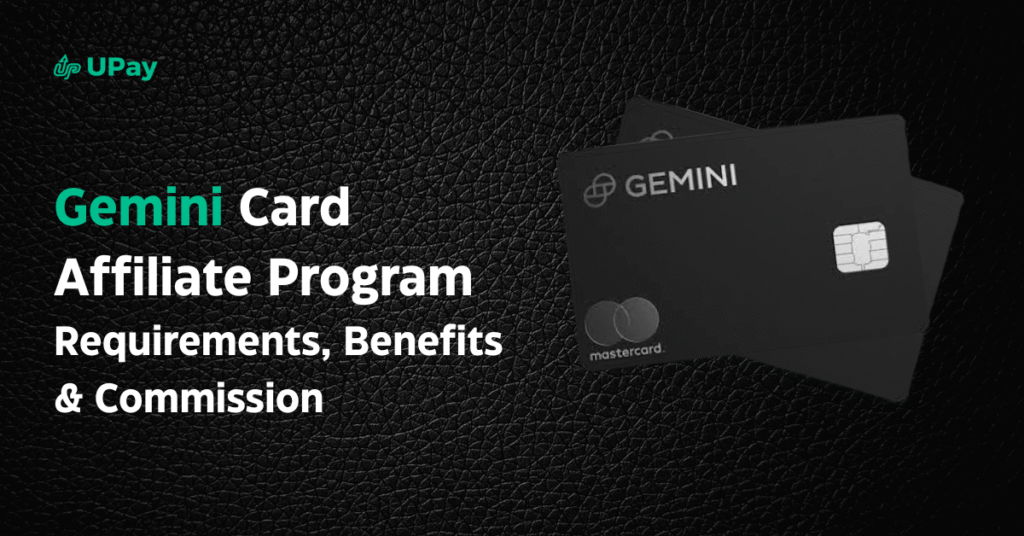
The Gemini Affiliate Program allows you to earn a flat commission of $25 per active trader by referring users to Gemini. Powered by the Impact platform, Gemini’s program is ideal for influencers and marketers targeting security-conscious U.S. crypto traders. However, while Gemini’s strong brand credibility and trusted reputation are attractive, the UPay Affiliate Program provides an even more compelling alternative. With a clear commission structure of $30 per card activation plus 0.6% on monthly recharge volumes, reliable monthly payouts, and global accessibility in over 168 countries, UPay offers advanced tools, flexible partner tracks, and comprehensive marketing support. By promoting both programs, you can capture Gemini’s security-focused audience and also reach international users seeking multi-currency fintech solutions. Key Takeaways Gemini’s Strengths UPay’s Edge Gemini Overview Founded in 2015 by Cameron and Tyler Winklevoss, Gemini has built its reputation on regulatory compliance and security. It was the first cryptocurrency exchange to receive SOC 2 Type 1 and Type 2 certification, a standard most financial institutions use to demonstrate data security and operational integrity. It operates under a BitLicense from the New York State Department of Financial Services and holds licences in select EU markets. Gemini’s product portfolio includes its core crypto exchange, the ActiveTrader platform for higher-volume users, the Gemini Credit Card with crypto cashback rewards, and GUSD, its regulated US dollar stablecoin. This range of products gives affiliates multiple promotional angles beyond just the exchange itself. Gemini Affiliate Program Overview The Gemini Affiliate Program, powered by the Impact platform, offers a straightforward way to earn commissions by referring users to Gemini’s trusted crypto exchange. Founded in 2015 by the Winklevoss twins, Gemini has built a reputation for strong regulatory compliance and security. How It Works Why Gemini Appeals to Affiliates Limitations of Gemini’s Affiliate Program Participation Requirements: Gemini vs. UPay The table below outlines the participation requirements for Gemini’s Affiliate Program compared to UPay’s Affiliate Program: Criteria Gemini Affiliate Program UPay Affiliate Program Account Status Requires a KYC-verified Gemini account No existing UPay account needed Audience Size Strong online presence (e.g., 10K+ followers or 50K monthly website visitors) No minimum audience requirements; open to all affiliates Content Quality High-quality, compliant content focused on crypto education Flexible content guidelines (social media, blogs, videos) Regional Eligibility Primarily U.S., Canada, UK Available in 168+ countries, including emerging markets (e.g., Nigeria, India, Brazil, Philippines) Application Process Selective approval (typically 3–10 business days) Instant approval via an online form Payout Monthly Monthly Key Insight: UPay’s lack of strict audience thresholds and instant online approval make it ideal for creators of all sizes, while Gemini appeals to established influencers targeting U.S. traders. UPay vs. Gemini: Which Is Better for Affiliates? Below is a direct comparison of the two affiliate programs: Criteria Gemini Affiliate Program UPay Affiliate Program Commission Rates $25 per active trader (flat rate) $30 per card activation + 0.6% on monthly recharge volumes Ease of Participation Requires strict content standards and strong audience metrics No content or audience restrictions; instant online approval Payout Frequency Monthly Monthly Global Reach Limited to select regions (primarily U.S., Canada, UK) Available in 168+ countries with multi-currency support Tools & Support Basic Impact dashboard and dedicated affiliate managers Advanced analytics, VIP account managers, customizable landing pages, pre-designed marketing collateral, and a KOL Partnership Program Product Range Crypto exchange, credit card, staking Multi-currency debit cards for crypto/fiat spending across various user segments Verdict: UPay offers higher upfront commissions and recurring rewards with a broader global reach and advanced support tools, making it a superior choice for scaling long-term affiliate income. Gemini Card 101 The Gemini Credit Card is a Mastercard designed to reward users with crypto on everyday spending. Key features include: Gemini and the Cryptocurrency Market Gemini holds an important position in the global crypto exchange market, capturing approximately 2.3% of the market share. Key insights include: UPay Affiliate Program: A Reliable Alternative For affiliates seeking higher, recurring income with a truly global platform, the UPay Affiliate Program is an excellent alternative. UPay’s program is built around promoting multi-currency debit cards that blend crypto and fiat spending seamlessly. It is structured to support diverse partner profiles: UPay Affiliate Program Overview UPay offers three partner tracks: UPay Card Portfolio & Global Reach UPay provides a diverse range of card types, tailored for different user segments: These offerings serve individuals, businesses, and Web3 companies alike. UPay is available in over 168 countries (excluding 30+ sanctioned regions such as China, Russia, Iran) and supports transactions in multiple currencies (USD, EUR, GBP, and several cryptocurrencies). Commission Structure & Payout Details Advanced Tools & Support UPay provides an extensive suite of resources to maximize your affiliate success: With these features, UPay democratizes affiliate marketing—providing transparency, scalability, and global reach for affiliates of all sizes. How Affiliate Marketing Works Affiliate marketing is a performance-based strategy where you earn commissions for every customer or sale generated through your promotional efforts. Both the Gemini and UPay programs operate similarly: Operating Strategies for Affiliates To maximize your revenue potential, consider the following strategies: Conclusion The Gemini Affiliate Program is a credible, well-structured option for affiliates with an established US audience in the crypto trading space. Its $25 flat commission, trusted brand, and Impact-powered tracking make it a reliable programme to promote. Its limitations, namely the geographic focus, the one-time commission model, and the audience size barrier, mean it is not the best fit for every affiliate. The UPay Affiliate Program addresses those limitations directly: higher per-activation commission, recurring monthly earnings, global availability, and no audience threshold. For affiliates who want to build income that scales with their referral base over time, UPay offers the stronger long-term structure. Promoting both together, with each aimed at the audience segment it serves best, is the approach most likely to maximise your total affiliate earnings. See Also: Fold Card Affiliate Program Ready to start earning? Sign up for the UPay Affiliate Program today and harness the power of the crypto and fintech markets to boost your income! Frequently Asked Questions How often
Top 10 Most Expensive Cryptocurrencies in 2026
This list explores the top 10 most expensive cryptocurrencies in 2026, analyzing their value, growth factors, and what sets them apart.
Anti Money Laundering in Cryptocurrency — What It Means for You
Anti-money laundering (AML) in cryptocurrency refers to the laws, regulations, and compliance procedures that require crypto businesses to detect, prevent, and report illicit financial activity. Money laundering, the process of disguising the origins of illegal funds, is a major concern for regulators and threatens the legitimacy of the entire cryptocurrency market. For cryptocurrency exchanges, wallet providers, and virtual asset service providers (VASPs), AML compliance is not optional. It is a regulatory requirement enforced by bodies including the Financial Conduct Authority (FCA) in the UK, FinCEN in the US, and shaped globally by the Financial Action Task Force (FATF). This guide explains how crypto AML works, what regulations apply to your jurisdiction, which tools and practices are required, and how UK-based crypto businesses can build a compliant AML framework. Why is AML Important in Cryptocurrency? Shutterstock The aim is to ensure that cryptocurrencies are used for legitimate purposes and not for activities like fraud or funding terrorism. However, because crypto transactions can be sneaky and happen anywhere in the world, Anti Money Laundering in cryptocurrency needs smart technology and cooperation to work effectively. Read Also: How to Remove Crypto Mining Malware, Crypto Recovery Companies. How Anti-Money Laundering Works in Cryptocurrency — A Step-by-Step Framework 1. Risk Assessment Before onboarding any customer, a crypto business must conduct an AML risk assessment. This means evaluating the specific risks posed by the platform’s products, customer base, geographic exposure, and transaction types. The risk assessment forms the foundation of the entire AML programme and must be reviewed regularly. 2. Know Your Customer (KYC) and Customer Due Diligence (CDD) Every customer must be identified and verified. Standard CDD involves collecting government-issued ID, proof of address, and assessing the customer’s intended use of the platform. For higher-risk customers, including Politically Exposed Persons (PEPs) and those from high-risk jurisdictions. Enhanced Due Diligence (EDD) applies, involving additional verification, source-of-funds checks, and ongoing monitoring. 3. Know Your Business (KYB) For corporate customers, exchanges must verify the business entity itself, identify Ultimate Beneficial Owners (UBOs), and assess the business’s own AML risk profile. 4. Transaction Monitoring VASPs must continuously monitor transactions on their platform for suspicious activity. This includes unusually large transfers, rapid movement between wallets, transactions involving sanctioned addresses, and patterns consistent with layering or smurfing. 5. Blockchain Analytics Blockchain analytics tools (such as Chainalysis, Elliptic, and TRM Labs) allow exchanges to trace the origin and destination of funds on-chain, identify connections to known illicit wallets, and generate risk scores for wallet addresses. 6. Sanctions Screening Every customer and transaction must be screened against international sanctions lists, including OFAC’s Specially Designated Nationals (SDN) list, the UN Consolidated list, and the UK HM Treasury Sanctions list. 7. Suspicious Activity Reporting (SAR) When suspicious activity is detected, VASPs are legally required to file a Suspicious Activity Report with the relevant Financial Intelligence Unit (FIU). In the UK, this means reporting to the National Crime Agency (NCA). Failure to file is itself a criminal offence. 8. Travel Rule Compliance For transactions above the relevant threshold (typically £1,000 in the UK), VASPs must collect and transmit sender and recipient information alongside the transfer. This applies to transfers between VASPs and is enforced by the FCA. 9. Record-Keeping All customer data, transaction records, and AML compliance activities must be retained for at least five years. These records are subject to inspection by regulatory authorities. 10. Employee Training All staff must receive regular AML training appropriate to their role. The Money Laundering Reporting Officer (MLRO), a mandatory position for FCA-registered firms is responsible for maintaining the training programme and ensuring regulatory returns are filed correctly. The Three Stages of Money Laundering — How Crypto Is Used at Each Stage Stage What Happens How Crypto Is Exploited AML Control Placement Illicit cash or funds are introduced into the financial system for the first time Purchasing cryptocurrency at exchanges or peer-to-peer platforms using cash; depositing to a non-KYC exchange; using a crypto ATM with no verification KYC at onboarding; cash-to-crypto monitoring; crypto ATM operator registration Layering Funds are moved through complex transactions to obscure their trail and make tracing difficult Passing funds through multiple wallets; using mixers/tumblers; swapping between cryptocurrencies; using privacy coins (Monero, Zcash); exploiting DeFi protocols Blockchain analytics; transaction monitoring for layering patterns; sanctions screening on wallet addresses Integration Laundered funds re-enter the legitimate economy appearing as clean money Converting crypto to fiat and withdrawing; purchasing assets (real estate, NFTs, luxury goods) via crypto; business accounts receiving “crypto income” Source-of-funds checks during large withdrawals; Enhanced Due Diligence; monitoring for cash-out patterns Crypto AML Regulations in the UK — FCA Requirements and Obligations The United Kingdom has one of the most active regulatory environments for cryptocurrency AML compliance in the world. The key regulatory framework consists of: 1. Money Laundering Regulations 2017 (MLRs 2017) The primary UK legislation requiring crypto asset exchanges and custodian wallet providers to register with the FCA and implement full AML/CTF programmes.This includes KYC, CDD, EDD, transaction monitoring, SAR filing with the National Crime Agency, and Travel Rule compliance. 2. FCA Crypto Asset Registration Since January 2020, all UK-based crypto asset businesses must be registered with the FCA under the MLRs. Operating without registration is a criminal offence. As of 2025, the FCA has approved fewer than 50% of applicants, the bar for AML compliance standards is high. 3. Travel Rule (UK) The UK Travel Rule came into force in September 2023, requiring VASPs to collect and transmit sender and recipient information for transfers of £1,000 or more. The FCA enforces compliance, and non-compliant transfers must be rejected. 4. MLRO Requirement FCA-registered firms must appoint a Money Laundering Reporting Officer (MLRO), a senior individual who is personally responsible for the firm’s AML programme and for filing Suspicious Activity Reports with the NCA. 5. FCA Enforcement In 2024, the FCA issued its first enforcement action against a firm enabling crypto asset trading, fining CB Payments Limited (a Coinbase entity) £3.5 million (~$4.7 million) for AML failures including inadequate transaction monitoring and insufficient customer