


Solana Policy Institute Urges Senate to Act On Crypto Bill

The Solana Policy Institute (SPI) has urged U.S. Senate leaders to move forward with the CLARITY Act before lawmakers begin their August recess, arguing that the legislation would provide long awaited regulatory certainty for the digital asset industry. The appeal comes as the Senate faces a narrowing legislative window and ongoing negotiations over key provisions of the cryptocurrency market structure bill. Key Takeaways Solana Policy Institute Calls for Immediate Senate Action The Solana Policy Institute sent a letter to Senate Majority Leader John Thune and Senate Minority Leader Chuck Schumer urging them to prioritize a vote on the CLARITY Act before Congress begins its August recess. SPI President Kristin Smith and CEO Miller Whitehouse Levine said passing the legislation would provide the regulatory certainty needed for American developers, institutions, and consumers while helping the United States remain competitive in the global digital asset industry.The organization argued that bringing the bill to the Senate floor would move it one step closer to becoming law. Senate Faces Limited Legislative Window The Institute’s request comes as the Senate has limited time to consider major legislation before lawmakers shift their attention to government funding, nominations, and the upcoming election season. A Republican led version of the CLARITY Act, which combines provisions previously approved by two Senate committees, was introduced last week. Senate Majority Leader John Thune also indicated that the legislation remains under consideration, stating that the Senate will likely vote on the CLARITY Act if there is enough Democratic support to proceed. Ethics Provisions Remain a Major Obstacle One of the primary issues delaying progress is disagreement over ethics provisions related to President Donald Trump’s cryptocurrency business interests. The latest version of the CLARITY Act includes language that would prohibit public officials, government employees, and their spouses from issuing or sponsoring digital assets until January 20, 2029. However, discussions continue over how those provisions should be enforced, with debate focusing on whether enforcement authority should rest with the Department of Justice or state authorities. These concerns remain a significant point of negotiation between lawmakers. Developer Protections Included in the Legislation The bill also incorporates the Blockchain Regulatory Certainty Act, a provision designed to provide legal clarity for developers of non custodial blockchain software. Under the proposal, developers who do not take custody of customer assets would not be classified as money transmitters. The Solana Policy Institute said the provision would protect software developers from unnecessary criminal or regulatory liability and encourage continued blockchain innovation within the United States. Industry organizations have argued that clearer legal definitions would reduce uncertainty for developers building decentralized applications and blockchain infrastructure. Industry Groups Continue Pushing for Passage The Solana Policy Institute is not the only organization advocating for the legislation. Digital Currency Group (DCG) also urged Senate leadership to schedule a floor vote before the August recess, stating that the CLARITY Act would provide a clear regulatory framework for American businesses and consumers while supporting innovation in the digital asset sector. Industry supporters argue that delaying the legislation could slow investment and encourage blockchain development to move to jurisdictions with clearer regulatory frameworks. Conclusion The Solana Policy Institute’s latest appeal highlights the growing urgency surrounding the CLARITY Act as the Senate approaches its August recess. While supporters believe the legislation would establish much-needed regulatory certainty for the cryptocurrency industry, unresolved disagreements over ethics provisions and enforcement authority continue to shape negotiations. Whether the Senate is able to advance the bill before lawmakers leave Washington could determine the pace of U.S. cryptocurrency regulation for the remainder of the legislative session.
Strategy Posts $8.2 Billion Loss as Bitcoin Holdings Increase 11% During Q2

Strategy reported an $8.22 billion net loss for the second quarter of 2026 after a decline in Bitcoin’s market price resulted in a large unrealized accounting loss on its digital asset holdings. Despite the loss, the company increased its Bitcoin treasury by 11% during the quarter, reduced outstanding debt, expanded its cash reserves, and continued adjusting its capital management strategy. Key Takeaways Bitcoin Price Decline Drives Quarterly Loss Strategy reported a net loss of $8.22 billion during the second quarter of 2026, compared with net income of approximately $10 billion during the same period last year. The loss was driven primarily by an $8.32 billion unrealized fair value adjustment on the company’s Bitcoin holdings following a decline in Bitcoin’s market price during the quarter. These losses are accounting adjustments rather than realized losses, meaning the company continues to hold most of its Bitcoin despite the decrease in market value. Strategy’s software business remained profitable, generating $122.4 million in revenue during the quarter with a gross margin of 66.6%. Bitcoin Treasury Continues to Expand Despite the market downturn, Strategy continued accumulating Bitcoin throughout most of the quarter. The company increased its holdings by approximately 11%, reaching nearly 846,000 BTC by June 30 before later reducing the total to 843,775 BTC through limited sales completed during July. Based on the company’s filings, the Bitcoin portfolio had an original acquisition cost of approximately $63.7 billion while its market value stood at roughly $54.8 billion as of late July, leaving the holdings below their average purchase price. Strategy remains the largest publicly traded corporate holder of Bitcoin. Company Shifts Toward Balance Sheet Management Alongside expanding its Bitcoin treasury, Strategy focused on improving its financial position. Convertible debt declined 18% during the quarter to approximately $6.7 billion following the repurchase of a portion of its outstanding notes. The company also expanded its U.S. dollar reserve from $2.4 billion at the end of the quarter to approximately $3.75 billion through additional capital raising activities. According to management, the reserve is sufficient to cover more than two years of preferred dividend payments and interest obligations. Bitcoin Sales Support Capital Strategy Strategy continued implementing its recently introduced BTC Monetization Program, which allows the company to sell limited amounts of Bitcoin under certain circumstances. During 2026, the company sold approximately $218 million worth of Bitcoin to fund preferred stock dividend payments and strengthen its liquidity position. The sales represent a notable shift from the company’s long standing strategy of holding Bitcoin indefinitely, although executives emphasized that Bitcoin remains the foundation of the company’s treasury strategy. Management also stated that Bitcoin sales may be used when they provide a more efficient source of capital than issuing additional common shares. Preferred Stock and Cash Reserves Become Larger Focus The company continues expanding its Digital Credit strategy through preferred securities, including STRC and other preferred stock offerings. Strategy has maintained uninterrupted preferred dividend payments for 18 consecutive months and recently increased efforts to support the trading price of STRC through a share repurchase program. Executives said maintaining adequate cash reserves has become an important part of ensuring continued dividend payments while providing flexibility during periods of Bitcoin price volatility. Strategy Maintains Long Term Bitcoin Focus Despite reporting one of the largest quarterly accounting losses in its history, Strategy’s management reiterated its long term commitment to Bitcoin. The company continues to view Bitcoin as its primary treasury asset while gradually evolving its capital structure through debt reduction, increased liquidity, and the expansion of its Digital Credit business. Management said these initiatives are intended to strengthen the company’s financial position while allowing it to continue operating through changing market conditions. Conclusion Strategy’s second-quarter results illustrate the impact that Bitcoin price volatility can have on companies with large cryptocurrency treasuries. Although the company recorded an $8.22 billion unrealized loss, it continued expanding its Bitcoin holdings, reduced debt, increased cash reserves, and maintained dividend payments. The quarter also highlights a gradual evolution in Strategy’s treasury management approach, with limited Bitcoin sales, stronger liquidity, and greater emphasis on balance sheet stability complementing its long-term commitment to holding Bitcoin.
Hungary Lifts Cryptographic Controls After Granting First Mica License

Hungary has rolled back one of Europe’s strictest cryptocurrency transaction requirements, repealing its mandatory third party validation system shortly after issuing its first authorization under the European Union’s Markets in Crypto-Assets (MiCA) framework to Budapest based crypto platform CoinCash. The move removes an additional compliance layer that industry participants argued disrupted the domestic crypto market while reinforcing Hungary’s transition toward the EU’s harmonized regulatory regime. Key Takeaways Hungary Removes Transaction Level Crypto Validation The Hungarian Parliament voted to abolish the country’s mandatory validator requirement, eliminating an additional approval process that applied to certain cryptocurrency transactions. The requirement had been introduced under Hungary’s 2024 Crypto Assets Act and took effect on July 1, 2025. Under the previous framework, cryptocurrency conversions could only proceed after a licensed validator verified: Once those checks were completed, the validator issued a compliance declaration before the transaction could be finalized. The repeal removes this transaction level approval process while leaving broader regulatory obligations under MiCA intact. Government cites market disruption Finance Minister Kármán András said the validator requirement had created significant friction within Hungary’s cryptocurrency market. According to the minister, the additional compliance burden prompted several cryptocurrency service providers to suspend or discontinue operations in Hungary. He said the market is beginning to recover following the government’s decision to eliminate the extra validation layer. The repeal also removes criminal provisions associated with the previous framework, including penalties related to violations of the validator requirement and unauthorized crypto exchange activities. Coincash Becomes Hungary’s First Mica Licensed Crypto Firm The regulatory change comes shortly after the National Bank of Hungary (MNB) granted Tiwala Solutions, operator of CoinCash, the country’s first authorization under the European Union’s MiCA framework. CoinCash voluntarily suspended operations in December 2025 while completing the licensing process. According to the company, the authorization allows it to provide a broad range of regulated crypto services, including: CoinCash said it plans to gradually restore services and expand its offerings following the approval. Hungary Aligns With Mica Hungary had previously implemented one of the European Union’s strictest crypto compliance regimes by combining MiCA licensing with its own national validator requirement. The country also shortened the MiCA transition period for crypto asset service providers, requiring compliance by July 1, 2025, one year earlier than the EU’s maximum transition deadline of July 1, 2026. With the repeal, Hungary is removing requirements that went beyond the EU framework while maintaining MiCA’s licensing, governance, and compliance standards. Market Implications The repeal is expected to reduce operational friction for cryptocurrency businesses serving Hungarian customers. Instead of requiring transaction by transaction third party validation, crypto firms will operate primarily under MiCA’s entity level regulatory framework, which focuses on licensing, governance, risk management, consumer protection, and ongoing compliance. The change could encourage crypto service providers that previously limited or suspended operations in Hungary to re-enter the market. Conclusion Hungary has taken a significant step toward aligning its cryptocurrency regulations with the European Union’s MiCA framework by removing its controversial third-party validator requirement while preserving broader licensing and compliance standards. The repeal, coupled with CoinCash becoming Hungary’s first MiCA authorized crypto asset service provider, marks a shift from transaction level oversight toward a harmonized EU regulatory model that aims to balance market access with consumer protection.
Us Arbitration Giant Launches Specialist Panel for Crypto Disputes

The American Arbitration Association (AAA) has launched a dedicated Web3 Panel to handle disputes involving blockchain technology, digital assets, smart contracts, tokenization, and autonomous transactions. The initiative expands the century old dispute resolution organization’s expertise as cryptocurrency and decentralized technologies become increasingly integrated into commercial activity. The new panel brings together legal and technical specialists who will oversee arbitration and mediation involving blockchain based businesses, while operating under the AAA’s existing arbitration rules rather than creating a new regulatory framework. Key Takeaways AAA Expands Dispute Resolution for Digital Assets The American Arbitration Association announced the creation of its Web3 Panel on July 29, establishing a dedicated roster of arbitrators with experience in blockchain technology, cryptocurrency, decentralized finance, tokenization, and emerging digital commerce. The panel is designed to resolve disputes arising from decentralized and automated commercial environments, including disagreements involving smart contracts, governance structures, asset ownership, cybersecurity incidents, transaction records, and cross-border enforcement. It will also address disputes related to agentic commerce, where artificial intelligence systems negotiate, authorize, or execute transactions with limited human involvement. Rather than creating a new legal system, the panel will administer cases under the AAA’s existing Commercial Arbitration Rules for business disputes and Consumer Arbitration Rules for matters involving exchanges, wallet providers, and similar services. As with other arbitration proceedings, cases require a valid arbitration agreement between the parties before the AAA can administer the dispute. Panel Combines Legal and Technical Expertise The initial Web3 Panel brings together professionals from legal practice, academia, and technology. Its founding members include: The AAA said it intends to expand the panel as new technologies and categories of disputes emerge. Focus Extends Beyond Cryptocurrency The Web3 Panel’s jurisdiction is intended to cover a broad range of blockchain related commercial issues. Potential disputes include questions involving contract formation, governance, custody of digital assets, tokenized asset rights, decentralized autonomous organization (DAO) voting, cybersecurity incidents, wallet custody, exchange restrictions, stolen asset recovery, and smart contract vulnerabilities. The panel also recognizes the growing role of autonomous software systems in commerce, extending its expertise to disputes arising from AI driven transactions and automated agreements. AAA Senior Vice President and Head of Panel Relations Eric Dill said the increasingly technical nature of blockchain related disputes requires specialized expertise. “Web3 disputes involve familiar commercial questions in a highly technical environment.” He added that businesses increasingly need dispute resolution processes that combine trusted administration with technical knowledge and practical case management. Part of Broader Legal Infrastructure Efforts The launch builds on the AAA’s earlier work developing dispute resolution frameworks for blockchain and smart contracts. At the same time, the organization is working on the Legal Context Protocol, an initiative intended to establish standards governing transactions carried out by autonomous AI agents. The project is being developed in collaboration with companies including Google, IBM, and Circle. Arbitration Remains Separate From Regulation The establishment of the Web3 Panel does not give the AAA regulatory authority over the cryptocurrency industry. Instead, it provides parties that have agreed to arbitration with access to specialists capable of handling technically complex disputes involving blockchain technology. Arbitrators also cannot reverse blockchain transactions directly. Instead, arbitration awards typically require remedies such as repayment, new asset transfers, or other actions that are carried out outside the original blockchain transaction. The launch comes as arbitration continues to play a growing role in digital asset disputes, including recent cases involving cryptocurrency businesses and their commercial partners. Conclusion The American Arbitration Association’s new Web3 Panel reflects the increasing demand for specialized dispute resolution as blockchain technology, digital assets, and AI-driven commerce become more common in business transactions. By combining legal professionals with technical experts, the AAA aims to provide parties with arbitrators who understand both the commercial and technological aspects of decentralized systems. While the panel does not regulate the cryptocurrency industry or replace the courts, it expands the legal infrastructure available to companies operating in the digital asset sector and signals continued institutional recognition of blockchain-based commerce as it becomes more established.
Guide to Crypto Card Issuing Platforms for Startups
Every card in your wallet was issued by a bank. Not the brand on the front, but a bank sitting quietly behind it. The Delta card is an American Express product. The Amazon card is Chase. The Apple Card is Goldman Sachs. The brand gets the real estate; the bank holds the license. For decades, that license was the wall that kept startups permanently on the spending side of a card, never the issuing side. Crypto card issuing platforms for startups just changed which side you stand on. How Crypto Card Issuing Works: The API Core Modern card issuing platforms use flexible software architectures and API-driven systems to deploy tailored financial products. Application programming interfaces (APIs) connect a startup’s cryptocurrency wallet directly to global payment networks. The following sequence describes how crypto cards facilitate an automated, smooth transaction flow, converting digital assets into usable fiat in milliseconds: Read Also: How to earn crypto passively. Compliance & Responsibility: KYC, AML, and Security The interaction between digital assets and traditional commercial networks requires strict adherence to global financial regulations. Brands must establish a compliance baseline to operate legally: “Compliance is not a one-time checkbox. For startups entering the card issuing space, KYC and AML obligations are ongoing operational responsibilities that sit with the program manager, not just the platform provider.” Financial Action Task Force (FATF), Guidance on Virtual Assets Critical Compliance Note: While partnering with a white-label issuing platform helps manage these operational hurdles, startups cannot fully bypass regulatory obligations. Established providers hold necessary legal licenses and banking relationships to handle certain technical aspects, but startups retain significant compliance responsibilities. This includes independent KYC and AML verification to ensure the program aligns with local laws. Read Also: What Does 5x Mean in Crypto? Crypto Card Issuing Platforms for Startups Platform Overview Platform Best For Technical Focus UPay End-to-end Crypto Programs Managed infrastructure, instant stablecoin conversion Marqeta High-volume Enterprise Programmable infrastructure, complex JIT funding Lithic Early-stage/MVPs Developer-friendly, reliable sandbox, speed Paymentology Cross-border Scaling Cloud-native, hyper-localized processing Cross River Bank-grade Compliance Chartered banking, fiat/crypto hybrid Reap Web3 Corporate Spend Bridging Web3 treasury to traditional vendors Startups must carefully evaluate card issuing platforms to find a provider that aligns with their product roadmap, treasury goals, and geographical expansion targets. Note on Mobile Wallets: Feature availability, such as Apple Pay and Google Pay integration, is not universal. Integration capabilities depend heavily on specific issuers and regional regulations; therefore, startups should verify these details with their provider based on their target markets. “The fastest path from idea to issued card runs through developer-first infrastructure. Sandbox environments, clear API documentation, and modular ledger systems are not luxuries. They are table stakes for any serious card issuing platform.” Lithic Developer Documentation Read Also: Coin Ticker: The Three Letters That Speak for a Whole Crypto Project. How to Choose: The Right Crypto Card Platform for Your Startup Step / Consideration Key Focus What to Check / Ask 1. Growth Stage Match platform complexity to business maturity. Speed and sandbox environments for early-stage; high-volume stability for scaling enterprises. 2. Compliance Understand regulatory and licensing obligations. Banking licenses, modular KYC/AML toolkits, and data residency processes. 3. Technical Needs Evaluate architecture and funding mechanisms. API flexibility, Just-In-Time (JIT) funding, and stablecoin support (USDT/USDC). 4. Scalability Plan for cross-border and international growth. Multi-currency settlement and global card issuance architecture. Read Also: Tips on how to convert crypto to cash. Frequently Asked Questions Conclusion Most startups spend years building something fast enough to compete globally, then hand the payment layer to infrastructure that wasn’t designed for them and hope it keeps up. It doesn’t. The correspondent bank still takes three days. The FX fee still quietly eats the margin. The wire still fails on a Friday afternoon in a timezone nobody accounted for. Choosing the right crypto card issuing platforms for startups is not a back-office decision. It is a growth decision. The platform determines whether your card program scales with your user base or fights it, whether contractors in Lagos get paid on Tuesday or Thursday, whether your treasury asset becomes spending power in minutes or days. The gap between decentralized assets and everyday commerce is closing. The startups that close it deliberately, with infrastructure built for speed and global reach rather than inherited from a banking era that predates them, are the ones that stop explaining payment delays and start compounding on the time they saved.
Best Prepaid Crypto Card for Companies in 2026
Your company owns Bitcoin; your bank doesn’t care. When it’s time to pay a contractor in Berlin, a designer in Lagos, or a developer in Manila, the wire transfer still takes three to five business days through a correspondent bank that charges for the privilege of slowing your money down. The crypto sits in your treasury — liquid, owned, fully available while the payment infrastructure pretends it doesn’t exist. Prepaid crypto cards are the fix that should have existed three years ago: your treasury funds the card, the card handles the conversion, and the payment clears the same day you authorize it. First things first, What Is a Prepaid Crypto Card for Companies? A prepaid crypto card is a payment card you fund in advance using cryptocurrency. When a purchase is made, the card instantly converts the loaded crypto into local fiat currency and completes the transaction, just like any regular debit card. For companies, this model adds a layer that consumer cards typically don’t offer: the ability to issue multiple cards to employees, set individual spending limits, track all transactions in real time, and consolidate crypto-to-fiat reporting for accounting purposes. It’s expense management built for a business that holds or earns in crypto. Read Also: Tips on how to convert crypto to cash quickly. Why Companies Are Making the Switch 1. Lower Transaction Costs Businesses are moving away from traditional corporate cards to reduce payment costs. Standard business credit cards often charge between 1.5% and 3.5% per transaction, while international payments add foreign exchange fees. Crypto prepaid cards help companies cut these expenses and streamline spending. 2. Faster Expense Management Managing employee expenses through traditional systems can be time-consuming and paperwork-heavy. Virtual payment tools have already gained momentum, with many businesses adopting them to simplify reconciliation and reduce administrative workload. Crypto prepaid cards build on this efficiency by enabling faster and more controlled spending. 3. Direct Access to Crypto Holdings For crypto-native businesses, prepaid crypto cards remove unnecessary conversion steps. Instead of selling digital assets, transferring funds to a bank, and making payments separately, companies can spend directly from their crypto balances through a single transaction. 4. More Efficient Cross-Border Payments Global companies use crypto prepaid cards to pay contractors and teams across regions without relying on expensive bank wires. Payments settle faster, avoid high currency conversion costs, and allow recipients to receive local currency through established card networks. 5. Reduced Chargeback Risk Chargebacks remain a major challenge for traditional payments. Chargebacks cost merchants an estimated $33.8 billion globally in 2025, a figure projected to keep climbing, and many disputes are fraudulent. However, crypto transactions are irreversible once confirmed, giving businesses greater payment certainty and lowering exposure to costly disputes. Read Also: Crypto Cards With Apple Pay and Google Pay Support How a Prepaid Crypto Card for Companies Works Step How It Works Business Benefit 1. Funding Companies load funds from a treasury wallet to distribute spending access centrally. Eliminates manual employee transfers while protecting primary crypto reserves. 2. Controls Administrators assign individual balances, daily/monthly caps, and merchant restrictions. Reduces unauthorized spending while maintaining team flexibility. 3. Conversion Crypto is automatically converted to fiat at the point of sale at prevailing market rates. Enables seamless payments using digital assets without manual exchanges. 4. Tracking Transactions instantly appear in a central dashboard showing fiat, crypto, and location data. Provides real-time visibility for finance teams to monitor expenses. 5. Integration Payment data syncs directly with accounting platforms like QuickBooks or Xero. Automates bookkeeping, speeds up reconciliation, and ensures compliance. Virtual and Physical Card Options Most providers offer both virtual and physical prepaid crypto cards. Virtual cards work well for Physical cards support: Companies can issue either option, or both, depending on their operational requirements. The 8 Best Prepaid Crypto Cards for Companies-Quick Summary Table Provider Core Assets Key Features Best For Upay BTC, ETH, USDT 1% fee, 0% FX, Apple/Google Pay, White Label/API Freelancers & crypto businesses Crypto.com Multiple 2%–5% cashback, 0% FX, €10k ATM limit Tech-forward users Wirex Multiple 0.5%–8% WXT back, free ATM up to $200 European freelancers & cross-border Digitap Multiple Instant conversion, OpenAPI, central dashboard International teams & unified expenses Rain.XYZ Stablecoins Virtual/physical cards, compliance, expense dashboard Companies modernizing on stablecoins RedotPay Multiple No annual fee, API integration, team access Fintechs & remote-first teams Mountain Wolf USDT, USDC, ETH Real-time visibility, finance dashboard Startups requiring expense control Bitsa BTC, ETH, LTC No bank needed, €15k daily spend, multi-card Budget separation without traditional banking 1. UPay Source: x.com/UPayOfficial_EN UPay is a standout prepaid crypto card built specifically to serve both individual users and businesses. Through its UP Business platform, UPay offers a White Label program so companies can issue branded cards (virtual and physical) to team members, integrate via API, manage multiple user accounts, and handle high-volume transactions from a central dashboard. The card runs on Visa and Mastercard networks and is accepted at over 55 million merchants across 180 countries. It supports 50+ assets, including BTC, ETH, and USDT, with automatic crypto-to-fiat conversion at the point of sale. Fees are transparent, with a standard 1% transaction fee and 0% cross-border charge. Security includes Google Authenticator 2FA and advanced safeguards with global compliance. It also integrates with Apple Pay and Google Pay, making it a strong all-around option for crypto-native companies. 2. Crypto.com Visa Card Source: Pinterest.com The Crypto.com prepaid Visa Card is one of the most recognized products in the space and comes in both virtual and physical versions. It supports multiple crypto and fiat currencies, making it well-suited for companies with global operations or multi-currency needs. Higher card tiers offer perks such as airport lounge access, subscription rebates for services like Netflix and Spotify, and cashback of up to 5% in CRO tokens. The tiered structure means companies choosing higher tiers unlock better rewards but need to stake CRO tokens accordingly. It also integrates with Apple Pay and Google Pay, with ATM withdrawals capped at €10,000 monthly and top-ups limited to €25,000. It’s a strong
How to Issue Branded Crypto Cards for Your Business
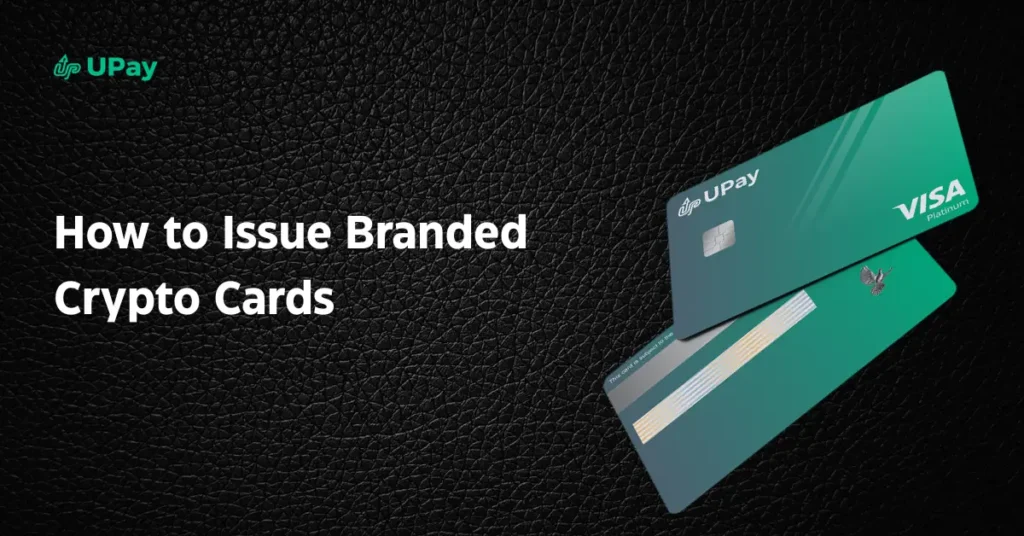
Every time someone pulls out their Uber card, Amazon card, or Apple Card, the brand wins, not from the transaction, but from the moment before it. The half-second when the card comes out, when whoever is standing nearby sees the name on it. That is an impression no algorithm serves, no ad platform charges for, and no competitor can skip. It happens at the point of money changing hands, which is the most attentive moment in any consumer’s day. For most of that history, only the biggest brands in the world could buy that moment. Branded crypto cards just put it on the open market. First things first, What Is a Branded Crypto Card? Simply, a branded card is much like the cards you are currently familiar with, but for cryptocurrency. It is a payment (physical or virtual) card issued under your business’s brand that allows your customers to spend crypto that’s converted to fiat at the point of sale. The card carries your branding, while all of the complexities, such as card network licensing and crypto-to-fiat conversion, are handled by the payment provider in the background. It is technically a white-label card issuing, where your brand sits in front, and all the heavy lifting is at the back. Read Also: Quick tips to converting crypto to cash. Why Businesses Are Issuing Branded Crypto Cards The branded crypto card offers a passive brand impression, which offers brand visibility. Unlike digital links, the cards get seen by colleagues, cashiers, and friends. If you are building a product that sells, this form of visibility compounds. A common friction point in crypto adoption is spending. Users hold stablecoins or other digital assets but face limited merchant acceptance at the point of sale. A crypto card solves this directly. The card converts crypto to fiat at the moment of purchase. This feature makes the user’s balance spendable anywhere the typical card network (Visa/Mastercard) is accepted. Branded cards are often loaded with rewards. Users can expect cashback in USDT, spending bonuses, or crypto-back on purchases. These bonuses are currently unmatched, especially for crypto-native users. Card issuers typically earn interchange fees on every transaction processed through their card. For businesses with a large active user base, this can become a passive revenue line. Read Also: Best Crypto Cards With Apple Pay and Google Pay Support. What You Need Before You Start Here is what you need to know about issuing crypto cards as a brand: How to Issue Branded Crypto Cards with UPay UPay is one of the major white-label crypto card issuance providers. Here is how to navigate obtaining a branded crypto card from them: Step 1: Submit a Demo Request Go to business.upay.best/white-label and fill out the contact form. You’ll provide your first and last name, company name, preferred contact method, email, phone number, country, business structure, and your inquiry. This is how you start the partnership conversation. Step 2: Complete KYB/KYC UPay has built-in KYC/KYB and AML compliance baked into its infrastructure, so you’ll go through business verification as part of onboarding before you get access to anything. Step 3: Configure Your Card Program Work with UPay to define your card parameters, such as virtual, physical, or both, and submit your branding assets. UPay handles card issuance, production, and delivery. Your brand chooses the design, colors, and branding elements. Step 4: Integrate the API UPay says integration takes under 3 weeks via their open API, which connects to your existing exchange or fintech platform. They provide complete documentation, sandbox testing, and all the needed technical support. Step 5: Go Live Switch from sandbox to production. Cards support USDT (TRC20/ERC20/BEP20) and USDC, work in 180+ countries, and are compatible with Apple Pay, Google Pay, and Alipay. Why Partner With UPay for Your Branded Card Issuance UPay has a long history of being the go-to for several brands and businesses. They are backed by incredibly powerful technology, but there is more. What we define as a modern card issuing platform is a modern card issuer that issues a card that is digital-first.– Jawad Jahan, Research Analyst, Juniper Research Virtual vs. Physical Cards: Which Should You Issue? Both physical and virtual options have benefits. Hence, the decision is comparing both in relation to the unique needs of your business. Virtual cards are best for online spending and subscriptions. What’s more, their issuance is instant, and the cost is low. On the flip side, issuance of physical cards can take weeks. Plus, they are pretty pricey. However, it is best for brand presence and in-store purchases. Many businesses launch with virtual cards first to validate demand, then introduce physical cards once the user base justifies the production cost. We advise this approach to avoid unnecessary expenses. Read Also: What Does 5x Mean in Crypto? Conclusion Issuing a branded crypto card can help extend your brand into your users’ daily financial lives. What makes the experience much better is partnering with UPay. UPay’s card issuing program handles the licensing, compliance, and network relationships. This way, your business can focus on the product experience. If you are ready to put your brand in your customers’ wallets, UPay is where you start.
South Korean Crypto Trading Surges as Stock Market Declines

Cryptocurrency trading activity on South Korea’s major exchanges climbed sharply this week as the country’s stock market suffered several days of steep losses, prompting investors to reposition capital and seek alternative trading opportunities. Trading volumes across the nation’s five largest crypto exchanges rose well above recent averages as the KOSPI experienced a sharp sell off. Market observers say the surge may reflect a combination of investors rotating funds into digital assets, raising liquidity to meet margin requirements, and moving capital overseas to trade Korean stock-linked derivatives. Key Takeaways Crypto Exchanges Record Sharp Increase in Activity According to market data, trading across Upbit, Bithumb, Coinone, Korbit, and Gopax totaled approximately $964.11 million on July 28, representing an 82.5% increase over the previous month’s average daily trading volume. The elevated activity continued on July 29, with trading reaching roughly $831.76 million, still about 57.4% above normal levels. The increase coincided with a sharp decline in the KOSPI, South Korea’s benchmark stock index, which lost significant value over consecutive trading sessions and triggered market circuit breakers during the sell-off. Market capitalization on the exchange reportedly declined by as much as 864 trillion won during the downturn. Upbit and Bithumb Lead Trading Gains The largest increase in activity was recorded on Upbit, South Korea’s biggest cryptocurrency exchange. Trading volume reached approximately $715 million on July 28, almost double its average daily volume of about $356 million over the previous month. The following day, Upbit processed roughly $596 million in trades, remaining around 67% above its monthly average. Bithumb also experienced a substantial increase in activity, with trading volumes rising sharply as investors responded to heightened market volatility. Analysts said investors appeared to concentrate trading on exchanges with deeper liquidity as financial markets became more volatile. USDT trading outpaces Bitcoin and Ethereum One of the most notable developments during the market turbulence was the surge in Tether (USDT) trading. On Upbit, USDT trading volume reached approximately 121.5 billion won on July 28, exceeding both Bitcoin’s 89.7 billion won and Ethereum’s 59.8 billion won. Activity accelerated further the following day, with USDT trading climbing to roughly 200 billion won, around twice Bitcoin’s trading volume and approximately three times Ethereum’s. Compared with the same period one month earlier, USDT trading increased several-fold, highlighting growing demand for stablecoins during the market downturn. Analysts Offer Different Explanations While some market participants believe investors shifted money from equities into digital assets as stock prices declined, analysts cautioned that the increase in crypto trading does not necessarily indicate fresh capital entering the cryptocurrency market. According to research cited by local media, some investors may have sold digital assets to obtain cash for margin calls triggered by falling stock prices. Because cryptocurrencies trade around the clock and can be converted into cash quickly, they can serve as a readily available source of liquidity during periods of market stress.Researchers suggested investors may have exchanged Korean won for USDT before transferring funds to foreign cryptocurrency exchanges or decentralized platforms to access Korean stock linked perpetual futures and other derivatives unavailable through domestic markets. Tiger Research senior researcher Cho Yoon sung said demand may have increased among investors moving assets to overseas exchanges or personal wallets to trade Korean equity related perpetual contracts. Stock Market Volatility Renews Focus on Crypto The latest trading surge comes months after many South Korean retail investors shifted capital away from cryptocurrencies and into artificial intelligence-related stocks, particularly semiconductor companies. That rotation helped fuel strong gains in Korean equities before the recent correction reversed part of those advances. The latest volatility suggests investors remain willing to move quickly between asset classes as market conditions change. Some analysts also noted that despite renewed crypto activity, blockchain based artificial intelligence tokens did not experience a comparable rise in demand during the stock market sell-off. Conclusion The sharp increase in cryptocurrency trading across South Korea’s exchanges highlights how closely digital asset markets remain linked to broader investor sentiment. As the KOSPI experienced several days of significant losses, trading volumes rose well above normal levels, particularly in USDT, reflecting heightened demand for liquidity and alternative trading strategies. While it remains unclear how much capital moved directly from equities into cryptocurrencies, the surge demonstrates that South Korea’s crypto market continues to play an important role during periods of financial market volatility. Analysts expect exchange volumes to remain a key indicator of investor behavior as both the stock and cryptocurrency markets continue to respond to changing economic conditions.
Aviva Investors Launches Tokenized Fund After Central Bank of Ireland Approval

Aviva Investors has launched its first tokenized fund share class after receiving approval from the Central Bank of Ireland, bringing its US Dollar Liquidity Fund onto the XRP Ledger (XRPL). The launch expands the use of blockchain technology in regulated asset management while maintaining the same investment structure and protections as the conventional fund. Developed in partnership with Ripple, the new share class enables eligible investors to access the fund through digital wallets while preserving traditional custody arrangements. The underlying assets remain with BNY Mellon, while Komainu provides digital asset custody and Licuido delivers the tokenization infrastructure. Key Takeaways Aviva Brings Its First Fund Onto Blockchain Aviva Investors announced the launch of a tokenized share class for its US Dollar Liquidity Fund, making it the firm’s first blockchain based investment product. The tokenized share class is available to eligible investors with digital wallets and is issued on the XRP Ledger, while retaining the same investment objective, daily liquidity, regulatory protections, and risk profile as the existing share class. The underlying fund, launched in 2020, invests in high-grade, short-term U.S. dollar-denominated debt instruments issued by governments, banks, and corporations. Central Bank of Ireland Approves New Structure The launch follows approval from the Central Bank of Ireland, allowing the tokenized share class to operate within the existing regulatory framework. Rather than replacing the traditional fund structure, the new offering adds a blockchain based share class while keeping the underlying assets under conventional custody arrangements. BNY Mellon continues to safeguard the fund’s assets, while Komainu serves as the regulated digital asset custodian and Licuido provides the tokenization technology powering the issuance on XRPL. This structure allows investors to access tokenized fund units without changing the investment strategy or regulatory protections of the underlying fund. Ripple Partnership Moves Into Production The product represents the first live deployment resulting from the partnership between Aviva Investors and Ripple, which was announced earlier in 2026. Ripple’s XRP Ledger provides the blockchain infrastructure supporting the issuance and transfer of the tokenized shares. Aviva Investors Chief Executive Officer Mark Versey said the company had spent several months developing the tokenized fund structure and described the launch as the firm’s entry into tokenized asset management. “We’re thrilled to be able to announce the launch of our first fund in the tokenisation space.” Ripple Senior Vice President of Trading and Markets Nigel Khakoo described the launch as a significant milestone for regulated fund tokenization. “This is a landmark moment for fund tokenisation.” He added that the product demonstrates how institutional investment funds can be issued on live blockchain infrastructure while maintaining investor protections. Xrpl Continues to Expand Institutional Use Cases The launch adds another regulated real world asset product to the XRP Ledger. According to Ripple, XRPL has processed more than 4 billion transactions since its launch in 2012, supports nearly 8 million active wallets, and is maintained by more than 130 independent validators. The announcement also coincides with the activation of the latest XRPL 3.2.0 update, which became the minimum required version for validators and node operators after the latest protocol amendment. While the update does not introduce major user facing features, developers said it strengthens network reliability and stability for applications built on the ledger. RippleX developer Mayukha Vadari noted that some protocol upgrades are intended to improve long-term adoption rather than generate immediate increases in transaction activity. She highlighted the Clawback amendment, which allows authorized issuers of regulated digital assets to recover tokens in cases involving fraud, mistaken transfers, or compliance requirements. Growing Institutional Adoption of Tokenized Funds Aviva Investors joins a growing number of traditional financial institutions introducing tokenized investment products. The launch follows earlier tokenization initiatives on XRPL, including Archax’s tokenization of abrdn’s US Dollar Liquidity Fund. More broadly, asset managers such as BlackRock, Franklin Templeton, and Apollo have also introduced blockchain-based investment products as demand for tokenized real-world assets continues to grow. The new share class allows investors to access a regulated money market-style fund using blockchain technology while preserving the established operational and custody framework relied upon by institutional investors. Conclusion Aviva Investors’ launch of a tokenized share class for its US Dollar Liquidity Fund marks an important milestone in the adoption of blockchain technology within regulated asset management. By securing approval from the Central Bank of Ireland and issuing the product on the XRP Ledger, the firm has combined traditional fund infrastructure with blockchain-based distribution while maintaining the same investment objectives, liquidity, and regulatory safeguards as its conventional fund. The launch also strengthens the growing role of tokenized real-world assets in institutional finance and highlights continued collaboration between traditional asset managers and blockchain infrastructure providers as regulated digital investment products become more widely available.
Us Sanctions Iranian Maritime Firm, Says It Accepted Bitcoin to Evade Restrictions
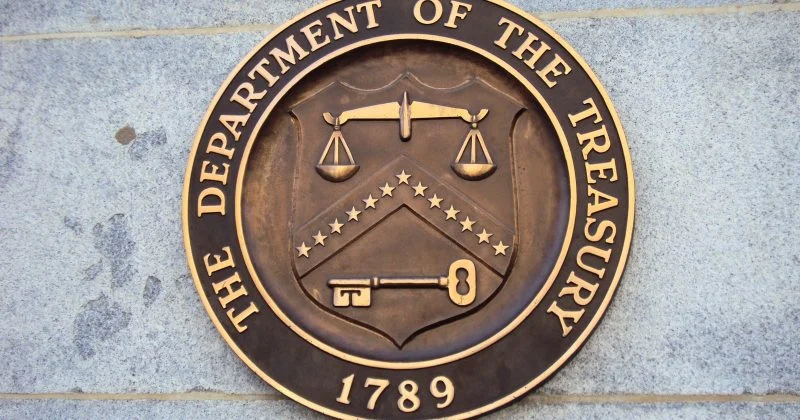
The United States has imposed sanctions on two Iranian maritime firms accused of operating an Islamic Revolutionary Guard Corps (IRGC)-backed insurance network that allegedly accepted Bitcoin and other digital assets to bypass Western sanctions. The Office of Foreign Assets Control (OFAC), part of the U.S. Treasury Department, designated the Persian Gulf Marine Insurance Company (PGMIC) and HormuzSafe Marine Services Authority, alleging they helped generate revenue for the IRGC by requiring commercial vessels transiting the Strait of Hormuz to purchase insurance policies payable through cryptocurrency. Key Takeaways Treasury Targets IRGC-Linked Insurance Network On July 29, the U.S. Treasury’s Office of Foreign Assets Control announced sanctions against Persian Gulf Marine Insurance Company and HormuzSafe Marine Services Authority. According to the Treasury, the two entities operated under the umbrella of the Islamic Revolutionary Guard Corps (IRGC) and played central roles in a maritime insurance program covering vessels traveling through the Strait of Hormuz, one of the world’s busiest oil shipping routes. The Treasury alleged that HormuzSafe, developed with the involvement of Iran’s Ministry of Economy, provided maritime services including insurance, traffic management, security, and emergency response while generating revenue for the IRGC. Meanwhile, Persian Gulf Marine Insurance Company allegedly issued the insurance policies used within the network. Insurance Allegedly Tied to Threats Created by Iran According to U.S. authorities, commercial vessels were effectively required to purchase insurance before transiting the Strait of Hormuz. The Treasury alleged that the policies covered risks including vessel seizures and harassment by IRGC naval forces, describing the arrangement as a system in which ships paid for protection against threats allegedly created by the same organization benefiting from the payments. Treasury Secretary Scott Bessent linked the sanctions to Iran’s economic situation. “With its economy in freefall and inflation in the triple digits, the regime is desperate for cash.” He added that the United States would not allow Iran to use international shipping to finance the IRGC or hold global commerce hostage. Bitcoin Allegedly Used to Bypass Sanctions A key element of the Treasury’s announcement was its claim that HormuzSafe accepted Bitcoin and other digital assets to facilitate payments outside the traditional financial system. According to OFAC, cryptocurrency payments allowed the network to collect revenue without relying on conventional banking channels that are subject to U.S. sanctions and international financial monitoring. The agency alleged that using digital assets formed part of a broader effort to evade Western financial restrictions while maintaining revenue from maritime traffic. Earlier reports had suggested Iran was developing a Bitcoin-based maritime insurance platform, and the latest sanctions identify HormuzSafe as part of that effort. However, the Treasury’s public announcement did not disclose specific wallet addresses, transaction amounts, or blockchain evidence related to the alleged cryptocurrency payments. Additional Sanctions Target Shipping Network Alongside the two maritime firms, OFAC also sanctioned eight shipping companies and designated eight oil tankers as blocked property. According to the Treasury, the companies are registered in jurisdictions including China, Hong Kong, and the Marshall Islands and were involved in transporting Iranian crude oil and petroleum products. The department said it has now sanctioned more than 100 vessels linked to Iran’s shadow fleet since the beginning of the year as part of an ongoing enforcement campaign. Crypto Enforcement Continues to Expand The latest action follows broader U.S. efforts to target cryptocurrency activity linked to sanctioned entities. Earlier in July, the Treasury sanctioned cryptocurrency wallets allegedly associated with Iran’s central bank, while stablecoin issuer Tether froze approximately $131 million in USDT connected to those addresses. The HormuzSafe sanctions illustrate another dimension of crypto enforcement, focusing not on wallet operators or exchanges but on companies allegedly using digital assets as payment infrastructure within commercial operations. The case also underscores the challenges regulators face when cryptocurrency transactions are embedded within legitimate international trade activities rather than traditional financial institutions. Conclusion The U.S. sanctions against Persian Gulf Marine Insurance Company and HormuzSafe Marine Services Authority reflect growing efforts to disrupt the use of cryptocurrency in sanctions evasion. According to the Treasury, the two firms operated an IRGC-backed insurance network that accepted Bitcoin and other digital assets while requiring ships transiting the Strait of Hormuz to purchase approved coverage. In addition to targeting the two companies, the United States expanded sanctions against Iran’s shipping network by designating additional companies and vessels. The enforcement action demonstrates how regulators are increasingly focusing on cryptocurrency’s role in international trade and sanctions compliance as digital assets become more integrated into cross-border financial activity.
Triple-a Confirms Treasury-Wallet Breach After Losses Reach $11.8m

Singapore based crypto payments firm Triple-A has confirmed that unauthorized actors gained access to several of its treasury wallets, resulting in the loss of company owned digital assets. While the company has not disclosed the total amount stolen, blockchain investigators estimate the losses have risen to approximately $11.8 million. Triple-A said the breach affected only its operational treasury accounts and did not impact customer assets. The company stressed that client funds remain protected because they are held separately in trust accounts and are not custodied within the compromised wallets. Key Takeaways Triple-a Confirms Wallet Compromise Triple-A announced that it detected unauthorized access to certain wallets containing the company’s own digital assets on July 25. As a precaution, the Singapore based payment provider placed parts of its platform into maintenance mode for approximately three hours while it secured the affected infrastructure. After completing its response, the company restored all services and resumed transaction processing and settlements across its markets. In its statement, Triple-A emphasized that the incident was limited to operational treasury accounts and did not affect customer funds. The company said it remains well capitalized, can meet all of its financial obligations, and will absorb the losses using its own treasury reserves. Onchain Analysis Points to Larger Losses Although Triple-A did not disclose the value of the stolen assets, blockchain investigators have provided estimates based on onchain activity. Blockchain analyst Specter initially estimated that attackers had drained more than $9.3 million from the company’s hot wallets before bridging the assets to Ethereum. Blockchain security firm PeckShield later increased the estimate to more than $9.7 million, reporting that approximately 5,227 ETH had been consolidated into a single Ethereum wallet. Subsequent analysis by Specter suggested that the attack continued beyond the initial compromise. The investigator estimated total losses had reached approximately $11.8 million, noting that additional deposits continued to enter the compromised wallets and were immediately transferred out for roughly 31 hours after the first suspicious transactions were detected. The stolen assets were reportedly moved across multiple blockchain networks, including Ethereum, TRON, Polygon, Arbitrum, Solana, The Open Network, and Bitcoin. Company Statement Leaves Unanswered Questions Triple-A’s statement described a three-hour maintenance period during which infrastructure was secured, but it did not explain why blockchain data appeared to show assets continuing to flow into compromised wallets for more than a day after the initial breach. The two timelines are not necessarily inconsistent, as temporarily disabling customer-facing services does not automatically prevent deposits from reaching existing blockchain wallet addresses. However, the company has not provided additional details regarding which systems were placed into maintenance or whether deposit addresses remained active throughout the incident. Customer Assets Remain Protected Triple-A repeatedly emphasized that customer funds were not exposed during the breach. The company explained that it does not provide digital asset custody on behalf of clients and instead safeguards customer funds through separate trust accounts maintained with regulated institutions. As a licensed payment provider operating under Singapore’s Payment Services Act, Triple-A is required to segregate customer assets from its own operational funds. The company stated that the financial impact is limited solely to its treasury accounts and that customers continue to receive normal settlement services following the restoration of operations. Investigation Underway Triple-A said it is working with internal security teams, external cybersecurity specialists, blockchain forensic firms, and the Singapore Police Force to investigate the incident. The company is attempting to trace the stolen assets and support potential recovery efforts but has not disclosed the attack vector or how unauthorized access to the treasury wallets was obtained. Triple-A also clarified that although it uses Fireblocks as part of its digital asset infrastructure, there is currently no evidence linking the breach to Fireblocks or indicating that the platform itself was compromised. Security Challenges Continue Across the Industry The incident adds to a series of major cryptocurrency security breaches reported in recent weeks. The Triple-A breach follows other significant exploits, including attacks on AFX Trade and WEMIX, contributing to a period of elevated losses across the digital asset industry. According to blockchain security firm PeckShield, cryptocurrency hacks resulted in $75.87 million in losses across 40 incidents during June alone. The latest attack highlights that even highly regulated digital asset service providers remain exposed to operational security risks involving online treasury wallets. Conclusion Triple-A’s confirmation of unauthorized access to its treasury wallets provides reassurance that customer assets remain protected, but the incident has raised questions about the management of operational wallets after blockchain investigators estimated losses at approximately $11.8 million. While the company maintains that the breach was contained within hours, onchain data suggests attackers continued draining assets for an extended period after the initial compromise. As forensic investigators and law enforcement continue tracing the stolen funds, the incident serves as another reminder that strong regulatory oversight and customer asset segregation do not eliminate the operational risks associated with managing internet-connected cryptocurrency wallets.