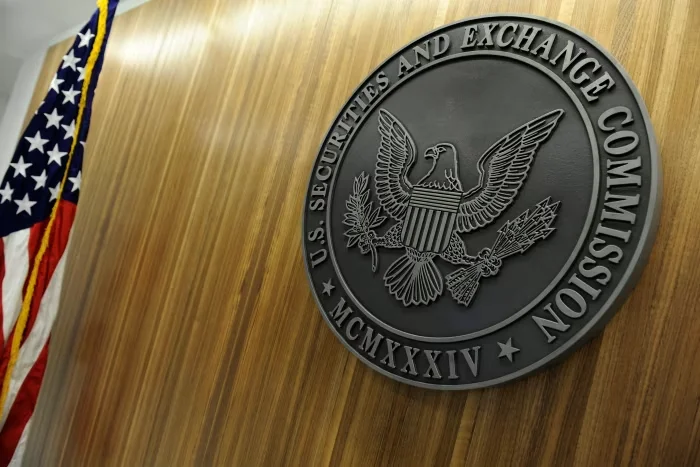

A utility token is a type of cryptocurrency token that provides holders with access to a specific product, service, or functionality within a blockchain-based ecosystem, rather than representing an investment or ownership stake in a company. Unlike security tokens — which derive value from an external, tradable asset or enterprise — utility tokens are designed to be consumed or used within their native platform. Common utility token functions include paying for transaction fees, accessing premium features, participating in governance votes, unlocking computational resources, and serving as in-app currency within decentralized applications. Examples of prominent utility tokens include BNB (used for discounted trading fees on Binance and gas on BNB Chain), LINK (used to pay Chainlink oracle node operators for data feeds), FIL (used to purchase decentralized storage on Filecoin), and UNI (used for governance voting in the Uniswap protocol). The distinction between utility and security tokens carries significant regulatory implications: utility tokens that pass the Howey Test — meaning purchasers buy them with an expectation of profit derived from the efforts of others — may be classified as unregistered securities by regulators like the U.S. SEC. This classification challenge has led many token issuers to carefully design tokenomics that emphasize genuine utility and consumption rather than speculative appreciation.
Origin & History
| Date | Event |
|---|---|
| Jul-Aug 2013 | Mastercoin (now Omni) conducts one of the first token sales, blurring the line between investment and utility |
| 2014 | Ethereum’s ICO introduces the concept of a token that fuels a computing platform (ETH as gas), establishing the utility token archetype |
| 2017 | The ICO boom sees thousands of projects issue “utility tokens” to fund development, many with questionable actual utility |
| Jul 2017 | Binance launches BNB as a utility token offering trading fee discounts — a clear, measurable use case |
| Jul 25, 2017 | SEC publishes the DAO Report, applying the Howey Test to tokens and signaling that many “utility tokens” may be securities |
| 2018 | SEC enforcement actions against fraudulent ICOs intensify; the distinction between utility and security tokens becomes critical |
| Apr 3, 2019 | SEC releases “Framework for Investment Contract Analysis of Digital Assets” — detailed guidance on utility vs. security classification |
| 2020-2021 | DeFi governance tokens (UNI, COMP, AAVE) emerge as a new category of utility tokens with voting rights |
| 2022-2023 | SEC sues multiple exchanges and projects, alleging various “utility tokens” are actually unregistered securities |
| 2024-2025 | Regulatory clarity improves globally with frameworks like MiCA (EU) providing formal definitions for utility tokens |
How It Works
Utility Token Ecosystem Flow:
A platform or dApp requires tokens to access its services. Token holders use their tokens to pay fees, access features, vote on governance proposals, or earn rewards through staking. The flow is circular: users acquire tokens to consume them, and token consumption drives demand.
Classification Spectrum:
Pure utility tokens (gift cards, software licenses, gas tokens, access passes) sit at one end — purchased for consumption, not investment returns. Pure security tokens (stocks, equity, revenue shares, dividend tokens) sit at the other end. Most real-world tokens occupy the gray area in between.
| Category | Utility Token | Security Token | Payment Token |
|---|---|---|---|
| Purpose | Access platform services | Represent investment or ownership | Medium of exchange |
| Value Driver | Demand for the platform’s services | Expectation of profit from the issuer’s efforts | Adoption as money |
| Regulatory Status | Generally not securities (if genuine) | Subject to securities regulation | Varies by jurisdiction |
| Examples | BNB, LINK, FIL, UNI | Tokenized stocks, REITs | BTC, LTC, XMR |
| Holder Rights | Service access, governance votes | Dividends, profit share, voting | None (payment medium) |
| Howey Test | Should fail (no profit expectation) | Should pass | Should fail |
In Simple Terms
A digital access pass: A utility token is like a subway token or an arcade token — you buy it not as an investment but to use a specific service. Just as an arcade token only works inside that arcade, a utility token provides access to a particular blockchain platform’s features.
Fuel for the machine: Many utility tokens function as “gas” that powers operations on their platform. Ethereum’s ETH pays for computation, Filecoin’s FIL pays for storage space, and Chainlink’s LINK pays for oracle data. Without the token, you cannot use the service.
Governance power: Some utility tokens grant voting rights over the protocol’s future. Holding UNI tokens lets you vote on changes to the Uniswap protocol, making utility tokens a form of decentralized decision-making power.
Not an investment (in theory): The key distinction is intent. You buy a utility token to use it, not primarily to profit from holding it. However, in practice, many people buy utility tokens hoping they appreciate in value, which is where regulatory gray areas emerge.
Supply and demand dynamics: As more people want to use a platform, demand for its utility token increases, which can drive up the price. Conversely, if the platform loses users, the token’s value may decline. The token’s value is theoretically tied to platform usage, not speculation.
Real-World Examples
| Scenario | Implementation | Outcome |
|---|---|---|
| Exchange fee discounts | Binance offers reduced trading fees for users who pay with BNB tokens | BNB becomes one of the most widely held utility tokens, with genuine consumption-driven demand from millions of active traders |
| Oracle data payments | Smart contracts pay LINK tokens to Chainlink node operators for delivering off-chain data (price feeds, weather, sports results) | LINK creates a functioning marketplace where data providers earn tokens for accurate, timely data delivery to DeFi protocols |
| Decentralized storage | Users pay FIL tokens to store data on Filecoin’s distributed network; storage providers earn FIL by allocating disk space | A decentralized alternative to AWS S3 where the utility token mediates supply and demand for storage resources |
| DeFi governance | UNI holders vote on Uniswap fee switches, treasury allocations, and protocol upgrades through on-chain governance | Community-driven protocol management without a central company, with the token serving as the voting credential |
Advantages
| Advantage | Description |
|---|---|
| Alignment of incentives | Utility tokens create economic alignment between platform users, developers, and service providers within the ecosystem |
| Regulatory flexibility | Genuine utility tokens may avoid securities classification, reducing legal compliance burden for issuers |
| Programmable access control | Smart contracts can automatically gate features based on token holdings, enabling sophisticated access management |
| Decentralized governance | Governance utility tokens distribute decision-making power among stakeholders rather than concentrating it in a corporate board |
| Network effects | As utility increases, more users acquire tokens, attracting more developers, creating a virtuous cycle of ecosystem growth |
Disadvantages & Risks
| Risk | Description |
|---|---|
| Regulatory reclassification | A token initially classified as utility may later be deemed a security by regulators, exposing holders and issuers to legal consequences |
| Speculative distortion | When utility tokens are traded on secondary markets for speculation, their price may detach from the underlying utility value |
| Velocity problem | If users buy and immediately spend tokens (high velocity), the token may struggle to maintain value because no one holds it long-term |
| Platform dependency | A utility token’s value is entirely dependent on the success of its parent platform — if the platform fails, the token becomes worthless |
| Artificial utility | Some projects force unnecessary token requirements into their platform design solely to justify a token issuance, creating friction rather than genuine value |
Risk Management Tips:
- Evaluate whether a utility token has genuine, organic demand from actual platform users, not just speculative traders
- Research whether the platform could function equally well without a token — if yes, the token may lack sustainable value
- Monitor regulatory developments in your jurisdiction regarding utility token classification
- Assess the token’s velocity: high utility usage with low holding incentives can suppress long-term token value
FAQ
Q: How do I know if a token is a utility token or a security token?
A: Apply the Howey Test: Is there (1) an investment of money, (2) in a common enterprise, (3) with an expectation of profits, (4) derived primarily from the efforts of others? If all four prongs are met, the token is likely a security. Genuine utility tokens are purchased primarily for consumption and use, not for profit expectation. However, this classification is often ambiguous and context-dependent.
Q: Can a utility token increase in value?
A: Yes. If demand for the platform’s services grows, demand for the required utility token also increases, which can drive price appreciation. However, the primary design intent of a utility token is functional use, not investment returns. Many utility tokens have appreciated significantly, though this does not change their intended classification.
Q: Are all governance tokens utility tokens?
A: Most governance tokens are classified as utility tokens because their primary function is to enable voting and decision-making within a protocol. However, if a governance token also entitles holders to protocol revenue or dividends, it may take on security-like characteristics. The classification depends on the specific rights and design.
Q: Why did so many ICOs in 2017 call their tokens “utility tokens”?
A: During the 2017 ICO boom, projects labeled tokens as “utility tokens” to attempt to avoid securities regulations. Many of these tokens had minimal actual utility at launch, with vague promises of future platform functionality. The SEC’s July 2017 DAO Report and subsequent enforcement actions clarified that labeling a token as a “utility token” does not exempt it from securities law if it functionally operates as a security.
Q: What is the “velocity problem” for utility tokens?
A: The velocity problem occurs when users buy a utility token, immediately use it for its service, and the recipient immediately sells it. If no one holds the token for extended periods (high velocity), the token’s market capitalization stays low despite high transaction volume. Mechanisms like staking, lock-ups, and burn-on-use help reduce velocity and support token value.
Related Terms
Security Token, Governance Token, Tokenomics, ICO, ERC-20, Howey Test, DeFi, Smart Contract, Staking, Token Burn
Sources
- SEC Framework for “Investment Contract” Analysis of Digital Assets (April 3, 2019)
- SEC Report of Investigation: The DAO (July 25, 2017)
- Ethereum Foundation — Token Standards Documentation
- European Union — Markets in Crypto-Assets Regulation (MiCA) Full Text
- Catalini and Gans, “Initial Coin Offerings and the Value of Crypto Tokens” (MIT Working Paper)
UPay Tip: Before investing in any utility token, ask yourself: “Would I buy this token even if it could never be resold, purely to use the platform?” If the answer is no, you are treating it as a speculative investment, not a utility — and you should evaluate it accordingly, including understanding the risk that regulators may agree with that assessment.
Disclaimer: This content is for educational purposes only and does not constitute financial advice. Always conduct your own research (DYOR) and consult qualified financial advisors before making investment decisions.