


Every time someone pulls out their Uber card, Amazon card, or Apple Card, the brand wins, not from the transaction, but from the moment before it.
The half-second when the card comes out, when whoever is standing nearby sees the name on it. That is an impression no algorithm serves, no ad platform charges for, and no competitor can skip.
It happens at the point of money changing hands, which is the most attentive moment in any consumer’s day.
For most of that history, only the biggest brands in the world could buy that moment. Branded crypto cards just put it on the open market. First things first,
What Is a Branded Crypto Card?
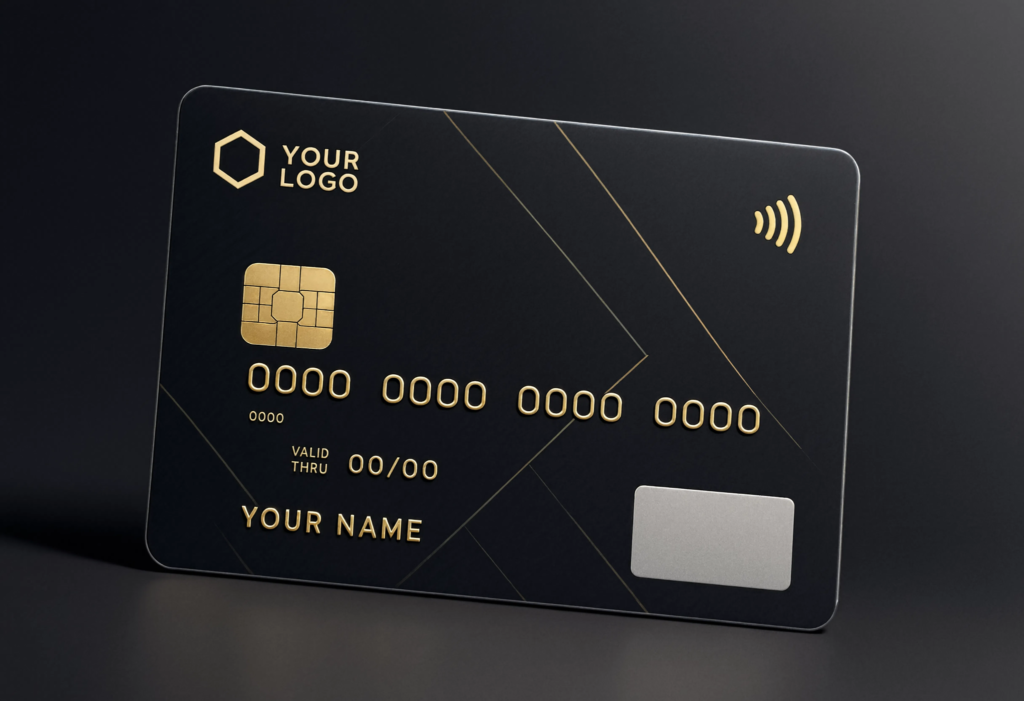
Simply, a branded card is much like the cards you are currently familiar with, but for cryptocurrency.
It is a payment (physical or virtual) card issued under your business’s brand that allows your customers to spend crypto that’s converted to fiat at the point of sale.
The card carries your branding, while all of the complexities, such as card network licensing and crypto-to-fiat conversion, are handled by the payment provider in the background.
It is technically a white-label card issuing, where your brand sits in front, and all the heavy lifting is at the back.
Read Also: Quick tips to converting crypto to cash.
Why Businesses Are Issuing Branded Crypto Cards
- Brand Visibility
The branded crypto card offers a passive brand impression, which offers brand visibility. Unlike digital links, the cards get seen by colleagues, cashiers, and friends.
If you are building a product that sells, this form of visibility compounds.
- Crypto Spending Utility
A common friction point in crypto adoption is spending. Users hold stablecoins or other digital assets but face limited merchant acceptance at the point of sale.
A crypto card solves this directly. The card converts crypto to fiat at the moment of purchase.
This feature makes the user’s balance spendable anywhere the typical card network (Visa/Mastercard) is accepted.
- Loyalty and Retention
Branded cards are often loaded with rewards. Users can expect cashback in USDT, spending bonuses, or crypto-back on purchases.
These bonuses are currently unmatched, especially for crypto-native users.
- New Revenue Streams
Card issuers typically earn interchange fees on every transaction processed through their card.
For businesses with a large active user base, this can become a passive revenue line.
Read Also: Best Crypto Cards With Apple Pay and Google Pay Support.
What You Need Before You Start
Here is what you need to know about issuing crypto cards as a brand:
- Business Verification (KYB): Your business must complete full Know Your Business verification with the card-issuing platform.
This process demands corporate registration documents, director identification, and proof of business address.
- Compliance Framework: Issuing payment cards may require coordination with a licensed card program manager, depending on your jurisdiction.
Most platforms like UPay handle the regulatory framework on your behalf. However, you still have to operate within their permissible use policies.
- Use Case Definition: Are you issuing cards to employees for expense management or to customers as a consumer product?
Also, is it for crypto holders to serve as a spending tool? You need to define what you intend to do upfront to determine integration paths and limits.
How to Issue Branded Crypto Cards with UPay
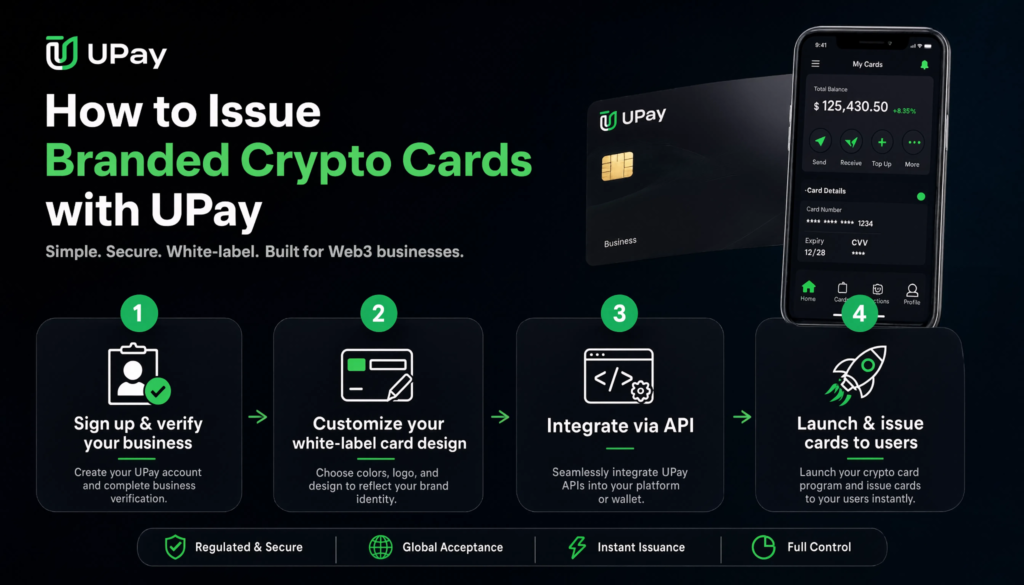
UPay is one of the major white-label crypto card issuance providers. Here is how to navigate obtaining a branded crypto card from them:
Step 1: Submit a Demo Request
Go to business.upay.best/white-label and fill out the contact form.
You’ll provide your first and last name, company name, preferred contact method, email, phone number, country, business structure, and your inquiry.
This is how you start the partnership conversation.
Step 2: Complete KYB/KYC
UPay has built-in KYC/KYB and AML compliance baked into its infrastructure, so you’ll go through business verification as part of onboarding before you get access to anything.
Step 3: Configure Your Card Program
Work with UPay to define your card parameters, such as virtual, physical, or both, and submit your branding assets.
UPay handles card issuance, production, and delivery. Your brand chooses the design, colors, and branding elements.
Step 4: Integrate the API
UPay says integration takes under 3 weeks via their open API, which connects to your existing exchange or fintech platform.
They provide complete documentation, sandbox testing, and all the needed technical support.
Step 5: Go Live
Switch from sandbox to production. Cards support USDT (TRC20/ERC20/BEP20) and USDC, work in 180+ countries, and are compatible with Apple Pay, Google Pay, and Alipay.
Why Partner With UPay for Your Branded Card Issuance
UPay has a long history of being the go-to for several brands and businesses. They are backed by incredibly powerful technology, but there is more.
- Full API connectivity: The UPay API provides smooth integration. You can automate almost all its services, including card issuance and real-time monitoring.
- Customized card design: Your brand is one of a kind; it is only expected that your card should be too. UPay offers a full customization option to ensure your card reflects your brand. It doesn’t matter if you want a physical or virtual card. Both options are on the table.
- Secure and Compliant: You already have a lot to worry about, and UPay ensures that regulatory compliance is not one of them. All facets of regulations are taken care of.
- End-to-end technical support: Undoubtedly, there would be times you need help. UPay has a dedicated technical team on standby to ensure you aren’t left hanging.
- Crypto-to-fiat flexibility: Users can spend crypto in real-world situations smoothly with the UPay crypto card. The card supports direct crypto-to-fiat conversions.
What we define as a modern card issuing platform is a modern card issuer that issues a card that is digital-first.– Jawad Jahan, Research Analyst, Juniper Research
Virtual vs. Physical Cards: Which Should You Issue?
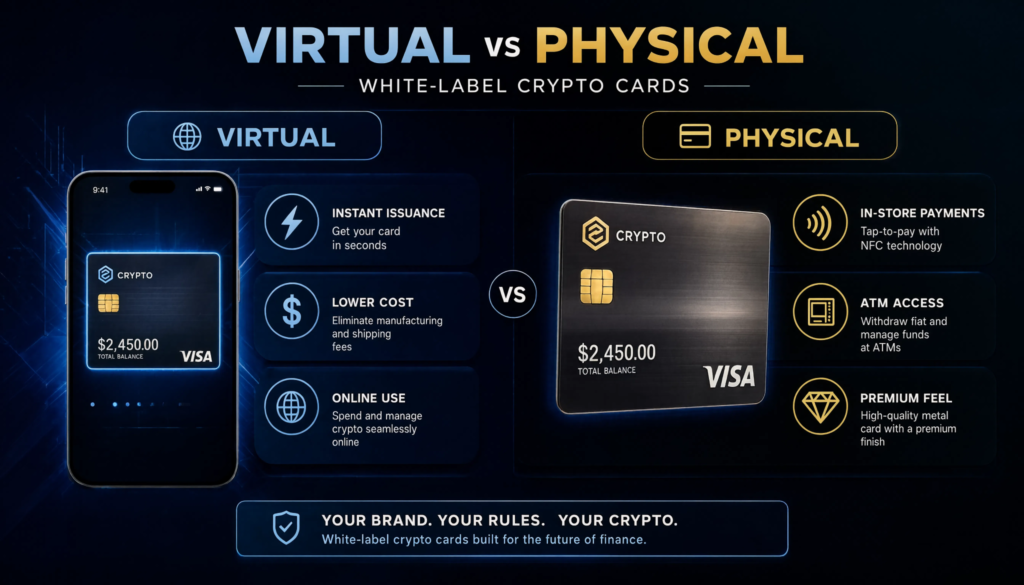
Both physical and virtual options have benefits. Hence, the decision is comparing both in relation to the unique needs of your business.
Virtual cards are best for online spending and subscriptions. What’s more, their issuance is instant, and the cost is low. On the flip side, issuance of physical cards can take weeks.
Plus, they are pretty pricey. However, it is best for brand presence and in-store purchases. Many businesses launch with virtual cards first to validate demand, then introduce physical cards once the user base justifies the production cost. We advise this approach to avoid unnecessary expenses.
Read Also: What Does 5x Mean in Crypto?
Conclusion
Issuing a branded crypto card can help extend your brand into your users’ daily financial lives. What makes the experience much better is partnering with UPay.
UPay’s card issuing program handles the licensing, compliance, and network relationships. This way, your business can focus on the product experience.
If you are ready to put your brand in your customers’ wallets, UPay is where you start.