Imagine turning your cryptocurrency into instant cash without ever selling it. That’s the promise of a crypto-backed loan.
A crypto-backed loan is a way to unlock financial flexibility while still holding onto your digital assets. But how safe is it, and is it really a smart move for personal finance?
Let’s break it down so you can see both the opportunities and the risks.
Key Takeaways
- Crypto-backed loans allow you to borrow cash or stablecoins without selling your crypto, making them useful for liquidity while holding long-term.
- Loan-to-Value (LTV) ratio is critical, borrowing conservatively protects you from forced liquidations during market dips.
- Platforms like UPay, Aave, and Nexo make borrowing accessible, but due diligence is essential to avoid platform risks.
- Unlike selling, borrowing against your crypto avoids triggering taxable events in most jurisdictions.
What Is a Crypto-Backed Loan?
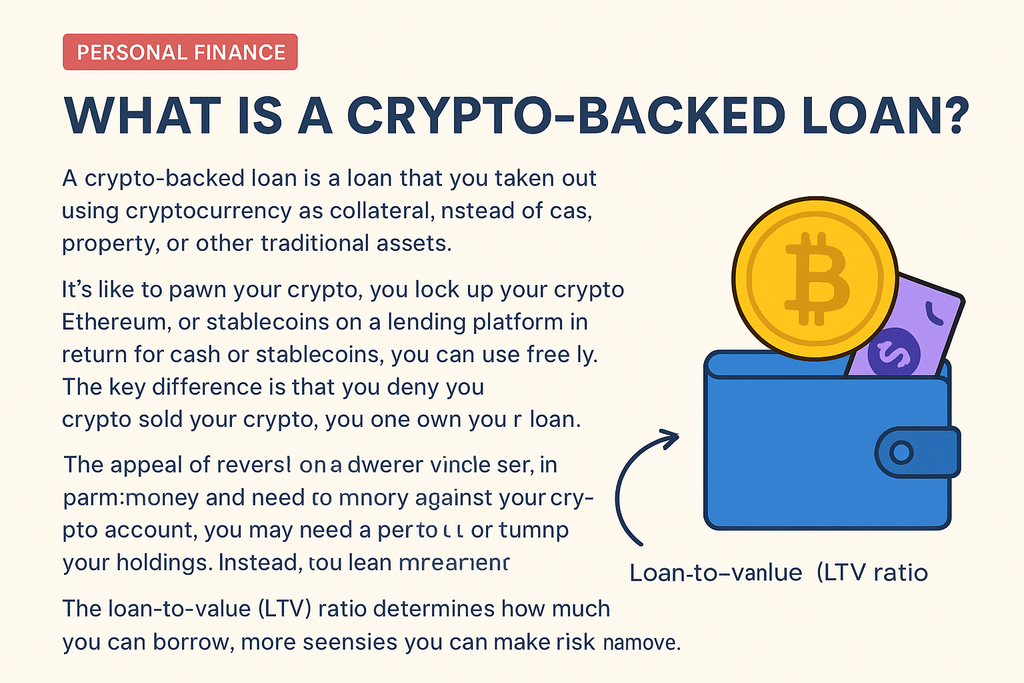
A crypto-backed loan is exactly what it sounds like: a loan you take out by using your cryptocurrency as collateral instead of cash, property, or other traditional assets.
Think of it like pawning your crypto; you lock up your Bitcoin, Ethereum, or stablecoins in a lending platform, and in return, you receive cash or stablecoins that you can use freely.
The key difference, however, is that unlike pawning, you don’t sell your crypto; you still own it, and once you repay your loan, you get it back.
The appeal here is that many crypto holders believe in the long-term value of their assets and don’t want to sell them, especially during a bull run when the price could keep climbing.
But life happens; you might need funds for an emergency, to invest in a business, or even just to pay bills. With a crypto-backed loan, you don’t have to liquidate your holdings; instead, you borrow against them.
What is a Loan-to-Value Ratio?
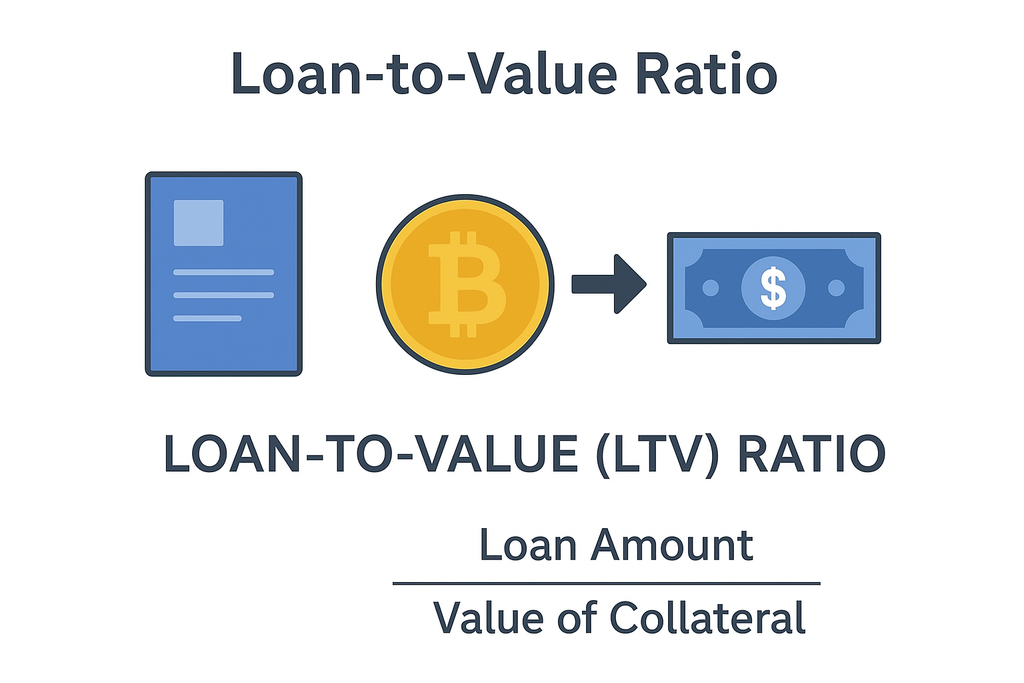
The loan-to-value (LTV) ratio is what determines how much you can borrow. For example, if you deposit $10,000 worth of Bitcoin and the platform offers a 50% LTV, you can borrow $5,000.
But there’s a catch. If the market value of your collateral falls significantly, you risk a margin call or liquidation. This is why understanding crypto-backed loans is not just about borrowing money; it’s about smart risk management and preserving your investments.
In terms of personal finance, crypto-backed loans blend the niches of investing and borrowing, making them a useful tool for those who want liquidity without letting go of their long-term bets on crypto’s future.
The Risks and Benefits of Using Crypto as Collateral
Crypto-backed loans are often celebrated as a financial connection between the traditional world of credit and the new, decentralized economy.
The greatest appeal lies in their ability to provide liquidity without forcing an investor to sell off their holdings. For someone who believes strongly in the long-term growth of Bitcoin or Ethereum, this is invaluable.
Posting Cryptocurrency as Collateral:
By posting crypto as collateral, borrowers can access cash or stablecoins while still holding on to the potential upside of their digital assets. This makes such loans especially attractive to investors who don’t want to trigger taxable events by selling or who want to continue riding the wave of potential appreciation.
Easy Accessibility:
Another advantage is accessibility. Unlike conventional bank loans from traditional banks, crypto-backed loans are not tethered to credit histories, income statements, or geographical barriers. They operate on collateral value.
For borrowers in regions where credit infrastructure is weak or exclusionary, this provides a chance to tap into capital in ways that traditional systems have long denied.
The rise of platforms such as Nexo, Binance, and Aave has demonstrated that global users, from Lagos to London, can access liquidity in just a few clicks.
Risks of Using Crypto as Collateral
1. Volatility
Yet, this promising tool is not without serious risks. The single greatest vulnerability is volatility. Unlike a mortgage loan where collateral is a physical house that usually maintains some baseline value, crypto assets can swing violently in price within hours.
If the value of the pledged collateral drops below a required threshold, lenders move quickly to liquidate holdings to protect their capital. For the borrower, this means losing the very assets they were trying to preserve. It’s a hard paradox: while you borrow to avoid selling, extreme price drops may force liquidation at a worse time than if you had simply sold in the first place.
2. Hacks, Insolvency and Regulatory Crackdowns.
There are also broader systemic risks tied to the platforms themselves. Many lending protocols are centralized entities, and history has shown that exchanges or custodians are not immune to hacks, insolvency, or regulatory crackdowns.
The 2022 collapse of Celsius, for example, left countless borrowers and lenders stranded, highlighting the fragility of trusting centralized platforms with digital wealth. Even in decentralized protocols, smart contract vulnerabilities or governance failures can expose users to sudden losses.
In sum, crypto-backed loans embody both the promise and peril of the digital finance revolution. They democratize access to credit and preserve long-term investment positions, but they demand a level of risk awareness far beyond traditional borrowing.
For those who understand the mechanics and are prepared for market volatility, they can be a powerful financial instrument. For others, they may be a gamble wrapped in innovation.
Best Platforms for Crypto-Backed Loans
Choosing the right platform for a crypto-backed loan is arguably just as important as understanding the mechanics of the loan itself. Not all platforms are created equal, and with real money on the line, safety, transparency, and reliability must be top priorities.
1. Centralized Platforms
Reputable centralized platforms like Nexo and Binance Loans have built strong user bases by combining competitive interest rates with insurance coverage on custodial assets.
These options are particularly suitable for borrowers who value simplicity and are comfortable with a more traditional fintech-style experience. They often provide user-friendly apps, fixed or flexible repayment plans, and customer support, making them attractive to those new to crypto lending.
2. Decentralized Platforms
On the decentralized side, platforms such as Aave, Compound, and MakerDAO give borrowers more control and transparency by operating without intermediaries. Here, the terms are coded into smart contracts, reducing the risk of platform mismanagement.
However, DeFi loans typically require a stronger technical understanding and demand vigilance when it comes to monitoring collateral ratios. While these platforms embody the crypto ethos of self-custody and decentralization, they can be intimidating for beginners.
3. Upay
UPay offers a crypto lending model that is modern, intuitive, and user-friendly, built for the individual who values both convenience and safety.
Their core product, UPay Crypto Loans, enables borrowers to leverage BTC and ETH as collateral to access liquidity without selling their holdings. Some of its defining features are:
- Its structure is purposefully designed for simplicity: floating interest rates, demand-based repayment (meaning no strict loan term), and flexible access that supports use cases like remittances, conversions, and deposits.
- What truly differentiates UPay is how practically it handles risk. Daily interest is calculated at UTC+0, compounding in real time but not immediately deducted from your balance, protecting you from surprises.
- If your Loan-to-Value (LTV) breaches the warning or liquidation thresholds, the platform sends alerts via in-app messages, emails, and SMS, and if needed, triggers a forced liquidation to protect the lender.
- Upay’s design aligns closely with the principles of financial inclusion. Its KYC-compliant, AML-ready infrastructure and mobile-first interface make it accessible to users in regions where traditional banking is slow or restrictive.
It’s also worth diversifying across multiple platforms instead of concentrating all collateral in one place. In a market as fast-moving and dynamic as crypto lending, staying alert and informed is the key to borrowing safely while maximizing benefits.
Conclusion
Crypto-backed loans are redefining personal finance by offering a smart alternative to traditional borrowing. Instead of liquidating holdings during volatile market cycles, investors can unlock liquidity while still maintaining exposure to long-term upside.
Platforms such as UPay, Aave, and Nexo are making this pathway increasingly secure and accessible, blending the speed of crypto with safeguards drawn from traditional finance.
The key takeaway is balance; borrowing against your assets can be liberating, but it demands prudence. Understanding loan-to-value ratios, interest structures, and liquidation risks is non-negotiable.
When approached strategically, crypto-backed loans become more than a financial tool; they represent a bridge between wealth preservation and financial agility.
Frequently Asked Questions
What is a Crypto-Backed Loan?
A crypto-backed loan is a type of secured loan where you use your cryptocurrency as collateral. Instead of selling your Bitcoin, Ethereum, or other tokens, you lock them up on a lending platform to borrow cash or stablecoins.
What happens if the value of my crypto drops?
If your collateral falls below a certain threshold (the loan-to-value ratio), the platform may liquidate part or all of it to protect the loan. That’s why it’s important to borrow conservatively.
Can I still access my crypto during the loan?
No. Once pledged as collateral, your crypto remains locked until the loan is repaid. However, if prices rise, you still benefit from that appreciation once the assets are unlocked.
Are crypto-backed loans safe?
They can be, provided you use reputable platforms like UPay, Aave, or Nexo. The risks include market volatility and platform reliability, so always research before borrowing.
What can I use the loan for?
You can use it for almost anything, paying bills, investing in other opportunities, or covering emergency expenses, without triggering taxable events from selling your crypto.