


How Much Money Do You Need to Start Cryptocurrency Trading?
This article is intended solely for informational purposes and should not be considered trading or investment advice. Nothing herein should be construed as financial, legal, or tax advice. Trading or investing in cryptocurrencies carries a considerable risk of financial loss. Always conduct due diligence before making any trading or investment decisions. There is really no single amount you need to start trading cryptocurrency. You can begin with a dollar or with a hundred, and both are possible on venues that publish minimums. What changes with the number is how large a share of your money the fees take, and whether you can get what is left back out at a sensible cost. That second half is the part most guides skip. Money goes into a market cheaply and comes out expensively, so budget for the exit before the entry. Key Takeaways Factors to Consider When Determining Your Initial Investment Four things shape the amount. Three of them you can measure; the fourth is a judgement only you can make. Financial Situation The relevant figure is not your income or your savings. It is the sum you could hand over permanently without changing the month you are in: rent, debt payments, the emergency fund, the bills already scheduled. Work it out first, then compare it with the minimums below. If it is smaller than the smallest order your venue takes, the venue has answered the question. Risk Tolerance Crypto prices move sharply in both directions, and a position can be worth materially less within a day. That is a property of the market, and the drivers are set out in our piece on what influences cryptocurrency price volatility. What follows is arithmetic rather than temperament. A 30% fall on 50 dollars is 15 dollars and on 5,000 dollars is 1,500. Run the drop you would find hard to absorb backwards through that sum and you have a ceiling you calculated. Trading Goals A short holding period and a long one put different pressure on costs, because frequent trading pays the fee schedule repeatedly. Dollar cost averaging is investing a fixed amount at regular intervals regardless of price, as Charles Schwab defines it, and it does not depend on picking a moment. Market Knowledge and Experience Familiarity changes which costs you can see. Someone who knows what a maker fee, a taker fee and a spread are reads an order screen differently from someone meeting all three at once, and our guide to reading depth charts covers the order book these minimums refer to. Minimum Requirements for Crypto Trading Three things sit between a balance and a first trade: what the venue will accept, what the trade costs, and what it costs to take the proceeds away. Exchange Minimums Each venue sets its own floor, and it depends on the product. Kraken publishes both: a Buy Crypto minimum of one unit of USD, EUR, GBP, CAD, AUD or CHF, or 110 JPY, and an order book minimum of 0.0001 BTC or 0.01 ETH, on a support page stamped 18 December 2025. Coinbase’s help centre does not publish a flat figure: it says minimum purchase amounts vary by crypto or payment method. Binance’s fee schedule does not state a minimum order size, which is a fact about that schedule rather than about Binance. Venue and product Minimum it publishes What that is in dollars Source, read 28 September 2026 Kraken, Buy Crypto button 1 unit of USD, EUR, GBP, CAD, AUD or CHF, or 110 JPY 1 dollar if funded in USD; otherwise one unit of that currency Kraken support page, stamped 18 December 2025 Kraken, order book 0.0001 BTC, or 0.01 ETH 8.43 dollars at 84,304.29 per BTC Same page; price from CoinGecko Coinbase No flat figure; amounts vary by crypto or payment method Not stated by Coinbase Coinbase help centre Binance, entry tier No minimum stated on the fee schedule Not stated on that schedule Binance fee schedule Transaction Fees Kraken publishes 0.40% maker and 0.80% taker at its lowest volume tier on Kraken Pro, its order book product, and a 1% trading fee on instant and recurring trades, with a spread included in the price shown. Binance publishes 0.100% maker and 0.100% taker at its entry tier, under 1,000,000 US dollars of 30 day volume with a BNB balance of zero or more. Maker and taker are identical there, so the claim that makers always pay less does not hold at the tier a beginner occupies. Coinbase charges a separate limit order execution fee equal to 1% of the amount you trade on each limit buy and limit sell, and says it may also charge a 1.875% Coinbase fee that varies by payment method. Its order book tiers sit behind a login and could not be read. On a 10 dollar trade, pricing no Binance spread because none is quoted on its schedule, no Coinbase spread because it applies to simple buy and sell orders rather than the limit orders priced here, and no discount on either: Binance’s taker rate takes 1 cent, Kraken’s 8 cents, Coinbase’s limit fee 10 cents, and the payment method fee up to 19 cents more. Withdrawal Limits and the Cost of Leaving Venues cap withdrawals over a period, and the cap usually moves with your verification tier. Identity checks are a condition of a regulated venue rather than an obstacle, and our explainer on anti money laundering compliance covers why the tiers exist. At this size the charge matters more than the cap. Coinbase publishes US wire fees of 10 dollars incoming and 25 outgoing. On chain it publishes no advance figure: network fees rest on its estimate of prevailing rates, disclosed at the time of the transaction. How Much Money Do You Need to Start Cryptocurrency Trading? There is no single figure, and that is not a dodge. The floor is set by how you will take the money out again, which differs by venue, country and payment method. So compute it
Top 10 Solana Projects in 2026: DeFi, NFTs, Staking and Wallets

Solana is one of the most active Layer-1 blockchains in the world, and in 2026 its ecosystem looks very different from two years ago. DeFi total value locked sits above $6 billion, Solana’s decentralised exchanges traded about $79 billion over the past 30 days against Ethereum’s $43 billion on DefiLlama’s figures, and projects like Jupiter, Kamino, Jito and Pump.fun have reshaped what a top Solana project actually means. This guide covers ten projects by what each does and who uses it. Key Takeaways The Solana Ecosystem in 2026: What the Numbers Show Metric Figure Source and date DeFi total value locked About $6.6 billion DefiLlama chains listing, 27 Sep 2026 Rank among all chains Second, behind Ethereum at $53.3 billion DefiLlama chains listing, 27 Sep 2026 Largest single protocol (liquid staking, not counted in the figure above) Sanctum, $2.33 billion DefiLlama Solana chain page, 27 Sep 2026 Stablecoins issued on Solana $16.51 billion, USDC $7.30 billion of it DefiLlama stablecoins page, 27 Sep 2026 Last full network halt 6 February 2024, approximately five hours Solana outage report Consensus upgrade Alpenglow, live on testnet and devnet, no mainnet date Anza, September 2026 One caveat on the first row. DefiLlama’s documentation says liquid staking protocols are “tracked but not counted towards chain TVL by default”, so Sanctum’s $2.33 billion and Jito’s $1.29 billion sit outside the $6.6 billion. That is why the table below adds to more than the chain total. What is Solana? Solana has earned its reputation as a high-performance blockchain, setting itself apart with its speed and efficiency. That throughput, and its low fees, made it attractive to developers. At the core of it lies Proof of History. Rather than relying on proof of work or proof of stake alone, it uses a verifiable delay function to timestamp transactions, so validators verify faster. Alpenglow, below, retires Proof of History along with TowerBFT, so this describes Solana as it runs today. Our Solana glossary entry covers the basics. The Network Record: Outages, Firedancer and Alpenglow Most roundups skip this, and it decides whether the projects below stay usable when the chain is busy. Solana has stopped before. The last full mainnet-beta halt began at 09:53 UTC on 6 February 2024, when in the outage report’s own words “block finalization halted”, and it puts the incident at “approximately five hours”. A validator cache bug was the cause: evicting a legacy loader program sent it into an infinite recompile loop. Firedancer answers that fragility. It is an independent validator client written from scratch so one implementation’s bug cannot stop everything, and its repository publishes a hybrid build, Frankendancer, and the full client, each marked “This is a mainnet ready release”: v0.1204.40300 on 21 September 2026 and v26.08.5 on 15 September. A mainnet-ready release says the maintainers consider the software fit to run. What matters for client diversity is stake, and both are on mainnet already. Jump’s 2025 Breakpoint session put Frankendancer at 20 to 30 percent of mainnet stake across roughly 175 validators, and said the full client had voted on mainnet since July 2025 and produced blocks since October 2025, on a few low-stake validators. Alpenglow is the replacement for Solana’s consensus, filed as SIMD-0326 on 25 July 2025. Its status field still reads Review and its feature-gate field is unfilled. The rollout has moved anyway. Anza activated Alpenglow on testnet on 24 September 2026 and on devnet on 25 September, retiring TowerBFT on both. Mainnet-beta has no announced date: Anza ties it to an observation period of unstated length, and the Agave v4.4 schedule lists mainnet-beta feature activations resuming on 9 November 2026. Anza’s design post puts Alpenglow’s target at “about 150 ms (median)” of finality, sometimes “as fast as 100 ms”, against “about 12.8 sec” under TowerBFT. Our Alpenglow explainer covers what it changes. Top 10 Solana Projects to Watch Out For First, how the largest protocols compare. Two of them, Sanctum and Drift, are not among the ten profiled below, and every figure is a DefiLlama reading from 27 September 2026. Category Protocol Value locked on Solana, 27 September 2026 Liquid staking infrastructure Sanctum $2.33 billion Trading and aggregation Jupiter $2.04 billion Lending and structured yield Kamino $1.57 billion Automated market maker Raydium $1.39 billion Liquid staking with MEV Jito $1.29 billion Token launches Pump $405 million Perpetuals Drift $350 million 1. Magic Eden Magic Eden is the best known NFT marketplace on Solana, with a wide range of digital art, collectibles and gaming assets. It spent years expanding onto Bitcoin and EVM chains, then reversed course. Its Help Center article says support for EVM chains and Bitcoin ended on 9 March 2026, the Bitcoin and Runes APIs followed on 27 March, and “Magic Eden will continue supporting the Solana Marketplace and Packs”. Key features: a Launchpad that helps creators mint, and support for Metaplex Core, Token 22 and compressed NFTs. Whether a creator is paid a royalty on a resale depends on the collection. 2. Mad Lads Mad Lads is Solana’s best known NFT collection, 10,000 anime-inspired items from the Backpack wallet team. What separates it from earlier collections like Degenerate Ape Academy is utility: holders receive airdrops, and it has the visibility of a team still shipping. Best for: collectors who want an active holder community. Key risk: floor prices track market sentiment. Decentralized Finance (DeFi) on Solana Solana’s high throughput and low fees make it good ground for decentralised finance. 3. Raydium Raydium is a prominent decentralised exchange on an automated market maker model. Pools and pricing algorithms handle trades, so there is no order book. Key features: instant liquidity without a counterparty; yield farming rewards for supplying it; and Fusion pools, which let new projects bootstrap liquidity. Raydium held $1.39 billion on DefiLlama on 27 September 2026. 4. Jupiter (JUP) Jupiter is the central trading hub of the Solana ecosystem, and on 27 September 2026 it held $2.04 billion on DefiLlama, second on the chain behind Sanctum. It began as a swap aggregator,
Crypto Card Issuing API: A Practical Guide to How One Actually Works
Building a card programme the old way means a sponsor bank, a processor, a personalisation bureau and a compliance function, assembled one contract at a time. The figure people quote for that is eighteen months. A card issuing API is the argument that you no longer have to. It does not make that work disappear so much as move most of it onto somebody else’s balance sheet, and what is left is worth understanding before you sign. Key Takeaways What a Crypto Card Issuing API Is A crypto card issuing API is a set of programmable endpoints that let a business create, fund, freeze and cancel payment cards tied to a customer’s crypto balance, without owning the machinery underneath. The provider holds the relationships that are hard to get: network membership, the issuing arrangement, processing and conversion. You keep the customer, the brand and the spending rules. The conversion step is where the crypto part lives. The card is an ordinary card on an ordinary network; what the provider adds turns a crypto balance into settlement currency at authorisation, so the merchant sees a normal transaction and the customer a crypto debit. How the Flow Works, Step by Step Onboarding and identity checks. Your application collects the customer’s details and submits them through the provider’s verification endpoints. The result comes back asynchronously, so build for a pending state rather than a yes or no. Funding the balance. The customer moves crypto into the account the card draws on. On UPay that is a recharge from the UPay wallet rather than a direct debit, so the balance is something your customer keeps topped up. Issuance and provisioning. A virtual card issues quickly. A physical one has to be produced and shipped, which is why UPay’s card endpoints include activation and logistics tracking alongside registration. Authorisation. When the customer pays, the network sends an authorisation request, the provider checks the balance and your spending rules, converts, and approves or declines. Anything you want to control has to be set in advance. Settlement and reconciliation. Cleared transactions settle to the merchant through the network while your side reconciles against webhooks. The webhook feed is the record and the dashboard is the summary. Our note on how USDT payments work covers what a chain confirmation actually tells you, which is the input to that reconciliation. What UPay’s API Documentation Actually Publishes Here is what UPay’s own developer documentation and business pages state. What a buyer asks What UPay’s own material publishes Where it says it Which cards can I issue? Physical and virtual Visa cards through a single API UPay Business site Is there a sandbox? A test environment is published; staging is listed as unavailable and the production base URL is not publicly disclosed UPay API reference How is a request authenticated? Each request is signed, and a signature is valid for 60 seconds before it has to be regenerated UPay API reference Are there network restrictions? Calling IP addresses must be allow-listed, and responses come only from designated addresses UPay API reference What can I do to a card? Register, activate, recharge, lock and unlock, cancel, query bills, set a trade password, track logistics, confirm 3-D Secure, authorise a spend amount UPay API reference What else does the API cover? Merchant, Account, CustomerGroup, Customer, Address, Card, Wallet, Acquirer, Outlay, IFrame, file upload, region list, code list and webhook groups UPay API reference Is the documentation in English? The primary reference is in Simplified Chinese; a full English mirror is published at upay-api-en.readme.io (https://upay-api-en.readme.io/) UPay API reference, both editions How do I know something happened? Webhook notifications for card, wallet, acquiring and payout events UPay API reference What does it cost to process? Under 1 percent on crypto payments, against 3 to 5 percent quoted for traditional cross-border UPay Business site How fast does money settle? About 5 minutes on chain (“~ 5 minutes”); fiat payout T+0 or T+1 depending on the channel; bank settlement T+1 UPay Business site and its crypto payment page Both are worth reading before you scope the work: the allow-list constrains where your code runs, and a 60-second signature window constrains how it retries. UPay Business publishes about five minutes for crypto settlement, giving “~ 5 minutes” against 1 to 5 business days for traditional rails, while its crypto payment page says on-chain settlement “can be completed in real time, while fiat settlement is typically T+0 or T+1, depending on the payout channel”, with bank settlement listed as T+1. The quick figure is the on-chain leg and T+0 or T+1 is the fiat payout leg, so ask which leg your corridor actually ends on. UPay also publishes the only ROI figure in this category: a saving of 20,000 to 50,000 US dollars per million processed against traditional banking rails. The Compliance You Inherit The technology works in a sprint. The compliance file takes a quarter, and it sets your launch date. Identity verification. Card issuance is a regulated activity in every market that matters for a card programme, so every cardholder is verified before a card exists. UPay publishes submit, query and progress endpoints for it, so your product has to show a state between applied and approved. Our explainer on know-your-customer compliance in crypto sets out what the checks do. Transaction monitoring and sanctions. Screening runs against names and, for the crypto leg, against wallet addresses. The US Treasury’s Office of Foreign Assets Control has listed virtual currency addresses on its sanctions list since 2018, so an address is a screenable identifier in the same way a name is. UPay names its infrastructure partners, which is more than most providers do: identity verification with Sumsub, which UPay announced in May 2024, stablecoin settlement with StraitsX, and cloud infrastructure with Tencent Cloud. All three are listed on UPay Business under “Built on Trusted Global Partnerships”. Named partners are checkable; “enterprise-grade infrastructure” is not. The Travel Rule. In the United States, 31 CFR 1010.410(f) requires originator and beneficiary
How do I Use my Virtual Crypto Card?
Wondering ‘How do I use my virtual crypto card?’ Learn the step-by-step guidance on spending crypto effortlessly online and in-store.
How to Set Up Recurring Crypto Payments: DCA Buys and Subscriptions
For many crypto users, having to authorise every payment by hand, whether a subscription, a salary, a donation, a rent split or an investment schedule, is one of the frictions that slows wider adoption. Recurring crypto payments fix that by running a transaction on a set schedule, so nobody logs in and presses send each cycle. Which Setup Do You Need? Start Here The jobs come in three, and almost everyone wants one of the first two rows. Work out which you are first: the platforms, the steps and the tax treatment all differ. What you want to do What it is called Where you set it up Which section below Buy a fixed amount of crypto automatically every week or month A recurring buy, or dollar-cost averaging An exchange or broker app, funded from your bank or card The exchange walkthrough Charge your own customers a subscription fee in crypto on a schedule Recurring billing, or crypto subscriptions A payment gateway or billing platform with a merchant dashboard The business walkthrough Pay a contractor or a contributor on a repeating schedule A payment stream or scheduled transfer An open-ended streaming protocol such as Sablier Flow, Superfluid or LlamaPay The streaming section Key Takeaways What Are Recurring Crypto Payments? A recurring crypto payment moves a set amount between wallets or accounts at a regular interval, repeating without anyone authorising each one. The idea mirrors a direct debit, with no bank in the middle. The technical point guides tend to skip: neither Bitcoin nor Ethereum has a built-in clock. A blockchain does not wake up on the first of the month and send anything. Something has to trigger each payment, which is why the mechanisms come in two shapes while the jobs come in three. The simple shape is an exchange recurring buy: a platform draws from your linked bank or card and buys on schedule. The other is a smart contract, either pre-funded and releasing value on schedule, or authorised once and triggered by an off-chain scheduler. Streaming protocols Streaming protocols move value continuously rather than in discrete payments. Superfluid runs constant flows that update balances every second from one transaction. Sablier has two shapes that behave differently. Lockup escrows the whole amount up front and releases it over a fixed duration, which suits vesting. Flow runs open-ended from a balance the sender tops up, and that is the one built for recurring pay. LlamaPay runs on several chains and lets recipients withdraw at will. These suit organisations and developers; for personal use an exchange recurring buy is simpler. Setting Up a Recurring Buy on an Exchange The consumer path, applying to most major platforms with small variations. 1. Verify and secure the account. Almost every platform requires identity verification first, and higher tiers unlock higher limits. Use an authenticator app for two-factor rather than SMS, which is exposed to SIM-swap attacks: this account is about to get standing permission to move money. 2. Link the funding method. A bank link almost always costs less than a card, and over years that difference is the biggest cost you control. 3. Choose the asset. Bitcoin, Ethereum and Solana are the assets most platforms offer on a schedule. Where a fixed value has to arrive, choose a stablecoin. 4. Set the amount and frequency. Check your tier’s limits, note the minimum, and add up every schedule already running. 5. Read the confirmation screen, then turn on alerts. Many platforms buy immediately and then continue on the interval, and some will not let you edit a schedule at all. Notify on every execution, success or failure: a failed schedule nobody notices for four months is the common failure, and it is silent. Setting Up Recurring Billing for a Business Register with a gateway and complete know-your-business verification: registration documents, proof of address, beneficial ownership. This is the step that overruns on any entity with layered ownership. Set the assets, the settlement currency and the retry logic. USDC and USDT are standard because the amount does not move between cycles; to hold fiat, configure conversion on receipt. Then set the amount, the cycle, any trial, and what happens on a failure: retrying after one, three and seven days lifts collection without anyone chasing. Integrate and reconcile. Most gateways ship storefront plugins and documented APIs. Insist confirmed payments land in your ledger as entries, not screenshots. Tell customers which network to use. Sending on the wrong chain is a common way a crypto payment is lost, and a support cost you inherit. Where a Crypto Card Fits, and Where It Does Not A crypto card is the other way people pay a recurring bill in crypto: put it on file with a merchant and it settles like any other card. UPay’s current cards run on Visa and are issued by partner institutions rather than by UPay itself. A UPay card is funded by recharging it from the UPay wallet, and in the app the step is labelled Collateral/Recharge. A merchant’s recurring charge draws on the card’s balance the way any card charge does. What the card will not do is top itself up, so a subscription declines if the balance is short on the day. The recharge is the thing to remember, not the payment. From UPay’s own fee tables: 10 USDT to issue a virtual Premier or Platinum card and 100 USDT for a physical one, 2 percent to recharge Premier and Platinum, no annual fee on any card, and a 1 percent cash machine fee on physical Premier and Platinum with daily limits of 3,750 and 3,000 US dollars. UPay publishes Apple Pay and Google Pay support for its virtual cards; its Help Center says which card and market. Deactivating a virtual card costs 1 USDT and replacing one 10 USDT, the route if a merchant keeps billing a card you want closed. Eligibility runs on nationality rather than residence, and differs by card. Premier applications are blocked for nationals of countries
Can You Use Crypto Credit Cards Anywhere? Where They Get Declined
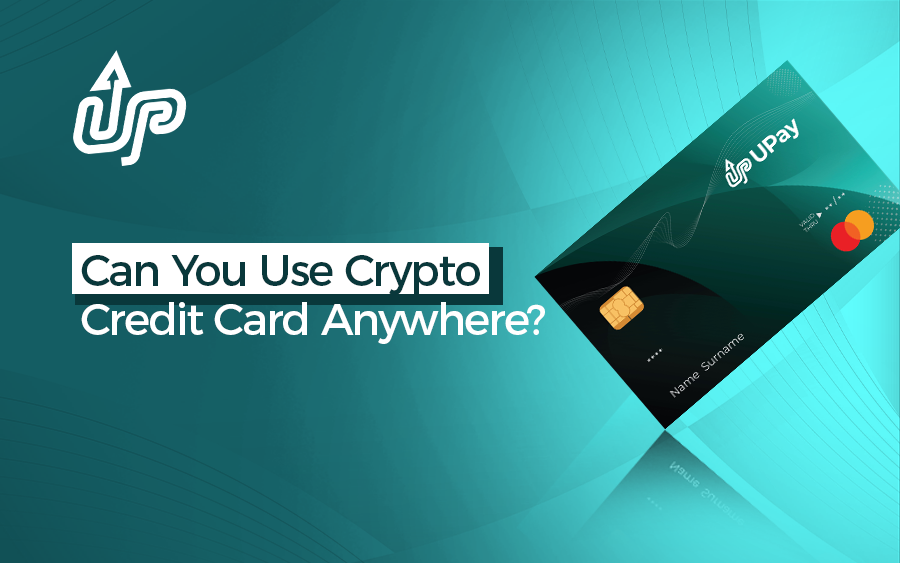
Crypto cards make it easier to spend digital assets on ordinary things, without selling to a bank first. Where do they stop working? Almost nowhere, bar a short list that includes the places people most want a card: hotel check-in, the car hire counter, the fuel pump, the subscription page and anything coded gambling. Key Takeaways What are Crypto Credit Cards? Almost every page on this topic uses “crypto credit card” as a catch-all for cards that spend cryptocurrency on everyday purchases. The networks do not, and nor do the merchants declining them. The Consumer Financial Protection Bureau draws the line plainly: “Prepaid cards and debit cards are ways to spend money you already have. Credit cards are ways to borrow money.” A prepaid card, it adds, “is not linked to a bank or credit union account”. A merchant’s decline logic reads the card range, not the marketing. A prepaid programme is prepaid whether or not the money arrived as Bitcoin. Card type Where the money comes from How a merchant sees it Typical crypto version Common decline Crypto credit card A credit line, repaid later A credit card; US issuers carry Regulation Z billing error rights A bank card rewarding in crypto Availability, few markets Crypto debit card An account balance with the provider A debit card, funds checked live Providers running account structures Holds above your balance Crypto prepaid card Value loaded before you spend A prepaid card, known by its range Most cards sold as crypto cards Merchants blocking prepaid ranges How Crypto Cards Work Can You Use Crypto Credit Cards Anywhere? Visa’s corporate page gives “175 M+ merchant locations” in “more than 200 countries and territories”. Read the first with Visa’s own footnote: it includes “an estimated 64 million locations through payment facilitators”, from data supplied by acquirers and third parties as of 30 June 2025. Mastercard gives “more than 210 countries and territories” on its about page and “150 million+ acceptance locations” on its crypto card programme page, whose own meta description says 100 million+. The two halves of that page disagree. Where national rules are strict or unresolved, availability narrows and a provider may not operate in the market at all. Eligibility, Not Acceptance, Is the Real Limit The title assumes you already hold one. For a genuine crypto credit card, getting one is the harder half. The Gemini Credit Card is issued by WebBank on Mastercard World Elite. Gemini’s support page, written before launch, says residents in all 50 US states “will be eligible to apply” and that it “will not be available outside of the U.S.” The Coinbase One Card is issued by First Electronic Bank on the American Express network, pays up to 4 percent bitcoin back and, per the network’s announcement of 12 June 2025, is “exclusively available to Coinbase One members in the U.S.” The Crypto.com Visa Signature card is issued by Comenity Capital Bank under a licence from Visa U.S.A. Inc., and its own FAQ heads the product “(US-only)”. Nexo’s is the one dual product, and the only one not issued by a bank: the issuer is DiPocket UAB, an electronic money institution. It offers to “Switch between Credit and Debit Mode with one tap”, publishes “crypto-backed Credit Lines starting from 1.9% interest”, and is available only to “citizens and residents of” selected European countries, “including the European Economic Area (EEA) and the United Kingdom”. So on the availability all four state, a reader outside the US, the EEA and the UK is not eligible, whatever the merchant count says. Prepaid and debit cards serve the rest of the world, and that is what most products under the credit label are. Where Crypto Cards Actually Get Declined “Anywhere Visa is accepted” is true of the network and false of your afternoon. Here are the seven. Gambling and Other Blocked Merchant Categories Every merchant has a category code. Gambling is 7995, which Visa’s merchant data standards manual of April 2026 defines as “Betting, including Lottery Tickets, Casino Gaming Chips, Off-Track Betting, Wagers at Race Tracks and games of chance to win prizes of monetary value”. This is not only an issuer being cautious. Regulation GG, implementing the Unlawful Internet Gambling Enforcement Act, puts the duty on the payment system. Section 233.5(a) requires all “non-exempt participants in designated payment systems” to run written policies “reasonably designed” to block restricted transactions. Section 233.6 offers a safe harbour, which it calls “non-exclusive”, for a “code system, such as transaction codes and merchant/business category codes” able to “reasonably identify and deny authorization”. The rule reaches only unlawful Internet gambling, but a code system is blunt, so most programmes decline the whole category. Pre-Authorisation Holds at Hotels, Car Hire and Fuel Pumps This has nothing to do with crypto: some merchants authorise an estimated amount before they know the final bill. A hotel authorises the room rate plus extras, a car hire desk the rental plus a deposit, a fuel pump up to a ceiling. On a credit card that eats a credit line you were not using. On a wallet-funded card it freezes real money, so load for the hold, not the bill. The car hire counter is the sharpest case. Hertz’s rental terms say “Debit cards and prepaid or store value cards are accepted for payment at the end of your rental”, and that in most cases the location will perform a credit check for debit card customers. Acceptance to settle is not acceptance to open, and Hertz adds that taking such a card is contingent on it covering the estimated charges plus an authorisation of up to USD 500.00. Subscriptions and Recurring Billing Netflix publishes the conditions. It says “We accept prepaid cards with the following logos”, but also that the cards it takes “must be enabled for recurring e-commerce transactions”, and that “We accept virtual cards in select markets”. Both bite on a card that is virtual first. Address Verification With No Billing Address Checkouts in the US, the
Best P2P Crypto Exchanges: The Real Fees and Who Each Venue Bars
Peer-to-peer trading puts you opposite another person instead of an order book. You agree a price, the platform locks the seller’s crypto in escrow, the buyer pays by bank transfer or mobile money, and the escrow releases. That is why P2P reaches markets a card-funded exchange does not, and why the small print decides everything. Fees move, venues close, and a dead marketplace can leave its marketing pages up for years. Every figure below was read on the operator’s own page on 28 September 2026. Key Takeaways What a P2P Exchange Is, and What Escrow Actually Covers On a P2P marketplace you trade against a named counterparty, and the venue’s only job is to hold the crypto while the money moves on a rail it does not control. MEXC describes it plainly at mexc.com: “When an order is created, MEXC locks the crypto amount being traded within the P2P order until both parties complete the transaction.” Non-custodial venues do the same with multi-signature wallets rather than a company account. That sentence contains the most important fact about peer-to-peer trading. Escrow holds crypto. It does not hold the buyer’s money, and cannot claw it back once it has been sent and reversed. Binance says so in its own guide to chargebacks: a chargeback happens “when your trade partner requests to have their funds back after you’ve completed the transaction and received your money”. The seller can “end up losing both the crypto you sold and the money you received”, and Binance’s advice is to “select payment methods that do not allow chargebacks as much as possible”. In practice that means card payments, PayPal and some mobile wallets, all of which can be pulled back weeks later. A cleared bank transfer, or cash, cannot. Reversibility is a property of the payment rail, not of the person. A counterparty with five hundred completed trades and a perfect rating can still file a card dispute, so reputation does not protect a seller here. Crypto itself moves the other way: once sent, it is not reversible. The Nine Venues, and What Each One Publishes Where a venue’s own page could not be read, the cell says so rather than sitting empty. Venue Identity check Fee, from its own page Country restrictions in its own terms Binance P2P Mandatory for all new users Flat taker fee of 0.06 to 0.08 USDT per trade order on USDT pairs in selected fiat markets, plus maker fees of 0% to 0.35% by market Its terms serve through an embedded PDF viewer, so the current list could not be read OKX P2P Required, and the paying account name must match the verified name “No service fee for trading P2P”, with payment providers charging their own Its Risk and Compliance Disclosure, updated 8 July 2026, restricts Afghanistan, Canada, Cuba, Hong Kong, India, Iran, Japan, Malaysia, Nepal, North Korea, Syria and parts of Ukraine Bybit P2P Standard level mandatory for all products Its P2P fee article, updated 28 July 2026: takers 0% in most listed markets, makers 0.05% to 0.3% Its help centre, updated 1 September 2026, excludes the United States, Chinese Mainland, Hong Kong, Singapore, Canada, North Korea, Cuba, Iran, Uzbekistan, Sudan and Syria MEXC P2P Primary verification mandatory Zero platform fee, with the payment provider’s own charges on top Its published app-availability table names no restricted region WazirX Required, with Travel Rule verification on crypto deposits Not published at any address read for this table Not published at any address read for this table HTX P2P Not readable; its support pages return empty bodies to a fetch Not readable, same reason Not readable, same reason Hodl Hodl None today, but its terms reserve the right to introduce it 0.75% per registered user, paid by each side separately United States residents barred outright, with Russia, Belarus, Cuba, Iran, Iraq, North Korea, Somalia, Sudan and Syria Bisq No registration and no KYC Bisq Easy, the only protocol Bisq 2 launched with, charges no trade fee; the older multisig protocol is 1.3% combined Its introduction page names none LocalCoinSwap Discretionary, and can be demanded on any trade 1% to whoever created the offer India barred, with Belarus, Cuba, Iran, Iraq, Lebanon, Libya, Mongolia, Russia, Syria and others Hodl Hodl’s fee is not shared. Its FAQ at hodlhodl.com sets a “Trading fee of 0.75% for every registered user” and says “each party will pay their respective fee”, so a trade costs up to 1.5% between you, less where one side is a referral at 0.5%. Bisq publishes two different answers because it runs two protocols. The wiki at bisq.wiki puts the older “Combined BTC trading fee rate” at “1.3% (0.15% by maker and 1.15% by taker)”, while Bisq Easy, the only protocol Bisq 2 launched with, says “There are no trade fees for buyers or sellers”, capped at 600 USD a trade. LocalCoinSwap’s identity policy has no threshold. Its terms reserve the right “at our sole discretion, to require Know Your Customer (KYC) and Anti-Money Laundering (AML) documentation” on a dispute, on suspicion, or on a regulator’s request. That can arrive on a ten dollar trade or a ten thousand dollar one. MEXC has the cheapest published fee and the most regulator attention. The Financial Conduct Authority added MEXC Global Ltd to its warning list on 22 March 2024: “This firm may be promoting financial services or products without our permission.” BaFin published an unauthorised-business notice on mexc.com on 19 October 2023, and France’s AMF blacklisted the site on 4 June 2024. Five Names You Will Still Find on Other Lists A P2P venue can stop trading while its marketing site keeps running, and a venue that stopped can start again, so the only reliable check is the operator’s own announcement page on the day you act. Paxful is the clearest case. Its main site still reads “Buy bitcoins instantly” and still lists gift cards among its payment methods. Its own withdrawal property at withdraw.paxful.com carries the headline “Paxful Has Shut Down Operations:
Can You Buy Crypto With a Gift Card?
Yes, you can buy cryptocurrency with a gift card. If you have one sitting in a drawer that you are never going to spend, there are marketplaces that will take it in exchange for Bitcoin or a stablecoin. Before any of that, one sentence, because it is the reason most people arrive at this question. If Somebody Told You to Buy Gift Cards, Stop Here The US Federal Trade Commission puts it first on its own gift card page: “Only scammers will tell you to buy a gift card, like a Google Play or Apple Card, and give them the numbers off the back of the card.” The next sentence is “No matter what they say, that’s a scam.” It also says, flatly, that “No real business or government agency will ever tell you to buy a gift card to pay them.” That covers the tax office, the police, your bank’s fraud team, a utility, a romantic interest you have not met, and anyone offering to recover money you have lost. If it has already happened, contact the gift card company first. The FTC’s own guidance is to “Report the gift card scam to the gift card company right away” and ask for your money back. Keep the card and the receipt. Then report it to the body that handles fraud where you live. In India that is the National Cyber Crime Reporting Portal at cybercrime.gov.in, run by the Ministry of Home Affairs, which takes financial fraud complaints. In England, Wales and Northern Ireland it is reportfraud.police.uk or 0300 123 2040, and in Scotland you report via 101. In Germany it is the police Onlinewache portal at portal.onlinewache.polizei.de, with 110 for emergencies. In the United States it is ReportFraud.ftc.gov, whose own line is “Every report makes a difference.” On 28 September 2026 that page carried a notice that “Due to the government shutdown, we are unable to offer this website service”, so check whether it is taking reports again. Never pay anyone who offers to trace or recover the money. An offer to get back what you lost is the second scam, and the first sign of it is a fee requested up front. Key Takeaways Gift Cards as a Payment Method for Crypto An unwanted gift card is a real problem: value you hold that you cannot spend where you want to. That is the legitimate reason people ask this question. Read Also: Understanding the Monthly Limit on Crypto Cards Types of Gift Cards Retail gift cards are issued by a chain such as Amazon or Walmart and are spendable only there. Prepaid Visa and Mastercard gift cards work anywhere those networks are accepted. Digital gift cards are the same thing delivered by email or text. A fourth category gets misfiled constantly. Binance’s own page defines a Binance Gift Card as “a prepaid crypto voucher that can be used for a variety of use cases, including crypto deposit and withdrawal on Binance, crypto transfer and loyalty rewards”. It is funded from crypto you already hold and redeemed inside Binance, so it is a way of moving crypto rather than of acquiring it. What It Actually Costs You This is the question the whole transaction turns on, and it is worth being blunt about the answer. A gift card converts at a discount to its face value, and for someone selling their own card that discount is the entire cost. It is the gap between the number printed on the card and the crypto that reaches your wallet. CoinCola does publish the size of that gap. Its own gift card page, read 28 September 2026, lists Amazon US at 80% to 92% of face value, Google Play at 60% to 82%, iTunes and Apple at 70% to 85%, Steam Wallet at 65% to 80% and Visa gift cards at 70% to 88%. So a 100 dollar Amazon US card is being quoted at a haircut of 8 to 20 per cent, and a Google Play card at 18 to 40 per cent. CoinCola flags its own numbers: “Rates fluctuate based on buyer demand. All rates above are indicative, check live offers for real-time pricing.” Prestmit publishes nothing comparable. Its rate page carries a live calculator, warns that rates shift frequently and must be confirmed immediately before you transact, and shows no figures to a plain reader. Its sell page says only that “Our rates are always up to date in line with market trends”. Four addresses were tried: prestmit.io, /rates, /sell-gift-card and /gift-card-rate-calculator, which 404s. Treat every band as indicative, because that is what the operator calls it. Get the live quote in the platform’s own chat before you release anything, and walk away if it changes. One fee does exist alongside the discount, and it falls on the other side. CoinCola’s announcement of a 4% gift card trading fee from 1 January 2024 says it applies “only to vendors, while those actively selling gift cards will continue to enjoy 0 trading fees”. Where You Can Actually Do This Platform What it does Identity check Payout Rate published in advance? CoinCola Marketplace for redeeming or selling gift cards for crypto Mandatory, with unverified accounts capped at 100 US dollars Crypto Indicative bands per brand; live offers govern Prestmit Gift card to cash or crypto exchange for Nigeria and Ghana Account required Naira, cedis, USD, BTC, LTC, DOGE, USDT Live calculator only, no fixed rate Binance P2P General peer-to-peer market, not a gift card desk Mandatory for all new users Crypto Set by each advertiser Paxful Its withdrawal site says it has shut down; its main site still markets trades. Do not use Tiered KYC when the marketplace was reachable Withdrawals only None published CoinCola does what this page describes: “Redeem or sell gift cards from global brands for crypto instantly”. It says it serves more than sixty countries and names Nigeria, Kenya and Ghana. Its verification rule is the number most guides omit: “Unverified accounts can trade up to
How to Add Crypto Cards to Apple Wallet
Learn how to add crypto cards to Apple Wallet with our step-by-step guide. Discover tips for seamless integration and secure payments.