
Paul Atkins Said the SEC and CFTC Are Preparing Coordinated Crypto Oversight, Including an Expected MOU

Paul Atkins image

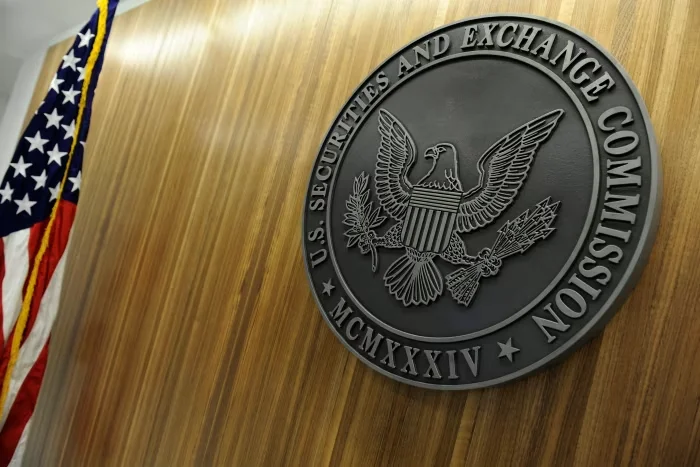
U.S. regulators are moving closer to a long-awaited breakthrough in cryptocurrency oversight, as the Securities and Exchange Commission (SEC) and the Commodity Futures Trading Commission (CFTC) prepare to formalize cooperation through a coordinated regulatory framework.

The development was confirmed following public remarks by SEC Commissioner Paul Atkins, who revealed that both agencies are working toward a Memorandum of Understanding (MOU) designed to clarify how digital assets will be supervised in the United States. 

The announcement comes ahead of a scheduled high-level meeting between SEC Chairman Paul Atkins and CFTC Chairman Michael Selig on January 29, with broader policy details expected to be unveiled the following day.

A Coordinated Push to End Regulatory Confusion

CFTC


For years, crypto firms have operated under overlapping and sometimes conflicting oversight. The SEC has frequently argued that many tokens qualify as securities, while the CFTC has asserted authority over cryptocurrencies it considers commodities, such as Bitcoin and Ethereum. This regulatory split has led to enforcement disputes, delayed product launches, and uncertainty for both investors and builders.

The forthcoming MOU signals a deliberate attempt to resolve these tensions. Rather than competing for jurisdiction, the two agencies are aligning supervisory roles and sharing information. 

According to officials, the goal is to draw clearer boundaries around asset classification, exchange oversight, and enforcement responsibilities.

A joint interview with The Wall Street Journal featuring Atkins and CFTC Commissioner Michael Selig underscored how seriously regulators are treating this effort. Both acknowledged that fragmented oversight has hindered market stability and complicated compliance for legitimate firms.

What the January 30 Announcement Could Deliver

Market participants are watching January 30 closely, as regulators are expected to outline practical steps for implementation. While the agencies have not released a final framework, several areas are widely expected to be addressed.

See also  Hong Kong’s SFC Approves Four New Virtual Asset Providers

Asset classification will be central. Clear criteria for determining whether a digital token falls under securities or commodities law would reduce legal ambiguity that has persisted for over a decade. Exchanges may also receive clearer guidance on registration requirements, especially platforms that list a mix of security tokens and commodity-based assets.

Stablecoins are another likely focus. Oversight may depend on how a stablecoin is backed and used, with payment-focused tokens potentially treated differently from those marketed as investment products.

In addition, coordinated enforcement procedures are expected to be introduced. This would allow the SEC and CFTC to conduct joint investigations, reduce duplication, and respond more quickly to fraud and market manipulation.

Expert Views: A Long-Overdue Shift

Legal and financial experts have largely welcomed the move, describing it as overdue rather than radical.

“Formalized cooperation between the SEC and CFTC is long overdue,” said Dr. Eleanor Vance, a professor of financial regulation at Georgetown University. “

Their combined oversight can address market manipulation and fraud more effectively than isolated efforts. This move aligns with global trends where financial regulators are establishing unified digital asset frameworks.”

The comparison to Europe is unavoidable. The European Union’s Markets in Crypto-Assets (MiCA) framework already provides a single rulebook for crypto firms operating across member states. U.S. regulators, by contrast, have relied heavily on enforcement actions in the absence of comprehensive legislation.

Acting Without Waiting on Congress

Another notable aspect of the MOU approach is speed. While Congress has held numerous hearings on crypto regulation, major legislation has stalled. By relying on inter-agency cooperation, the SEC and CFTC can act within their existing legal authorities rather than waiting for new laws to pass.

See also  Cristiano Ronaldo's NFT Drop Tomorrow: Must-Know Details Revealed 

This administrative route allows regulators to offer more consistent guidance while maintaining flexibility. It may also accelerate approvals for new products, including exchange-traded funds and tokenized financial instruments, that have faced delays due to jurisdictional uncertainty.

Implications for the U.S. Crypto Market

If implemented as expected, coordinated oversight could mark a turning point for the U.S. crypto sector. Clearer rules would help firms plan compliance strategies, attract institutional capital, and compete globally. For investors, unified supervision could improve transparency and reduce risk without stifling innovation.

The January 29 meeting between Atkins and Selig, followed by the anticipated January 30 announcement, suggests regulators are serious about execution rather than symbolism. According to NS3.AI, the discussions are explicitly aimed at strengthening regulatory coordination and reinforcing the United States’ position as a global digital asset hub.

While details still matter, the direction is clear: U.S. crypto regulation is shifting from fragmented enforcement toward structured cooperation. For an industry long caught between agencies, that alone represents a meaningful change.

Disclaimer: This article is intended solely for informational purposes and should not be considered trading or investment advice. Nothing herein should be construed as financial, legal, or tax advice. Trading or investing in cryptocurrencies carries a considerable risk of financial loss. Always conduct due diligence before making any trading or investment decisions.

Subscribe to our Newsletter

Join our community and stay up-to-date with the latest news, updates, and exclusive offers by subscribing to our newsletter. Enter your email address below to receive our monthly newsletter directly to your inbox.

pop up image

Experience the Best of Online Payment with Crypto

UPay offers mainstream-friendly access to crypto. Easily buy, swap, make payouts, and manage funds using our crypto card. No cross-border fees.